Red warning signal Flight 200, the earliest rainstorm in 13 years, was affected.

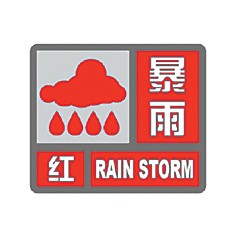
  Guangzhou Daily News (all-media reporter Yekas) "The sky is leaking!" Since the early hours of yesterday morning, heavy rain has been spilled in Yangcheng one after another. At 10: 15 am yesterday, a rainstorm red warning signal was released in Conghua District of Guangzhou, which was the first rainstorm red warning signal released in Guangzhou this year. The reporter learned from the Guangzhou Meteorological Observatory that this is also the earliest rainstorm red warning signal in Guangzhou since the implementation of the Regulations on Issuing Early Warning Signals of Sudden Meteorological Disasters in Guangdong Province in 2006.

  Influenced by strong thunderstorm clouds, from the night of 18th, heavy rain, heavy rain and short-term gale occurred in central and northern Guangzhou, and the influence of wind and rain gradually expanded. Yesterday, there were strong thunderstorms in most parts of Guangzhou from 3: 00 to 6: 00 and from 8: 00 to 15: 00, with accumulated rainfall ranging from heavy rain to heavy rain, accompanied by strong lightning and gusts of 8-10.

  During this process, all districts in the city issued warning signals of rainstorm and thunderstorm and gale, among which the rainstorm warning signals in Huadu, Zengcheng and Conghua districts were upgraded to red at the highest level, while those in Baiyun, Huangpu, Liwan, Tianhe, Yuexiu and Panyu districts were upgraded to orange at the highest level. Except Panyu and Nansha District, all other districts issued orange warning signals of thunderstorm and gale at the highest level. Except Panyu, Nansha and Haizhu District, all other districts have issued hail orange warning signals.

  Emergency headquarters, the city’s meteorological disaster, launched the emergency response of Guangzhou meteorological disaster (rainstorm) level II and meteorological disaster (thunderstorm and gale) level III. As of around 15: 00 yesterday, the rainstorm in Conghua and Zengcheng districts in Guangzhou was red, the rainstorm in Baiyun, Huangpu and Panyu districts was orange, the thunderstorm and gale in Huangpu, Yuexiu, Tianhe, Liwan, Haizhu and Nansha districts in yellow rainstorm warning signal and Zengcheng district were orange, the thunderstorm and gale warning signals in Conghua, Huadu, Huangpu, Yuexiu, Tianhe, Liwan, Haizhu and Panyu districts were yellow, and the hail warning signals in Conghua and Zengcheng districts were orange.

  The reporter learned from the Guangzhou Meteorological Bureau that the "Regulations on Meteorological Disaster Prevention in Guangzhou" was officially implemented on April 1 this year, which stipulates that classes will be suspended in the morning when the rainstorm red warning signal in the region takes effect from 6: 00 to 8: 00; When the rainstorm red warning signal in the region takes effect from 11: 00 to 13: 00, classes will be suspended in the afternoon. If classes are suspended in accordance with the provisions of the preceding paragraph, students will stop attending school; Students who are already on their way to and from school should take refuge in a safe place nearby. Schools should open school buildings to ensure the safety of students at school and on school buses.

  Guangzhou Daily News (all-media reporter Li Yan correspondent Airport Xuan, Nan Xuan) Affected by the strong thunderstorm weather, Baiyun Airport launched the yellow warning of the first large-scale flight delay this year at 13:14 on April 19. At 16:10, the warning level was reduced to blue. By 17: 00, there were 70 departure flights delayed by more than one hour, 106 departure flights were cancelled, 92 arrival flights were cancelled, and 23 foreign flights were reserved. Baiyun Airport made every effort to ensure the follow-up, and the order in the terminal was stable.

  On April 19th, Baiyun Airport planned 694 outbound flights and 682 inbound flights, totaling 1,376 flights. Affected by the strong thunderstorm, the blue warning of large-scale flight delay was started at 10:36, and 58 flights were delayed for more than one hour. At 13:14, 83 flights were delayed for more than one hour, and the emergency response level of large-scale flight delay was upgraded to yellow. Flights to East China, Beijing and Chongqing are obviously controlled by traffic.

  In view of the large-scale flight delay, Baiyun Airport launched a flight coordination mechanism to coordinate airlines to reduce flights and adjust capacity in time. By 17: 00, Baiyun Airport had arranged 17 meals and 15 hotel accommodations.

  According to the emergency stop requirements of Guangzhou Traffic Management Station, Baiyun Airport Airport Express Line suspended the operation of urban and long-distance passenger lines at 12 noon on April 19. All drivers and passengers strictly observe their posts and stand by on the spot. When the rain weakened and the road traffic conditions improved, the operation was fully resumed at 13: 40.

  Airport Express is also doing a good job in Baiyun Airport — Service guarantee of Pazhou Canton Fair special line. Yesterday was the last day of the first phase of the 125th Canton Fair, and there was a peak of returning merchants in Pazhou. Airport Express and Airport Express will earnestly ensure the return passenger flow, and the shuttle bus will start rolling and leave when the passengers are full.

  At 16:10, with the improvement of weather conditions, the number of departure flights delayed by more than one hour at Baiyun Airport dropped to 78, and the emergency response level of large-scale flight delays dropped to blue.

  According to the latest meteorological information, the next weather will still be dominated by showers. Baiyun Airport reminds passengers to pay attention to the weather changes when going out. You can check the flight dynamics through the airlines you take or Baiyun Airport service hotline 020-96158, Airport Link, WeChat, Weibo and APP.

Statistics show that the income of residents is growing rapidly, and groups such as migrant workers are facing the problem of increasing income.

  The sources of rapid income growth are increasingly diversified, and the gap between urban and rural areas is narrowing.

  There are still challenges in optimizing the income pattern of residents and "increasing income continuously"

  It is more difficult for some groups to increase their income. Experts suggest promoting employment and entrepreneurship to increase their income and improving the income control system.

  Ning Renjie, who works in a private company in the communications industry in Jinan, told reporters that five years ago, his salary deducted social security, individual tax and other expenses, and he got about 3,200 yuan a month, and now it has risen to more than 5,000 yuan. "The company will adjust its salary every one or two years, plus various welfare allowances, and its income will increase significantly compared with five years ago."

  According to the data of the National Bureau of Statistics, the per capita disposable income of the national residents in 2016 was 23,821 yuan, with an average annual real increase of 7.4% since 2012. In the next four years, as long as the average annual real growth rate of national residents’ income is above 5.3%, the goal of doubling residents’ income by 2020 compared with 2010 can be achieved.

  Recently, the Economic Information Daily reporter visited many places and learned that in recent years, the income of urban residents has maintained rapid growth, the income gap has been narrowing, and the sources have become increasingly diverse. However, the current sustained income increase of urban and rural residents is also facing new challenges, and it is more difficult for some groups to increase their income. Experts said that sustained economic growth is the basis for the continuous improvement of residents’ income. From the perspective of economic development, the driving force for residents’ income growth will not shrink. In the future, it is necessary to promote employment and entrepreneurship to increase income, deepen the reform of wage system in government agencies, enterprises and institutions, and establish and improve the income control system.

   "Being in the countryside is better than going out to work"

  According to the data of the National Bureau of Statistics, the per capita disposable income of rural residents was 12,363 yuan in 2016, with an average annual real growth rate of 8.0% since 2012. The average annual real growth rate of per capita disposable income of rural residents was 1.5 percentage points faster than that of urban residents. In 2016, the ratio of per capita disposable income of urban and rural residents was 2.72, down by 0.16 compared with 2012.

  Li Wenjie, a native of Linyi, Shandong Province, who often works in plumbing projects in Beijing and Hebei, said that in recent years, wages have risen steadily. "The salary was 200 yuan/day five years ago, and now 250 yuan/day, the wages of coolies have also risen from 80 yuan to 150 yuan every day."

  According to the National Bureau of Statistics, in recent years, governments at all levels have continuously expanded the space for mass entrepreneurship and innovation, and the business environment of individual industrial and commercial households and small and micro enterprises has been further improved. The employment situation has progressed steadily, and the number of migrant workers and the wage level have continued to grow, which has boosted the wage income of urban and rural residents to grow rapidly.

  While wage income continues to increase, the income gap between urban and rural residents continues to narrow.

  Ling Jihe, the chairman of Jiangxi Green Energy Agricultural Development Co., Ltd., has transferred more than 20,000 mu of land, and implemented workshop management. Sixteen brigades manage farmland in pieces, and each brigade is in charge of eight couples. In 2016, the average annual income of each couple was 147,000 yuan, and the year-end bonus was also given at the end of the year. The highest one could get 200,000 yuan or 300,000 yuan. Previously, they could only earn 50,000 to 60,000 yuan a year when they went out to work.

  Dong Yunjian, chairman of Baoyi Kiwifruit Planting Professional Cooperative in Yuanquan Town, Boshan District, Zibo City, Shandong Province, said that since 2010, he began to transfer land to grow kiwifruit, and in recent years, he introduced new varieties, benefiting from the development of modern agriculture, expanding the planting scale and greatly increasing the income. "It is no problem for one person to manage three acres of kiwifruit, and the net income per acre can reach 20,000 yuan, which is better than going out to work."

  According to statistics from Shandong Provincial Bureau of Statistics, in 2016, the per capita disposable income of rural residents in Shandong actually increased by 52.4% compared with 2011, with an average annual growth rate of 8.8%.

  According to the National Bureau of Statistics, the bumper harvest of grain laid the foundation for the growth of rural residents’ agricultural income, and the prices of agricultural products such as rice, vegetables and fruits rose in stages in different periods, which made agriculture "not bright in the east and bright in the west" under the unfavorable price situation of agricultural products such as corn to avoid the decline of income. At the same time, since the second half of 2014, the pig price situation has been favorable, which has driven the net income of rural residents in animal husbandry out of the dilemma of reducing income.

  In addition to the income gap between urban and rural areas, the income gap between different regions and groups is also narrowing. In 2016, the per capita income ratio of residents in the eastern and western regions was 1.67, that of residents in the central and western regions was 1.09, and that of residents in the northeast and western regions was 1.21. The relative income gap between east and west, central and west, and northeast and west decreased by 0.06, 0.02 and 0.08 respectively compared with 2012.

  From 2013 to 2015, the income multiples of the top 20% households and the bottom 20% households in Zhejiang Province decreased from 6.51 times to 6.04 times, showing a gradual narrowing trend. Especially for low-income people, the income growth rate has increased from 18.1% to 20.9% in these three years.

  In 2016, the average annual salary of employees in non-private units in cities and towns in Jiangxi Province ranked lower for a long time. Compared with 2012, the average annual salary of agriculture, forestry, animal husbandry and fishery increased by 14.6%, the average annual growth of accommodation and catering industry was 11.8%, and the average annual growth of water conservancy, environment and public facilities management industry was 10.9%. The average annual growth rate of these three low-wage industries is higher than the provincial average.

  Increase in net income of property

  According to the National Bureau of Statistics, the per capita net transfer income of residents in 2016 was 4,259 yuan, an increase of 56.2% over 2012, and the proportion of per capita disposable income increased to 17.9%. The per capita net income of property was 1,889 yuan, an increase of 53.5% compared with 2012, and the proportion of per capita disposable income increased to 7.9%.

  The 72-year-old Kang Caie is a native of Laoling Village, Moganshan Town, Deqing County, Zhejiang Province. She used to make a living by farming and doing odd jobs in the mountains, with an annual income of less than 20,000 yuan. In 2010, she rented the house to a private host, and charged 19,000 yuan a year. This year, it rose to 50,000 yuan. It was charged for 24 years at a time, and the rent was 1.2 million yuan, which was invested in her son’s Shiyi tea farm (more than 300 acres of tea garden).

  "The B&B economy has brought tangible income to our mountain people." Kang Caie said with a smile that she worked in a homestay modified by her home, cooking, cleaning, doing easy work, getting to know tourists from all over the world, and increasing her annual income by more than 30 thousand yuan, and her life was very comfortable.

  The income structure of urban residents in Zhejiang is characterized by diversification. In 2000, the per capita wage income of urban residents accounted for 69.5% of the total household income. In 2016, the proportion of wage income decreased by 13.1 percentage points, and the proportion of operating and property income increased by 9.9 and 11.8 percentage points respectively.

  According to the relevant person in charge of the Local Taxation Bureau of Nanchang City, Jiangxi Province, in 2016, the individual tax on wages and salaries accounted for 59.8% of the individual tax, which was 6.7 percentage points lower than the 66.5% in 2011. The dependence of residents’ income on wages and salaries declined, and the proportion of capital income and property income increased.

  According to the National Bureau of Statistics, in recent years, the state has vigorously promoted precise poverty alleviation, the policy of benefiting the people has been continuously strengthened, and various social security standards such as pensions have been continuously improved, which has led to a rapid growth in the net transfer income of urban and rural residents. The increase in rental housing income and dividend income has led to a rapid growth in the net income of urban residents’ property. At the same time, the net income of rural residents’ property has increased rapidly under the guidance of the state’s policies of actively developing various forms of agricultural moderate scale operation and encouraging farmers to voluntarily transfer contracted land management rights according to law.

  Some groups face the problem of increasing income.

  Although the income of urban residents shows some bright spots, such as the rapid growth of income, the shrinking income gap and the increasingly diversified sources, the current continuous increase of income of urban and rural residents is also facing new challenges, and it is more difficult for some groups to increase their income.

  According to a survey conducted by the reporter of Economic Information Daily, some industries are under great pressure to reduce production capacity, which affects the wage growth of employees. Li Xiaodong, the foreman of the First Team of Comprehensive Excavation in Xinyuan Coal Mine of Shanxi Yangmei Group, said that as an old miner with more than 20 years of service, his income has not increased much in recent years. When the coal market is poor, it is not easy to ensure that the income will not drop sharply, and the growth is far less than that of the rural "unskilled".

  According to the reporter’s investigation, steel, coal, electric power and other industries are under great pressure to reduce production capacity. Some trading companies, large shopping malls and other enterprises have difficulties in operating, and their employees’ income is flat or declining. Some overcapacity and zombie enterprises are merged and reorganized, and some employees are laid off, which affects the income growth of relevant personnel.

  At the same time, the income growth of migrant workers has slowed down, and the ability to transfer employment to technology-intensive departments is insufficient. Li Mingguang, a migrant worker engaged in the decoration industry in Jinan, said that in the past year or two, the construction industry in Jinan has been somewhat depressed, which has affected the income of migrant workers who mainly take odd jobs. "Now the wages have increased a lot compared with five or six years ago. The competition is fierce, and there are more people and less work. This year, I often work for a few days and rest for a few days. The income will not be much more than last year."

  According to statistics, from 2014 to 2016, the average monthly income of migrant workers increased by 9.8%, 7.2% and 6.6% respectively, and the growth rate dropped year by year. In 2016, more than half of migrant workers were still concentrated in traditional industries such as manufacturing and construction, and the proportion of receiving skills training was not high, and the ability to transfer employment to technology-intensive departments was insufficient. More than 60% of migrant workers have not signed labor contracts with employers or units, and their employment stability is not high.

  In addition, the price fluctuation of some agricultural products restricts the steady growth of net income from agricultural operations. "The price of corn is low, but the drought and flood are guaranteed, and the fluctuation is small. If it can’t be sold this year, it can be sold next year. The profit prospect of vegetables is good, but it is difficult for farmers to bear once they lose money." Song Hailong, a cadre of Nanwei Village, Fushan County, Shanxi Province, said, "Wei Shiye, a poor household in Nanwei Village, borrowed 50,000 yuan to engage in facility vegetables, and lost more than 30,000 yuan in half a year, which failed to get rid of poverty and increased the burden."

  Agricultural income is still the main income of rural households. According to statistics, more than half of the net operating income of rural residents in 2016 came from agriculture. However, the growth of rural residents’ net agricultural income slowed down, with growth rates of 6.8%, 4.6% and 1.1% from 2014 to 2016 respectively. The main reason is that the import impact of foreign low-priced agricultural products has increased, the prices of some domestic agricultural products have continued to decline, the income of agricultural products such as grain has declined, and the difficulty in increasing agricultural net income has intensified. At the same time, the ability of agriculture to resist natural disasters is still weak. In 2016, some areas were greatly affected by natural disasters, and agriculture experienced a decrease in income.

  At present, the policy of benefiting the people needs a new focus to stimulate income growth. Zhu Guihua, a citizen of Jinan, retired from an enterprise last year with a monthly pension of more than 1,800 yuan. She said that the salary increase of enterprise retirees this year was 6.5%, which was the lowest in the past decade. Retirees in many enterprises have a low pension base. For her, the increase of 6.5% is less than that of 120 yuan, and the increase is not in line with psychological expectations.

  With the aging of the population and the increase of rigid expenditure on treatment, the dependency ratio of the basic old-age insurance system for enterprise employees in Zhejiang decreased from 7.08 at the end of 2010 to 2.79 at the end of 2016. In 2017, the budget of the basic old-age insurance fund for enterprise employees in Zhejiang showed a deficit, and sustainable development faced challenges.

  In recent years, the net transfer income of urban and rural residents has increased rapidly, thanks to the improvement of various social security standards and the increase in poverty alleviation investment. As the government’s transfer payments continue to increase and the financial burden increases, it is more difficult to continuously introduce inclusive policies to benefit the people. A number of interviewed experts said that if there is no new inclusive policy and the existing policy standards for benefiting the people are not greatly improved, it will be difficult to support the residents’ transfer of net income to continue to maintain rapid growth.

  Improve the income control system

  In view of the current employment situation, some respondents suggested promoting employment and entrepreneurship to increase income, deepening the reform of the wage system, improving the income control system, and deepening the reform of the wage system of government agencies, enterprises and institutions.

  In terms of increasing income from employment and entrepreneurship, many interviewees suggested that the first is to promote the construction of entrepreneurial platforms such as creative space and business incubation bases, implement policies such as employment and entrepreneurship service subsidies and incubation subsidies, and lower the threshold for entrepreneurship. Encourage farmers to engage in e-commerce entrepreneurship, build an entrepreneurial service platform, and make full use of farm stock construction land to build a farm entrepreneurial base. The second is to promote the full employment of key groups, improve the identification and assistance system for people with employment difficulties, implement classified and accurate assistance, and develop public welfare posts for the placement of people with employment difficulties. The third is to strengthen vocational skills and improve the quality of employment. Build and upgrade public training bases for high-skilled talents, make full use of Internet technology, and explore the establishment of individual study accounts and credit accumulation systems for workers. We will implement training programs for family farmers, modern young farmers and leaders of new agricultural business entities to speed up the training of professional farmers.

  In terms of deepening the reform of the wage system of government agencies, enterprises and institutions, experts suggest that, first, actively cultivate the wage referendum and normal growth mechanism of enterprise employees, so that employees can enjoy more "right to speak" in wage growth. Establish enterprise benefit sharing mechanism and encourage mixed ownership economy to implement employee stock ownership. The second is to explore the establishment of an income distribution incentive mechanism that conforms to the industry characteristics of public institutions and is oriented to increasing knowledge value, and to establish a multi-factor distribution mechanism according to technology and contribution. For high-level talents, the policy of income distribution tilt can be formulated separately. The third is to steadily increase the income of government staff. On the basis of standardizing allowances and subsidies, the regional additional allowance system is implemented to rationally regulate the wage gap in different regions; Standardize incentive subsidies, give local authorities the right to distribute certain assessment rewards, and focus on grassroots frontline personnel and outstanding performance personnel.

  In addition, in terms of improving the income control system and promoting income equity, Zhu Guihua and other enterprise retirees said that although the government advocates the integration of pensions, compared with the pensions of retirees in government agencies and institutions, the pension base of enterprise retirees is low, even if the same increase is maintained, the gap between the actual amount of growth is still large. According to the difference of pension base between retirees in institutions and enterprises, a more targeted pension growth rate can be formulated.

  Chen Bin Kai, an associate professor at the School of Economics of the Central University of Finance and Economics, suggested continuing to improve the policy of equal opportunities in the initial distribution. The increase of income of low-income class mainly depends on non-agricultural employment, and its employment direction is often labor-intensive small and medium-sized enterprises. Support can be provided to such enterprises to raise the income level of the middle and lower classes, such as encouraging the development of small and medium-sized enterprises through fiscal and tax preferential policies and financial policies. It can also increase the transfer payment to low-income groups and improve the efficiency of transfer payment. For example, in the tax system, we can give full play to the role of tax as a redistribution tool, reduce the tax burden of low-and middle-income groups and small and medium-sized enterprises, and strengthen the tax collection for high-income groups.

  Yu Zijin, director of the Local Taxation Bureau of Wanli District, Nanchang City, suggested that the threshold should be raised appropriately to benefit the middle and low income groups and gradually expand the middle income groups. Give play to the role of individual tax in the redistribution of national income, strengthen the adjustment of capital and property income, adjust excessive income, and narrow the gap between the rich and the poor.

Ou Yangming Gao, an academician of Chinese Academy of Sciences: In 2030, L4-class fully-automatic passenger cars based on end-to-end large models will be commercialized in mid-to high-end passenger ca

On March 29th, at the China Electric Vehicle committee of 100 Forum 2025 held today, Ou Yangming Gao, vice chairman of China Electric Vehicle committee of 100 and academician of China Academy of Sciences, said that the multi-modal large model as the base model of the end-to-end algorithm can empower high-order autonomous driving technology, but it also needs to solve the safety and reliability problems of the large model. At the same time, L3 autopilot needs to solve relevant laws and regulations as soon as possible, and L4 autopilot needs to accumulate experience step by step, so it is not appropriate to mention national autopilot for the time being. "In 2030, the L4-class fully automatic passenger car based on the advanced end-to-end large model will be commercialized in the middle and high-end passenger car scale." Ou Yangming high expectations. (Cailian)

Meteorological disaster warning signal and prevention guide

  A typhoon warning signal

  Typhoon warning signals are divided into four levels, which are represented by blue, yellow, orange and red respectively.

  (1) Typhoon blue warning signal

  Standard: It may or has been affected by tropical cyclones within 24 hours, and the average wind force along the coast or land is above 6, or the gust is above 8 and may continue.

  Defense Guide: 1. The government and relevant departments should make preparations for typhoon prevention according to their duties; 2. Stop outdoor collective activities and dangerous outdoor operations such as high altitude; 3. Take active measures for water operations and passing ships in relevant waters, such as returning to Hong Kong to avoid the wind or sailing around; 4. Reinforce the structures that are easy to be blown by the wind, such as doors and windows, hoardings, scaffolding, billboards, etc., and cut off the dangerous outdoor power supply.

  (2) Typhoon yellow warning signal

  Standard: it may be or has been affected by tropical cyclones within 24 hours, and the average wind force along the coast or land is above 8, or the gust is above 10 and may continue.

  Defense Guide: 1. The government and relevant departments should prepare for typhoon emergency according to their duties; 2. Stop large-scale indoor and outdoor gatherings and outdoor dangerous operations such as high altitude; 3. Take active measures for water operations and passing ships in relevant waters to strengthen port facilities and prevent ships from anchoring, grounding and collision; 4. Reinforce or dismantle structures that are easy to be blown by the wind. Personnel should not go out at will, ensure that the elderly and children stay in the safest place at home, and the dangerous house personnel will be transferred in time.

  (3) Typhoon orange warning signal

  Standard: It may or has been affected by tropical cyclones within 12 hours, and the average wind force along the coast or land is above 10, or the gust is above 12 and may continue.

  Defense Guide: 1. The government and relevant departments should do a good job in typhoon prevention and emergency rescue according to their duties; 2. Stop large-scale indoor and outdoor gatherings, suspend classes and business (except for special industries); 3. Water operations and passing ships in relevant waters should return to Hong Kong to take shelter from the wind and strengthen port facilities to prevent ships from anchoring, grounding and collision; 4. To reinforce or dismantle structures that are easily blown by the wind, the personnel should stay in a windproof and safe place as far as possible. When the typhoon center passes, the wind will decrease or stay still for a period of time. Remember that strong winds will suddenly blow, and they should continue to stay in a safe place to avoid the wind, and the dangerous personnel should be transferred in time; 5. Relevant areas should pay attention to prevent flash floods and geological disasters that may be caused by heavy precipitation.

  (4) Typhoon red warning signal

  Standard: It may or has been affected by tropical cyclones within 6 hours, and the average wind force along the coast or land is above 12, or the gust is above 14 and may continue.

  Defense Guide: 1. The government and relevant departments should do a good job in typhoon emergency and emergency rescue according to their duties; 2. Stop the assembly, suspend classes and suspend business (except for special industries); 3. Ships returning to Hong Kong to take shelter from the wind should take active measures according to the situation, and properly arrange personnel to stay behind or move to a safe place; 4. To reinforce or dismantle the structures that are easy to be blown by the wind, the personnel should stay in a windproof and safe place. When the typhoon center passes by, the wind will decrease or stay still for a period of time. Remember that the strong wind will suddenly blow, and they should continue to stay in a safe place to avoid the wind, and the dangerous people should be transferred in time; 5. Relevant areas should pay attention to prevent flash floods and geological disasters that may be caused by heavy precipitation.

  Second, the rainstorm warning signal

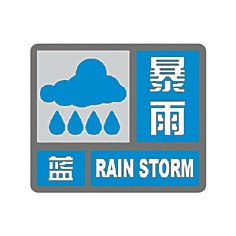
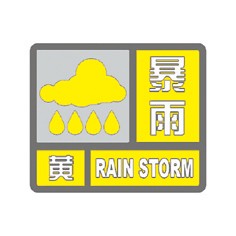
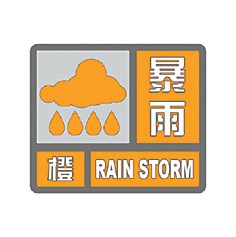
  The rainstorm warning signal is divided into four levels, which are represented by blue, yellow, orange and red respectively.

  (A) rainstorm blue warning signal

  Standard: within 12 hours, the rainfall will reach more than 50 mm, or it has reached more than 50 mm and the rainfall may continue.

  Defense Guide: 1. The government and relevant departments should prepare for the rainstorm according to their duties; 2. Schools and kindergartens take appropriate measures to ensure the safety of students and children; 3. Drivers should pay attention to road water and traffic jams to ensure safety; 4. Check the drainage system of cities, farmland and fish ponds, and prepare for drainage.

  (2) yellow rainstorm warning signal

  Standard: The rainfall will reach more than 50 mm within 6 hours, or it has reached more than 50 mm and the rainfall may continue.

  Defense guide: 1. The government and relevant departments should do a good job in preventing rainstorm according to their duties; 2. The traffic management department shall take traffic control measures in heavy rainfall sections according to the road conditions, and implement traffic guidance in waterlogged sections; 3. Cut off the dangerous outdoor power supply in low-lying areas, suspend outdoor work in open places, and transfer people in dangerous areas and residents of dangerous houses to safe places to shelter from the rain; 4. Check the drainage system of cities, farmland and fish ponds and take necessary drainage measures.

  (C) rainstorm orange warning signal

  Standard: within 3 hours, the rainfall will reach more than 50 mm, or it has reached more than 50 mm and the rainfall may continue.

  Defense guide: 1. The government and relevant departments should do a good job in emergency prevention of rainstorm according to their duties; 2. Cut off the dangerous outdoor power supply and suspend outdoor work; 3. Units in danger zones shall suspend classes or business, and take special measures to protect the safety of students, children and other working personnel who have arrived at school; 4. Do a good job in the drainage of cities and farmland, and pay attention to prevent possible disasters such as flash floods, landslides and mudslides.

  (4) Rainstorm red warning signal

  Standard: within 3 hours, the rainfall will reach more than 100 mm, or it has reached more than 100 mm and the rainfall may continue.

  Defense Guide: 1. The government and relevant departments should do a good job in emergency and rescue against rainstorm according to their duties; 2. Stop the assembly, suspend classes and suspend business (except for special industries); 3. Do a good job in the prevention and rescue of mountain torrents, landslides, mudslides and other disasters.

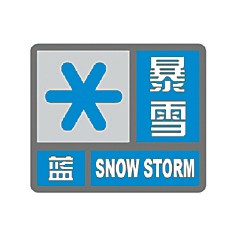
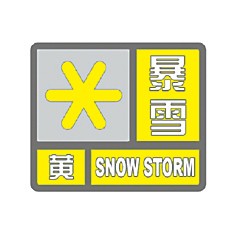
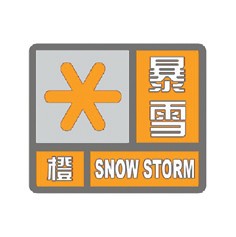
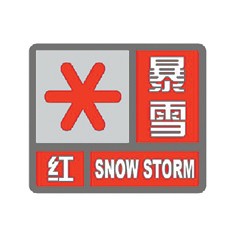
  Third, the blizzard warning signal

  Blizzard warning signals are divided into four levels, which are represented by blue, yellow, orange and red respectively.

  (1) Blizzard Blue Warning Signal

  Standard: within 12 hours, the snowfall will reach more than 4 mm, or it has reached more than 4 mm and the snowfall continues, which may have an impact on traffic or agriculture and animal husbandry.

  Defense Guide: 1. The government and relevant departments should prepare for snow disaster and freezing injury according to their duties; 2 transportation, railway, electric power, communications and other departments should carry out road, railway and line inspection and maintenance, and do a good job in road cleaning and snow melting; 3. Pedestrians should pay attention to cold prevention and anti-skid, drivers should drive carefully, and vehicles should take anti-skid measures; 4. Farming and pastoral areas and breeding industries should reserve feed and prepare for snow disaster prevention and freezing injury prevention; 5. Reinforce temporary structures that are easily crushed by snow, such as scaffolding.

  (B) Blizzard yellow warning signal

  Standard: within 12 hours, the snowfall will reach more than 6 mm, or it has reached more than 6 mm and the snowfall continues, which may have an impact on traffic or agriculture and animal husbandry.

  Defense Guide: 1. The government and relevant departments shall implement measures to prevent snow disaster and freezing damage according to their duties; 2 transportation, railway, electric power, communications and other departments should strengthen the inspection and maintenance of roads, railways and lines, and do a good job in road cleaning and snow melting; 3. Pedestrians should pay attention to cold prevention and anti-skid, drivers should drive carefully, and vehicles should take anti-skid measures; 4. Farming and pastoral areas and breeding industries should prepare enough feed to prevent snow disasters and freezing damage; 5. Reinforce temporary structures that are easily crushed by snow, such as scaffolding.

  (3) Blizzard orange warning signal

  Standard: within 6 hours, the snowfall will reach more than 10 mm, or it has reached more than 10 mm and the snowfall continues, which may or has already had a great impact on traffic or agriculture and animal husbandry.

  Defense guide: 1. The government and relevant departments should do emergency work to prevent snow disaster and freezing injury according to their duties; 2 transportation, railway, electric power, communications and other departments should strengthen the inspection and maintenance of roads, railways and lines, and do a good job in road cleaning and snow melting; 3. Reduce unnecessary outdoor activities; 4. Reinforce temporary structures that are easily crushed by snow, such as scaffolding, and drive outdoor livestock into the shed to feed.

  (4) Blizzard red warning signal

  Standard: within 6 hours, the snowfall will reach more than 15mm, or it has reached more than 15mm and the snowfall continues, which may or has had a great impact on traffic or agriculture and animal husbandry.

  Defense Guide: 1. The government and relevant departments should do emergency and rescue work to prevent snow disaster and freezing injury according to their duties; 2. If necessary, suspend classes or business (except for special industries); 3. When necessary, the aircraft will be suspended from taking off and landing, the train will be suspended, and the expressway will be temporarily closed; 4. Do a good job in disaster relief work in pastoral areas.

  Fourth, the cold wave warning signal

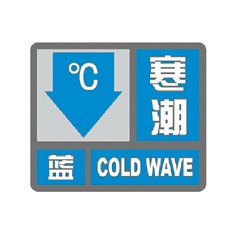
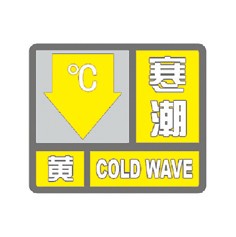
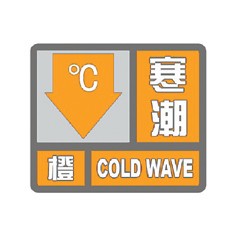
  The cold wave warning signal is divided into four levels, which are represented by blue, yellow, orange and red respectively.

  (A) cold wave blue warning signal

  Standard: within 48 hours, the minimum temperature will drop by more than 8℃, the minimum temperature will be less than or equal to 4℃, and the average wind power on land will reach more than 5. Or it has dropped by more than 8℃, the lowest temperature is less than or equal to 4℃, and the average wind power reaches more than 5, which may continue.

  Defense Guide: 1. The government and relevant departments should prepare for the cold wave according to their duties; 2. Pay attention to adding clothes to keep warm; 3. Take certain protective measures for tropical crops and aquatic products; 4. Prepare for the wind.

  (2) Cold wave yellow warning signal

  Standard: within 24 hours, the minimum temperature will drop by more than 10℃, the minimum temperature is less than or equal to 4℃, and the average wind power on land can reach above 6. Or it has dropped by more than 10℃, the lowest temperature is less than or equal to 4℃, and the average wind force is above 6, and it may continue.

  Defense guide: 1. The government and relevant departments should do a good job in preventing cold wave according to their duties; 2. Pay attention to add clothes to keep warm and take care of the old, weak and sick; 3. Take cold-proof measures for livestock, poultry, tropical and subtropical fruits and related aquatic products and crops; 4. Do a good job of windproof.

  (3) Cold wave orange warning signal

  Standard: within 24 hours, the minimum temperature will drop by more than 12℃, the minimum temperature is less than or equal to 0℃, and the average wind power on land can reach above 6. Or it has dropped by more than 12℃, the lowest temperature is less than or equal to 0℃, and the average wind force is above 6, and it may continue.

  Defense guide: 1. The government and relevant departments should do a good job in preventing cold wave emergency according to their duties; 2. Pay attention to cold and warmth; 3. Agriculture, aquaculture, animal husbandry, etc. should actively take anti-frost and freezing measures to minimize losses; 4. Do a good job of windproof.

  (4) Cold wave red warning signal

  Standard: within 24 hours, the minimum temperature will drop by more than 16℃, the minimum temperature is less than or equal to 0℃, and the average wind power on land can reach above 6. Or it has dropped by more than 16℃, the lowest temperature is less than or equal to 0℃, and the average wind force is above 6, and it may continue.

  Defense Guide: 1. The government and relevant departments should do a good job of emergency and rescue against cold wave according to their duties; 2. Pay attention to cold and warmth; 3. Agriculture, aquaculture, animal husbandry, etc. should actively take anti-frost and freezing measures to minimize losses; 4. Do a good job of windproof.

  Five, strong wind warning signal

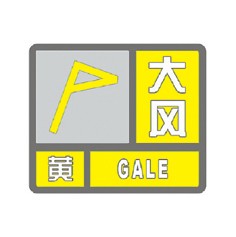
  The warning signal of gale (except typhoon) is divided into four levels, which are represented by blue, yellow, orange and red respectively.

  (A) gale blue warning signal

  Standard: It may be affected by strong winds within 24 hours, with an average wind force of more than 6 or a gust of more than 7; Or have been affected by strong winds, the average wind force is 6~7, or the gust is 7~8 and may continue.

  Defense Guide: 1. The government and relevant departments should do a good job in preventing strong winds according to their duties; 2. Close the doors and windows, reinforce the structures that are easy to be blown by the wind, such as hoardings, scaffolding and billboards, properly arrange outdoor items that are easily affected by strong winds, and cover building materials; 3. Take active measures for water operations and passing ships in relevant waters, such as returning to Hong Kong to avoid the wind or sailing around; 4. Pedestrians should pay attention to riding bicycles as little as possible, and don’t stay under billboards and temporary structures when it is windy; 5. Relevant departments and units should pay attention to forest and grassland fire prevention.

  (2) Gale yellow warning signal

  Standard: It may be affected by strong winds within 12 hours, with an average wind force of 8 or above or a gust of 9 or above; Or it has been affected by strong winds, with an average wind force of 8-9, or a gust of 9-10 and may continue.

  Defense Guide: 1. The government and relevant departments should do a good job in preventing strong winds according to their duties; 2. Stop outdoor dangerous operations such as outdoor activities and high altitude, and people in dangerous areas and residents of dangerous houses should try to move to sheltered places to avoid the wind; 3. Take active measures for water operations and passing ships in relevant waters to strengthen port facilities and prevent ships from anchoring, grounding and collision; 4. Cut off the outdoor dangerous power supply, properly arrange outdoor items that are easily affected by strong winds, and cover building materials; 5. Airports, highways and other units should take measures to ensure traffic safety, and relevant departments and units should pay attention to forest and grassland fire prevention.

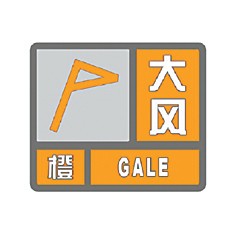
  (3) Gale orange warning signal

  Standard: It may be affected by strong winds within 6 hours, with an average wind force of more than 10 or a gust of more than 11; Or have been affected by strong winds, with an average wind force of 10-11, or gusts of 11-12 and may continue.

  Defense Guide: 1. The government and relevant departments should do a good job in preventing strong winds according to their duties; 2. Primary and secondary schools and units with weak wind resistance should suspend classes and business, and reduce the number of people going out; 3. Water operations and passing ships in relevant waters should return to Hong Kong to take shelter from the wind and strengthen port facilities to prevent ships from anchoring, grounding and collision; 4. Cut off the dangerous power supply, properly arrange outdoor items that are easily affected by strong winds, and cover building materials; 5. Airports, railways, highways, water transportation and other units should take measures to ensure traffic safety, and relevant departments and units should pay attention to fire prevention in forests and grasslands.

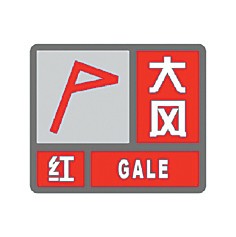
  (4) Gale red warning signal

  Standard: It may be affected by strong winds within 6 hours, with an average wind force of more than 12 or a gust of more than 13; Or have been affected by strong winds, the average wind force is above 12, or the gust is above 13 and may continue.

  Defense Guide: 1. The government and relevant departments should do a good job in gale emergency and emergency rescue according to their duties; 2. Personnel should stay in windproof and safe places as far as possible, and don’t go out at will; 3. Ships returning to Hong Kong to take shelter from the wind should take active measures according to the situation, and properly arrange personnel to stay behind or move to a safe place; 4. Cut off the dangerous power supply, properly arrange outdoor items that are easily affected by strong winds, and cover building materials; 5. Airports, railways, highways, water transportation and other units should take measures to ensure traffic safety, and relevant departments and units should pay attention to fire prevention in forests and grasslands.

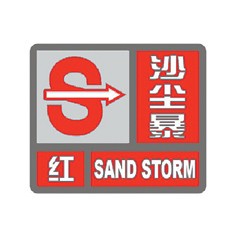
  Six, sandstorm warning signal

  The warning signal of sandstorm is divided into three levels, which are represented by yellow, orange and red respectively.

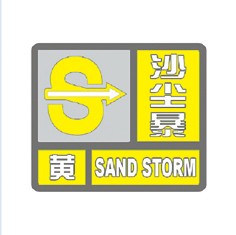
  (A) the yellow warning signal of sandstorm

  Standard: Sandstorm weather may occur within 12 hours (visibility is less than 1000 meters), or sandstorm weather has occurred and may continue.

  Defense guide: 1. The government and relevant departments should do a good job in preventing sandstorms according to their duties; 2. Close the doors and windows, reinforce the structures that are easily blown by the wind, such as hoardings, scaffolding and billboards, properly arrange outdoor items that are easily affected by strong winds, cover building materials, and do a good job in sealing precision instruments; 3. Pay attention to carrying dust-proof articles such as masks and scarves to avoid dust damage to eyes and respiratory tract; 4. Patients with respiratory diseases and those who are sensitive to sandstorms should not go outdoors.

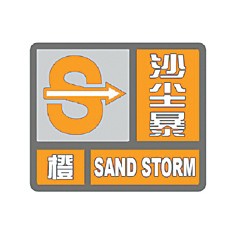
  (2) The orange warning signal of sandstorm

  Standard: Strong sandstorm weather may occur within 6 hours (visibility is less than 500 meters), or it has already occurred and may continue.

  Defense Guide: 1. The government and relevant departments should do a good job in preventing sandstorms according to their duties; 2. Stop outdoor activities and dangerous outdoor operations such as high altitude and water; 3. Airports, railways, highways and other units should take protective measures for traffic safety, and drivers should pay attention to changes in sandstorms and drive carefully; 4. Pedestrians should ride bicycles as little as possible, and outdoor personnel should wear masks, scarves and other dust-proof articles to pay attention to traffic safety.

  (3) Sandstorm in red warning signal

  Standard: Extreme sandstorm weather may occur within 6 hours (visibility is less than 50 meters), or extreme sandstorm weather has occurred and may continue.

  Defense Guide: 1. The government and relevant departments should do a good job in emergency rescue against sandstorms according to their duties; 2. Personnel should stay in windproof and dustproof places, and do not engage in outdoor activities; 3. Schools and kindergartens postpone going to school or leaving school until the end of the particularly strong sandstorm; 4. The plane stopped taking off and landing, the train stopped running and the expressway was temporarily closed.

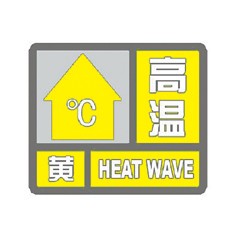
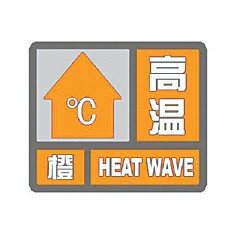
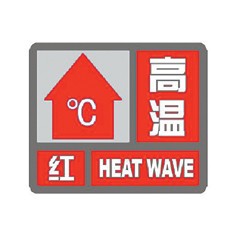
  Seven, high temperature warning signal

  The high temperature warning signal is divided into three levels, which are represented by yellow, orange and red respectively.

  (A) high temperature yellow warning signal

  Standard: The maximum daily temperature will be above 35℃ for three consecutive days.

  Defense Guide: 1. Relevant departments and units should make preparations for heatstroke prevention and cooling according to their duties; 2. Minimize outdoor activities in the afternoon; 3. Provide guidance on heatstroke prevention and cooling for the old, weak, sick and young people; 4. Personnel who work under high temperature conditions and need to do outdoor outdoor operations for a long time during the day shall take necessary protective measures.

  (2) High temperature orange warning signal

  Standard: The maximum temperature will rise above 37℃ within 24 hours.

  Defense Guide: 1. Relevant departments and units shall implement safeguard measures for heatstroke prevention and cooling according to their duties; 2. Try to avoid outdoor activities in high temperature period, and the personnel working under high temperature conditions should shorten the continuous working hours; 3. Provide guidance on heatstroke prevention and cooling for the old, weak, sick and young people, and take necessary protective measures; 4. Relevant departments and units should pay attention to prevent fires caused by excessive electricity consumption and excessive electric loads such as wires and transformers.

  (3) High temperature red warning signal

  Standard: The maximum temperature will rise above 40℃ within 24 hours.

  Defense Guide: 1. Relevant departments and units shall take emergency measures for heatstroke prevention and cooling according to their duties; 2. Stop outdoor outdoor operations (except for special industries); 3. Take protective measures for the old, weak, sick and young people; 4. Relevant departments and units should pay special attention to fire prevention.

  Eight, drought warning signal

  The drought warning signal is divided into two levels, which are represented by orange and red respectively. The classification of drought index is based on the comprehensive meteorological drought index in the national standard Meteorological Drought Grade (GB/T20481-2006).

  (A) the orange warning signal of drought

  Standard: It is estimated that the comprehensive meteorological drought index will reach severe drought in the coming week (meteorological drought will occur once every 25 to 50 years), or more than 40% of crops in a county (district) will suffer from drought.

  Defense Guide: 1. Relevant departments and units should do emergency work to prevent drought according to their duties; 2 relevant departments to enable emergency standby water sources, dispatch all available water sources within the jurisdiction, and give priority to ensuring domestic water for urban and rural residents and drinking water for livestock; 3. Reduce urban water supply indicators, give priority to irrigation water for cash crops, and limit a large amount of agricultural irrigation water; 4. Restrict unproductive high water consumption and service water consumption, and restrict the discharge of industrial sewage; 5 meteorological departments to carry out artificial precipitation enhancement operations in a timely manner.

  (2) Arid red warning signal

  Standard: It is estimated that the comprehensive meteorological drought index will reach extreme drought in the coming week (meteorological drought will occur once in more than 50 years), or more than 60% of crops in a county (district) will suffer from drought.

  Defense Guide: 1. Relevant departments and units shall do emergency and disaster relief work for drought prevention according to their duties; 2. Governments at all levels and relevant departments start emergency water supply schemes such as long-distance water transfer, and adopt various means such as carrying water outside, drilling deep wells and delivering water by car to ensure the life of urban and rural residents and drinking water for livestock; 3. Limited or limited supply of domestic water for urban residents, reducing or phasing out agricultural irrigation water supply; 4. Non-productive high water consumption and service industry water consumption are strictly prohibited, and industrial sewage discharge is suspended; 5. The meteorological department shall increase the intensity of artificial precipitation enhancement in a timely manner.

  Nine, lightning warning signal

  Lightning warning signals are divided into three levels, which are represented by yellow, orange and red respectively.

  (1) Lightning yellow warning signal

  Standard: Lightning activity may occur within 6 hours, which may cause lightning disasters and accidents.

  Defense Guide: 1. The government and relevant departments should do a good job in lightning protection according to their duties; Pay close attention to the weather and try to avoid outdoor activities.

  (2) Lightning orange warning signal

  Standard: There is a great possibility of lightning activity within 2 hours, or it has been affected by lightning activity and may continue, so there is a great possibility of lightning disaster.

  Defense Guide: 1. The government and relevant departments shall implement lightning protection emergency measures according to their duties; 2. Personnel should stay indoors and close the doors and windows; 3. Outdoor personnel should hide in buildings or cars with lightning protection facilities; 4. Cut off the dangerous power supply, and do not shelter from the rain under trees, poles or tower cranes; 5. Don’t take an umbrella in the open field, and don’t carry farm tools, badminton rackets and golf clubs on your shoulders.

  (3) Lightning red warning signal

  Standard: The possibility of lightning activity within 2 hours is very high, or there has been strong lightning activity, which may continue, and the possibility of lightning disaster is very high.

  Defense Guide: 1. The government and relevant departments should do a good job in lightning protection emergency rescue according to their duties; 2 personnel should try to hide in buildings or cars with lightning protection facilities, and close the doors and windows; 3. Do not touch antennas, water pipes, barbed wire, metal doors and windows, external walls of buildings, and stay away from live equipment such as wires and other similar metal devices; 4. Try not to use TV, telephone and other electrical appliances without lightning protection device or with incomplete lightning protection device; 5. Pay close attention to the release of lightning warning information.

  X. Hail Warning Signal

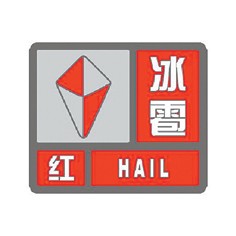
  Hail warning signals are divided into two levels, which are represented by orange and red respectively.

  (1) Hail orange warning signal

  Standard: Hail weather may occur within 6 hours and may cause hail disaster.

  Defense Guide: 1. The government and relevant departments should do a good job in hail prevention according to their duties; 2. The meteorological department should prepare for the artificial hail suppression operation and choose the opportunity to carry out the operation; 3. Outdoor pedestrians should immediately take refuge in a safe place; 4. Drive poultry and livestock into covered places, and properly protect outdoor articles or equipment such as cars that are vulnerable to hail attacks; 5. Pay attention to the lightning disaster accompanied by hail weather.

  (2) Hail red warning signal

  Standard: there is a great possibility of hail within 2 hours, and it may cause heavy hail disaster.

  Defense Guide: 1. The government and relevant departments should do a good job of emergency and rescue against hail according to their duties; 2 meteorological departments to carry out artificial hail suppression operations in a timely manner; 3. Outdoor pedestrians should immediately take refuge in a safe place; 4. Drive poultry and livestock into covered places, and properly protect outdoor articles or equipment such as cars that are vulnerable to hail attacks; 5. Pay attention to the lightning disaster accompanied by hail weather.

  Eleven, frost warning signal

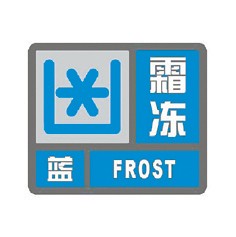
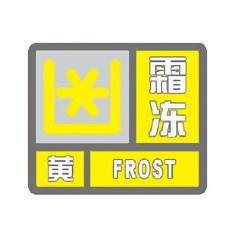
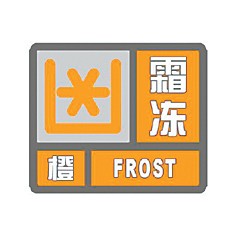
  Frost warning signals are divided into three levels, which are represented by blue, yellow and orange respectively.

  (1) Frost blue warning signal

  Standard: within 48 hours, the minimum ground temperature will drop below 0℃, which will have an impact on agriculture, or it has dropped below 0℃, which has already had an impact on agriculture and may continue.

  Defense guide: 1. The government and the competent departments of agriculture and forestry should make preparations for frost prevention according to their duties; 2. Take certain protective measures for crops, vegetables, flowers, fruits and forestry breeding.

  3. Rural grass-roots organizations and farmers should pay attention to local frost warning information so as to take measures to strengthen protection.

  (2) Frost yellow warning signal

  Standard: within 24 hours, the minimum ground temperature will drop below minus 3℃, which will have a serious impact on agriculture, or it has dropped below minus 3℃, which has had a serious impact on agriculture and may continue.

  Defense guide: 1. The government and the competent departments of agriculture and forestry should do a good job in frost prevention according to their duties; 2. Rural grassroots organizations should widely mobilize the masses to prevent and fight disasters; 3. For crop and forestry breeding, measures such as field irrigation should be actively taken to prevent frost and freezing, so as to minimize losses; 4. For vegetables, flowers, melons and fruits, measures such as covering and spraying antifreeze should be taken to reduce freezing injury.

  (3) Frost orange warning signal

  Standard: within 24 hours, the minimum ground temperature will drop below minus 5℃, which will have a serious impact on agriculture, or it has dropped below minus 5℃, which has had a serious impact on agriculture and will continue.

  Defense guide: 1. The government and the competent departments of agriculture and forestry should do a good job in frost prevention according to their duties; 2. Rural grassroots organizations should widely mobilize the masses to prevent and fight disasters; 3. Take active measures to deal with the breeding of crops, vegetables, flowers, melons and fruits, and forestry to minimize losses.

  Twelve, fog warning signal

  The fog warning signal is divided into three levels, which are represented by yellow, orange and red respectively.

  (1) Fog yellow warning signal

  Standard: Fog with visibility less than 500 meters may appear within 12 hours, or fog with visibility less than 500 meters and greater than or equal to 200 meters has already appeared and will continue.

  Defense Guide: 1. Relevant departments and units should make good preparations for fog prevention according to their duties; 2 airports, highways, ferry terminals and other units to strengthen traffic management to ensure safety; 3. Drivers should pay attention to the change of fog and drive carefully; 4. Pay attention to safety in outdoor activities.

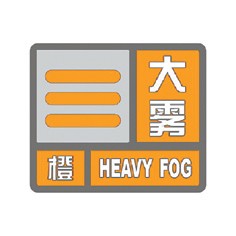
  (2) Fog orange warning signal

  Standard: Fog with visibility less than 200m may appear within 6 hours, or fog with visibility less than 200m and greater than or equal to 50m has already appeared and will continue.

  Defense Guide: 1. Relevant departments and units should do a good job in fog prevention according to their duties; 2. Airports, expressways, ferry terminals and other units should strengthen dispatch and command; 3. Drivers must strictly control the speed of cars and ships; 4. Reduce outdoor activities.

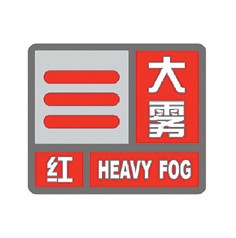
  (3) Fog red warning signal

  Standard: Fog with visibility less than 50 meters may appear within 2 hours, or fog with visibility less than 50 meters has already appeared and will continue.

  Defense Guide: 1. Relevant departments and units should do a good job in anti-fog emergency work according to their duties; 2. Relevant units shall take timely traffic safety control measures in accordance with industry regulations, such as airport suspension of aircraft take-off and landing, temporary closure of expressways, temporary suspension of ferries, etc.; 3. Drivers should take preventive measures in foggy days according to the regulations on driving in foggy days, adopt reasonable driving modes according to environmental conditions, and find a safe parking area to stop as soon as possible; 4. Don’t do outdoor activities.

  Thirteen, haze warning signal

  Haze warning signals are divided into two levels, which are represented by yellow and orange respectively.

  (1) Haze yellow warning signal

  Standard: Haze with visibility less than 3000 meters may appear within 12 hours, or haze with visibility less than 3000 meters has already appeared and may continue.

  Defense Guide: 1. Drivers should drive carefully; 2. Due to the obvious decrease of air quality, personnel should be properly protected; 3. Patients with respiratory diseases should minimize going out and wear masks when going out.

  (2) Haze orange warning signal

  Standard: Haze with visibility less than 2000m may appear within 6 hours, or haze with visibility less than 2000m has already appeared and may continue.

  Defense Guide: 1. Airports, expressways, ferry terminals and other units should strengthen traffic management to ensure safety; 2. Drivers should drive carefully; 3. The air quality is poor, and personnel need proper protection; 4. Personnel should reduce outdoor activities, patients with respiratory diseases should try to avoid going out, and they can wear masks when going out.

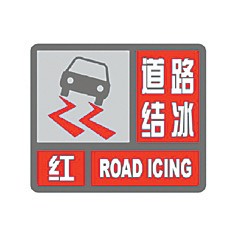
  Fourteen, road icing warning signal

  The warning signal of road icing is divided into three levels, which are represented by yellow, orange and red respectively.

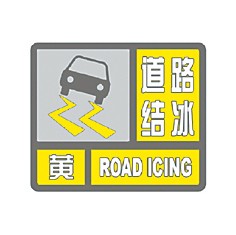
  (A) road icing yellow warning signal

  Standard: When the road surface temperature is lower than 0℃, precipitation occurs, and road icing may occur within 12 hours.

  Defense Guide: 1. Traffic, public security and other departments should prepare for road icing according to their duties; 2. Drivers should pay attention to road conditions and drive safely; 3. Pedestrians should ride bicycles as little as possible when going out, and pay attention to anti-skid.

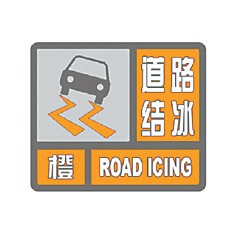
  (B) Road icing orange warning signal

  Standard: When the road surface temperature is lower than 0℃, precipitation occurs, and road icing which has great influence on traffic may occur within 6 hours.

  Defense Guide: 1. Traffic, public security and other departments should do a good job in road icing emergency work according to their duties; 2. Drivers must take anti-skid measures, obey orders and drive slowly; 3. Pedestrians should pay attention to anti-skid when going out.

  (3) Road icing red warning signal

  Standard: When the road surface temperature is lower than 0℃, precipitation occurs, and road icing that has a great influence on traffic may occur or has occurred within 2 hours.

  Defense Guide: 1. Traffic, public security and other departments should do a good job in road icing emergency and rescue; 2. Traffic, public security and other departments should pay attention to directing and guiding the vehicles, and close the icy road traffic when necessary; 3. Personnel shall go out as little as possible. (From June 21, 2007 "China Meteorological News" Author: China Meteorological Bureau)

At least five cars collided on the top of the bus when the brakes failed, and several people were injured.

  At 7 o’clock on the evening of May 2, at the intersection of Xinglong Road and Xinglong No.1 Road, two buses that were standing by stood together after a loud noise. The accident happened to a foreign bus, which rushed down Xinglong Road, butted against the rear of the bus and injured two cars in the opposite lane. In the accident, several passengers on the bus were injured, and the accident vehicle blocked the road, causing traffic congestion.

  At 7: 30 pm on the 2nd, the reporter rushed to the intersection of the incident. A white bus entered the rear of a 609 bus overhead, and the contact position between the two cars was seriously deformed. The front of the 609 bus is still on a 319 bus, and its body has also changed shape. At the scene, the ground was covered with glass fragments. The reporter saw in two buses that the inside was a mess, similar to the ground outside. In the last row of bus No.609, a seat has been pushed up, which shows the great impact force.

  Three big cars occupied more than half of the road in the accident, and the traffic police were directing traffic loudly and cleaning up the scene at the same time. The two buses that were hit were able to start. Under the command of the traffic police, the two cars drove forward for a certain distance. When the bus No.609 was separated from the bus, the windshield of the bus crashed to the ground with a crash. This bus has a Lu V license plate, and the right side of the cab has shrunk in.

  "At that time, two buses stopped at the station, and the bus quickly rushed down the slope and one end was topped." Mr. Wang, a nearby citizen, said that the driver of the bus consciously turned the steering wheel to the left and the right side of the front of the bus hit the bus, which saved the driver’s own life. The two buses then collided. At that time, there were many passengers in both buses, and they suffered a lot of impact. The bus swerved to the left. At least two cars were hit in the opposite lane, and the rear door of one Volkswagen was dented. Fortunately, the owner was not hurt.

  The reporter found one of the car owners. He said that he was greatly frightened. Fortunately, he was not injured. "The speed of this bus is not slow. It came directly to my car, and my eyes were dark." At the scene, the reporter also found the driver of the bus that caused the accident. He didn’t want to talk about the accident.

  On two buses, several injured people are waiting for treatment. Master Xu, the bus driver of No.609 bus, sat in the seat near the door, his face full of pain, and his head, chest and knees were injured. He said that at the time of the incident, the bus was standing close to the bus No.319 in front. At that time, I felt that the speed of the car behind me quickly hit and hit him on the steering wheel. Not long after, the 120 ambulance arrived, and a staff member tried to carry him to the ambulance, but when he tried hard, Master Xu couldn’t stand the pain. The emergency personnel immediately took a stretcher and carried him to the ambulance. A 24-year-old boy in the car was squeezed by the front seat, and his injury was lighter than that of Master Xu.

  The 120 ambulance sent the injured to the hospital several times. One of the injured told the reporter that there were at least 7 injured people. "There are 4 people on one bus and 3 people on the other." A 120 emergency worker told the reporter that he went to the scene and sent three injured people to a nearby hospital. The driver of bus No.609 was the most seriously injured.

  In the interview, the reporter noticed that the traffic between Xinglong Road and Xinglong Road was almost stagnant, and many car owners honked their horns anxiously, which further strained the atmosphere at the scene. "This has been blocked for an hour. The road is already narrow. Just move the car." The citizen said. At this time, a trailer arrived, ready to move the accident vehicle. As the injured were sent to the hospital and the accident vehicles moved away, the traffic situation improved slightly.

  At 8: 06 pm on the 2nd, Weibo, the official of the municipal traffic police detachment, responded to the car accident. "According to the 122 Command Center, the accident was caused by the brake failure of a foreign bus, which hit two buses and two cars. Three people were slightly injured in the accident, and the Sifang traffic police have rushed to the scene for disposal. The cause of the accident is under further investigation."

  During the interview, the reporter remembered that he had interviewed a car accident caused by similar brake failure in the same place. At 4: 40 pm on June 22, 2011, at the intersection of Xinglong Road and Xinglong No.1 Road, a van failed to brake, scraped a Honda car and then hit a Volkswagen Skoda car, and then stopped at the rear of the bus waiting for the signal light.

  The reporter found through online search that similar brake failures have occurred frequently. At 1 pm on April 1, 2011, near the intersection of Fuzhou South Road and Jiangxi Road, a large truck failed to brake and hit five cars. At 4: 30 pm on March 11th, 2011, a yellow engineering rescue vehicle on Longde Road failed to brake and hit two buses.

  The old driver, Mr. Zhang, told the reporter that the roads in Qingdao are hilly, and many downhill positions have intersections and signal lights, so it is very dangerous for downhill brakes to fail. "Why not set a speed bump in the downhill lane? Let the driver develop the habit of slowing down downhill instead of accelerating. Even if the brakes fail, the speed will not cause great disaster. " Text/Reporter Han Xiaowei Figure/Reporter Sun Chuanhao

(Source: Peninsula Network-peninsula metropolis daily) [Editor: Song Tao]

Don’t believe these three battery charging rumors: batteries are actually very resistant to manufacturing.

Large-capacity battery and fast charging have always been two characteristics pursued by players. There are also many skills about charging on the Internet. For non-flagship phones, these skills don’t really need much attention. However, it is still necessary to solve some common misunderstandings for expensive and folding screen mobile phones.

Mobile phones can’t be recharged frequently: the battery of mobile phones can be recycled 800 times, so it’s not so easy to break down.

Many people know that the battery life of a mobile phone or laptop is about 800 cycles, but they don’t know what this life means. They mistakenly believe that each charge will consume a lifetime, so they think that they can’t charge frequently. In fact, this concept is incorrect. Cycle life refers to a cycle when the total amount of battery discharge reaches the rated capacity. For example, if the battery is discharged by 10%, 30%, 40% and 20% respectively, only when the total amount of these four discharges reaches the rated capacity can it be counted as consuming a cycle life. Therefore, the mobile phone can be charged anytime and anywhere, without worrying about the loss of battery life.

In addition, after the life of the battery reaches 800 cycles, it does not mean that the battery will be completely damaged, but after that, it can provide 80% of the designed capacity. This just shows that its durability has declined.

IPhone does not need fast charging because fast charging damages the battery: it has an impact but it is not serious.

Another common misunderstanding is that fast charging will damage the battery, because fast charging is faster and may consume the battery life faster. indeedHigh temperature and increased voltage will accelerate the aging speed of the battery. The fast charging of the mobile phone is mainly realized by increasing the voltage or current, which will inevitably increase the loss of the battery.

However, there is no need to worry. Fast charging is not the chief culprit of battery damage. Anyone who has used fast charging knows that when charging fast, the mobile phone will heat up. High temperature will affect the activity of lithium ion inside the battery, thus affecting the life of the mobile phone battery. Therefore, the main reason for the decrease of battery life of mobile phones is high temperature, not fast charging.

As long as the heating problem is properly controlled, there is no need to worry that fast charging will damage the battery. And now with the continuous maturity of technology, many brands have done charging protection for fast charging to ensure that it will not affect the battery within two or three years. According to my own experience, even with fast charge, the battery life can still reach more than 80% after two or three years.

The battery breaks down quickly when the mobile phone is charging: it has no effect at all.

Many people have heard that mobile phones can’t be charged while playing, because both charging and discharging will damage the battery. However, this view is unscientific.Charging and using the mobile phone at the same time has no effect on the health of the battery. In fact, on the contrary, charging and using the mobile phone at the same time is also beneficial to the life of the mobile phone battery. The life of mobile phone battery mainly depends on the number of times of charging and discharging.When the mobile phone is charging, the power chip will directly supply power to the motherboard and control the stored energy of the battery. When the battery is fully charged, the mobile phone will get power directly from the motherboard when it is used, bypassing the power supply of the battery. Therefore, even if the battery is removed, there will be no problem, and the battery will have a short rest, reducing the number and frequency of discharge. The mobile phone motherboard is also equipped with a power control chip.

Choose fast-charging and large-capacity mobile phones instead of caring about batteries;

The use of the battery must be lossy, but as far as the current technology is concerned, whether it is fast charging or slow charging, basically the mobile phone battery can be used in a better state for 2-3 years. Therefore, instead of worrying about battery loss, it is really better to change a battery with a larger capacity, or choose a fast charge of more than 100W, a larger capacity and a faster speed, which can make up for the poor experience caused by battery loss.

High-capacity fast charging mobile phone recommended:

6000 mAh battery:

200W fast charging mobile phone recommended:

120W fast charging mobile phone recommended:


mobile.zol.com.cn
true

https://mobile.zol.com.cn/824/8243326.html
report
2756
Large-capacity battery and fast charging have always been two characteristics pursued by mobile phone players. There are also many skills about charging on the Internet. For non-flagship phones, these skills don’t really need much attention. However, for expensive iPhone and folding screen phones, it is still necessary to solve some common misunderstandings. Mobile phone can’t be recharged frequently: can the battery of mobile phone be cycled 800 times? …

A picture to understand how to handle housing lease filing.

Standardizing the development of the housing rental market and establishing a housing system with both rent and purchase are major livelihood projects to realize living and living. Rental housing is an important way to solve the housing problems of new citizens such as migrant workers and newly employed college students. In recent years, the housing rental market in Nanning has developed rapidly, which has played an important role in meeting the housing needs of urban residents, especially new citizens, and promoting new urbanization.

With the further expansion of the housing rental market, the market faces many problems to be solved urgently, especially the new requirements for market supervision and regulation. In order to further standardize the order of the housing rental market, the Ministry of Housing and Urban-Rural Development, the National Development and Reform Commission, and the Ministry of Public Security jointly issued the Opinions on Rectifying and Regulating the Order of the Housing Rental Market (hereinafter referred to as the Opinions). The Opinions require that housing rental contracts concluded through real estate brokerage agencies and housing rental enterprises should be filed online immediately. The online signing for the record shall use the model text of the housing lease contract formulated by the housing and urban-rural construction and market supervision departments.

Housing rental needs to be registered for the record, both online and offline.

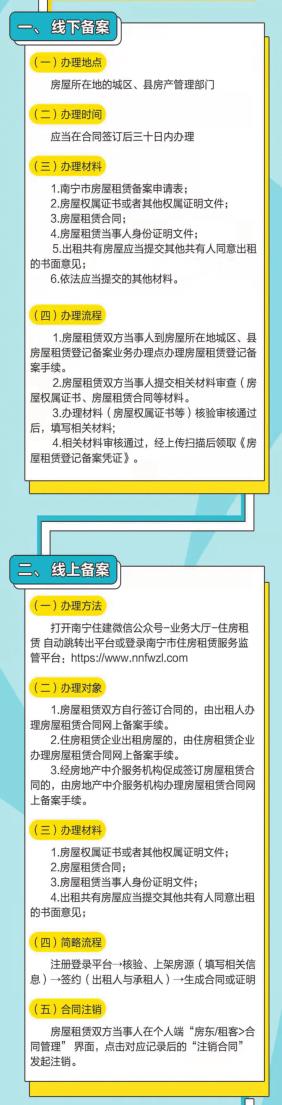
According to the Measures for the Administration of Commercial Housing Leasing, the Measures for the Administration of Housing Leasing in Nanning, and the Guiding Opinions of the Ministry of Housing and Urban-Rural Development on Further Standardizing and Strengthening the Filing Work of Housing Online Signing, it is necessary to implement the system of online signing of housing leasing contracts. The parties to the house lease shall file the house lease contract through the online signing filing system. It shall, within 30 days after the signing of the contract, go to the county or urban real estate management department where the leased house is located to handle the house lease registration and filing. You can entrust others in writing to handle the housing lease registration for the record. It is reported that the housing lease in Nanning implements the registration and filing system, and the lessee can choose offline filing or online filing.

Special reminder: offline filing can be handled in the housing rental management department in the jurisdiction where it is located, and the processing time should be handled within 30 days after the contract is signed. The materials to be handled mainly include: Nanning housing lease filing application form, housing ownership certificate or other ownership certificates, housing lease contract, identity certificates of parties involved in housing lease, written opinions of other co-owners agreeing to lease the shared housing, and other materials that should be submitted according to law.

The benefits of filing a lease guarantee many basic rights and interests.

Why do you want to apply for lease filing in Nanning? What are the benefits of filing a lease? For individuals (families), it has many benefits to register and put on record the house lease, which can not only verify the identity of both parties to the lease and the authenticity of the property right of the leased house, but also serve as one of the evidences in case of a house lease dispute, which is conducive to protecting the legitimate rights and interests of both parties to the lease. Not only that, it can also be used as the basis for the lessee to handle basic public services such as residence permit, compulsory education for school-age children, social security, basic medical security, and provident fund withdrawal. In addition, when handling the housing lease filing through the Nanning housing lease service supervision platform, the system will automatically identify the information of the personnel involved in the transmission. When the lessee is identified as being suspected of being involved in the transmission, the system will automatically terminate the application for the housing lease filing business, and timely feed back the early warning information to the lessor and the municipal communication office.

In terms of monetary subsidies for public rental housing, eligible individuals (families) who have leased for the record can also apply for monetary subsidies, that is, non-low-income families and individuals who have obtained Nanning’s effective public rental housing security qualification but have not been allocated rent in kind, and live in the urban planning area of this city can apply for monetary subsidies for public rental housing ranging from 91 to 600 yuan per month.

In addition, people from outside the city who are eligible for lease filing can also apply for household registration in this city and settle in Nanning. In the conditions of urban settlement in this city (including counties under the jurisdiction of the city), outsiders with legally stable residences (including leases) can apply for household registration in this city, and legally stable residences include leased houses that have obtained the Certificate of Housing Lease Registration and Filing; You can also enjoy the right to withdraw the provident fund.

For enterprises, the "Measures for the Administration of Special Financial Funds for Supporting the Development of Housing Leasing Market in Nanning" clearly stipulates that, first, after the housing of enterprises completes the lease filing, eligible enterprises can be awarded certain awards. If the intermediary agency, custody or self-management houses are put on record by signing the contract online on the government leasing platform, subsidies will be given according to each set (room) of 50 yuan. Second, during the pilot period, if the operation is selected as a demonstration enterprise through evaluation, the total reward amount will reach 5 million yuan, and the enterprises participating in the evaluation must complete the registration on the government leasing platform. ?

How to handle the housing lease filing in Nanning? Please pay attention to the following guidelines.

Handling place and contact telephone number

Room 506, 5th Floor, Qingxiu Building, No.68 Dongge Road, Qingxiu District 0771-5843683

Office 803, 8th Floor, Housing and Construction Bureau, No.63 Xiangzhu Avenue, Xingning District 0771-3290722

Room 0214, Floor 2, Building B, Administrative Office Building of Jiangnan District People’s Government, No.19 Zhuangjin Avenue, Jiangnan District, 0771-4950493

Office No.3, Floor 2, Building 23, Jinshuiwan Garden, No.1-51 Luban South Road, Xixiangtang District 0771-3145603

Hall 0771-4928537, 1st floor, No.20 Dezheng Road, Dashatian, Liangqing District

House Management Office, 2nd Floor, Yongning District Housing and Urban-Rural Development Bureau, No.196 Xianhu Avenue East, Yongning District 0771-4792631

Window of Housing and Construction Bureau of Wuming District Government Affairs Service Center at the intersection of Biaoying Road and Dani Road in Biaoying New District, Wuming District 0771-6231154 0771-6219810

Window No.8, Floor 2, Torch Building, No.1 Binhe Road, High-tech Zone 0771-5816892

The B3 and B4 podium buildings of Green Harbor International Center, No.39 Zhuangjin Avenue, Economic Development Zone, 0771-4515030, the comprehensive window of the government affairs service hall of Economic Development Zone.

Window 6, Government Affairs Service Center, No.37 Wuhua Avenue, Guangxi-ASEAN Economic Development Zone 0771-6336902

Xingning district various subdistrict business banlidian

Chaoyang Sub-district Office Xiutian Road No.2 Office (603) 0771-2432357

Party-mass Service Center, 6th Floor, Minsheng Sub-district Office, G1 Building, Wan Li Automobile Parts City, No.298 Wangzhou Road, Minsheng Sub-district Office 0771-4736410

Xingdong Sub-district Office No.103 Xiuxiang Avenue, Xingning District 0771-3189672

Santang Town Government Santang Town Village Construction Comprehensive Service Center (opposite Sitang Agricultural Machinery Gas Station) 0771-5821329

Wutang town government village construction integrated service center 0771-4229230

301 0771-4257025, 3rd Floor, Kunlun Town Rural Construction Comprehensive Service Center, No.2 Jiutang Street, Kunlun Town, Kunlun Town Government

Malicious fee deduction, privacy theft … Attention! These 10 apps are "toxic"
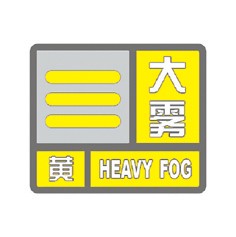
  Xinhua News Agency, Tianjin, June 16 (Reporter Zhang Jianxin) The National Computer Virus Emergency Response Center recently found through Internet monitoring in the "Net 2019" special action that ten illegal and harmful mobile applications exist in the mobile application publishing platform, and their main hazards involve malicious fee deduction, privacy theft and gambling.

  These illegal and harmful mobile applications are as follows:

  1. Three mobile applications, Calendar (version 1.0), Avatar Bar (version 1.0) and Pictu (version 2.9.1), subscribe to various charging services without users’ knowledge or authorization, and have the property of malicious fee deduction.

  2. Ramadan Wallpapers (version 1.1), Charge and Sync Dock Reviews (version 1.0) and MayDayOnAir (version 2.0.6) obtain personal information of users without their knowledge or authorization, which has the property of privacy theft.

  3. Dehui Technology (version 1.2), Temi Technology (version 1.2), Tianhui Kindergarten Parents (version 1.2), and Competitive Happy Card — Boutique Games (Version 1.0) These four mobile applications are related to gambling, and gambling activities involving gambling funds are carried out in the form of betting points, playing cards and gambling, which is suspected of breaking the law and making users have property risks.

  In view of the above situation, the National Computer Virus Emergency Response Center reminds the majority of mobile phone users not to download these illegal and harmful mobile applications first to avoid unnecessary security threats to the mobile phone operating system. Secondly, it is suggested to turn on the "real-time monitoring" function of the anti-virus mobile application in the mobile phone to actively defend the operation of the mobile phone, so as to monitor the intrusion activities of unknown viruses in the first time.

Ge Junbo: past lives of Domestic Heart Stent.

Heart stent is called one of the greatest inventions in contemporary cardiology, and tens of millions of heart patients around the world have been reborn. However, at the beginning of the 21st century, imported metal coronary stents monopolized the market, and the high price discouraged many patients.

Ge Junbo believes that doctors have the responsibility and obligation to save some money for patients so that they can get effective treatment. In order to enable most patients with coronary heart disease to afford stents, in 2000, Ge Junbo and his team began to study domestic cardiac stents with independent intellectual property rights.

In December 2005, the first generation of drug-eluting stents in China was successfully developed. Its appearance broke the monopoly of imported stents, greatly reduced the price of stents, and enabled more than 100,000 patients to afford stents every year, saving patients and the country about 1.2 billion yuan in medical expenses.

This success didn’t stop Ge Junbo’s team. In order to develop a completely absorbable stent, Ge Junbo’s team spent eight years concentrating on research, and finally found that a biomaterial of polylactic acid has the possibility of being made into a coronary stent.

In May 2013, Ge Junbo team submitted the test results to china food and drug administration and began to apply for clinical research.

On September 7th, 2013, the first fully bioabsorbable stent in China was successfully implanted in a patient.

In May, 2015, Ge Junbo was invited to give a report at an international conference on innovative stents, which was a strong international voice of the new stents with independent intellectual property rights in China. The birth of completely bioabsorbable stents enhanced China’s international competitiveness in this industry, and also made China’s medical device products develop from "Made in China" to "Made in China".

On March 4, 2020, the domestic bioabsorbable heart stent was officially approved for marketing.

Academician Ge Junbo said: "We have met the best time, which allows each of our researchers to show their talents and turn their ideals into reality."

In this programme, Ge Junbo, academician of China Academy of Sciences and director of the Department of Cardiology, Zhongshan Hospital affiliated to Fudan University, will tell you about past lives, a domestic heart stent.

The second episode of the fourth chapter "Medical Care in Great Countries" of "Medical Care to the Party" was broadcast on CCTV-12 Lifeline at 12: 00 on August 17th, and was jointly released by Learning Powerful Countries, communist party Net, CCTV Video, CCTV, CCTV Video, China IP TV, Healthy China and Health News. Please watch.

Audit Commission: Zhejiang and other four provinces borrowed 15.35 billion yuan through illegal guarantees.

  The picture shows Auditor-General Liu Jiayi at the 21st meeting of the 12th the NPC Standing Committee on June 29th.

   Xinhua News Liu Jiayi, Auditor-General of the National Audit Office, today (June 29th) gave a report on the audit of the implementation of the central budget and other financial revenues and expenditures in 2015 to the 21st session of the 12th the National People’s Congress Standing Committee (NPCSC) (hereinafter referred to as the audit report). The audit report pointed out that in 2015, local government debts of 11 provinces, 10 cities and 21 counties were audited. By the end of 2015, the balance of government debts of 11 provinces was 820.2 billion yuan, and the balance of contingent debts was 1,097 billion yuan.

   The audit report pointed out that some areas still violate the rules or borrow in disguise. Spot checks show that by the end of 2015, four provinces, including Zhejiang, Sichuan, Shandong and Henan, had a debt balance of 15.35 billion yuan through illegal guarantees, fund-raising or promised repayment.

   The audit found that some hidden debts appeared in some places. Four provinces, including Inner Mongolia, Shandong, Hunan and Henan, agreed to pay the construction funds in the name of government purchasing services in the entrusted construction projects, involving financing of 17.565 billion yuan; Among the 23.594 billion yuan of funds raised by the four provinces of Zhejiang, Henan, Hunan and Heilongjiang in infrastructure construction, there are different degrees of government commitments to buy back social capital and solidify income.

   The full text of the report is as follows:

  The State Council about2015Annual audit report on the implementation of the central budget and other financial revenues and expenditures

  — — At the 21st meeting of the 12th the NPC Standing Committee on June 29th, 2016,

  Auditor-General Liu Jiayi

  The NPC Standing Committee:

  Entrusted by the State Council, I report to the National People’s Congress Standing Committee (NPCSC) on the audit of the implementation of the central budget and other financial revenues and expenditures in 2015, for your consideration.

  According to the Audit Law and relevant laws and regulations, the National Audit Office audited the implementation of the central budget and other financial revenues and expenditures in 2015. In accordance with the spirit of the Fifth Plenary Session of the 18th CPC Central Committee and the arrangements of the CPC Central Committee and the State Council on economic work, the audit work focuses on promoting the implementation of major policies and measures, insisting on auditing according to law, being objective and realistic, encouraging innovation, and promoting reform, carefully distinguishing unintentional negligence from knowingly committing crimes, work mistakes from dereliction of duty, exploring practice and abusing power for personal gain, seriously exposing major problems that harm the interests of the masses, violate major disciplines and laws, and fail to perform major duties, and promptly revealing major potential risks. Focusing on structural and institutional issues, it mainly audited the central financial management, budget implementation and final accounts, local government debt, poverty alleviation and other key funds and projects, the implementation of major policy measures, and financial institutions and central enterprises.

  In 2015, under the strong leadership of the CPC Central Committee and the State Council, all departments and regions conscientiously implemented the resolutions of the Third Session of the 12th National People’s Congress, actively responded to complex situations, overcame multiple difficulties, and made new achievements in economic construction and social development. Overall, the implementation of the central budget is good.

  — — Economic development is progressing steadily, and it is good in stability. Facing the downward pressure of the economy, we innovated the way of regulation and control, accelerated structural adjustment and innovation drive, and promoted regional coordinated development and new urbanization. The GDP increased by 6.9%, and per capita disposable income grew faster than the economic growth rate, with 13.12 million new jobs in cities and towns and 14.42 million rural poor people reduced.

  — — A proactive fiscal policy will increase efficiency. Efforts were made to optimize the structure, revitalize the stock, make good use of the increment, increase tax reduction and fee reduction, and expand effective investment. The revenue and expenditure of the central general public budget increased by 7.1% and 8.4% respectively. We will deepen decentralization, combine decentralization with management, optimize service reform, cancel or suspend the collection of 57 central-level administrative fees, and streamline the pre-approval of industrial and commercial registration by 85%.

  — — Fiscal and tax reform has been steadily advanced. Study and promote the reform of the division of powers and expenditure responsibilities between the central and local governments, and improve the transfer payment system. We will promote the pilot reform of the camp, expand the scope of ad valorem collection of resource taxes, and all the increase in export tax rebates will be borne by the central government. Establish a standardized local government debt financing mechanism, incorporate debt classification into the budget, and implement quota management.

  — — Budget management is constantly standardized. We will promote the implementation of medium-term financial planning management, formulate methods for compiling comprehensive financial reports of the government, improve the system and mechanism of state-owned assets management, and improve the standard of basic expenditure quota and project expenditure management. Strict economy and strict control of general expenditures, the budget of the "three public" funds at the central level decreased by 11.7%.

  — — The accountability for rectification was further strengthened. The State Council specially deployed the rectification work of the problems identified in the 2014 annual audit, and included the supervision matters. Relevant departments, units and localities have incorporated the rectification into the special education of "three strictness and three realities", and the Audit Commission has strengthened the follow-up and supervision according to the requirements of the State Council, and the rectification effect has been the best over the years. In December 2015, the National People’s Congress Standing Committee (NPCSC) listened to the State Council’s report on rectification, and put forward deliberation opinions. Relevant departments, units and localities have earnestly implemented it, further strengthened rectification, conducted in-depth verification, implemented responsibilities and properly disposed of problems left over from history; For institutional problems, we will accelerate reform and improve the system. At present, the basic rectification has been completed, and the promotion of income increase, expenditure reduction and loss recovery has increased to 608.3 billion yuan, and 5,947 systems have been formulated and improved, handling more than 5,500 people.

  Judging from this year’s audit, the relevant departments, units and local governments have further enhanced their awareness of financial discipline and deepening reform, and have been able to implement the decision-making arrangements of the CPC Central Committee and the State Council, promote reform and innovation, and significantly improve the level of financial management and the performance of fund use. However, there are still problems of violating discipline and violating the law and irregular management in some areas, especially in some aspects, the institutional mechanisms are not perfect, laws and regulations and operating rules are not adjusted in time, and there are problems such as poor information transmission, insufficient coordination of measures, and unsuitable supervision, which affect the implementation of relevant policies and measures.

  I. Audit of the draft central final accounts and budget implementation

  (1) Audit of the draft final accounts of the central government. According to the provisions of the Budget Law, the National Audit Office audited the draft final accounts of the central government prepared by the Ministry of Finance before it was submitted to the State Council. The draft final accounts of the central government prepared by the Ministry of Finance shows that the revenue of the central general public budget is 6,926.719 billion yuan and the expenditure is 8,063.966 billion yuan. The revenue of government funds was 411.819 billion yuan and the expenditure was 436.342 billion yuan; The operating income of state-owned capital was 161.306 billion yuan, and the expenditure was 136.257 billion yuan. Compared with the implementation reported to the National People’s Congress, the final accounts of general public budget revenue are 3.32 billion yuan more, and the final accounts of expenditure are 9.034 billion yuan less; The final accounts of government fund income (including local income) are more than 1.229 billion yuan, and the final accounts of expenditure are more than 700 million yuan; The final accounts of state-owned capital operating income are 14 million yuan more, and the final accounts of expenditure are 290 million yuan more. The above-mentioned income and expenditure difference is mainly based on the adjustment made by the cleaning results during the final settlement period. The main problems found in the audit:

  1. No changes in budget levels were reported. Including: adjusting the central level expenditure of 10.124 billion yuan to the local transfer payment expenditure, and adjusting the local transfer payment expenditure of 26.252 billion yuan to the central level expenditure. After the audit pointed out, the Ministry of Finance has made a report on the budget level adjustment of major subjects in the draft final accounts.

  2. The presentation of some income is not comprehensive enough. Mainly, 93.748 billion yuan of value-added tax and consumption tax has been refunded to software and resources comprehensive utilization enterprises according to regulations, which is not reflected in the draft final accounts. After the audit pointed out, the Ministry of Finance has added supplementary explanations to the draft final accounts.

  3. According to the facts, the settlement matters are not standardized. Mainly because the scope and standards of application are not clear, some liquidation periods are too long or the liquidation is not timely, and some use the funds over-allocated in the previous year to offset the expenditures of the current year. For example, in 2015, the agricultural and forestry insurance premium subsidies of 2.52 billion yuan over-allocated in the previous year were directly used to offset the expenditures that should be arranged in the current year.

  4. Failing to report the performance of financial funds as required. The main reason is that the relevant policy contents and performance targets are not reported in the budget, and the realization of relevant performance targets is not reported in the draft final accounts.

  (2) Financial management audit. The audit focused on budget allocation and management, capital security and performance, fiscal policy implementation and fiscal and taxation reform. In 2015, the Ministry of Finance, the Development and Reform Commission and other departments seriously organized and implemented a proactive fiscal policy, increased the overall use of fiscal funds, innovated the investment and financing system, accelerated the progress of budget implementation, and further standardized budget and investment management. The main problems found in the audit:

  1. The overall coordination of budget arrangement is not in place.

  First, there is not enough convergence between budget allocation and project determination, and some projects are lagging behind. In recent years, the proportion of the general public budget has been increasing at the beginning of the year, but in 2015, the central level project expenditure and special transfer payment were 205.275 billion yuan (accounting for 13%) and 677.83 billion yuan (accounting for 38%), respectively, which have not been implemented by departments or regions at the beginning of the year; The proportion of investment in the central budget refined to regions at the beginning of the year also needs to be improved. During the budget implementation, there are 12.061 billion yuan of projects that have not been determined or have no implementation conditions when the budget is issued, which affects the timely use of funds, of which 1.02 billion yuan from three departments is added to the balance by the end of the year; 2.7 billion yuan to support the protection of 900 traditional villages was distributed to 30 provinces in April 2015, and only 491 villages (55%) were identified in that year.

  Second, there is insufficient connection between budget allocation and special planning, and there is also a lack of overall coordination between some special planning. Spot check on the implementation of the Twelfth Five-Year Plan for water pollution prevention and control in key river basins in 18 provinces shows that 1,684 projects (accounting for 44%) included in the plan of 9 provinces were not subsidized by the central government, while 2,135 projects (equivalent to 63% of the planned projects) in 7 provinces were subsidized. Some budgets allocate funds according to multiple plans, and these planning objectives are not consistent, which is not conducive to the orderly progress of the project. For example, nine special arrangements of the central government have subsidies related to high-standard farmland construction, and there are only four national plans in the plans on which the budget is allocated.

  Third, there is insufficient connection between budget allocation and system regulations, and some special projects have no management methods or relevant regulations are not clear enough. When the Development and Reform Commission allocated 85 special projects to subsidize local investment, 32 were based on management measures, 33 were based on special plans, 8 were based on implementation plans, and others were based on internal signing and notification. The three special management measures, such as the transformation of weak schools in rural compulsory education allocated by the Ministry of Finance, are only stipulated in principle, and the actual allocation is discussed one by one. Some systems are not strictly implemented. The Development and Reform Commission allocated 78.48 million yuan in subsidies for three special investment projects, including the construction of cultural facilities at the municipal level, which exceeded the scope, application and standards.

  Fourth, the division of several budgets is not clear enough, and some projects are cross-arranged. Among them: for 53 projects in three departments, the government fund budget and the general public budget are 26.806 billion yuan and 2.946 billion yuan respectively; The government fund budget and the general public budget are 5.419 billion yuan and 380 million yuan respectively for the universal service of telecommunications and the renovation of venues for minors’ off-campus activities.

  2. The transfer payment system needs to be improved.

  First, some general transfer payments still have designated purposes. In 2015, general transfer payments accounted for 57% of local transfer payments, down 2 percentage points from the previous year, of which 1.35 trillion yuan was earmarked, and only 52% of local transfer payments could actually be coordinated, especially 25% of balanced transfer payments were also earmarked. The Ministry of Finance should accelerate the reform of transfer payment and prevent the general transfer payment from being "specialized".

  Second, the multi-head management of special transfer payment needs to be improved. There are 52 special transfer payments actually broken down into 301 specific items, most of which are still allocated according to the original channels and original management methods. The spot check of the special agricultural comprehensive development was actually decomposed into 13 specific items, of which 3 were allocated by the Ministry of Finance and 10 were allocated by the Ministry of Finance in conjunction with other five departments; The special project to guide the development of local science and technology has integrated the two special projects allocated by the two departments of the Ministry of Finance, but they are still allocated by the two departments according to the original two management methods.

  Third, the management of special transfer payment is weak. Mainly because there are many distribution links and long management chains, the situation of "small, scattered and chaotic" has not been changed for a long time. Among the special subsidies for the construction of revolving dormitories in 5,806 township health centers arranged by the Development and Reform Commission in 25 provinces, a single project is only 50,000 yuan; Of the 41 projects that were randomly selected for central investment subsidies, 13 received subsidies of 86.37 million yuan by using false information and illegal multi-head declarations; Among the subsidies for agriculture, forestry and water affairs in 69 counties, 1.383 billion yuan (accounting for 5%) was defrauded, occupied or wasted. For example, an insurance company in Lixian County, Hunan Province colluded with 29 township governments to defraud 40.6103 million yuan from 2013 to 2015 through false insurance, false reporting and false claims settlement, and the township government made a profit of 1677 through "return".

  3. Financial management performance needs to be further improved.

  First, some budget arrangements do not fully consider the carry-over balance. The Ministry of Finance continued to compile a budget of 1.006 billion yuan for three projects, including renewable energy development with an implementation rate of less than 60% for two consecutive years, and carried over 889 million yuan (accounting for 88%) at the end of the year; In the case that five projects, including the management of national tax system, carried over 142 million yuan last year, another 131 million yuan was budgeted, and the carry-over increased to 196 million yuan at the end of the year.

  Second, the implementation progress of some budgets is slow. Among the transfer payments arranged in the general public budget, government fund budget and state-owned capital operation budget, 293.47 billion yuan (accounting for 6%), 95.901 billion yuan (accounting for 71%) and 12.43 billion yuan (accounting for 100%) were not issued within the prescribed time limit respectively. The slow progress of some projects has caused a large amount of funds to be carried forward, and the balance of 18 projects with special subsidies for the development of the central cultural industry was 199 million yuan at the end of the year (accounting for 83% of the total subsidies); Of the 42 central departments randomly selected, 6 departments and 3 subordinate units had a balance of 2.695 billion yuan carried forward by the project at the end of the year, and another 177 million yuan was transferred to the project unit through appropriation instead of expenditure.

  Third, some tariffs and import and export link taxes are not collected in time. Because the customs, banks and treasury are not fully networked, paper tax bills are written off, and the scale of tax withholding is increasing year by year. In 2015, 19.468 billion yuan of tax was withheld for more than 15 days. Spot-check of 23 customs areas found that there were 281 enterprises whose deposits that should be converted into taxes were overdue for 709 million yuan, with an average overdue of 38 days, of which 10.7071 million yuan was overdue for 3 months.

  Fourth, the scope of financial authorization payment is not detailed enough. Mainly, the Ministry of Finance classifies the goods and services expenditure in basic expenditure and the non-government procurement expenditure of goods and services in project expenditure as authorized payment, which not only increases the handling fee expenditure, but also is not conducive to ensuring the safety of funds. A spot check of 83.486 billion yuan of authorized payment found that the handling fee to the correspondent bank was equivalent to 22 times of the handling fee under the direct payment method; 6.845 billion yuan of financial funds were illegally transferred to the actual fund account by the budget unit, which was out of financial supervision.

  (three) the audit of the budget implementation of the central department. Forty-two central departments and 241 subordinate units were audited, and the financial expenditure budget was 189.162 billion yuan, accounting for 36% of the total expenditure budget of these departments. Generally speaking, these departments can conscientiously implement the budget, strictly control and reduce the "three public" funds, strengthen the management of carry-over surplus funds, improve the financial and budget management system, and strive to improve the performance of the use of financial funds, and the budget implementation is good. The main problems found in the audit:

  1. Illegal withdrawal and use of funds still occur from time to time. Mainly: the Ministry of Justice, the Environmental Monitoring Institute of the Ministry of Land and Resources, the Nuclear and Radiation Safety Center and other six affiliated units obtained financial funds of 66,945,900 yuan through repeated declaration of projects or overstatement of the number of people; Seven departments, including the Ministry of Education, the Development and Reform Commission and the People’s Bank of China, and 37 affiliated units, including China Academy of Water Resources and Hydropower Research and China International Electronic Business Center, have not included 924 million yuan in departmental budget management. For example, Kunming Customs has deposited 11,979,500 yuan from the disposal of smuggled goods outside the account for business expenses and welfare. In addition, we also found that the final accounts of completion were not handled in time and the government procurement was not standardized, involving an amount of 6.133 billion yuan.

  2. The budget guarantee measures of public institutions are not clear enough. Mainly, it is common that basic expenditures crowd out project expenditures and personnel funds crowd out public funds. From 2014 to 2015, 19 institutions, such as Satellite Environment Application Center and Market Research Center of the State Administration for Industry and Commerce, crowded out 236 million yuan of supplementary personnel funds such as project expenditures and public funds, and some units’ personnel funds exceeded the financial allocation by nearly four times.

  3. Some departments and subordinate units use departmental power or influence to obtain income. Mainly: the Ministry of Civil Affairs, the Chinese Society of Environmental Sciences, and the Information Center for Senior Talents illegally carried out activities such as reaching the standard of appraisal or qualification examination, from which they charged 13.5148 million yuan; Seventeen affiliated units, such as China Communications Information Center, China Construction Industry Association, and Central United (Beijing) Certification Center, received 578 million yuan in consulting services from participating units while being entrusted by departments to carry out activities such as evaluation, appraisal and reaching standards. Among them, the Scientific Research Institute of the Ministry of Transport received 16.309 million yuan in the name of technical services when it was entrusted with the evaluation, technical guidance and acceptance review of the title of "transit metropolis".

  4. Some departments and units have not fully implemented the management systems of "three public funds" and conference fees. All departments attach importance to strengthening the management of "three public funds" and conference fees, and the number of violations has been significantly reduced. The main problems found in this audit:

  First, going abroad on business. Mainly: 8 units, such as the Study Abroad Service Center of the Ministry of Education and the China Chamber of Commerce for Import and Export of Mechanical and Electrical Products, illegally organized 5 trans-regional and inter-departmental groups, and 8 groups with problems of changing routes or extending time; Four departments and 11 affiliated units charged or passed on expenses for going abroad (territory) of 3,844,200 yuan without budget or over budget, including 1,140,700 yuan from CBRC and 924,600 yuan from All-China Women’s Federation.

  The second is the official car. Mainly: four subordinate units, such as the Service Bureau of the Ministry of Commerce, the China-Japan Friendship Environmental Protection Center and china population communication center, occupied 9 vehicles of other units for a long time without compensation, and three departments, such as the State-owned Assets Supervision and Administration Commission, failed to clear and hand over 10 official vehicles in time; There are problems in 20 affiliated units, such as the operating expenses of official vehicles exceeding the budget and the purchase of official vehicles exceeding the standard, involving an amount of 6,232,700 yuan, including 1,255,600 yuan for three affiliated units of the Ministry of Land and Resources and 598,000 yuan for two affiliated units of the Ministry of Civil Affairs.

  The third is official reception. Mainly, 3 departments including the General Administration of Customs and 16 subordinate units such as China Youth Travel Group Corporation and National Culture Palace charged 2,409,800 yuan for exceeding the standard and passed on the reception fee. In addition, the disposal methods of consumer goods such as drinks purchased before the promulgation of the eight central regulations and other documents are not clear.

  The fourth is the conference fee. Mainly: 3 departments and 21 affiliated units spent 16.511 million yuan on meeting expenses, including 10.8184 million yuan from China Nonferrous Metals Industry Association and 577,900 yuan from China Academy of Agricultural Sciences; Four departments and 20 affiliated units held 263 meetings in non-designated hotels outside Beijing, including 248 affiliated units of the Ministry of Transport. Three departments and three affiliated units were paid 924,700 yuan by other units, including 324,600 yuan by the National Library and 190,800 yuan by the Ministry of Housing and Urban-Rural Development.

  The relevant departments are actively rectifying the above problems, and have turned over 84.9684 million yuan to the state treasury, recovered or refunded 89.1692 million yuan, and adjusted the accounts by 2.313 billion yuan.

  Second, the key special audit situation

  (a) the local government debt audit. The audit focused on 11 provinces, 10 cities and 21 counties. Judging from the audit, relevant departments and localities have established and improved debt financing and risk early warning mechanisms, improved relevant systems, and further strengthened government debt management. By the end of 2015, the government debt balance of 11 provinces at the same level was 820.2 billion yuan, or the contingent debt balance was 1,097 billion yuan. The main problems found in the audit:

  1. Some local debt financing has not been effectively used. Spot checks found that by the end of 2015, among the replacement bonds issued by six provinces including Heilongjiang, Shandong, Hunan, Beijing, Inner Mongolia and Guangdong, 13.84 billion yuan (2%) was not used in time, mainly due to the failure to reach an early repayment agreement or the delay in repayment procedures; Among the replacement bond financing used in Hunan, Shandong, Henan and Guangdong provinces, 11.257 billion yuan (2%) failed to repay the debt according to the prescribed priority; Among the new bond financing in Inner Mongolia, Zhejiang and Hunan provinces, 2.423 billion yuan (4%) has not been used because the project has not been implemented.

  2. Some areas still violate the rules or borrow in disguise. Spot checks show that by the end of 2015, four provinces, including Zhejiang, Sichuan, Shandong and Henan, had a debt balance of 15.35 billion yuan through illegal guarantees, fund-raising or promised repayment. In some places, there are some hidden debts. Four provinces, including Inner Mongolia, Shandong, Hunan and Henan, agreed to pay construction funds in the name of government purchasing services, involving financing of 17.565 billion yuan. Among the 23.594 billion yuan of funds raised by the four provinces of Zhejiang, Henan, Hunan and Heilongjiang in infrastructure construction, there are different degrees of government commitments to buy back social capital and solidify income.

  In response to the above problems, relevant departments are studying to strengthen debt management, and relevant places are actively rectifying.

  (2) Audit of poverty alleviation funds. The distribution, management and use of poverty alleviation funds were audited, and 40 counties in 17 provinces were selected. From 2013 to 2015, these 40 counties received 10.998 billion yuan of financial poverty alleviation funds and audited 5.013 billion yuan (accounting for 45%), involving 364 townships, 1,794 administrative villages and 3,046 projects. Judging from the audit, these places have conscientiously implemented the relevant requirements of poverty alleviation work, vigorously implemented precision poverty alleviation and precision poverty alleviation, continuously increased investment in poverty alleviation and development, strengthened the management of poverty alleviation funds, and promoted poverty alleviation projects in an orderly manner, achieving positive results. The main problems found in the audit:

  1. Part of the allocation of funds did not fully consider the situation of poverty-stricken people who established the card. Some poverty alleviation funds allocation has not yet established an effective linkage mechanism with the data of poverty-stricken population with the establishment of the file card. In the implementation of specific poverty alleviation projects, some places have not strictly screened the poverty-stricken objects according to the prescribed conditions. Of the 1,339 poverty-stricken household discount loans of 65.6 million yuan issued by Xundian County in Yunnan Province in 2015, only 711 loans of 34.33 million yuan (accounting for 52%) were issued to poor households with the file card.

  2. 151 million yuan of poverty alleviation funds were falsely reported or used illegally. Among them: 59 units and 28 individuals in 29 counties falsely claimed or defrauded 55.7313 million yuan of poverty alleviation funds by forging contracts, fabricating household subsidy payment forms, repeating declarations, and recording false invoices; The finance, poverty alleviation departments of 14 counties, township governments and village committees illegally used 60.9135 million yuan for non-poverty alleviation areas such as balanced budget, municipal construction and hotel renovation; 25 units in 17 counties used 21.9478 million yuan to make up for business expenses and distribute benefits; Seven units illegally collected 12,493,600 yuan of project promotion fees in poverty alleviation work, which was mainly used to make up for the funds.

  3. 870 million yuan of poverty alleviation funds are idle or wasted. Because the overall integration is not in place, the poverty-stricken counties that have been spot-checked receive more than 200 special subsidies from their superiors every year, and the least single project is only 4,800 yuan; Of the 5.013 billion yuan poverty alleviation funds randomly selected, 843 million yuan (accounting for 17%) had been idle for more than one year by the end of March 2016, of which 260 million yuan had been idle for more than two years, the longest being more than 15 years; After the completion of 29 poverty alleviation projects in 17 counties, they were abandoned, idle or failed to achieve the expected results, resulting in a loss of 27.0611 million yuan.

  After the audit pointed out the problems, the relevant localities have recovered 14.226 million yuan of funds and recovered 69.8159 million yuan of idle funds.

  (3) Follow-up audit of affordable housing projects. Judging from the national audit, in 2015, the financial investment at all levels in urban affordable housing projects and rural dilapidated housing renovation increased by 17% and 40.6% respectively over the previous year; The number of families enjoying housing security benefits and the number of rural dilapidated houses that have been renovated increased by 17% and 62% respectively, effectively improving the living conditions of urban and rural residents. The main problems found in the audit:

  1. The implementation of relevant policies is not in place. In terms of subsidies and treatment distribution, 48,500 non-poor or subsidized families received subsidies of 424 million yuan for the renovation of dilapidated houses in rural areas; There are 58,900 unqualified urban families who enjoy 60,462,500 yuan of affordable housing subsidies and 37,700 sets of housing. In terms of fiscal and taxation financial support policies, 891 projects failed to enjoy tax relief of 2.249 billion yuan as required; There are 25.8 billion yuan of financing, such as shed reform loans, which are charged intermediate fees or do not enjoy preferential interest rates. In addition, the implementation of the green channel policy is not in place, and the supervision is not strict. There are 4,287 projects in 1,339 cities and counties (accounting for 29% of the spot check projects) with problems such as unapproved construction, illegal land occupation, and failure to bid according to law.

  2. There are more than 140 units and more than 180 compensation objects to defraud financial funds. Among them, 41 grass-roots agencies and some village and town cadres defrauded and occupied 14,483,800 yuan of subsidies for the renovation of dilapidated houses in rural areas by falsely claiming, withholding or collecting "deposits"; 184 families and 3 units defrauded the compensation for land acquisition and demolition of 96.1788 million yuan by fabricating property rights information; 102 units took financial funds of 455 million yuan by overstating the number of households, repeating declarations and fabricating the roster of farmers.

  3. There are 866 cities and counties with problems such as idle funds or insufficient housing utilization. The audit found that by the end of 2015, 748 cities and counties had carried over a total of 60.355 billion yuan of special funds (equivalent to 3% of their investment in that year), of which 47.86 billion yuan had been idle for more than one year; There are 190,000 sets of affordable housing that cannot be delivered in time due to the lag in supporting infrastructure construction, and 6,544 sets of housing are illegally sold or leased.

  After the audit pointed out the problems, the relevant localities have used 933 million yuan of funds as a whole, recovered 118 million yuan, refunded 106 million yuan of overcharged taxes and fees, cancelled or adjusted 15,000 households, cleared, recovered and allocated 7,231 sets of housing, and handled 352 people.

  (four) the audit of industrial injury insurance fund. The 17 provinces audited were able to implement the relevant national requirements, continuously expand the coverage of insurance coverage, and strive to safeguard the rights and interests of employees. However, in some places, the implementation of policies is still not in place, and there are still weak links in fund distribution and management. The spot check found that 170,000 units failed to apply for work-related injury insurance for 1,149,500 employees, and 103,600 "old work-related injuries" in six provinces have not been included in work-related injury insurance; 141 million yuan of funds were fraudulently obtained, illegally distributed and used, among which 17 medical rehabilitation institutions and 441 people fabricated information to defraud or impersonate 68.4776 million yuan of funds, 63 agencies and relevant units illegally distributed insurance benefits of 16.6208 million yuan to 809 people, and also used 55.9671 million yuan for personnel and office expenses. In addition, problems such as irregular financial management were found to be 245 million yuan. After the audit pointed out the problems, the relevant localities recovered 60.306 million yuan of funds, and corrected the irregular financial management problems involving 11.07 million yuan.

  (five) the prevention and control of water pollution and the audit of related funds. The 18 provinces audited have continuously increased investment and actively promoted the construction of water pollution prevention and control projects. In the past five years, the water quality of key state-controlled and provincial-controlled sections in the region has increased by 33 percentage points and decreased by 32 percentage points. The main problems found in the audit:

  1. Regional water environmental protection pressure is greater. Sampling 23 cities and counties along the Yangtze River Economic Belt, 12% (400 million tons per year) of urban domestic sewage is discharged directly into the Yangtze River without treatment; Among the 373 ports along the Yangtze River, 359 (96%) are not equipped with ship garbage receiving points, and 260 (70%) are not equipped with pollution emergency treatment facilities. Among 231 urban and rural centralized drinking water sources sampled from 89 cities and counties, 124 (53%) water quality monitoring indicators were not up to standard; Of the 72 groundwater sources, 27 (37%) are over-exploited.

  2. 397 projects failed to achieve the expected results. By the end of 2015, of the 883 water pollution prevention and control projects sampled, 276 (31%) failed to start (finish) work on schedule due to insufficient preliminary preparation and imperfect supporting facilities; There are 121 completed projects (accounting for 13%) that failed to bring benefits into play in time.

  3. 17.621 billion yuan of financial funds have not been effectively used. By the end of 2015, 14.359 billion yuan of central special subsidies had been deposited in local financial departments, of which 422 million yuan had been stranded for more than two years; Of the project funds, 2.928 billion yuan is idle in local authorities and project units, of which 940 million yuan has been idle for more than 3 years; Another 334 million yuan was illegally taken or lost.

  In response to the above problems, the relevant localities accelerated the implementation of 77 projects, allocated 2.345 billion yuan, revitalized and used 802 million yuan as a whole, and returned 260 million yuan.

  (six) the development, utilization and protection of mineral resources and the audit of related funds. From the audit of 1724 mining rights and related funds in six provinces, the relevant departments and localities have continuously strengthened the management of mineral resources, standardized the collection and management of related funds, and improved the level of resource protection and resource development and utilization. The audit found that the supervision and law enforcement in some places were lax, and there were 391 cases of illegal mining rights in the examination and approval, transfer or development management, among which: the land and resources department approved 88 cases of illegal mining rights; State-owned mining enterprises illegally transferred or acquired 92 mining rights and related shares; State-owned geological prospecting units or individuals involved in 104 mining rights declarations or transactions by using internal information such as geological prospecting data, and sought personal gain from them; The relevant local authorities approved the establishment of 63 mining rights in the forbidden mining area in violation of regulations, and did not make exit arrangements for 44 mining rights that existed before the establishment of the nature reserve. In addition, it was found that illegal collection and use of mining rights related funds was 3.581 billion yuan, of which 628 million yuan was used for foreign investment, lending or personnel funds. After the audit pointed out the problem, the relevant localities rectified the problem by recovering and confiscating illegal income, amounting to 990 million yuan.

  Iii. Follow-up audit on the implementation of policies and measures

  Organize audit institutions at all levels to continuously carry out follow-up audits, focusing on the implementation of policies and measures to stabilize growth, promote reform, adjust structure, benefit people and prevent risks in various departments and regions. The National Audit Office directly tracked and audited 29 provincial-level and 36 central departments, and through auditing more than 5,200 units involved in more than 80 policies in 23 aspects, it promoted 9,408 newly started and completed projects, and accelerated the approval or implementation of 9,454 projects; Accelerate the release of financial funds of 528.822 billion yuan, recover the balance of funds carried forward of 114.425 billion yuan, and integrate and coordinate the use of funds of 73.21 billion yuan; Promote the cancellation, merger and decentralization of 134 administrative examination and approval items, cancel 241 professional qualifications and enterprise qualification identification, and stop or cancel 111 fees; Promote the improvement of more than 50 systems and introduce more than 20 risk prevention measures; 2,138 people were dismissed and suspended for inspection, and more than 90 people were transferred to discipline inspection and supervision and judicial organs for investigation. The audit found that there are some problems worthy of attention in the implementation of policies and measures:

  (1) The establishment and improvement of institutional rules in some areas need to be accelerated. In terms of system, laws and regulations that affect the standardization of special funds clearing and integration, and require the arrangement of linking expenditures for key issues have not been adjusted in time, and the inter-domain and structural imbalance of expenditures is more prominent. The contradiction between the large funding gap in budget implementation and the coexistence of some funds lying on the account "sleeping" still exists. In terms of standards, the investment standards of agriculture-related projects are low, especially in compensation for land acquisition, demolition and resettlement. The compensation standards of some agriculture-related projects are less than half of those of railway and highway projects, which leads to difficulties in land acquisition, demolition and resettlement. In terms of assessment, the relevant incentive assessment mechanism has not yet adapted to the development requirements, and the objectives and tasks of rural drinking water safety, rural land consolidation, energy conservation and emission reduction are not completely consistent with the local actual situation.

  (2) The reform of examination and approval management of major projects needs to be accelerated. Spot check of 172 expressway construction projects in 11 provinces requires an average of 26 examination and approval procedures involving 9 departments, and an average of 22 pre-service services such as feasibility study report and industry consultation, and some items are repeatedly examined and approved by multiple departments or the same department for many times, with an average examination and approval period of 3.5 years. Regarding the problems reflected in the audit, the relevant departments conducted a special study, and 81 items of intermediary services for standardized examination and approval have been cleared up, but some factors restricting the progress of the project have not been eradicated, and some of them have been repeatedly examined and approved before and after construction; Some approvals and reviews are in a cyclical dilemma; Some have not made clear the time limit for handling after the approval and filing, which has affected the progress.

  (3) Policies and measures related to the overall integration of financial funds need to be implemented urgently. The State Council has repeatedly requested to increase the overall integration of financial funds, and relevant departments and localities have actively taken measures. The audit has continued to promote the revitalization of stocks and overall integration, and has repeatedly proposed amendments or abolishment of specific system provisions that are not suitable. The audit found that, because the management authority of special funds is scattered in different departments, the competent authorities are unwilling to integrate as a whole, for fear of losing the administrative power, for fear that the functions will be adjusted, for fear that the staffing of institutions will be reduced, and for grass-roots governments, for fear of losing special support, for fear of offending the competent authorities and for fear that the performance will be affected, it is difficult to fully implement the requirements for the overall integration of financial funds.

  (D) The role of government investment funds in supporting innovation and entrepreneurship has not been effectively brought into play. By the end of 2015, of the 13 government investment funds funded by the central government, 108.251 billion yuan (30%) remained unused. A spot check of the venture capital guidance fund found that among the 206 sub-funds approved, 39 could not be established on schedule because they did not attract social capital, and the financial funds of 1.367 billion yuan were stranded in the custody account; Of the 167 established sub-funds, 14.888 billion yuan (41%) was unused, and 14 of them had never been invested. A similar phenomenon exists in local government investment funds. A random inspection of six local funds shows that 12.4 billion yuan (66%) of the financial investment of 18.75 billion yuan has been converted into time deposits of commercial banks.

  (E) scientific research investment management mechanism does not meet the requirements of scientific and technological innovation. Tracking the implementation of policies such as auditing the construction of an innovative country, mass entrepreneurship and innovation, it is found that the management system of scientific research projects and funds is still not perfect, the scientific research funds are over-managed, the tangible cost accounts for a large proportion, the intellectual cost compensation is not enough, and the conversion rate of scientific research results is low. Judging from the spot check of the use of scientific and technological funds in 11 central departments and units, the amount of problems such as expanding the scope of expenditure and using fake invoices for reimbursement reached 317 million yuan, including the situation that invoices had to be collected everywhere to ensure necessary expenditures, and some individuals took the opportunity to defraud and obtain scientific research funds. In this regard, in recent years, the audit has continued to pay attention to it and made efforts to promote the establishment of relevant systems that conform to the laws of scientific research, are conducive to mobilizing and protecting the enthusiasm of scientific researchers, encouraging innovation and producing more results. The audit also found that there were many inspections of scientific research institutions and scientific research projects, which increased the burden on scientific research institutions. For example, from 2013 to 2015, 85 institutes affiliated to the Chinese Academy of Sciences received more than 3,500 inspections and evaluations, of which 760 were conducted in the name of "audit". During this period, the Audit Office only extended the audit of 15 institutes in the audit of departmental budget implementation of the Chinese Academy of Sciences.

  To these problems, we need to further improve the system and mechanism, and gradually solve them.

  IV. Audit of financial institutions

  Five financial institutions, including the Agricultural Bank of China, were audited, and loans from eight key commercial banks were continuously tracked. These financial institutions can implement the national macro-control policies, strengthen management and risk control, maintain steady operation, and improve their financial innovation and service capabilities. The main problems found in the audit:

  (1) The problems of difficult, expensive and slow financing in the real economy have not been effectively solved. In 2015, the financing difficulties of the real economy generally eased, but the growth rates of corporate loans, agriculture-related loans and small and micro enterprise loans were 3.64%, 6.23% and 8% respectively when the growth rate of all loans of the eight key commercial banks sampled was 9.48%. According to the survey, in order to obtain credit support, small and micro enterprises not only need to bear other expenses besides interest, but also often need to increase the guarantee and evaluation links, which prolongs the audit time and is not conducive to ensuring the capital needs of production and operation.

  (2) The risk prevention and control mechanism related to the disposal of non-performing loans and financial innovation of commercial banks is still not perfect. In 2015, the balance and NPL ratio of eight banks showed a Shuang Sheng trend. Due to the convergence of risk preference and credit investment of these commercial banks, the areas where NPL occurred tended to be concentrated; The disposal of non-performing loans needs to be strengthened. Only 33% of new non-performing loans are transferred to asset management companies in batches, and the provision coverage ratio of eight banks has declined, increasing the pressure on their own write-offs. The prevention and control of risks related to financial innovation is insufficient, and financial supervision needs to be strengthened.

  (3) The problem of illegal operation is still outstanding. The audit found that some staff of financial institutions had problems such as illegal lending, illegal insurance or bond and stock business, and 18 cases were suspected of major violations of the law; The risk prevention and control of some credit businesses needs to be further strengthened, and it is found that more than 12 billion yuan of new financing has been added to some enterprises that have been included in the national list of eliminating backward and excess capacity; After the promulgation of the eight central regulations, five financial institutions, namely Everbright Group, Agricultural Bank of China, People’s Insurance Group, China Life Insurance Group and Taiping Insurance, had 72.623 million yuan of problems such as over-standard car purchases and meetings in scenic spots.

  In response to the above problems, relevant financial institutions have rectified 20.753 billion yuan, revised and improved 103 systems, and pursued accountability for 219 times.

  V. Audit of central enterprises

  It mainly audited 10 central enterprises such as China Petrochemical, China Southern Airlines Group and Chinalco, and made spot checks on the management of some overseas businesses of central enterprises. These enterprises continue to improve the system, strengthen management, open up markets, and the scale of assets and income continues to grow. The main problems found in the audit:

  (a) the business results of enterprises are not true, and some of them violate the provisions on honest employment. The audit found that the assets, income and profits of 10 enterprises were 6.406 billion yuan, 58.582 billion yuan and 7.196 billion yuan respectively. Irregular problems in engineering construction, material procurement and investment involved 80.876 billion yuan, resulting in losses and waste of 2.084 billion yuan. After the promulgation of the eight central regulations, eight units belonging to seven enterprises, including China Electronics, China CNOOC and Hong Kong China Travel Service Group, illegally distributed subsidies of 5,912,300 yuan, involving 64 members of the unit leadership team; 70 units belonging to 10 enterprises have problems involving 1.116 billion yuan, such as illegal purchase and construction of buildings, over-standard meetings, car purchases, public travel and golf.

  (2) The accountability system and mechanism for enterprises are not perfect, and problems such as illegal decision-making are more prominent. In recent years, the audit found that enterprises were dereliction of duty, violating relevant policies and regulations, and the "three majors and one big" decision-making system caused losses. The regulatory authorities did not perform their duties of urging rectification, accountability and reporting announcements, and did not specify the standards for confirming and accountability for major losses of enterprises. They mainly relied on enterprises to pursue their own responsibilities and accountability, resulting in weak constraints, which led to repeated trials and even accumulation of some problems. Of the 284 major economic decisions made by 10 enterprises in this audit, 51 have problems such as illegal decision-making, procedural decision-making and improper decision-making, resulting in losses and waste of 12.682 billion yuan; It was found that 47 clues about major violations of discipline and law involved 29.502 billion yuan, of which 16 involved more than 100 million yuan, and 26 of the 94 responsible personnel were business leaders.

  (3) The overseas business management of the enterprise is weak. Of the 93 overseas businesses randomly selected, 62 (67%) have problems of insufficient argumentation, failure to submit for approval according to procedures, and weak control over key business links such as personnel supervision and commission payment in key positions, among which 10 clues about major violations of discipline and law have caused the risk of loss of state-owned rights and interests of 14.27 billion yuan.

  In response to the above problems, 10 enterprises have recovered 2.743 billion yuan of funds, established and improved 609 rules and regulations, and handled 453 person-times.

  VI. Clues of major violations of discipline and law transferred by the audit

  The main features of the clues of major violations of discipline and law found and transferred by the above audit are:

  (a) the abuse of public power such as administrative examination and approval and the management of state-owned assets and resources for personal gain is still outstanding. There are 287 clues of such problems, mainly related to direct or disguised intervention, illegal examination and approval, and black-box operation by leading cadres, conveying benefits to relatives and friends or other specific objects, and accepting money, real estate, equity, etc. After the above clues were transferred to the discipline inspection, supervision and judicial organs, more than 270 people have been dealt with.

  (2) Grass-roots managers collude inside and outside, and "through-train" fraud is used to defraud and obtain special financial funds. There are 55 clues of such problems, mainly because the managers of the relevant departments at the county and township level actively participate in or assist enterprises and individuals to forge, and defraud financial subsidies such as comprehensive agricultural development, demolition and resettlement, and poverty alleviation by forging official documents and seals, forging bank credit certificates, forging contracts or business information, and stealing farmers’ identity information. For example, Ganyu Rural Commercial Bank in Jiangsu Province inflated the scale of poverty alleviation loans by fabricating loan ledgers and repayment documents, and defrauded financial discount subsidies and loan incentives for poverty alleviation loans totaling more than 20 million yuan, from which local poverty alleviation and finance departments obtained more than 4 million yuan. Some also set up special "funds" to "manage" the staff in the project application, review, acceptance and settlement.

  (3) The staff of financial institutions and relevant enterprises illegally use inside information for profit. There are 59 clues of such problems, mainly using the inside information such as bond issuance, stock trading, suspension and resumption of trading, corporate mergers and acquisitions, directly or borrowing the name of others, or organizing related accounts to implement convergent transactions, and even promoting specific stock price fluctuations to profit from them.

  (four) with the help of network technology, organized, large-scale, cross-regional implementation of illegal fund-raising, money laundering and other activities. There are 32 clues of such problems, 10 of which are illegal fund-raising in the name of member mutual assistance and public welfare investment by registering a series of shell companies, establishing a special network platform and promising high returns; In the other 22 cases, fictitious transactions were used to transfer funds from many places through the bank account chain of rotation operation, and high-frequency rapid transfer between accounts was carried out, and finally transferred to designated domestic and foreign accounts, which was suspected of illegal money laundering.

  The problems found in the above audit, in violation of financial revenue and expenditure laws and regulations, have been issued an audit decision in accordance with the law, requiring the relevant units to correct them; Clues about major violations of discipline and law and those who should be held accountable have been transferred to relevant departments for investigation according to law; If the management is not standardized, it has been suggested that the relevant departments establish rules and regulations to effectively strengthen internal management; Important issues involving policies, systems and regulations have been proposed to be studied and solved in a comprehensive way in combination with relevant reforms. This report reflects the main problems found in the audit, and the specific situation is announced to the public through the announcement of individual audit results. In the next step, we will continue to urge relevant departments, units and localities to seriously rectify, and the comprehensive situation of rectification will be reported before the end of this year.

  VII. Audit recommendations

  (1) Strengthen accountability and openness, and improve the long-term mechanism for rectification of problems identified by audits. Suggestions: First, relevant departments and regions should incorporate rectification into the supervision and supervision, especially the competent authorities should strengthen supervision and take the audit results and rectification as an important basis for assessment, reward and punishment. For those who fail to make rectification on schedule and rectification is not in place, accountability shall be implemented. Second, the main person in charge of the audited entity should earnestly fulfill the first responsibility of rectification, promptly correct violations of discipline and discipline, improve relevant systems, and prevent similar problems from happening again; We should promptly organize research on the institutional problems reflected by the audit and the audit suggestions put forward, and actively promote the clean-up of unsuitable institutional provisions. Third, the audited entity should report the rectification results to the government at the same level or the competent department and announce them to the public in a timely manner.

  (2) Accelerate reform and ensure the implementation of major policies and measures. Suggestions: First, speed up the clean-up and revision of relevant systems, not only revise and abolish policies and regulations that are not in line with the current reality, but also establish and improve institutional mechanisms that meet the requirements of reform and development as soon as possible, and improve relevant supporting policies and regulations. The second is to speed up the formulation and revision of relevant industry, industry, product, network and service standards, establish and improve a reasonable enterprise standard, industry standard and national standard system, and create a good environment for innovation, development, transformation and upgrading. The third is to speed up the improvement of relevant assessment and incentive mechanisms, ensure the coordinated convergence of assessment objectives and major development plans, and coordinate the convergence of assessment indicators at all levels at the central and local levels. The fourth is to strengthen the standardization, promotion, summary and promotion of exploratory practices, and establish and improve positive incentives and fault-tolerant exemption mechanisms.

  (3) Further optimize the allocation of financial resources, effectively revitalize the stock and make good use of the increment. Suggestions: First, combined with the transformation of government functions, further clarify the powers and responsibilities of the central and local governments, rationalize the powers and responsibilities of departments in budget management, and improve the financial management system with reasonable allocation, clear responsibilities and efficient operation. The second is to optimize the expenditure structure, focus on supporting de-capacity, de-inventory, de-leverage, cost reduction and short-boarding, strictly control general expenditures, and do not arrange budgets for projects that are not ready. The third is to change the way of financial management, break down the institutional barriers that affect the overall planning of funds, enhance the coordination and effectiveness of relevant support measures to attract social investment, and make more use of discount loans and government procurement to support the real economy.

  (four) actively take measures to alleviate the contradiction between revenue and expenditure, to prevent and resolve various risks. Suggestions: First, strengthen the overall coordination of fiscal revenue and expenditure and play the role of active fiscal policy more effectively. While continuing to reduce taxes and fees, we will strengthen tax collection and management in accordance with the law, ensure that all accounts receivable are collected, provide financial support for key expenditures, and resolutely curb the problem of defrauding and falsely claiming financial funds. Second, continue to strengthen the management of local government debt, promote the digestion of debt stock through strict accountability, strictly control the increment, and pay close attention to the potential risk points that may increase government debt, such as "open stocks and dark debts", buybacks at the bottom, and solidified income. Third, closely follow the innovation of financial business, strengthen financial supervision and cooperation, and severely crack down on illegal fund-raising, online fraud, underground money houses, insider trading and other criminal activities to prevent financial risks.

  Chairman, vice-chairmen, Secretary-General and members, we will unite more closely around the CPC Central Committee with the Supreme Leader as the general secretary, fully implement the spirit of the 18th CPC National Congress and the Third, Fourth and Fifth Plenary Sessions of the 18th CPC Central Committee, sincerely accept the guidance and supervision of the National People’s Congress Standing Committee (NPCSC), perform the duties of auditing and supervision according to the decision-making arrangements of the CPC Central Committee and the State Council, and make due contributions to promoting sustained and healthy economic and social development!