On November 3rd, the launching ceremony of Geely Yuneng Green Smart Heavy Truck Power Station and the delivery ceremony of the first batch of heavy trucks were held in Yanghuopan Coal Mine of Yuneng Group.
The Geely Yuneng Charging and Replacing Power Station launched this time adopts the industry-first integrated energy technology of "scenery storage, charging and replacing", which is the first green intelligent heavy truck charging and replacing power station in Yulin City. There are 8 stations and 7 lithium batteries in the station, and one power exchange station can serve 50 heavy trucks.
A total of 50 heavy trucks were delivered in this activity. Each truck is equipped with a 3-ton lithium battery with a capacity of 280 kWh and a cruising range of 150 kilometers, which is equivalent to the power of 3-4 ordinary electric vehicles. The lithium battery can be fully charged in 1 hour each time, and the heavy card can be replaced in 5 minutes.
"A heavy truck can reduce the emission of carbon dioxide by 105 tons according to the calculation of 100,000 kilometers a year, and 50 vehicles can reduce the emission of carbon dioxide by 5,250 tons." Song Wei, deputy general manager of Geely Commercial Vehicle Sunshine Mingdao Energy Technology Co., Ltd. said.
It is understood that Yuneng Group will plan to invest 5 billion yuan in the later stage to build 100 new energy heavy-duty truck-changing power stations and put 5,000 heavy-duty trucks in the city. By then, the city will reduce carbon emissions by more than 500,000 tons every year.
Li Erzhong, member of the Standing Committee of the Municipal Party Committee and Vice Mayor, attended and delivered a speech. Yang Chenglin, member of the Standing Committee of the Municipal Party Committee and secretary of Shenmu Municipal Committee, Liu Weiping, deputy director of the Standing Committee of the Municipal People’s Congress, and Hui Decun, vice chairman of the CPPCC attended the meeting.
分类: hyjhfdfgd
[Common concern] Carry the lie through to the end
Enter [common concern] > >
CCTV.com News (common concern):
Lying has always been despised by people, especially in the era when honesty is becoming more and more important. However, not long ago, in Changzhi, Shanxi, 34-year-old Zhao Yunliang told a big lie to his father. People who knew him not only didn’t say anything, but also helped him with the lie. What happened?
 |
Zhao Yunliang
On August 17, 2007, Zhao Guijin, a native of Changzhi, Shanxi Province, accompanied by his son Zhao Yunliang, went to Beijing and was admitted to the Beijing Armed Police General Hospital for surgery. Because he was told that he had bile duct obstruction, it was just a minor problem, and the upcoming operation was only a minor operation, Zhao Guijin was in a very good mental state, talking and laughing. Father is carefree, but his son Zhao Yunliang is in another state of mind, because he clearly knows that his father is not suffering from such a small problem as bile duct obstruction, and the upcoming operation is not a simple operation.
 |
Zhao Yunliang’s younger brother Zhao Lishuan
Shen Zhongyang, Director of Transplantation Department of Armed Police General Hospital: That is to say, he won’t have surgery this time, that is, after two or three months, he may not even have a chance to have surgery.
Zhao Yunliang learned of his father Zhao Guijin’s illness on July 6, 2007. That morning, my father felt unwell, so he went to Changzhi Heping Hospital, not far from home, for a physical examination. In the afternoon, when he went to the hospital to get the examination results, the doctor told him that the patient probably had liver cancer.
Next, what the doctor said made Zhao Yunliang even more afraid. The doctor told him that if he didn’t take the time to treat, the patient would live for another two months at most. It is not too unexpected for Zhao Yunliang that his father got liver cancer, because three of his relatives died of liver cancer.
 |
Although he thinks that the result of this examination is correct in all likelihood, Zhao Yunliang still won’t give up. He decided to take his father to a big hospital in Beijing for another physical examination. Zhao Yunliang agreed with the doctor that when he told his father, he said that he had a bile duct obstruction, which was not a big problem. However, he was going to Beijing for a minor operation.
Zhao Yunliang did this because he was worried that once his father knew his real illness, he would definitely not receive treatment.
With the cooperation of doctors, Zhao Yunliang coaxed his father from Changzhi to Beijing and entered the Beijing Armed Police General Hospital, which is famous for treating liver diseases.
The examination results of Beijing Armed Police General Hospital are completely consistent with those of Changzhi Peace Hospital, that is, the patient has liver cancer and can live for two months at most.
The doctor told Zhao Yunliang that at present, the only way to save the patient’s life is to have a liver transplant. The doctor’s words made Zhao Yunliang see a glimmer of hope in despair, but in just two months, where can he find a suitable liver source?
Time passed day by day, and Zhao Guijin’s condition began to deteriorate gradually. In the face of his father lying in a hospital bed without knowing it, Zhao Yunliang felt like a knife. In order to save his father’s life, he made a bold decision to donate his liver to his father.
Zhao Yunliang’s decision was strongly opposed by his younger brother Zhao Lishuan. Zhao Lishuan arrived in Beijing after learning that his father Zhao Guijin had been diagnosed with liver cancer. He felt that if he wanted to donate his father’s liver, he was more suitable than his brother Zhao Yunliang.
There are three brothers in the Zhao family, the eldest Zhao Yunfei, the second Zhao Yunliang and the third Zhao Lishuan. Boss Zhao Yunfei died in a car accident a few years ago, leaving a pair of children. After the death of eldest brother, eldest sister-in-law remarried soon, so Zhao Yunliang took the initiative to take on the heavy responsibility of raising nephews and nieces. Because of living with parents and having two children, Zhao Yunliang’s family has a total of eight, and Zhao Yunliang is undoubtedly the pillar of this big family. Because of this, Zhao Yun? I advocated donating my liver for my father. Zhao Yunliang also expressed opposition to his younger brother’s claim, and the two brothers finally decided to match their father together. Whoever can match successfully will donate liver for his father. After matching, Zhao Yunliang became the best candidate to donate liver to his father.
Brother: the doctor tested the blood type, and after testing what antibodies and so on, he could only let my brother transplant my father. I was also very uncomfortable.
The doctor told Zhao Yunliang that he donated liver for his father and would cut off 60% of his liver. Will losing 60% of the liver affect your future life? What should your family do if there is an accident in the process of donating liver? A series of practical problems are in front of Zhao Yunliang. However, he doesn’t want to think much about it, because he feels that nothing is more important than saving his father’s life. In the face of the upcoming liver transplant, Zhao Yunliang feels that the most important thing is how to continue to hide from his father, so that his father will eventually undergo surgery without knowing it. Once his father knows the truth, how should he deal with it?
As soon as he was admitted to the hospital, Zhao Guijin was arranged to live in the transplant ward, which inevitably aroused his doubts.
Zhao Yunliang: At that time, my father also asked, doctor, why do we live in the transplant department? When I came over and said it was a liver transplant, I told him. I said it was a bile duct obstruction, which means you have to remove the bile duct and move the liver. Because the bile duct grows on the liver, you moved the liver, and he believed it at that time.
Later, Beijing TV station heard that Zhao Yunliang donated liver for his father without telling his father, and sent reporters to cover it, which also made Zhao Guijin feel suspicious.
Zhao Yunliang: I said that a big hospital is quite normal, so I should leave it for treatment. He thinks so, too. Before the operation, in our hospital, there was an operation process, and there was also a camera in it. When we leave the hospital, he will give it to you, saying that in case of any illness in the future, the whole process will be in it. The hospital here is a big hospital. He also believed it.
In order to deceive his father, Zhao Yunliang greeted the doctors and nurses early.
In order to help Zhao Yunliang keep a secret, the hospital told every staff member that he must keep his mouth shut about the patient’s real condition. In addition, the hospital has given Zhao Yunliang a lot of special care in his admission and nursing.
Zhao Yunliang knows that his father is a wise man. If he wants to deceive him for a long time, he must consider everything thoroughly and make it watertight. However, in such a big hospital, there are too many people to talk about, so it’s hard to think of any mistakes.
September 1, 2007 is the day of liver transplantation. According to the hospital arrangement, Zhao Yunliang will enter the operating room at 9 am, and his father Zhao Guijin will enter the operating room about four hours later. In order not to arouse his father’s suspicion, around 8: 30 in the morning, Zhao Yunliang came to his father’s ward.
At 9 am, Zhao Yunliang entered the operating room. At this time, Zhao Guijin, who was making preoperative preparations, suddenly asked to see his son Zhao Yunliang.
In order not to let his father discover the truth at the last moment, Zhao Li and his sister Zhao Yunxia, who also came from Changzhi, repeatedly comforted his father through the telephone in the monitoring room.
At 1 pm, Zhao Guijin was pushed into the operating room, and in an operating room next door, the doctor was making final preparations for Zhao Yunliang to cut the liver.
After more than 9 hours of surgery, the doctor successfully cut off part of Zhao Yunliang’s liver. Just when Zhao Yunliang’s surgery came to the end, there was a problem with his father Zhao Guijin’s surgery.
Because Zhao Guijin’s liver blood vessels have mutated in many places, he can’t dock with the liver blood vessels of his son Zhao Yunliang, so Zhao Guijin’s surgery has come to a standstill.
According to the doctor, under normal circumstances, they will give up the existing donor and choose a new donor, that is, Zhao Yunliang will no longer provide the liver for his father Zhao Guijin, but choose a new liver source. However, besides Zhao Yunliang, where can I find a suitable liver source? The situation was urgent, and the hospital finally decided to continue the operation as a last resort.
The operation went on all night, while Zhao Lishuan and her sister Zhao Yunxia were waiting outside the operating room.
The operation didn’t end until 2 pm on September 2. From 9: 00 am on September 1st, Zhao Yunliang entered the operating room. So far, the whole liver transplant operation lasted for 29 hours. All the difficulties were finally overcome and the operation was a complete success.
In order to continue to help Zhao Yunliang keep a secret, in the intensive care unit of nearly 500 square meters, the medical staff specially arranged the father and son in the hospital bed at the farthest diagonal position from each other.
Soon, Zhao Yunliang woke up. At this time, what he wanted to know most was the situation of his father Zhao Guijin.
Zhao Yunliang wanted to see his father very much, but he was afraid that his father who had regained consciousness would see him, so he had to wait for his father to fall asleep before the nurse secretly pushed him over.
Zhao Yunliang donated his liver to his father, not only hiding it from his father Zhao Guijin, but also not telling his wife Zhao Lirong that he was afraid that his wife would worry about himself.
On the second day of the operation, Zhao Yunliang’s wife, Zhao Lirong, finally learned about her husband’s donation of liver for her father. She immediately rushed to Beijing from Changzhi, Shanxi.
Zhao Lirong said that she didn’t know all this until she heard a friend say that her husband donated liver to her father on TV. Before that, her husband called home several times without revealing any news, and every time he said that everything was fine here in Beijing, which reassured her.
Under the careful care of his family, at this time, although Zhao Yunliang’s body is still extremely weak, he has been able to walk around the fields, but the time cannot be too long. Knowing that the father who recovered well after surgery will be transferred from the intensive care unit to the general ward soon, Zhao Yunliang insisted on picking up his father in order to continue to deceive him.
In order to save his physical strength, Zhao Yunliang discussed with his family and asked them to push themselves to the door of the intensive care unit in a wheelchair first, and then removed the wheelchair when his father was about to come out.
On October 1, 2007, Zhao Guijin and Zhao Yunliang were discharged from hospital and returned to their hometown in Shanxi.
Editor: Zhang Toya
The remains of eight stowaways were found in the river between Canada and the United States
China news agency, Toronto, April 2-Canadian police recently found eight dead people in the St. Lawrence River at the border between Canada and the United States. The police believed that they were stowaways trying to enter the United States, and confirmed the identity of two of them on April 1.
On March 30, the police found the bodies of six victims and a damaged and overturned boat in the swamp along the St. Lawrence River at the junction of Ontario, Quebec and New York. The incident area belongs to the Ake Viisas Ni Aboriginal community in Quebec. The next day, the local police found two more bodies.
After a preliminary investigation, the police revealed that the victims were believed to come from a Romanian family and an Indian family who tried to cross the border into the United States. These include a child under 3 years old and a 1-year-old baby who both hold Canadian passports.
On April 1, the police disclosed the identity of two Romanian couples who were both 28 years old. They are the parents of two young children.
The identities of the other four Indian deceased have not yet been determined.
Another 30-year-old Ak Viisas Ni community resident believed to be a boatman is still missing.
It is reported that on the evening of March 29, the local area encountered bad weather mixed with strong winds and rain and snow.
Police sources said that the local area has always been a "hot channel" for smuggling, and the number of cases of smuggling to the United States has recently increased.
The price reduction of BMW i4 in Kaifeng area hit, with a maximum profit of 100,000! There are plenty of cars.
[car home Kaifeng Preferential Promotion Channel] Recently, preferential promotion activities are being carried out, with a maximum discount range of 100,000 yuan and a minimum starting price of 359,900 yuan. If you are interested in this car, you may wish to click "Check the price of the car" in the quotation form to get a higher discount.

BMW i4 adopts modern and dynamic design language, and its front face is marked by a closed kidney-shaped air intake grille, which shows its unique identity as an electric vehicle. Chrome-plated decoration is used around the grille, which echoes the air inlet below, enhancing the sense of movement of the whole vehicle. The body lines are smooth and compact, and gradually narrow from front to back, creating a visual effect of sprinting forward. The overall style is futuristic and sporty, which perfectly interprets the design philosophy of BMW brand.
The body size of BMW i4 is 4785mm*1852mm*1455mm, the wheelbase is 2856mm, and the front and rear tracks are 1601mm and 1630mm respectively. Its smooth side lines and 18-inch rims are 245/45 R18 in front of tyre size and 255/45 R18 in rear of tyre size, showing a dynamic style.

The interior design of BMW i4 follows the modern and luxurious style of BMW brand, and adopts a series of high-quality materials and fine craftsmanship to create a comfortable and technological driving environment. The steering wheel is made of leather, which makes it feel comfortable, and has the function of manual adjustment up and down and back and forth to ensure that the driver can find the best grip posture. The center console is equipped with a 14.9-inch touch screen, which supports the voice recognition control of multimedia system, navigation, telephone and air conditioner, providing a convenient operating experience for drivers. In addition, the front seats have heating function to provide a comfortable ride experience, while the driver’s seat is also equipped with electric memory function to facilitate the driver’s personalized setting. There are also a number of USB and Type-C interfaces in the car to meet the charging requirements of different devices, and the front seats are also equipped with wireless charging function. The rear seats support proportional tilting, and the space layout can be flexibly adjusted according to actual needs. In a word, the interior of BMW i4 not only pays attention to practicality and comfort, but also incorporates rich technology configuration, bringing high-quality driving experience to drivers and passengers.

The BMW i4 is equipped with a powerful electric engine, with a maximum power of 250kW and a maximum torque of 430Nm, providing drivers with strong power output and excellent acceleration performance.
The owner of car home said: "The configuration parameters of Series I’s 3, 5 and X3 are almost the same, except that the shell has been changed. I want to buy the I4 for more than 100,000 yuan. Of course, it is still imported, so there is no need to do such a thing as buying it home and deducting the label. At first glance, the big nostrils are not mediocre. When I drive out, people are guessing at 600,000. I am sorry. "
Many countries are angry about the situation in Idlib. The Deputy Permanent Representative of China to the United Nations expressed his position.
CCTV News:On the 19th, the UN Security Council held an open meeting on the Syrian issue. Due to the recent rapid development of the situation in Idlib, several members of the Security Council engaged in an exchange of words at the public meeting.
At the public meeting, Jill Peterson, the UN Secretary-General’s Special Envoy for Syria, gave a report on "the role of the Syrian Constitutional Council is stagnant" and "the situation in Syria is developing rapidly".
Locock, UN Under-Secretary-General for Humanitarian Affairs, said that the recent escalation of the conflict in Idlib has further worsened the humanitarian situation, and he called on all parties to find a solution as soon as possible to protect local civilians.

Kelly Kraft, the Permanent Representative of the United States to the United Nations, pointed the finger at "the Syrian government and Russia", blamed the recent escalation of the situation in Idlib on the military actions of Syria and Russia, and said that "the Astana process on Syria led by Russia, Turkey and Iran has failed".
Nie Bianjia, Russia’s Permanent Representative to the United Nations, retorted that Idlib is the base camp of Sham Liberation Organization, a terrorist organization listed by the United Nations. Instead of fighting terrorism, some countries provide it with weapons and equipment, and repeatedly regard "humanitarianism" as an excuse when the situation is unfavorable.

Nie Bianjia, Permanent Representative of Russia to the United Nations: "We have heard the statement more than once today. You are taking advantage of the suffering civilians. Whenever the terrorists under your protection have a crisis, you bring up the so-called long-term peace plan. What can I say? Why don’t you listen to our efforts to protect civilians, but keep repeating the so-called bombing of civilians, schools and hospitals? "
At the meeting, the representative of Turkey proposed that "Turkish military personnel were recently attacked by Syrian government forces ‘ Deliberately attack ’ " . In this regard, Dai Falu, the Permanent Mission of Syria to the United Nations, stressed that Idlib is Syrian territory and the Syrian government has the right to carry out anti-terrorism operations in its own territory — — Turkey’s actions in Idlib violated international law and Syria’s sovereignty.
Subsequently, the representatives of the two countries also had many confrontations at the meeting.

At the open meeting of the Security Council, Wu Haitao, Deputy Permanent Representative of China to the United Nations, once again reiterated China’s position. Wu Haitao said that to solve the Syrian issue, we must adhere to the general direction of political settlement and make good use of the "Constitutional Council" platform; Make every effort to eradicate terrorists in Syria and create a favorable and safe environment for the Syrian political process; Efforts to improve the humanitarian situation in Syria are conducive to advancing the political process.
Wu Haitao, Deputy Permanent Representative of China to the United Nations, said: "Idlib has become a hotbed of terrorism, and the problem of foreign terrorist fighters is outstanding, resulting in serious spillover effects. Countries should eliminate the safe haven established by terrorist forces in Syria in accordance with Security Council resolutions and international law, which is also the requirement of resolution 2254. China supports all parties concerned to continue to seek a comprehensive and long-term solution to the Idlib issue through dialogue and negotiation. "
Xú Zhēng talks about Retrograde Life: I hope to inspire more people to find their own happiness and value.
BEIJING, Beijing, August 11th (Reporter Gao Kai) About life, about choice and about courage-The film "Retrograde Life", which recently landed in the cinema here, has become a member that cannot be ignored this summer because of its realistic theme and warm-hearted story. This is also after Dying to Survive, Xú Zhēng once again returned to the big screen with realistic creation after many years.
Xú Zhēng, the film’s director and star, was interviewed by Zhongxin.com a few days ago. He said, "This film is a tribute to all those who have worked hard. I hope it can inspire more people to face the challenges of life bravely and find their own happiness and value. "

Life in Retrograde. Photo courtesy of the film
In "Retrograde Life", the audience not only witnessed the process of the protagonist Gao Zhilei (Xú Zhēng) from being confused and struggling to gradually finding himself and rediscovering the meaning of life, but also observed all kinds of people and experienced all kinds of life during the delivery process with him. And these experiences finally point to a conclusion: Shun and Shun are all landscapes, and as long as you run, life is full of countless choices and possibilities.
The narrative technique of "Retrograde Life" is ingenious, which fully integrates Gao Zhilei’s inner world with the life state of the takeaway. Takeaway workers are not only closely related to the current urban life, but also a group of workers in this era. Through the screen writing of this group full of warm background, the film makes the audience feel the real situation of the takeaway more truly. Xú Zhēng said, "Takeaway industry, a familiar and unfamiliar field, connects thousands of households, but it is often overlooked the hardships and difficulties behind it. I think it is of great practical significance if we can extract these real lives and make them into movies. "
According to reports, in order to truly present the working life of the takeaway, the film creator has done a lot of preparatory work. They collected a lot of stories and materials, and adjusted and improved the script many times. Xú Zhēng said: "We went to the real takeaway station, observed their working conditions, and even set up a shooting scene next to the takeaway station." The experience in the preparatory stage of shooting made the creative team have a deeper understanding of the working state and psychological state of the takeaway, and also provided valuable materials for the creation of the film.
In order to ensure the sense of realism and substitution, the photography team of "Retrograde Life" adopts documentary style and tries not to polish it deliberately to increase the sense of realism of the film. At the same time, they also used light and flexible photographic equipment to better capture the working moments and life details of the takeaway.
In the face of such a challenging story as "Retrograde Life", Xú Zhēng chose to write, direct and act. He bluntly said: "Actually, the shooting pressure is very great, because it is very trivial to direct and act. But I can’t bear to part with this role. I think only by acting in person can we better grasp the inner world of the role. "
In Xú Zhēng’s view, the role of Gao Zhilei is a complicated figure. He hopes to be a good son, husband and father, but the heavy pressure of life makes him have to face the cruelty of reality. "His forbearance and powerlessness are a true portrayal of many middle-aged people in today’s society. I hope that through this role, the audience can see their difficulties and their tenacity and hope. "
In the casting of other roles, Xú Zhēng insisted on choosing powerful actors and gave them full play space. "I think the audience now cares more about the strength of actors, and they know how to appreciate acting." He said, "Therefore, I pay great attention to the actor’s performance ability and understanding of the role when casting."
Xú Zhēng spoke highly of the performances of Xin Zhilei, Lawrence Wang and Jia Bing. "Xin Zhilei has a kind of supercilious and peaceful strength, and she is very suitable for the role of Xiao Ni." He said, "Lawrence Wang’s performance is very natural, and he can well grasp the complexity and versatility of the role of’ Lao Cai’. Jia Bing used his comedy talent to add a lot of highlights to the film. "
Bravely face and choose your own life path, only in this way can we truly realize the color and significance of live high —— Retrograde Life emphasizes this core.
"I would like to dedicate this film to everyone who works hard." Xú Zhēng summed up the core significance of Retrograde Life in this sentence. (End)
The president of the graduation ceremony changed into a witness every second. Netizen: This can’t be accompanied by members? !
It’s another graduation season.
At the graduation ceremony of major universities
Have staged "fancy" graduation.
Funny.
Have a warm heart
Amazing
Have a blessing
……
The headmaster who met the "social cow" students
At the fuzhou college of foreign studies and trade degree awarding ceremony,
"Focus on a time difference" social interaction
Hold out your hand first and wait for the headmaster to turn around.
After plucking the ear, hug tightly.
Not only is the principal in stitches.
The students in the audience also laughed.
Netizen: This is youth!
Recently, Qingdao, Shandong
Girls take photos with principals at graduation ceremony.
Principals learn online how to "compare hearts"
Netizen: Looking at the whole school, you dare.
At Hangzhou Business School of Zhejiang Gongshang University
At the graduation ceremony
The dean of the business school is in the photo session.
Compare with your classmates.
The process of gestures also makes people laugh.
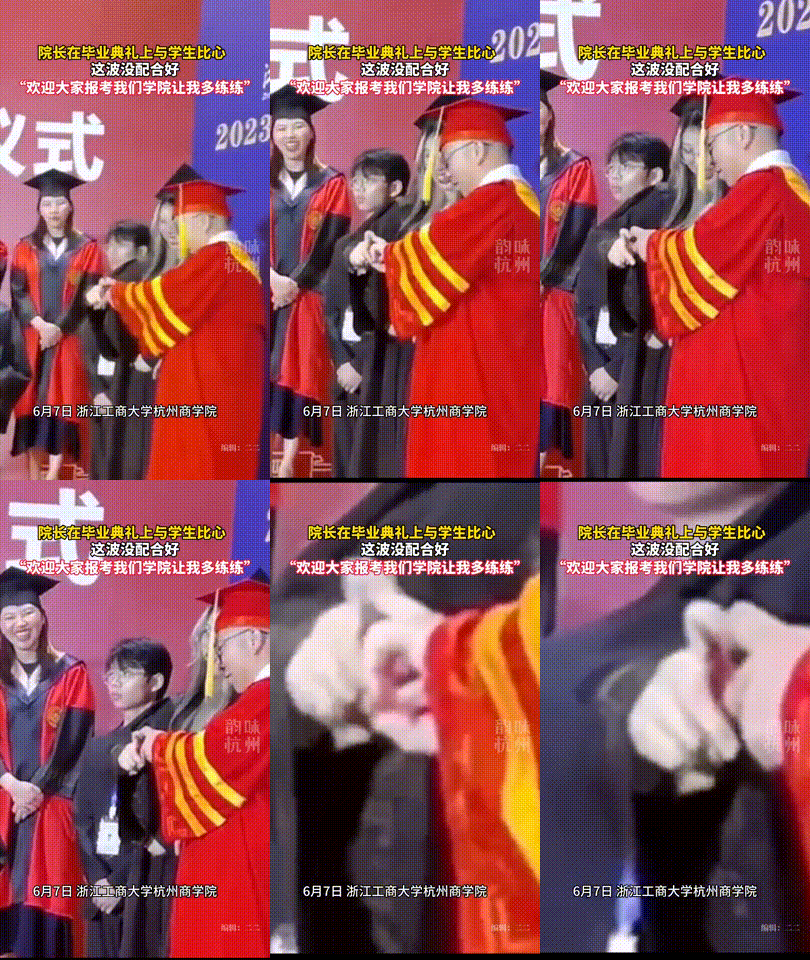
An awkward moment at the graduation ceremony
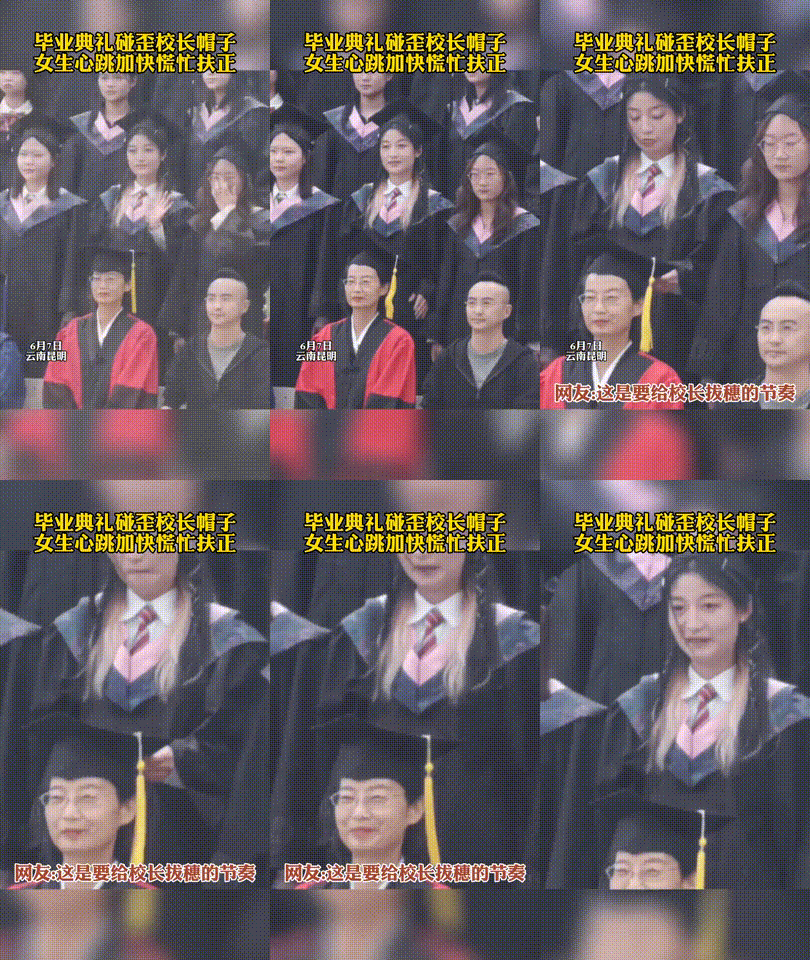
The graduation ceremony bumped the headmaster’s hat.
The girl’s heart beat faster and she hurriedly righted herself.
Girls scare expression packs.
A calm and calm
A playful and lovely
Netizen: This is the rhythm of heading for the principal.
On June 9, at the graduation ceremony of South-Central University for Nationalities
Two students with leg and foot injuries went on stage together.
When that camera turn to the boy
Everyone couldn’t help laughing.
Netizen: The main theme is a symmetry.
Bachelor’s uniform+marriage certificate
Graduation ceremony seconds change proposal scene
June 11th, Chongqing
Girls were pleasantly surprised to propose marriage while hosting the graduation party.
Boys said that they had been in love for four years.
Girlfriend is a person who likes the sense of ceremony very much.
I want to surprise her, but I can’t let her guess.
I haven’t slept well for more than ten days before proposing marriage.
Now the hanging heart finally fell down.
There was a romantic scene at the graduation ceremony of Shanghai Jiaotong University.
The girl was proposed at the doctor awarding ceremony.
She said
I really didn’t expect a boyfriend
So brave to rush onto the stage and propose to me.
I’m really touched. I’m really touched.
Boys said
This is the most challenging thing he has ever done in his life.
It is also the most successful thing.
Netizen blessing:
You wait for your diploma, and I’ll wait for you.
June 8, Yantai, Shandong
At the graduation ceremony of a university
A couple took off their bachelor clothes.
Show a marriage certificate
And put on a wedding dress and take a photo with the principal.
From bachelor’s clothes to wedding dresses
They have a double harvest of career and love.
Completed a quick and grand wedding.
The headmaster changed the witness every second.
Netizen:
"Diploma and marriage certificate together.
Does the principal have to follow the crowd? "
Like the "lovely" principal
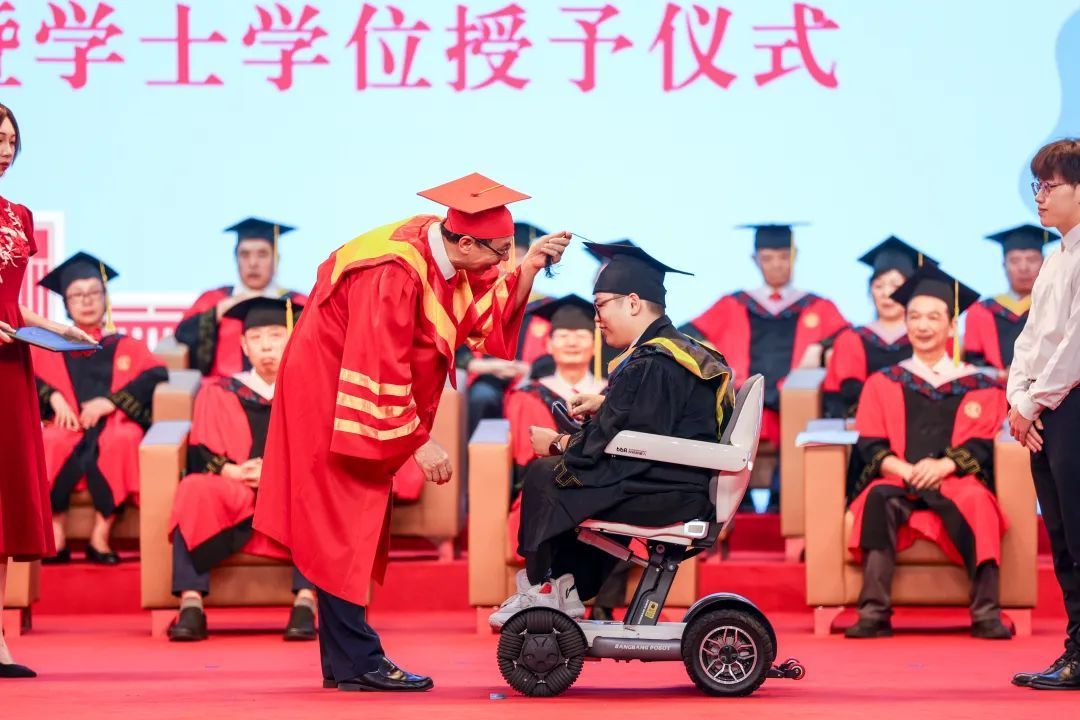
At the graduation ceremony of Zhuhai Institute of Technology
Principal Liu Ming bent down.
Give an ear to Peng Xu, an outstanding graduate in a wheelchair
Won the applause of the audience.
Peng Xu said that he felt very honored.
"When dialing the ear, the principal constantly comforted me.
Tell me that you have studied hard.
Makes me feel very warm.
The headmaster is very kind
I will never forget this memory. "
Graduation ceremony of a college in Chaoshan, Guangdong
Boys are full of energy playing basketball on stage.
Dean’s "princess hug" is also unambiguous.
The lovely student met the lovely dean
A relaxing and interesting unique memory
This must not be written down in youth?
Graduation is the story of millions of summers.
Graduation ceremony is a new starting point in life.
Millions of people, millions of different summers.
The same is just goodbye.
The difference is that they each rush to the other side of their dreams.
Graduation with ears of rice today!
Four years ago, Yuan Longping wore the school badge for him.
June 20
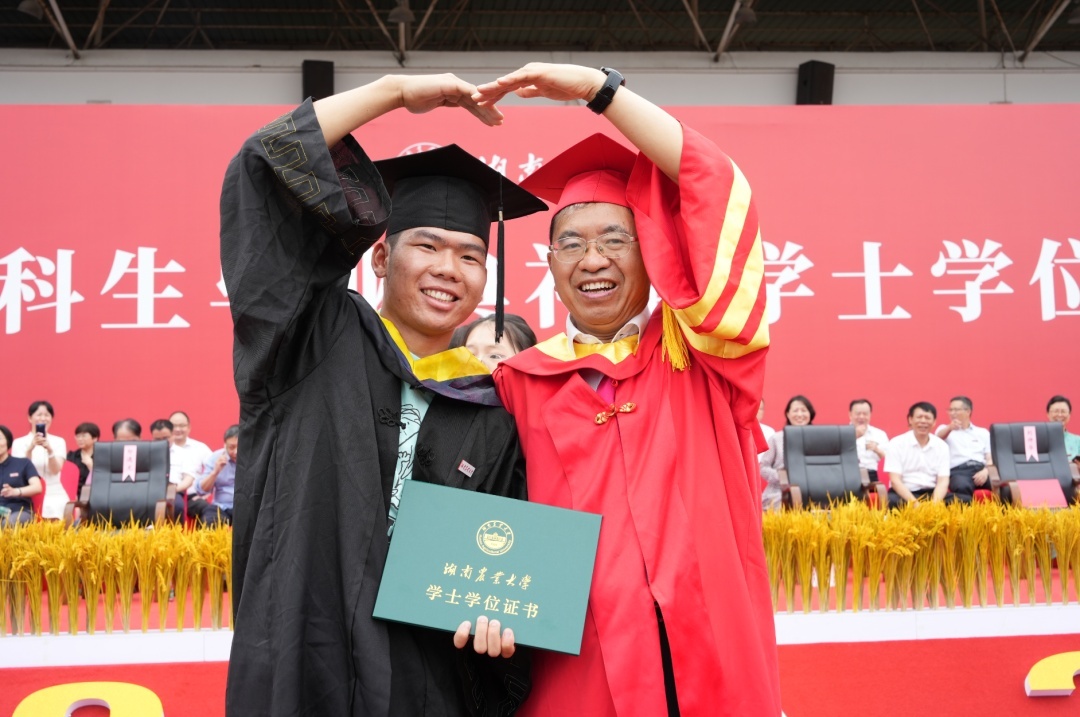
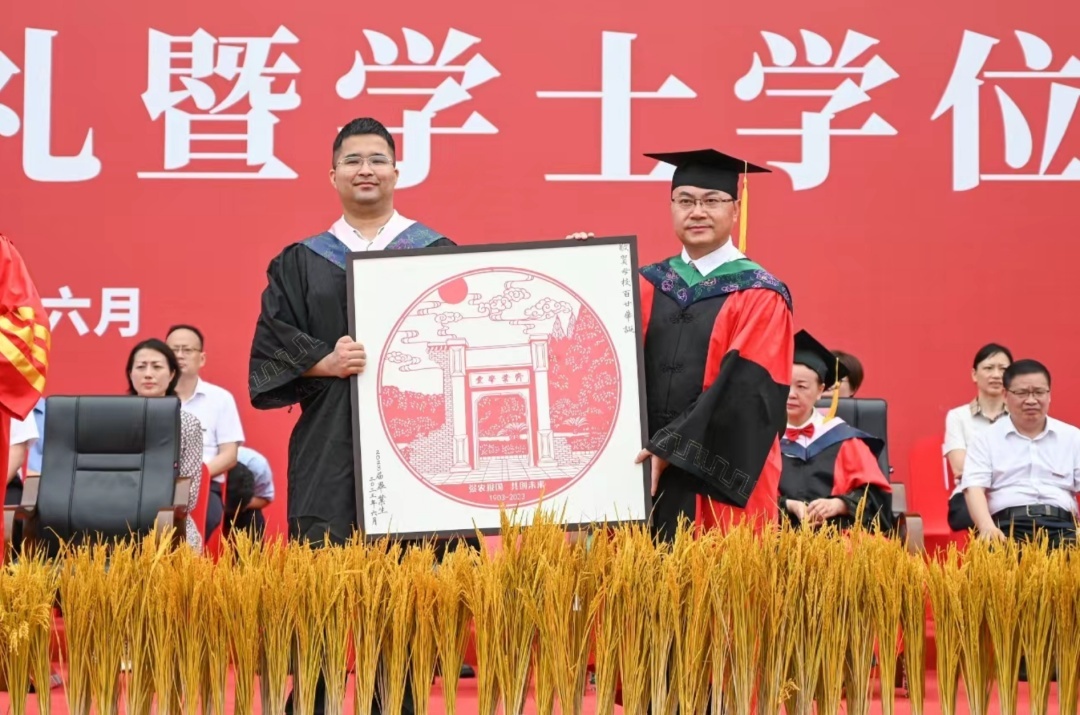
Hunan Agricultural University held the 2023 session.
Undergraduate graduation ceremony and bachelor’s degree awarding ceremony
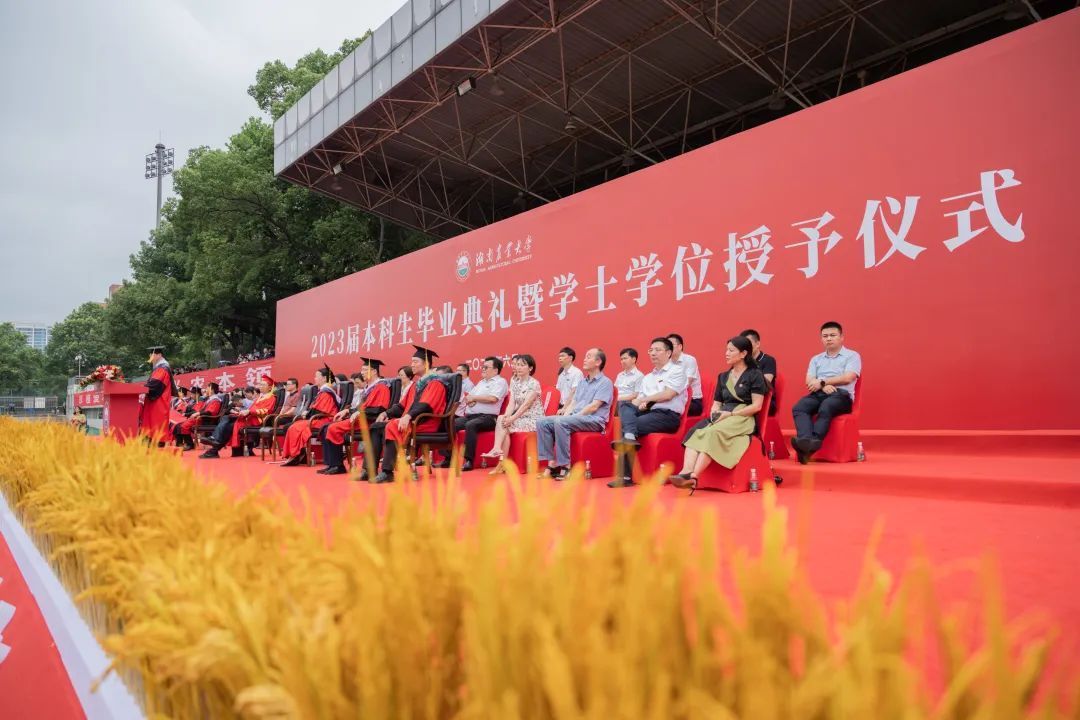
A row of golden ears of rice was placed at the ceremony.
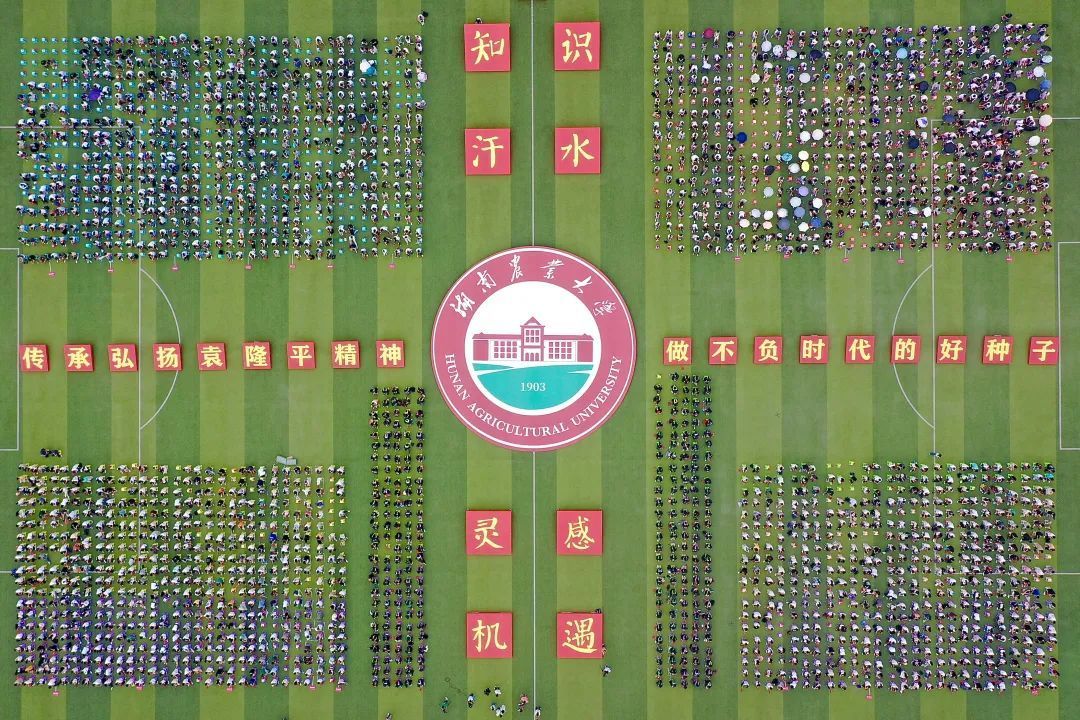
"Knowledge", "Sweat", "Inspiration" and "Opportunity"
Show up at the scene
According to reports, this means-
Students are a seed when they first enter school.
When I graduated, the seeds matured into ears of rice.
Students have grown into talents.
It is also in memory of Academician Yuan Longping.
I hope graduates
I don’t forget Yuan Lao at the opening ceremony four years ago.
The eight-character motto given to this student-
"Knowledge, sweat, inspiration and opportunity"
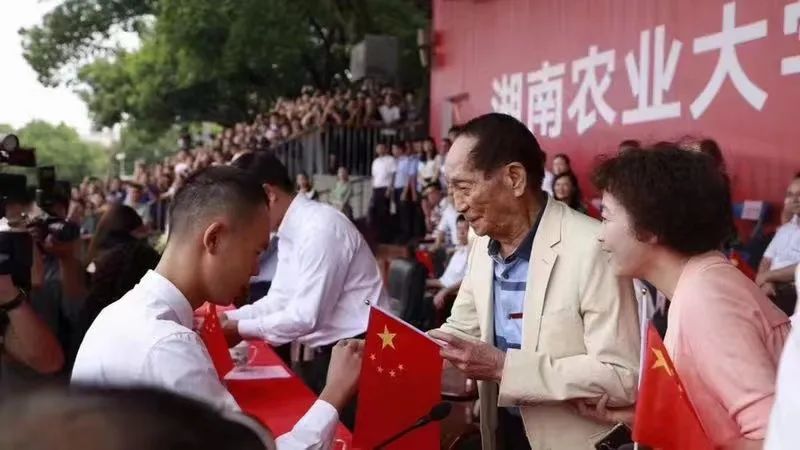
4 years ago (2019)
Yuan Longping came to the opening ceremony of this student.
Tens of thousands of teachers and students lined the streets to welcome.
With warm applause and cheers
Express your love for scientists’ idols
Campus becomes large in seconds. idolize scene.
At the opening ceremony of that year
Yuan Longping said:
People often ask me what is the "secret" of success. In fact, there is no secret. My experience is the words "knowledge, sweat, inspiration and opportunity". First of all, knowledge is power and the foundation of innovation. Students should not only lay a good foundation, but also broaden their horizons and grasp the latest development trends. Second, sweat refers to being able to bear hardships, and any scientific research results come from in-depth and meticulous hard work. Third, there must be inspiration. Inspiration is the spark of thought, which is the product of the sublimation of knowledge, experience, thinking and pursuit. Students should be "people with a will" and always pay attention to catching the spark of thought. The fourth is opportunity. What happens by chance may bring us inspiration and opportunity. You should learn to look at the problem with philosophical thinking and find out the inevitability behind it through the superficial phenomenon of chance. I think only by persisting in these points can we break through the obstacles and realize our dreams.
At the opening ceremony in 2019,
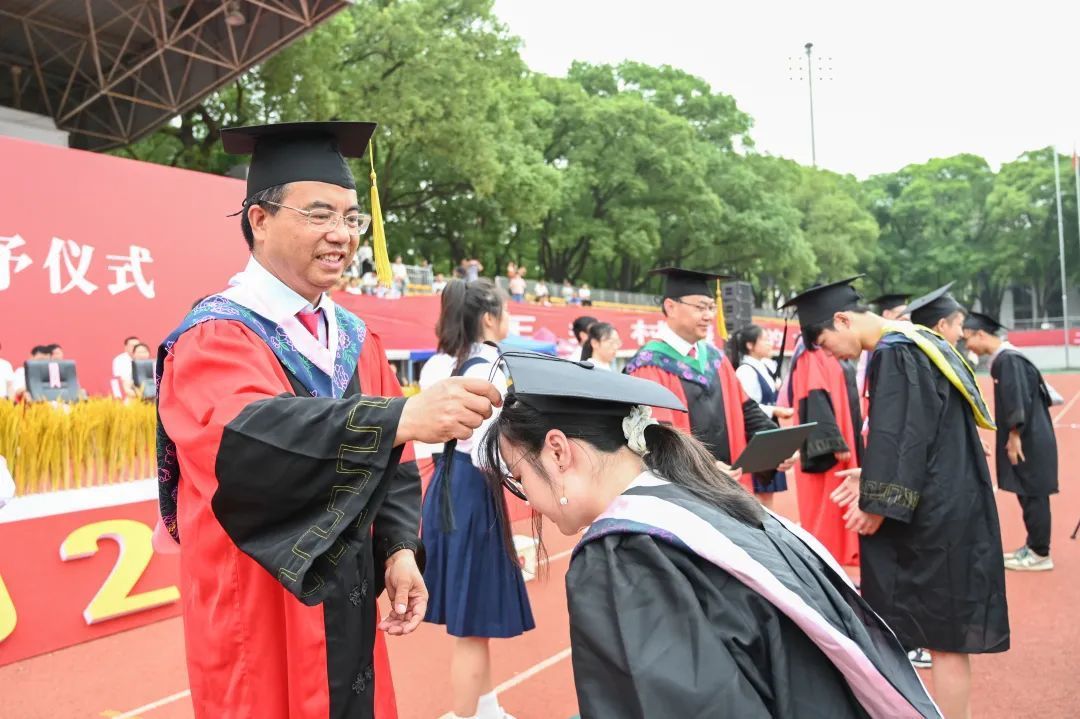
Yuan Longping wore the school badge for Tang Muyang, the freshman representative of that year.
Four years later.
Tang Muyang graduated with ears of rice!
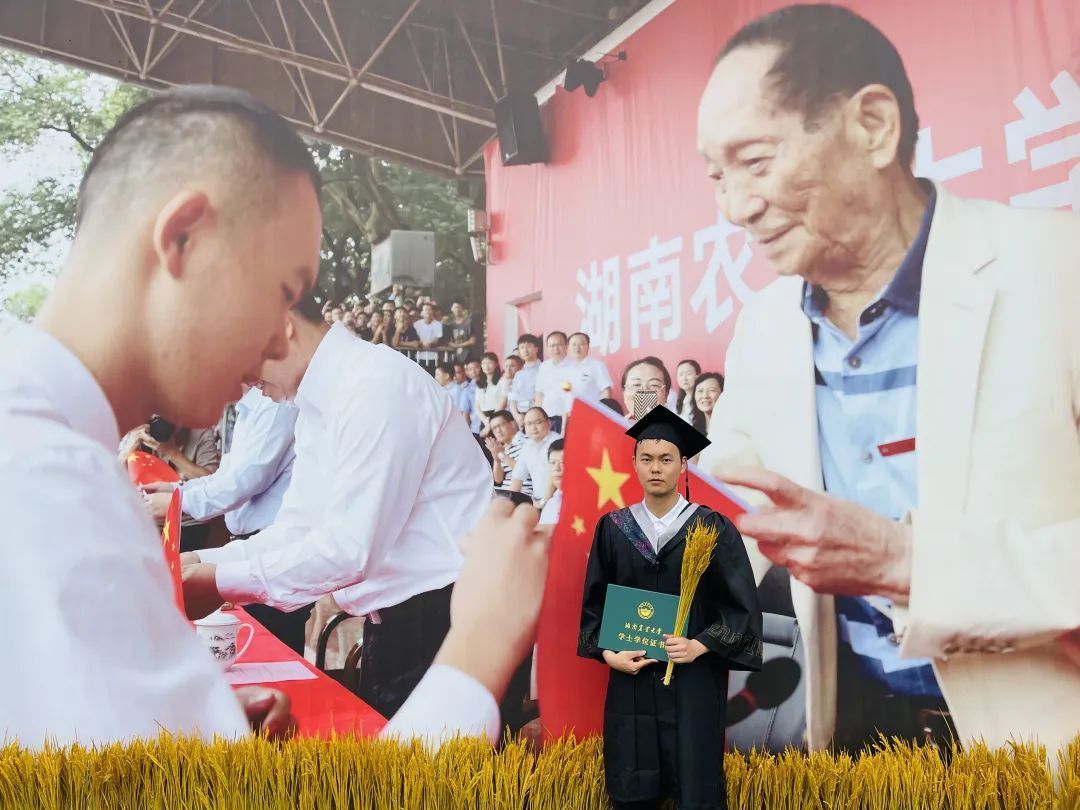
"Opening ceremony in 2019
When Grandpa Yuan came,
My classmates and I are very excited.
Grandpa Yuan wears the school badge for me.
I was very excited at that time.
This is an encouragement to me. "
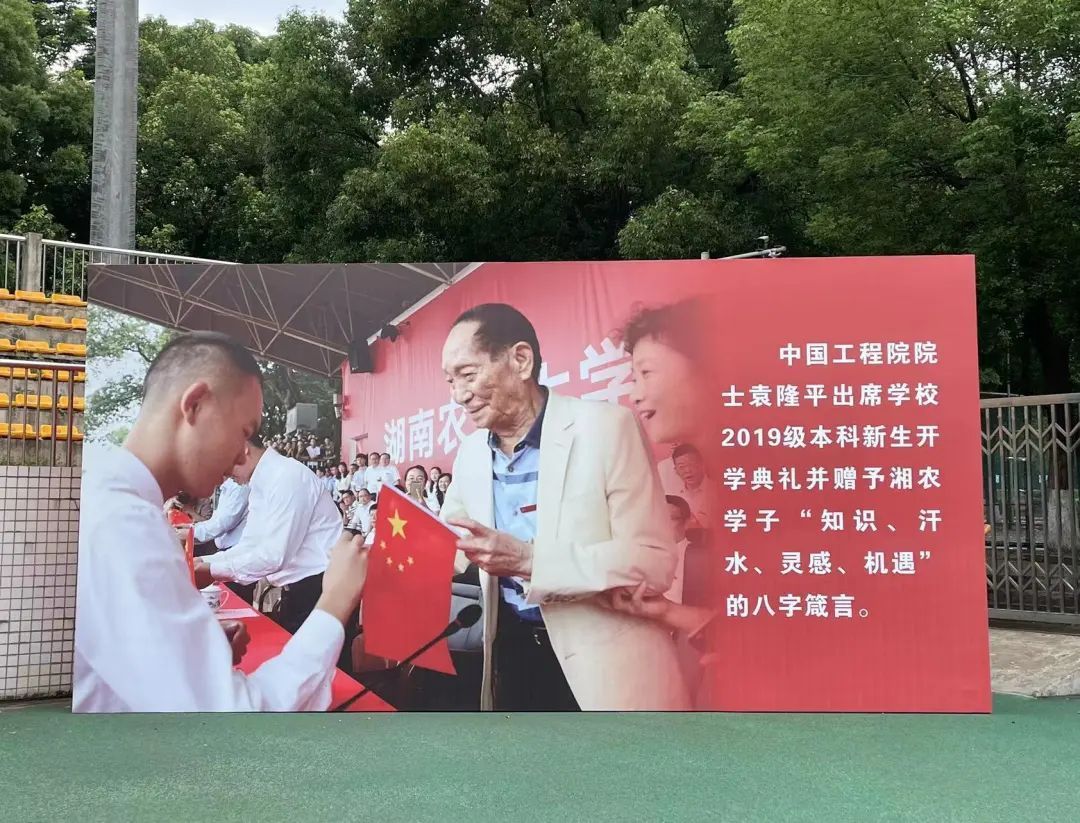
Today, graduates such as Tang Muyang
Will continue to take Yuan Lao’s "eight-character proverbs" to a new journey.
Tang Muyang said
Mature ear of rice
It keeps its head down when it is full of fruits and glory.
"Mature ears of rice inspire me:
Be humble and have a humble heart.
Think down and move on. "
Tang Muyang will go to Fudan University for postgraduate study.
He said
Will continue to uphold the spirit of Grandpa Yuan in the future.
Work hard and not be afraid of failure.
Actively innovate and study hard.
Contribute to the motherland and society.
the four years of university
Left a good memory for our life.
I wish all the graduates in 2023.
Jingfan’s shore is wide and the sea is flat.
Climb the peak, climb the mountain, and the red rises day by day.
Youth never leaves.
Dream to the future together!
[Endeavour, New Journey, New Era and Extraordinary Decade] Shandong: High-quality development has accumulated momentum.
【Endeavor, New Journey, New Era and Extraordinary Decade】
[Leap]
Guangming Daily reporter Zhao Qiuli Li Zhichen
Ocean deep, there are great hopes.
Since the 18th National Congress of the Communist Party of China, General Secretary of the Supreme Leader has put forward a series of important instructions and requirements for Shandong’s work, which has drawn a beautiful blueprint for Shandong’s high-quality development. Qilu’s children always bear in mind the entrustment, resolutely implement the new development concept, unswervingly promote the transformation of old and new kinetic energy, and accelerate the self-reliance and self-reliance of science and technology. In the past ten years, Shandong’s high-quality development has accumulated momentum, and the construction of a strong socialist modernization province in the new era has taken solid steps.
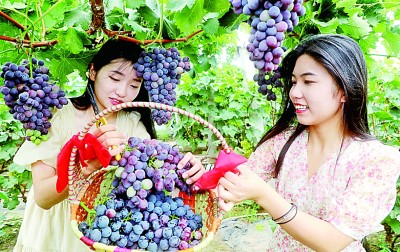
Mature season of selenium-enriched grapes. Information picture
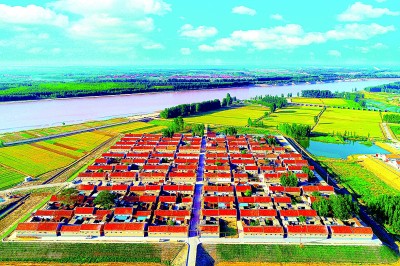
Overlooking Gaojia Village, Northern Song Dynasty Town, Lijin County, Dongying City, Shandong Province. This once typical Yellow River beach village has now realized its dream of living and working in peace and contentment. Information picture
1. Butterfly change of kinetic energy conversion industry
In the midsummer, the reporter walked into Shandong Weida Heavy Industry Co., Ltd. located in Tengzhou City. In the spacious gantry assembly workshop, dozens of CNC machine tools were busy running. Not far away, the high-end intelligent heavy-duty CNC machine tool assembly project site machinery roared, and a high-standard factory building with constant temperature and humidity was basically completed.
"This is a new and old kinetic energy conversion project implemented by the company focusing on the transformation and upgrading of high-end equipment industry." Lei Xiangyuan, deputy general manager of Weida Heavy Industry, told the reporter that the project adopts 5G+ industrial Internet technology, which closely integrates automation equipment with the data brain of smart factories to realize collaborative empowerment of industrial chains, further improve production efficiency and enhance product stability.
Weida Heavy Industry is a leading enterprise of high-end equipment in Tengzhou, the capital of small and medium-sized machine tools in China. After years of development, it ranks among the top 30 machine tool industries in China and the top 10 machine tool exporters in China, and has won the Chun Yan Prize, the highest prize in the country’s machine tool industry for three consecutive years. The sales volume of their fist product, the vertical gantry machining center, is about 300 units a year, and the price ranges from 1 million yuan to 10 million yuan, occupying a "place" in the national market.
Tengzhou’s practice has written a vivid footnote for Shandong to accelerate the conversion of old and new kinetic energy and promote high-quality development. In recent years, Shandong has insisted on "changing cages for birds" and made efforts to accelerate the conversion of kinetic energy. On the one hand, it has transformed and upgraded old kinetic energy, promoted the transformation and upgrading of traditional industries, and made "old trees grow new branches"; On the one hand, actively cultivate new kinetic energy, speed up the layout of strategic emerging industries, and make "small seedlings grow into big trees".
In the conversion of old and new kinetic energy, Shandong has vigorously cultivated a new generation of "Top Ten Industries" such as information technology, high-end equipment, new energy and new materials, and modern ocean, and strictly implemented the "five-reduction substitution" of production capacity, energy consumption, coal consumption, carbon emission and pollutant emission, and promoted the production suspension and relocation of Jigang Group, which has a history of more than 60 years. In 2021, the "four new" economy accounted for 31.7% of the province’s total, and the "four new" investment accounted for it.
Today’s Shandong is like a cocoon breaking, with the rebirth of traditional industries and the butterfly change of emerging industries, with surging development momentum everywhere.
2. Innovation leads the flow of vitality
Dongying City, located at the end of the Yellow River, as the resident of Shengli Oilfield, is born and prospered by oil. Ten years ago, to the east of Dongba Road here, it was still a saline-alkali land with green reeds and barren beaches. Nowadays, modern factories have sprung up, and the new material industrial park covering an area of 18,000 mu is magnificent, with a sense of science and technology.
This change is attributed to the national rare earth catalytic research institute located in Dongying Economic and Technological Development Zone, from the uninhabited barren land to the thriving industrial park. As the only research and development institution in the field of rare earth catalysis in China, the Institute is committed to solving the "stuck neck" problem in the field of rare earth catalysis application and breaking foreign monopoly.
Since the Institute settled in Dongying in August 2019, a magical road of "turning earth into gold" has been officially opened: assisting Weichai Power to reduce the precious metal content of the aftertreatment catalyst for natural gas engines by 70%, and saving the procurement cost by 3 billion yuan annually; Around the whole industry of rare earth automobile catalysis, nine projects with a total investment of 5.5 billion yuan, such as National Porcelain, Dongheng and Guiyan, have successively landed, which will form a closed loop of automobile catalysis industry chain and realize an annual output value of 60 billion yuan … … The old "old oil city" is showing new vitality.
In Shandong, like the National Rare Earth Catalytic Research Institute, a number of high-energy innovation platforms such as Ocean Science Center of Chinese Academy of Sciences and scientific apparatus for Thermophysical Experiment have been built. By the end of 2021, there were 20,000 high-tech enterprises in the province, a seven-fold increase over 2012.
Innovation is the first driving force for development. Shandong firmly grasps the top priority of development and strives to deepen scientific and technological innovation. Since the 18th National Congress of the Communist Party of China, the overall efficiency of Shandong’s scientific and technological innovation system has been continuously improved, and its regional innovation capability ranks among the top in the country. It has been listed by the State Council as a place with remarkable achievements in implementing the innovation-driven development strategy, creating a good innovation ecology, enhancing the independent innovation capability, strengthening the main position of enterprise innovation, and accelerating the transformation and application of scientific and technological achievements in 2021.
3. Talents bring Ma Benteng.
In chengwu Chemical Industry Park in Heze City, there is a national high-tech enterprise — — Shandong huimeng biotechnology co., ltd. Its DCTF(2,3- dichloro -5- trifluoromethylpyridine) products were rated as the fourth batch of national single champion products in manufacturing industry, accounting for more than 70% of the global output.
Pyridine fluorine-containing compounds such as DCTF are important pesticide pharmaceutical intermediates. It took ten years from research and development to mass production, and the products were recognized by the international market. At present, the company has become the leading enterprise with the largest production capacity in the field of DCTF, and plays an important role in the industry.
"The key to development lies in innovation, and the key to innovation lies in talents." The relevant person in charge of Huimeng Technology said that among the 580 employees of the enterprise, there are 124 R&D technicians and a doctoral research workstation. At the same time, the enterprise has also cooperated with Tianjin University of Science and Technology, Qingdao University of Science and Technology and other institutions and scientific research units for a long time, which has enhanced the strength of scientific research and development and the ability to transform achievements.
Chengwu, known as "the hometown of Bole", has played an important role in teaching skills, tackling key problems and inheriting skills by attracting talents, cooperating with universities and creating innovative studios, forging a large number of skilled talents and high-quality workers, and becoming the main force to promote the transformation of scientific and technological innovation achievements. The county’s specialized new enterprises and gazelle enterprises have mushroomed.
In order to let more "Maxima" race on the innovation and entrepreneurship track, Shandong promulgated and implemented the regulations on promoting talent development, and issued a series of policies, such as 22 talent reforms, 20 talents supporting the transformation of old and new kinetic energy, and 32 talents rejuvenating Shandong, to establish a list of key talent projects and improve the talent support system; Establish a talent development group and a talent development strategy research institute, and implement "independent organization and post-filing" for the open recruitment of high-level talents in provincial colleges and universities; Innovatively adopt the way of "one thing, one discussion" to introduce top talents, and implement multiple selection methods such as quota system, recommendation system and "judging by competition" for entrepreneurial talents in Taishan series talent projects.
Up to now, the province’s total human resources have exceeded 15 million, with 115 academicians from the two academies in Shandong and overseas academic institutions, 4,500 national and provincial leading talents and more than 3.5 million high-skilled talents. In the past three years, more than 2.18 million young college graduates have been gathered, and the situation of talent gathering has been expanding.
【2012】
● The regional GDP is 4,295.73 billion yuan.
● The per capita disposable income of urban residents is 24,496 yuan.
● The per capita disposable income of rural residents is 9,506 yuan.
● The urbanization rate of permanent residents is 52.03%
● 7454 invention patents granted.
● The total grain output is 48.158 million tons.
【2021】
● The regional GDP is 8,309.59 billion yuan.
● The per capita disposable income of urban residents is 47,066 yuan.
● The per capita disposable income of rural residents is 20,794 yuan.
● The urbanization rate of permanent residents is 63.94%
● There are 36,345 invention patents authorized.
● The total grain output is 55.007 million tons.
Source: Shandong Provincial Bureau of Statistics.
Wuling Hongguang MINIEV car is not simple, and it is sought after in Vietnam. It is a pure electric scooter.
Not long ago, Wuling Automobile held a new car launch conference in Vietnam, announcing that Wuling Hongguang MINIEV was officially listed in Vietnam. Only 24 hours after the launch, Wuling Hongguang MINIEV received 1000+ orders in Vietnam. As the pioneer and popularizer of miniature new energy scooters, Hongguang MINIEV has excellent product strength and cost performance. Through Wuling’s globalization strategy, Hongguang MINIEV successfully went international and showed the strength of China new energy vehicles to the world.
Wuling Hongguang MINIEV goes international, and GSEV architecture becomes the key.
In recent years, the export volume of Wuling automobile has greatly increased, and the recognition of foreign users has been on the line. The reason why Wuling Hongguang MINIEV can achieve excellent sales results in Southeast Asia market is mainly due to the GSEV architecture independently developed by Wuling. As a synchronous and highly intelligent architecture in Che Yun, this architecture has obtained 1409 authorized patents under the continuous development of Wuling. Hongguang MINIEV further improves the product strength through GSEV architecture, and opens the gap with other models in the automobile market.
Wuling builds whatever the people need.
As a "people’s car enterprise", Wuling insists on "building what people need". Under the environment of new energy development, Wuling reconsiders the meaning of scooter, and takes the user’s demand as the core to create a three-good pure tram Wuling Hongguang MINIEV with good start, good stop and good province.
As a pure electric scooter, Wuling Hongguang MINIEV has made improvements in the latitudes of difficulty, high cost and inconvenience in short-distance commuting. From the perspective of product strength, Hongguang MINIEV almost represents the ultimate level of miniature pure electric scooter.
According to accurate statistics, as of January 29th, 2023, the cumulative sales volume of Hongguang MINIEV exceeded 1.11 million vehicles, ranking first in the sales volume of pure electric vehicles of China brand for 28 consecutive months, and topping the global single-vehicle sales champion of new energy brands for 7 times. Through excellent global sales, Hongguang MINIEV led the development wave of new energy scooters, making China standard the mainstream standard of new energy scooters in the world and making great contributions to the popularization of new energy scooters around the world.
Hongguang MINIEV redefines scooter
Wuling insists on using the scene to define the car and taking the user’s demand as the core manufacturing idea. The body size of Wuling Hongguang MINIEV is smaller, and the turning radius is only 4.2M, making driving easier and more comfortable. The compact body size perfectly solves the problem of parking difficulty. A normal medium-sized parking space is enough to accommodate two Hongguang MINIEV. In terms of energy supplement, Hongguang MINIEV supports household AC energy supplement, which makes charging more convenient and faster. The comprehensive power consumption is only 5 cents for one kilometer, but the consumption of 100 kilometers is not as good as that of 5 yuan, and the cost-effectiveness ratio is even better.
Wuling Hongguang MINIEV has further implemented new energy scooter standards such as "not afraid of cold", "true endurance" and "safer" after meeting the three principles of good start, good stop and good province. It is no exaggeration to say that this series of models has changed the ecology of short-distance commuting and brought users a higher quality and convenient travel experience.
The performance of global crown sales has earned Wuling Hongguang MINIEV the reputation of "people’s scooter". In the future, Wuling will not forget the needs of the people, take independent innovation as the core concept, adhere to self-improvement through science and technology, and create more and better automobile products that meet the needs of national travel.
[Daguo New Village: Following the footsteps of the General Secretary] Desheng Village, Hebei Province: Planting Hope in Bashang Village
If the nation is to be revived, the countryside will be revitalized. Since the 18th National Congress of the Communist Party of China, under the strong leadership of the CPC Central Committee with the Supreme Leader as the core, China has made great strides from a big agricultural country to a powerful agricultural country, and the rural areas have taken on a new look, and farmers’ lives have become better and better. A magnificent picture of the prosperity of villages, people and industries has slowly spread out in the land of China.
Report to the 20th CPC National Congress pointed out that "the most arduous and arduous task of building a socialist modern country in an all-round way is still in the countryside. Adhere to the priority development of agriculture and rural areas, adhere to the integrated development of urban and rural areas, and smooth the flow of urban and rural factors. Accelerate the construction of a strong agricultural country and solidly promote the revitalization of rural industries, talents, culture, ecology and organization. " The People’s Forum Network launched a series of reports on "Great Country New Village: Following the footsteps of the General Secretary" to tell the story of the revitalization of the vast rural areas of China. Today, the research team of People’s Forum takes you into Zhangbei County, Zhangjiakou City, Hebei Province to see how Desheng Village can recite the "Victory Sutra".
Desheng Village, Zhangjiakou City, Hebei Province is located in Bashang area on the southern edge of Inner Mongolia Plateau, with barren land and extremely cold climate. In the past, Desheng village was a well-known poor village. The villagers’ income mainly depended on traditional farming and migrant workers, and the collective economy was "blank".
On January 24, 2017, on the eve of the Lunar New Year, General Secretary of the Supreme Leader braved the cold of 1949 and came to Desheng Village with snow, visited the people in need, and worked with grassroots cadres and the masses to calculate poverty alleviation accounts and seek poverty alleviation plans. The General Secretary stressed that it is necessary to play the chess game of "precision" and organically combine poverty alleviation and development, modern agricultural development and beautiful countryside construction to achieve rich farmers, strong agriculture and beautiful countryside.
In recent years, Desheng Village keeps in mind the entrustment, is grateful to forge ahead, and with the care and support of party committees and governments at all levels, insists on cultivating teams, developing industries and building new countryside, and gives full play to its advantages according to local conditions. The whole village has undergone earth-shaking changes in planting structure, industrial layout, living environment and villagers’ appearance. By 2022, the per capita income of the villagers in the village reached 21,600 yuan, and the collective income of the village reached 2.22 million yuan, making solid progress in rural revitalization.
The cadres and the masses are United, with both "leading geese" and "new blood"
The train runs fast, thanks to the headband. The locomotive of promoting rural revitalization is the party branch.
"It is necessary to strengthen the construction of rural grassroots organizations, so that the party branch can better play its role as a fighting fortress, become the backbone of leading the peasants to get rid of poverty and get rich, and do a good job in the affairs of the villagers." Ye Runbing, secretary of the Party branch of Desheng Village, firmly remembered the entrustment of the Supreme Leader General Secretary when he visited Desheng Village and turned it into the actual action of the village party branch.
In recent years, Desheng Village has actively played a leading role in the demonstration of the cadres of the "two committees" in the village, placing the construction of the cadres of the "two committees", the team of party member and the team of rich experts in a prominent position. By enhancing the initiative of grassroots organizations, stimulating the motive force of the party member team and casting the entrepreneurial drive of the officers, the ability and ability of the team will be enhanced and an excellent team will be built in the urgent and dangerous big exam war.
The Party branch of Desheng Village took the opportunity of the change of the village’s "two committees" to further optimize the team structure, and gradually selected a group of experts who went out to start businesses and led the rich into the village’s "two committees" team, realizing the combination of the old and the young, and the role of village cadres as "leaders" in leading development was further highlighted.
The key to improving the fighting capacity of grass-roots party organizations is to select the "leading geese" and give further play to the vanguard and exemplary role of party member.
Desheng Village has continuously improved its organizational system and assessment mechanism, carried out service activities such as "I am party member and I take the lead" and "I do practical things for the masses", and provided "point-and-order" services to make the party member team a "Depth Charge" with courage and dedication.
The key to rural revitalization lies in people. Building beautiful countryside needs both "leading geese" and "new blood". Desheng village adopts the combination of selection, construction, education, management and use, and strives to build leaders in various fields to lay a solid foundation for village-level development and the masses to get rich.
As soon as Xu Yaru graduated from university, she decided to return to her hometown to start a business. She used her professional knowledge of traditional Chinese medicine to help the village develop medicated diet culture and health care industry, and used the new media platform after work to share her little growth in the construction of her hometown and tell the story of Desheng. In 2021, Xu Yaru was elected as a member of the Party branch of Desheng Village and officially joined the team of the "two committees" of the village, injecting fresh blood into the revitalization of Desheng Village.
Industry-driven, breaking a new way to get rich
The sunny Zhangbei grassland, potato greenhouses and rows of photovoltaic panels have become a beautiful landscape.
Industrial development is the fundamental policy to promote farmers to get rich and increase their income. Desheng village insists on leading development with innovation, focusing on advantageous industries and strengthening characteristic industries, and has embarked on a new way of getting rich in industries.
Thanks to the unique climatic conditions, Desheng Village has the advantage of planting potatoes. In order to encourage villagers to actively plant and cultivate potatoes, the village attracted Liu Guirong, who started a business outside the village, to return to the village to take the lead in developing the micro-potato industry, constantly experimenting with planting new varieties of micro-potatoes with high quality, and teaching villagers planting techniques, thus becoming a famous "local expert" in the village.
Surprisingly, small potatoes can also become a big industry.
In order to expand the potato industry, with the strong support of Zhangbei County Party Committee and county government, Desheng Village won the project fund of 5.589 million yuan, built a potato mini-potato breeding park and processing park covering an area of 300 mu, built 280 breeding greenhouses, and cooperated with enterprises such as Da Nong Seed Industry, Beijing Yunong and China Potato Network to carry out market-oriented, standardized and networked production and management, thus realizing the industrialization and scale of potatoes.
Up to now, more than 180 villagers in the village have contracted greenhouses, and each greenhouse produces more than 140,000 seed potatoes every year, with an annual net income of more than 20,000 yuan. In order to further expand its influence and build a brand, Desheng people also registered the trademark of "Yufu Desheng" potato seed, which was included in the eighth batch of "One Village, One Product" list by the Ministry of Agriculture and Rural Affairs, and was also awarded the gold medal of Xiamen National Green Expo, and "Yam Egg" became the "Jin Doudou" for villagers to get rich.
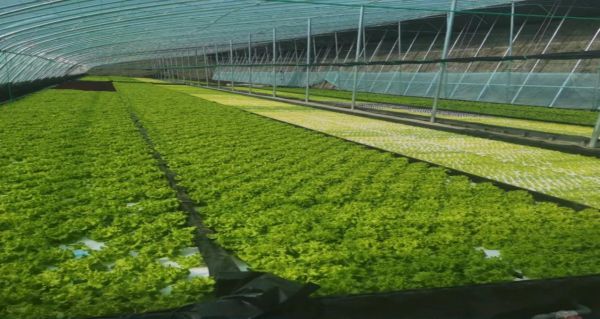
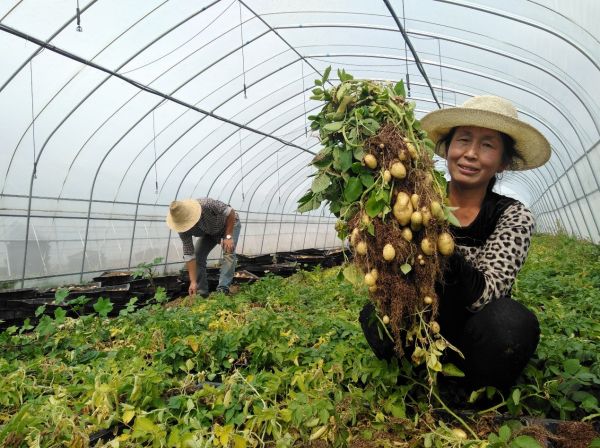
Mini-potato has become the "Jin Doudou" Desheng Village Committee of Zhangbei people to increase their income and get rich.
Zhangbei is rich in solar energy resources. Desheng village is 1400 meters above sea level, with an average annual sunshine of more than 3000 hours, which is suitable for developing photovoltaic industry.
Walking into Desheng village, you can see rows of photovoltaic panels, which are called "hardcore crops" by the villagers, and it is they that make the per capita annual income of the villagers reach more than 10,000 yuan.
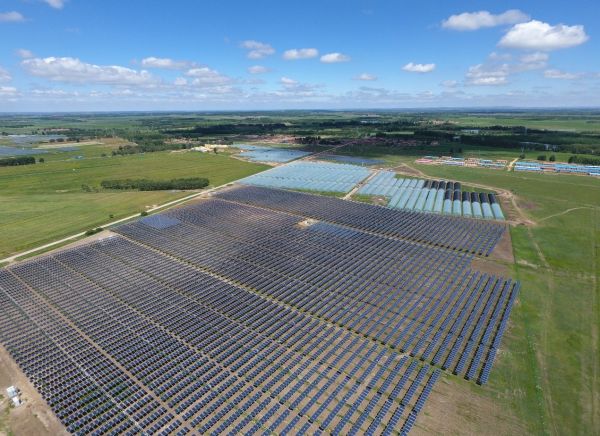
Photo courtesy of Desheng Village Committee, photovoltaic industry in Desheng Village
On the one hand, Desheng Village actively strives for a project fund of 4.5 million yuan to build two 500-kilowatt photovoltaic power stations with an annual power generation capacity of 750,000 kWh, and the collective economy steadily increases its income by more than 650,000 yuan each year. On the other hand, more than 2,600 mu of idle land, such as barren hills, slopes and grasslands, was transferred, and Desheng Village introduced enterprises to invest in photovoltaic power stations by market-oriented mechanism, and built a 50,000-kilowatt complementary power station for agriculture and light, with land transfer and equipment maintenance income of more than 1 million yuan. In terms of photovoltaic income distribution, Desheng Village adopts the principle of "public welfare posts+poor relief+village collective undertakings" to effectively realize accurate and differentiated distribution.
Nowadays, low-carbon development has become one of the labels of Desheng Village. In 2022, Desheng Village became the base of the 3rd China International Solar Decathlon Competition. From superior investment and construction to independent introduction of market players, from single photovoltaic power generation to complementary mode of agriculture and light, Desheng people use their diligence and wisdom to accelerate the pace of villagers’ green wealth.
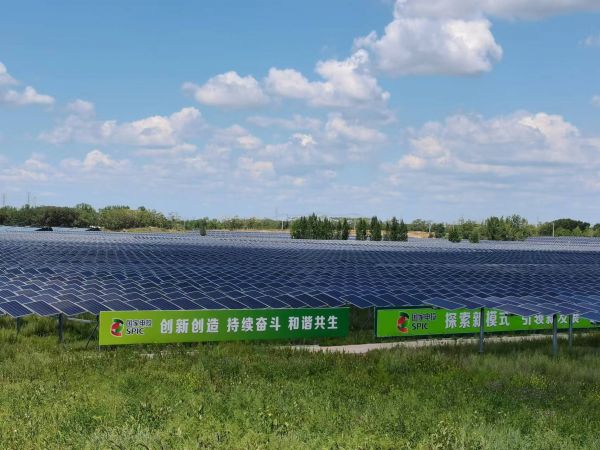
Photo courtesy of Desheng Village Committee, photovoltaic industry in Desheng Village
Besides "Jin Doudou" and "die-hard crops", villagers’ "earth nests" can also become "golden nests" for getting rich.
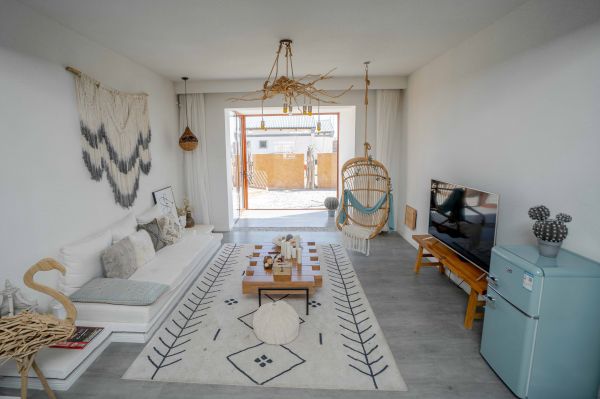
In recent years, Desheng Village has begun to vigorously develop homestay tourism, relying on the advantages of key projects such as complementary light and grass, Desheng residential buildings, miniature potato parks and ecological bases such as picking gardens and flower belts.
Desheng B&B creates a variety of styles to attract tourists to punch in. Photo courtesy of Desheng Village Committee
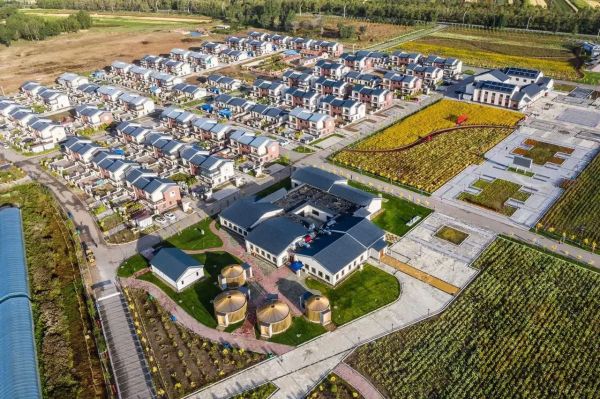
Desheng Industrial Group was introduced into the village to invest and develop, and 139 sets of two-story new residential buildings and 46 sets of boutique homestays were planned and built in a unified way. Led by Desheng Rural Industry Company, unique homestay courtyards such as Deshengwei Homestead, Custom Pastoral Commune and Pasture Art Museum were successively built, and 42 sets of homestay sample rooms were built, so as to simultaneously develop the rural tourism industry with eco-sightseeing, agricultural science and technology exhibition, complementary agriculture and light and homestay visits as the core, and the village received more than 50,000 tourists every year.
B&B tourism has become a new growth point of villagers’ income, and Desheng Village has been rated as "National Key Village for Rural Tourism" by the Ministry of Culture and Tourism.
Today, Desheng Village has formed a development model with potato seed planting, photovoltaic, homestay tourism as the leading factor, ecological breeding, wormwood planting and other characteristic industries going hand in hand, with obvious industrial driving effect and villagers’ income increasing year by year.
Desheng B&B creates a variety of styles to attract tourists to punch in. Photo courtesy of Desheng Village Committee
Livable and suitable for business, showing beautiful countryside.Xinfengcai
While driving the villagers to increase their income and get rich, Desheng village has also made great efforts to grasp the planning and construction of the village. In order to achieve the goal of "beautiful village, beautiful environment and beautiful rural style", Desheng Village insisted on closely combining the village renovation with the construction of green ecological homes from the planning, taking a multi-pronged approach, both inside and outside, and striving to create a beautiful countryside on the dam with both "face value" and "temperament".
The whole village pays attention to industrial cultivation and improvement of infrastructure conditions. According to the development model of "government guidance, market operation, project traction and diversified investment", it introduces powerful enterprises and implements new construction, relocation, transformation and upgrading of the whole village.
At the same time, around the function improvement, Desheng Village has also vigorously promoted the construction of infrastructure and public cultural service facilities, implemented projects such as main street hardening, tap water entering households, underground water supply and drainage, sewage treatment, and power supply, and built cultural service facilities such as Happiness Mutual Aid House, Desheng Impression Hall, Cultural Square, Villager Service Center, Health Room and Kindergarten. Incorporating rural greening and beautification into overall consideration and integrated design of village planning, adhering to local conditions, planting a variety of green plants, such as elm, pine, clove and begonia, which are suitable for trees, grass and flowers, has greatly improved the greening rate, and achieved the beauty of scientific planning and layout, the beauty of village capacity improvement environment and the beauty of village civilization and spirit.
To show the new countryside, we should not only pay attention to the "external beauty" of clean environment, but also polish the "internal beauty" of civilized Suntech.
In recent years, relying on moral banks and love supermarkets, Desheng Village actively encourages villagers to exchange points by participating in collective labor and public welfare undertakings, which greatly stimulates the internal motivation of villagers’ self-reliance; Relying on the activity of "the most beautiful Desheng" and centering on the socialist core values, various typical tree selection activities were carried out, which cultivated a good atmosphere of advocating civilization and promoted the construction of rural civilization.
Nowadays, walking in the village, with white walls and grey tiles and beautiful roads, Desheng Village has achieved a beautiful butterfly change and the villagers’ spirit has been greatly improved.
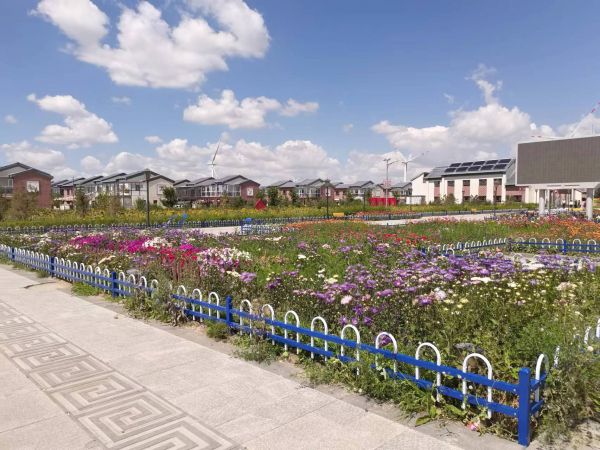
Photo courtesy of Desheng Village Committee of Beautiful Desheng Village
Grateful to forge ahead, set sail. After years of development, Desheng Village has successively won many honors, such as the national advanced grass-roots party organization, the national advanced collective for tackling poverty, the national civilized villages and towns, the national model village for democracy and rule of law, the national model village for rural governance, the national key tourist village, and the national village-level practice exchange base for consolidating and expanding the achievements of tackling poverty. A new socialist countryside with green ecology is moving from "planning map" to "real map". (Author: People’s Forum Research Group, written by Qu Tongyu)