On the afternoon of November 20th, the joint prevention and control mechanism of the State Council held a press conference in Beijing to introduce the situation of further prevention and control of epidemic situation in winter and spring.
At the press conference, Mi Feng, spokesman of the National Health and Health Commission, said that up to now, eight provinces affected by this round of local epidemic have not had any new local confirmed cases for more than 14 consecutive days. Outbreaks in border port cities such as Ejina, Heihe and Dalian were quickly and effectively disposed of. Many provinces controlled the epidemic in an incubation period. The current epidemic situation in the country as a whole has entered the stage of sweeping the tail.
Today’s conference summed up five experiences on why the epidemic involving more than 20 provinces can be effectively controlled in a short time.
The short-term control of this epidemic benefited from the high vaccination rate.
Wu Liangyou, deputy director of the CDC of the National Health and Wellness Commission:
Although the epidemic involved a wide range and the virus spread quickly, it was effectively controlled in a short time. In terms of epidemic prevention and control, we have learned from the experience of epidemic disposal in Shanghai and other places, and taken effective measures in catching early and catching small, and quickly controlling the epidemic.
First, the monitoring and information reporting of the epidemic situation have been strengthened, and the "report in case of sunshine, report in case of sunshine, and check after receiving the report" has been implemented. The the State Council Joint Prevention and Control Group immediately sent a working group to the provinces with the risk of epidemic spread to carry out emergency response work, thus winning time for early detection and early disposal of the epidemic situation.
Second, more scientific and accurate prevention and control measures have been taken, and multi-sectoral coordination mechanisms such as the special class for tracing the source of epidemic situation and the special class for regional investigation have been effectively brought into play. The national expert team for epidemic situation arrived at the scene at the first time, cooperated with the provinces and cities, seized the 24-hour prime time, quickly determined, investigated and controlled close contacts, sub-close contacts and other risk personnel, and effectively prevented the spread of epidemic situation.
The third is to carry out in-depth and meticulous investigation and analysis of epidemic traceability and transmission chain, find out the source of epidemic input and case infection in time, quickly investigate and control potential infected people, and cut off the virus transmission chain.
The fourth is to strengthen the measures of "external defense import", systematically investigate the potential risks of land, ports and air ports, improve the prevention and control measures of land ports bordering countries with serious epidemic in time, and reduce the risk of imported epidemic abroad. Fifth, timely, actively and comprehensively release information related to the epidemic situation, give full play to the advantages of mass prevention and control, guide the broad masses to strengthen their awareness of protection, improve the awareness of active consultation, active detection and active reporting of people with activity history in risky places and suspicious symptoms, and effectively reduce the risk of hidden spread of the epidemic situation.
In addition, the epidemic can be controlled in a short time, thanks to the high vaccination rate of Covid-19 vaccine in China. As of November 19th, China has covered 1.225 billion people, and 1.076 billion people have been vaccinated in the whole process, with population coverage rates reaching 86.9% and 76.3% respectively, and 65.73 million people have been immunized, which plays an important role in blocking the spread of Covid-19 and preventing the occurrence of severe diseases.
Give full play to the strength of the country and the province to improve the ability of nucleic acid detection in a short time when the epidemic occurs
Guo Yanhong, Ombudsman of National Health Commission Medical Administration Hospital Authority:
Nucleic acid detection plays a very important role in implementing the "four early", understanding the scope of infection and preventing and controlling the epidemic as soon as possible. For example, in the aspect of nucleic acid detection in Ejina Banner, the power of nucleic acid detection is mobilized in the shortest time, and the nucleic acid detection work of all staff, key populations and key areas is realized efficiently. The original nucleic acid detection capacity of Ejina Banner is only 1440 tubes/day. We mobilized in the autonomous region and the country in the fastest time, and the detection capacity reached 20,000 tubes/day in the shortest time, which can realize the complete nucleic acid detection of all staff in Ejina Banner in less than one day, improve the detection efficiency and lock the infection range in the fastest time.
The same is true in Dalian, where the original nucleic acid detection capacity is only 248,000 tubes/day, but the population of Dalian is nearly 6 million, and there are also key areas and key populations in Zhuanghe. We mobilized 345,000 tubes from the country and the province in the shortest time, and the ability of nucleic acid detection in a short time increased to 600,000 tubes/day, which can ensure that the nucleic acid detection of all employees in Dalian can be completed in a little more than two days, while the nucleic acid detection work in Zhuanghe can be carried out once a day, providing more accurate support for the overall epidemic prevention and control work. So in terms of nucleic acid detection,An important experience is to give full play to the strength of the country and the province, so that the place where the epidemic occurs can improve the nucleic acid detection ability in the shortest time, realize the efficient completion of the nucleic acid detection task, and provide important support for the epidemic prevention and control work.
Strengthen community prevention and control, and organize the masses to move out of their places of residence for centralized isolation after the outbreak.
Zhu Hongming, Deputy Director of the Grassroots Department of National Health Commission and First-class Inspector Zhu Hongming:
In some places, people are organized to move out of their places of residence for centralized isolation after the outbreak, which is also the basic work requirement and experience of epidemic situation handling. Taking this measure can effectively control the source of infection and cut off the transmission route.
We found that at the beginning of the epidemic in some areas, if centralized isolation measures are taken as soon as possible and in time, the epidemic can often be blocked quickly. At this time, if you are slow or hesitant or the isolation is not complete, the social mobility often does not decrease. Although the community has been closed, people are still flowing in the community or within the family, so the prevention and control of social epidemic situation has not been blocked. Therefore, we require that the isolation measures be put in place as soon as possible. The requirement of centralized isolation is to be isolated as far as possible, timely, centralized and standardized. All residents who meet the requirements are required to be isolated in a single room. Only in this way can the epidemic spread be blocked quickly in the early stage of the epidemic.
Outbreaks in schools should be classified and controlled, but the word "strict" should be highlighted.
Wang Dengfeng, Director of the Prevention and Control Office of the Ministry of Education and Director of the Department of Sports Health and Art Education:
When there is an epidemic, the campus should be closed, and the entrance and exit of the school gate should be controlled according to the different stages of the epidemic development, which is the requirement of epidemic prevention and control.
When the epidemic situation is serious, the school should carry out strict closed management, and all staff and students should strictly abide by the requirements of local closed control. Whether students or teachers, teachers must meet the relevant conditions if they are not in school and implement strict closed management, if they want to return to school. In many schools, when this happens, most teachers live off campus, so they can only take classes online at home, which is also a very important aspect of implementing school gate management. In this case, there are still some logistical support needs to enter and leave the school, which cannot be completely restricted to ensure the normal life of teachers and students in the school. Therefore, we must carry out classified control, but we must highlight the word "strict", which all teachers and students should abide by together.
There are also many references on the internet, such as different standards for school gate control and access. There are objective reasons for this "difference". First of all, logistics workers or logistics must enter the campus, and it is ok after strict disinfection measures and prevention and control arrangements are taken. Other teachers and students should strictly follow the requirements of closed management.
With the improvement of the epidemic situation, the management of the school gate is not "only allowed to enter, not allowed to leave". Entry and exit must be declared according to the prescribed procedures and classified management, which depends on the situation of the school and the requirements of local epidemic prevention and control. A general principle is that everyone is treated equally, but the necessity and urgency of different groups of people entering and leaving the school gate are different. From the perspective of schools, strict classified management should be implemented. The different requirements for different groups of people to enter and leave the school gate should also be clearly explained to all teachers and students so that everyone can understand each other. All these measures are aimed at effectively preventing and controlling the spread of the epidemic in the school and not spreading to the society when the epidemic occurs.
On the other hand, while doing a good job in school management, whether it is "only allowed in, not allowed out" or "orderly in and out", it may have a certain impact on study and life. While doing a good job in management, the school must do a good job in logistics service and psychological counseling, so that all teachers and students can feel comfortable while strictly implementing prevention and control measures.
Strengthen the epidemic prevention and control of school logistics personnel
Wang Dengfeng, Director of the Prevention and Control Office of the Ministry of Education and Director of the Department of Sports Health and Art Education:
The epidemic situation in Dalian is directly related to the logistics staff. From the point of view of the school’s logistics staff, there are three characteristics: first, there are more contacts with the outside world and people and things, so the risk of epidemic is relatively high. Second, there are many opportunities for the staff in the school canteen to have close contact with all the teachers and students. Once infected, the epidemic will spread widely. Third, the logistics staff have extensive internal and external contacts. From the perspective of epidemic prevention and control, epidemic prevention is more difficult. In order to do a good job in this area, we should prevent and control the epidemic from the following five aspects.
First, strictly implement vaccination. All logistics staff, especially those who have frequent and close contact with teachers and students, should be strictly vaccinated and complete the whole vaccination. At the same time, you should wear a mask during working hours, and the mask should be a surgical grade mask. Work clothes should be replaced, cleaned and sterilized regularly.
Second, regular nucleic acid testing. In the last round of the epidemic in Fujian, we found that the education department of Fujian Province has determined the practice of conducting regular nucleic acid testing for some or a certain proportion of teachers and students. In the last round of Fujian epidemic, positive cases were also found in the process of regular testing, which prevented the epidemic from spreading on a large scale. At present, the education system of 23 provinces (autonomous regions and municipalities) in China has implemented regular, irregular, partial or full nucleic acid testing, and it is even more necessary for logistics staff to do regular nucleic acid testing.
Third, strictly do a good job in health monitoring and management of logistics staff. Every semester, you should have a physical examination, at the same time, you should observe and find physical discomfort in time, report it in time and take relevant measures in time.
Fourth, strengthen the improvement of campus environment. It includes not only the improvement of campus health environment, but also the improvement of the living and working environment of logistics personnel, which is also a very important aspect to ensure epidemic prevention and control.
Fifth, strengthen humanistic care. Schools should care about and care for the problems and difficulties of logistics staff and logistics support personnel in their work and life, so that logistics staff can get humanistic care and do their best to do a good job in logistics support for school staff.
A Study on the Original Lanji Culture Dream of Red Mansions

author
Return home like a rainbow
In the fifty-eighth chapter of A Dream of Red Mansions, Jia Baoyu asked Fangguan to tell Ouguan not to burn paper in the future. Why does Jia Baoyu think burning paper is not good?
Jia Baoyu made it very clear that he was dissatisfied with burning paper because he felt: "Fools didn’t know that no matter whether gods, buddhas and dead people are dead, there must be different cases. I don’t know that there is only one word’ sincerity’. " It can be seen that what Jia Baoyu opposes is the reinforcement of etiquette and its hypocrisy.
Jia Baoyu was written twice in A Dream of Red Mansions to pay homage to others. Back to the 43rd, Jia Baoyu secretly went to the Narcissus Temple to pay homage to Jin Chuaner; In the seventy-seventh episode, Jia Baoyu paid homage to Qingwen in the Grand View Garden and wrote "The Daughter of Furong" for her.
The reason why Jia Baoyu’s two memorial ceremonies are commendable lies in his sincere heart.

Jin Chuaner and Qingwen are maids who are not treated as adults in a hierarchical society. They are no different from cats and dogs. They have no independent personality at all, let alone dignity. These people’s lives, like goods, can be bought with little money.
But Jia Baoyu loves them from the heart, their beauty, their innocence and their personality. Therefore, Jia Baoyu will be heartbroken because of the fragrance of Jin Chuaner and Qingwen, and will sincerely mourn the passing of their lives.
Jia Baoyu’s way of paying homage is different from the secular ethics. He is not particular about the form of decency, eclectic, unique, and has no secular utilitarian color, so it is particularly touching.
Jia Baoyu knew that his feelings for Jin Chuaner and Qingwen were beyond the understanding of secular people, so he didn’t care about the scene. Jin Chuaner and Qingwen can’t have a decent funeral like Qin Keqing and Jia Jing after their death, but some people really miss them.
Qin Keqing’s funeral was lively, but Jia Zhen wanted to use Qin Keqing’s funeral to seek fame for his son. What Wang Xifeng wanted was to show off her talents through Qin Keqing’s funeral. The utilitarian concept makes Qin Keqing’s funeral less solemn and solemn, and full of vulgarity of fame and fortune.
Jia Jing’s funeral is even more ridiculous. Jia Zhen and Jia Rong showed grief at the funeral, but privately they ignored human relations and played with beauty. It can be seen that their performance at Jia Jing’s funeral was completely theatrical. The hypocrisy of feudal ethics was vividly reflected in Jia Jing’s funeral.
Jia Baoyu is deeply dissatisfied with the word "today’s people are all confused about fame and fortune", dismissive of those who seek fame and reputation, and always uses a sincere heart to fight against secular falsehood.
Jia Baoyu is not against etiquette. When Jia Zheng is not at home, he also feels that if he passes by his father’s room, he should dismount. What Jia Baoyu dislikes is that etiquette has become a performance, without any real feelings, and that ethics has become a tool to oppress people. What Jia Baoyu is dissatisfied with is those who do moral show to maintain feudal ethics, those who hurt innocent people under the banner of feudal ethics, and the suppression of true feelings by feudal ethics.
Jia Baoyu is not opposed to learning. He is familiar with The Analects of Confucius, The Great Learning and The Doctrine of the Mean. He also has great respect for Confucius in his words, and he can speak freely at any time. What he opposes is to turn learning into a tool to gain fame and fortune, a "traitor and a ghost" like Jia Yucun, and a simple and sincere pre-Qin Confucianism, which was originally shining with the thought of "the people are the foundation of the country", was alienated by people who cheated the world and stole fame and became the ruling class’s skill of governing people. The reason why he hates "stereotyped writing in a timely manner" is that he thinks that "it was not originally written by sages, so how can it explain the insignificance of sages, but it is just a bait for future generations".
Jia Baoyu loves life and is not a world-weary person. The reason why he only wants to spend one day with his sisters and sisters is to refuse to be alienated by the "troubled world" and stick to truth, goodness and beauty.

That world is really ridiculous: Jia Lian’s affair with Bao Er’s family at Wang Xifeng’s birthday party can be forgiven, but Jia Baoyu’s sincere consideration for girls is regarded as incomprehensible and even unacceptable; Jia Yucun can rise to the top by favoritism and bending the law, while people without power like Feng Yuan and "stone nerd" can only be slaughtered; A husband and wife who have their own needs and are physically separated can maintain the harmony on the surface, but people who really love each other like Zhang Jinge and the garrison childe have been separated alive, and both of them committed suicide … Such a world, such a fig leaf as propriety and shame have almost disappeared.
Jia Baoyu’s heart is full of sincere and broad love, and naturally he can’t blend in with the world full of falsehood and ugliness. The deeper and nobler the love in Jia Baoyu’s heart, the more incompatible it is with the secular world. It is in response to the poem of the North Island: "Despicability is the passport of the despicable, and nobility is the epitaph of the noble."
I hope that the world will become clearer and clearer, and that the noble will not be isolated. No matter when, the pure ideal is priceless, even if it is illusory.
Original title: Jia Baoyu’s cynicism
Xinhua News Agency, Taiyuan, December 2 (Reporter Ma Xiaoyuan) At present, respiratory diseases have entered a period of high incidence, and fever is a typical symptom of respiratory infection in children. The reporter recently learned that some parents lack a correct understanding of fever, and often go to see a doctor in a hurry when their children have a fever, and some even "take a trip in the morning and take a trip in the afternoon", which brings unnecessary tossing to the children and affects their rest and rehabilitation. Experts remind that parents should correctly understand fever and avoid some misunderstandings.

The child was treated in the pediatrics department of the First Hospital of Shanxi Medical University. (Photo courtesy of the interviewee)
Yin Huaiqing, director of pediatrics in the First Hospital of Shanxi Medical University, said that fever itself is a defensive reaction of the body and an important means for the human body to fight infection. Moderate fever can improve the efficiency of the immune system. Some parents expect their children’s body temperature to return to normal after taking antipyretic drugs, which is a misunderstanding. The purpose of taking antipyretics is not to let the child’s body temperature drop to normal, but to relieve the discomfort caused by the child’s fever, so that the child can spend the fever period relatively comfortably.
Yin Huaiqing pointed out that whether it is influenza, respiratory syncytial virus, rhinovirus, adenovirus or mycoplasma pneumoniae, most of them are self-limited, that is, the development of the disease can be controlled and gradually recovered by the patient’s own immunity, but rehabilitation needs a process, and the improvement and recovery of respiratory diseases often takes about 5 days. "After respiratory infection, fever and cough are almost inevitable. As long as there are no signs of aggravation in this process, there is no need to go to the hospital repeatedly." Yin Huaiqing said.
Experts also reminded that no matter what kind of pathogen infection, if the child has any of the following situations, he needs to seek medical attention in time: First, he has been feverish for more than 3 days or has an ultra-high fever of 41 C or above; Second, the fever process is accompanied by poor spirit and lethargy; The third is severe cough and even wheezing. In addition, if the child is younger, especially the baby under 6 months, he should seek medical treatment at any time as appropriate; Children with a history of febrile convulsions and a family history of febrile convulsions should also actively seek medical treatment.
Yin Huaiqing said that to prevent all kinds of respiratory diseases, we should also develop sanitary habits such as wearing masks, washing hands frequently and ventilation, and advocate children and other key groups to actively vaccinate relevant vaccines, and do not advocate taking drugs in advance to prevent diseases; We should keep enough sleep and a light and nutritious diet to enhance our ability to resist diseases.
On November 3rd, the launching ceremony of Geely Yuneng Green Smart Heavy Truck Power Station and the delivery ceremony of the first batch of heavy trucks were held in Yanghuopan Coal Mine of Yuneng Group.
The Geely Yuneng Charging and Replacing Power Station launched this time adopts the industry-first integrated energy technology of "scenery storage, charging and replacing", which is the first green intelligent heavy truck charging and replacing power station in Yulin City. There are 8 stations and 7 lithium batteries in the station, and one power exchange station can serve 50 heavy trucks.
A total of 50 heavy trucks were delivered in this activity. Each truck is equipped with a 3-ton lithium battery with a capacity of 280 kWh and a cruising range of 150 kilometers, which is equivalent to the power of 3-4 ordinary electric vehicles. The lithium battery can be fully charged in 1 hour each time, and the heavy card can be replaced in 5 minutes.
"A heavy truck can reduce the emission of carbon dioxide by 105 tons according to the calculation of 100,000 kilometers a year, and 50 vehicles can reduce the emission of carbon dioxide by 5,250 tons." Song Wei, deputy general manager of Geely Commercial Vehicle Sunshine Mingdao Energy Technology Co., Ltd. said.
It is understood that Yuneng Group will plan to invest 5 billion yuan in the later stage to build 100 new energy heavy-duty truck-changing power stations and put 5,000 heavy-duty trucks in the city. By then, the city will reduce carbon emissions by more than 500,000 tons every year.
Li Erzhong, member of the Standing Committee of the Municipal Party Committee and Vice Mayor, attended and delivered a speech. Yang Chenglin, member of the Standing Committee of the Municipal Party Committee and secretary of Shenmu Municipal Committee, Liu Weiping, deputy director of the Standing Committee of the Municipal People’s Congress, and Hui Decun, vice chairman of the CPPCC attended the meeting.
From the birth of the first integrated circuit to the present, it is just one child. Reviewing this "core" road is beneficial to the innovation of China today.
The ZTE incident not only focused people’s attention on high-end chips, but also brought people back to the long history of electronics and its technological innovation. A series of technological inventions and innovations, such as electron tubes, transistors, semiconductor materials, integrated circuits, large-scale or ultra-large-scale integrated circuits, constitute the development journey of radio electronics and promote the continuous transformation and upgrading of the electronic information industry. Nowadays, human society is entering a new development stage characterized by Internet, big data and artificial intelligence, and the main driving force for this development is still the greatest invention of electronics 60 years ago-integrated circuit.

Electron tubes have led the development of radio electronic technology.
Electronics is a science and technology about the conduction of electricity in vacuum, gas or semiconductor. It is a key subject in the 20th century and determines the development trend of the whole technology. Electronic devices, components and circuits, as the basic units of various electronic devices and electronic systems, always play a leading role in technological innovation. In a sense, the development history of radio electronics is the evolution history of electronic devices.
The birth of the electron tube
In the 1980s, the discovery of Edison effect and the confirmation of the existence of electromagnetic waves marked the birth of electronics. In 1883, Thomas Edison, a famous American inventor, found that there was a weak current passing between the electrified filament and the steel wire, which was also called the Edison effect. In 1884, the British scientist John A. Fleming repeated a similar experiment. In 1895, Italian engineer Guglielmo Marconi successfully conducted a wireless telegraph transmission experiment with a distance of 2.5 kilometers on the basis of Hertz experiment. Since then, the wireless telegraph transmission distance has been continuously extended and achieved great success, and Marconi became the inventor of the wireless telegraph system. In 1896, Marconi telegraph company was founded, and Fleming was hired as the consultant of the company, and engaged in the improvement of powder detector, the key electronic device of telegraph receiver. Powder detector was invented by French physicist édouard Branly in 1891. Its complex structure and poor power seriously affected the efficiency of telegraph communication. In 1904, Fleming used vacuum diode as radio wave detector according to Edison effect, which greatly improved the performance of telegraph detector. In addition to detection, vacuum diode also has the rectification function of changing alternating current into direct current. Vacuum diode is the first electronic device in human history. Its success lit the torch of electron tube and illuminated the development path of electronic devices from generation to generation.
● The establishment of the electron tube "dynasty"
Compared with powder detector, the performance of diode is much better, but its detection efficiency is still very low and its output signal is still very weak. In 1906, deforest, who was engaged in radio signal detection in the United States, found that the electrical signal was significantly enhanced after adding a grid between the cathode and anode of the diode, and the first triode was born. In the first few years, people only regarded it as a sensitive detector and detector, and did not know that it also had an amplification effect. In fact, a triode is an amplifier. In 1919, Schottky, a German, put forward the idea of adding a curtain grid between the grid and the anode. In 1926, Henry J. Round, an Englishman, realized Schottky’s idea and invented the quadrupole. In the same year, holst and Bernard D. H. Tellegen in the Netherlands invented the pentode. These multipole vacuum tubes are collectively called electron tubes.
The advent of electron tubes has promoted the rise of the electronic industry. In 1920, American westinghouse Company opened the world’s first radio station in Pittsburgh. In 1921, American Radio Co., Ltd. was established, and the patents belonging to Marconi, Bell Telephone, General Electric, Westinghouse and Amster were brought together. Large factories for producing electron tubes were established all over the world, and electron tubes entered a new stage of large-scale industrial production. In 1925, with the development of radio broadcasting, radios began to appear on the market. In the same year, John L. Baird, an Englishman, made the first mechanical TV set capable of transmitting images. By the end of 1930s, electron tubes had penetrated into various application fields, becoming the "favored son" of radio technology and an irreplaceable product. Until the 1940s and early 1950s, electronic tubes were still in a state of vigorous development, and hundreds of millions of electronic tubes were produced every year in the world.
Transistors usher in the turning point of electronic information industry
The development of vacuum electronic devices promoted the development of various electronic devices, making the electronic information industries such as radio communication, telephone, broadcasting and television one of the largest industries in the world industrial system at that time. In 1930s, the miniaturization of electron tubes gave birth to a new type of semiconductor electronic device, which entered the historical stage of electronic technology.
● The rise of semiconductors
Miniaturization of electron tubes can reduce volume, weight, performance and power consumption, which meets the basic needs of the market. With the appearance of the first electronic computer ENIAC, the shortcomings of electron tubes became more obvious. This computer shares about 18,000 tubes, with a volume of 90 cubic meters and a mass of 30 tons. It covers an area of 167 square meters and consumes 150 kWh of electricity. In addition, with the expansion of electronic equipment functions and the improvement of requirements, the shortcomings such as service life and reliability of electronic tubes have also become urgent problems to be solved.
The exploration of miniaturization technology of electron tubes has finally made "semiconductor" crystals emerge from obscurity. Compared with conductors and insulators, semiconductor materials were discovered later. In 1833, the British physicist Michael Faraday first discovered that the resistance of silver sulfide decreased with the increase of temperature. In 1839, the French physicist Beclere discovered the semiconductor photovoltaic effect. In 1873, British engineer Willoughby Smith discovered the photoelectric effect of semiconductors. In 1874, German physicist Karl F. Braun discovered the rectification effect of semiconductors. In 1879, Edwin Hall, an American physicist, discovered the Hall effect of semiconductors, that is, a semiconductor with current placed perpendicular to the magnetic field will have a transverse voltage. In 1911, the concept of semiconductor was first named and used by German physicist Badeker. From 1910 to 1930, people did a lot of research on various substances considered as semiconductors. Although there was no breakthrough, the technical application of semiconductors aroused people’s strong interest. In 1906, people made a simple ore detector out of emery crystal, which was popular for a while because it was once used in radios, but soon gave way to vacuum diode detectors.
From the late 1920s to the early 1930s, there was a breakthrough in the theoretical research of semiconductors. In 1928, Felix Bloch, a Swiss-born American physicist, pioneered the energy band theory. In 1929, German-born British physicist Peierls put forward the perturbation theory. In 1931, Harold A. Wilson, a British physicist, put forward a physical model of semiconductor based on the energy band theory, and gave a clear definition of semiconductor by using the energy band theory, which laid a theoretical foundation for semiconductor physics. In 1939, Schottky put forward many important conclusions about rectification theory, arguing that there was an energy barrier between metal and semiconductor, and put forward the famous diffusion theory. With the extension of radio application band to short wave and ultrashort wave, the detection performance of vacuum diode is seriously insufficient. Scientists realized that R&D under the framework of "electron tube" could not solve the problem fundamentally, and subversive innovation must be carried out from basic research, so people began to look to the emerging semiconductors at that time.
● The advent of transistors
The progress of theoretical research and technical application of semiconductors has laid theoretical and technical conditions for the birth of new electronic devices. In 1925, the establishment of Bell Laboratories marked the mature stage of the combination of basic research and technological development in American industrial experiments, which provided a new research paradigm for the birth of new electronic devices. In 1945, Bell Laboratories established a solid-state physics research group led by shockley and Stanley Morgan, among which shockley also established a solid-state physics semiconductor research group with bratton, Gerald Pearson, Gibney and John Bardeen as core members. According to the division of labor, Pearson studied the characteristics of silicon crystals and germanium crystals, bratton studied the surface phenomena of semiconductors, and Shockley and Bardeen were responsible for the theoretical explanation of the experiment. According to shockley’s arrangement, Badin set out to study the "field effect" test. In the experiment, when germanium crystal is used instead of silicon crystal, the field effect phenomenon predicted by shockley appears. On November 21, 1947, when measuring the potential distribution on the crystal, Badin accidentally suggested to bratton that the tip of a metal should be pricked on the silicon wafer, and the resistance of the silicon crystal below the contact point could be changed by changing the voltage of the surrounding electrolyte, thus controlling the current flowing into the contact point. After that, they used germanium crystals instead of silicon crystals.Using various methods to continuously narrow the distance between the two contact points, finally on December 16th, a miracle of power amplification coefficient as high as 450% appeared, and a new type of electronic device was born. On June 30, 1948, this new electronic device was officially named transistor.
Shockley missed the invention of the point contact transistor because he was not present in the key experiment. In 1949, shockley put forward the theory of PN junction and junction transistor, and developed junction transistor in the laboratory. Because of its obvious advantages, junction transistor quickly replaced point contact transistor and was widely used. Since then, PNP alloy tube, alloy diffusion tube and mesa transistor have appeared one after another. In 1952, shockley invented the junction field effect transistor and its basic theory. In 1953, shockley developed a silicon junction field effect transistor. In 1956, shockley, together with Bardeen and bratton, won the Nobel Prize in Physics for his great contribution to three kinds of transistors and their fabrication processes. In the same year, the first point contact germanium alloy transistor in China was successfully developed under the leadership of Lin Shouwu and Lin Lanying. In 1957, Esaki Reona, who was employed by Sony, made the tunnel diode. In the same year, Fairchild Semiconductor Company manufactured the world’s first silicon planar transistor by thermal growth of silicon dioxide on a silicon wafer. In 1960, attalla, an Egyptian-American scientist, and Dawon Kahng, a Korean-American scientist, invented the silicon metal oxide semiconductor field effect transistor (MOSFET).
● Development of semiconductor devices
Although the transistor has completed the revolution in the technical sense, it has to face the test of the market to replace the electron tube in practical application. In 1951, the germanium transistor made by alloy method has come out, which has relatively stable amplification performance, but it is far worse than the electron tube in practical application, and has some shortcomings such as poor frequency characteristics, high noise, low power and short life.
With the continuous improvement of process structure, the purity of semiconductor materials such as germanium and silicon is gradually improved, and the advantages of transistors are increasingly apparent. Transistors and crystal diodes begin to enter the stage of mass production. In 1953, transistor hearing AIDS went on the market. In 1954, the world’s first subminiature transistor radio developed by the Industrial Development Engineers Association of Indianapolis, USA, went on the market, and the price was only $49.95. In 1955, transistor hearing AIDS and radios began to enter the international market. In 1956, the transistor was successfully fabricated by diffusion method, the frequency performance and power capacity of the transistor were greatly improved, the transistor technology entered a mature stage, and various high-frequency transistors came out one after another. Transistors in electronic equipment make electronic components such as resistors, capacitors, coils, relays and circuit plug-ins smaller and smaller, and their reliability and service life are greatly improved. The appearance of transistor makes people have more in-depth research on semiconductor materials, discover more "magic" functions, and manufacture a variety of semiconductor devices, such as photoresistors, solar cells, stress measuring devices, gas-sensitive alarms, etc. in automation equipment, and semiconductor devices have become the darling of electronics.
Integrated circuit opens a new era of microelectronics technology
The continuous miniaturization of transistors drives the innovation of manufacturing technology, and the innovation from alloy technology to plane technology makes the miniaturization of transistors take a bigger step. Planar technology not only promotes the production of semiconductor devices to a new stage of mass production, but also lays an industrial technical foundation for the birth of integrated circuits.
● The advent of integrated circuits
Although the miniaturization of transistors has improved the miniaturization of electronic equipment to a new level, with the rapid development of computer, satellite, aerospace and other technologies, the miniaturization of transistors is still far from meeting the needs of society, especially the military. In order to reduce the weight and volume of electronic equipment, not only transistors but also electronic components such as resistors, capacitors and relays should be smaller. As a result, people began to make various attempts and efforts in the high density of electronic equipment, and the electronic equipment of "micro-module" type appeared, that is, various electronic components were first assembled densely and then stacked into a solid structure. However, such efforts are still far from the requirements of precision electronic equipment such as aerospace. Can transistors, crystal diodes and other necessary components be assembled on a semiconductor chip according to the requirements of electronic circuits? This seems to be a natural problem.
In 1952, Geoffrey Dummer, an engineer at the Royal British Radar Station, put forward the idea of this integrated circuit. In May 1958, kilby, who was employed by Texas Instruments, immediately began to study the miniaturization of transistor circuits. On September 12th, kilby finally made resistors from germanium blocks, capacitors from PN junction germanium crystals, and mounted germanium transistors on germanium wafers on glass plates. Then, he etched channels between several devices and connected them with gold wires to form a complete circuit, which became the first integrated circuit (sometimes called microelectronics or chips) ever made. At the end of 1958, kilby and his colleagues made capacitors from silicon blocks with oxide layers, diffused layer resistors by diffusion method, and integrated phase-shift oscillator circuits by silicon crystal control, and applied for patents. Kilby won the Nobel Prize in Physics in 2000.
In 1959, Robert Noyce of Fairchild Semiconductor Company of the United States made a silicon integrated circuit by plane technology, which truly realized a monolithic integrated circuit and became the prototype of the later integrated circuit development. In 1960, the first MOS integrated circuit was born. In 1962, the first official product of integrated circuit with only 12 transistors and resistors appeared in the world, which marked that the third generation of electronic devices officially entered the stage of history. In 1965, Gordon Moore, the founder of Intel Corporation in the United States, put forward the famous Moore’s Law, arguing that the number of components that can be accommodated on a chip will double every 18 to 24 months, and the performance will also double. The invention of integrated circuits has paved the way for the development of microelectronics and microelectronics technology, and it has been developing at the speed predicted by Moore’s Law, which has a far-reaching impact on modern industry.
● Innovation of manufacturing technology
Integrated circuits are inseparable from the innovation of materials and their manufacturing processes. Transistor is the core device of integrated circuit, and its performance depends on the purity of germanium or silicon. In 1948, when shockley was making junction transistors, physical chemist Gordon Teal and engineer John B. Little helped him to make the first crystal puller, which made PN junction from molten crystal and made NPN junction single crystal by doping impurities. As later researchers commented: "No matter what kind of amplifier shockley designed, it can only be sketches for his own entertainment." That is to say, without the technology of purifying semiconductor materials, growing single crystals and doping impurities, high-performance transistors cannot be born.
Similarly, without silicon oxide mask, circuit printing, etching and diffusion technology, planar transistors and integrated circuits could not be realized, let alone the development of microelectronics technology. In 1957, it was discovered that silicon dioxide on the surface of silicon can prevent impurities from diffusing into silicon, which directly led to the emergence of silicon planar technology. The so-called planar process means that every process in the manufacture of planar transistors is carried out in a shallow planar layer on the surface of semiconductor wafers, and oxidation, photolithography, diffusion and ion implantation are important process links. In 1960, H. H. Loar and H. Christensen invented the epitaxial process. In 1970, Spieler and Castellani invented the lithography process. Mask aligner is the core equipment of chip making, and its principle is the same as that of photographic plate making in ancient printing industry. Driven by Moore’s Law, the exposure mode of lithography process has experienced the changes of contact mask aligner/proximity mask aligner in 1960s, projection mask aligner in 1970s, step mask aligner/step scanning mask aligner/immersion mask aligner in 1980s and now EUV mask aligner, which technically spans nodes such as 1 micron, 0.5 micron, 0.18 micron, 90 nm, 65 nm and 45 nm. The continuous innovation of lithography technology promotes the development of integrated circuit technology.
VLSI has become the foundation of modern industry.
Since the advent of integrated circuits, radio electronic equipment has set off an "integration" movement. From electronic computers to various electronic instruments, from aerospace complex electronic equipment to industrial automation control equipment, and today’s emerging industries such as cloud computing, Internet of Things and big data, integrated circuits continue to develop at Moore’s Law.
The emergence of large-scale integrated circuits
Integrated circuits can be divided into small-scale integrated circuits, medium-scale integrated circuits, large-scale integrated circuits and very large-scale integrated circuits according to the level of integration. Generally speaking, dozens of components on a single chip are small-scale, more than 100 to 1000 are medium-scale, more than 1000 are large-scale, and more than 100,000 are very large-scale. The rapid development of integrated circuits is the inevitable result of the development of technology and economy. Improving the integration of integrated circuits is in line with people’s intuitive imagination. Putting the whole circuit system and the whole radio equipment on a single chip can not only greatly save labor costs, but also make the process of large-scale integrated circuits not much different from that of simple integrated circuits with a few components. In addition, in the 1960s, electronic computers have penetrated into various departments such as national economy, scientific research and national defense, and the assembly with small-scale integrated circuits is unsatisfactory in terms of cost and technology. MOS transistor has the advantages of simple structure, small chip area and no need to add "isolation" measures when multiple transistors are integrated, so in 1967, bell laboratory made the first large-scale integrated circuit, which was quickly promoted to industrial production and practical application, occupying an important position.
Semiconductor memory has always been regarded as a representative product of increasing integration, from 1,000 bytes of storage capacity to 4,000 bits, 16,000 bits, 64,000 bits, 256,000 bits and 1 trillion bits. At the end of 1970s, Intel Corporation of the United States proposed random logic large-scale integrated circuit and invented computer central processing unit (CPU) integrated circuit, which created conditions for miniaturization of computers. In 1977, a VLSI with about 150,000 tubes on a chip appeared. In 1988, 16MB dynamic random access memory (DRAM) came out, and 35 million tubes were integrated on one chip, which marked the era of large-scale integration of integrated circuits.
● Industrial development of integrated circuits
The development of integrated circuit industry stems from people’s demand for quantity and quality of information and the progress of integrated circuit technology, which has penetrated into every corner of the national economy and people’s livelihood and become an important support for social development. The industrial structure of integrated circuits has undergone three major changes. The 1970s was the formative period of integrated circuit industry dominated by manufacturing. Its main products were microprocessors, memories and standard general logic circuits, and integrated circuit design was only a subsidiary department. The 1980s was the growth period of integrated circuit industry dominated by integrated circuit design, and its main products were microprocessors, microcontrollers and application-specific integrated circuits. During this period, design companies or design departments of integrated circuits without wafers were established one after another, and foundry factories began to rise. In the 1990s, with the rise of the Internet, the industrial structure of integrated circuits formed a professional pattern of independent design, manufacturing, packaging and testing, and the design industry became the "leader" of the industry.
The integrated circuit industry is mainly distributed in the United States, Japan, Europe, South Korea and Taiwan, China, forming a unique integrated circuit industry. The United States is the birthplace of integrated circuit technology, with large enterprises such as Intel, Texas Instruments, Micron, Qualcomm and Broadcom Waferless Design Company, ranking in the leading position in the world. Japan developed integrated circuits in 1964, becoming the second country in the world with integrated circuit technology. South Korea’s integrated circuit industry began in the 1970s, mainly based on memory, occupying a majority share in the global market, forming a monopoly situation. Taiwan, China started in 1980s and formed a complete industrial structure. China’s integrated circuit industry made great achievements from 1956 to 1978. For example, the first transistor was made in 1956, the DTL logic circuit was made in 1965, the first PMOS LSI circuit was developed in 1972, and a large electronic computer was independently developed for 10 million times in 1976. From 1979 to 2000, from technology introduction to key support, China’s integrated circuit enterprises have accumulated technology and developed in industry, but it is not smooth. After 2000, with the support and encouragement of the central and local policies, the integrated circuit industry in China has developed rapidly and obtained a number of "Chinese cores" with independent intellectual property rights, but there is still a big gap between the core technologies and the international advanced level.
From the birth of the first integrated circuit to the present, it is just one child. Reviewing this "core" road is beneficial to the innovation of China today. Social demand is the source of great innovation, and the miniaturization and integration of electronic devices point out the direction for the innovation of electronic technology. Great original innovation can not be separated from in-depth theoretical research. Without the breakthrough of solid state physics theory, it is hard to imagine the emergence of transistors and integrated circuits. "ZTE" is banned by the United States, which highlights that it is more important to introduce talents than technology. Silicon Valley is the center of high-tech innovation in the world and the highland where talents gather in the world. The transformation of new technology into new products is inseparable from a good innovation environment. The innovative environment of fair competition created by Bell Labs has made a team of complementary cooperation.
Wang Guoqiang, Ph.D., Research Fellow, Innovation Strategy Institute, China Association for Science and Technology. His main research interests are science and technology history, science and technology policy and science and technology communication.
This article is from Zhangjiang Science and Technology Review.

If you want to answer the question of "promoting the deep integration of culture and tourism", you can find ideas from the general secretary’s trip to Hunan.

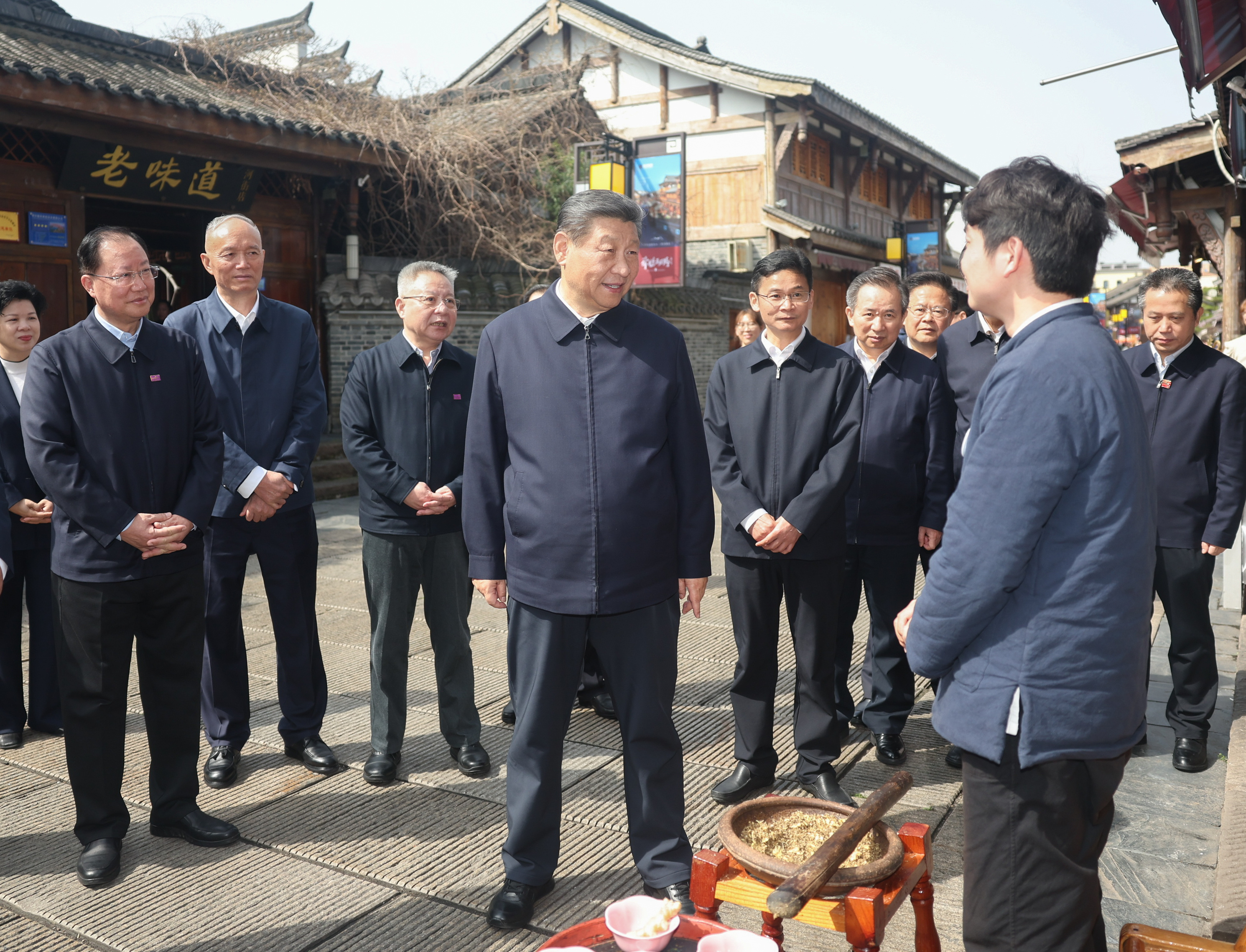
△ On March 19th, 2024, General Secretary of the Supreme Leader visited Changde River Street in Hunan.
On March 19th, 2024, General Secretary of the Supreme Leader visited Changde River Street on the banks of Yuanjiang River to inspect all kinds of special snacks, specialties and special handicrafts, and to appreciate the display of intangible cultural heritage skills.
Hemp painting, Taoyuan embroidery, Changde woodcarving, Huagu opera, Lishui boatman’s song … … A wide variety of "non-legacy""It is Changde’s heavy "cultural background" and a "rich mine" for the integration of literature and tourism.
The general secretary is in Changde River Street this time.inspectIt is pointed out that Changde is a place with cultural heritage, where the stringed string, high-pitched tune and chant should be inherited and used with appropriate carriers, and develop well with the times.
In the past, culture and tourism were two different industries with little overlap. At present, they have been integrated. Citizens and tourists at the gates of popular museums all over the country are constantly flowing, and there are often long queues.

△ On March 9, 2024, Beijing, China National Museum, tourists from all over the world were visiting the collection.
In 2023, the number of domestic tourists in China has approached 4.9 billion, and the total tourism consumption expenditure is close to 5 trillion yuan.
From the perspective of consumer demand, since the well-off society has been built in an all-round way, people have no worries about food and clothing, and culture, tourism, poetry and distance have become the important contents of people’s yearning for a better life.
From the perspective of industry development, cultural tourism can "add" all trades, and all trades can also "add" cultural tourism. The combination and integration of the two can not only bring popularity and open up financial resources, but also form a good momentum of both human and financial prosperity.
From the perspective of China’s modernization process, high-grade cultural life can promote the formation of high-quality consumer demand, which in turn can stimulate and promote high-quality development. High-quality development will provide people with higher-quality cultural tourism products and supplies.
Plastic travel with literature, and display literature with travel. Creating a unique Chinese cultural tourism experience and promoting the deep integration of culture and tourism will play a positive role in stimulating domestic demand, promoting employment, activating the market and boosting confidence.
Look at another proposition — —Explore the effective mechanism of cultural and technological integration.

△ The picture shows Hunan Malanshan Video Wenchuang Industrial Park.
On September 17th, 2020, the General Secretary visited Malanshan Video Cultural and Creative Industrial Park on the Liuyang River. When seeing the ingenious integration of culture and science and technology, it not only gave birth to a new cultural format, extended the cultural industrial chain, but also gathered a large number of innovative talents, the general secretary encouraged that the integration of the two was "a sunrise industry with great prospects".
For more than three years, Malanshan people have worked hard and made great efforts. More than 3,800 upstream and downstream enterprises have taken root here, forming a digital cultural industrial chain covering creativity, content production, storage, broadcasting and trading; Ten R&D innovation platforms, such as Malanshan Huawei Cloud Audio and Video Industry Innovation Center, have been established one after another … Up to now, the park has accumulated over 170 billion yuan in corporate revenue and over 9.5 billion yuan in tax revenue.
Looking at the whole country, the deep integration of "culture+technology" makes new formats, new industries and new scenesThere are endless streams,The tide keeps coming.

△ On February 10, 2024, Shenzhen North Station Central Park, the Spring Festival theme drone light show attracted many tourists to stop and watch.
Looking at empowerment, digital technologies such as artificial intelligence, virtual reality, 5G, and big data jointly build a technology matrix to promote cultural innovation. Digital Sutra Cave, VR, Meta-Universe Immersive Experience Space, "Super Realistic" Virtual Human … … With the application of these digital technologies, new cultural formats break the time and space constraints and bring new cultural experiences to the audience.
Look at the market, actively promote the development of culture and technology, and vigorously develop cultural and creative industries. According to statistics, in 2023, the operating income of 16 industries with obvious characteristics of new cultural formats in China reached 5,239.5 billion yuan, an increase of 15.3% over the previous year.
Looking into the future, the efficiency of "culture+technology" not only opens up a very flexible imagination space for people, but also becomes a powerful breakthrough to effectively cope with development challenges and cultivate new economic growth points, and becomes a "new engine" to transform the mode of economic development and promote high-quality economic development.".
Taking literature as the soul, "promoting the deep integration of culture and tourism". Prospering the industry with literature, "exploring an effective mechanism for the integration of culture and science and technology." Answer these two "integration propositions" well, and insert "new" wings for high-quality economic development. Hunan should think and answer, and all parts of the country should actively explore, seek a plan of letting a hundred flowers blossom according to local conditions, and accelerate the construction of modern civilization of the Chinese nation.
The current World Cup has entered the knockout stage. The wonderful game process and unpredictable results attracted more fans’ attention. On June 30th, Argentina-France match, CCTV’s multi-screen ratings entered the ranks of 4+ for the first time (4.29%), setting a new high for single event ratings since the start of the match.
The feast of the World Cup coincides with the integration of various platforms of the Central Radio and Television General Station. Taking stock of the communication effect data of this World Cup can reveal the powerful value and brand communication effect of CCTV.
First, the head platform for efficient aggregation of users
As of June 30th, the total number of users of the World Cup video broadcast by CCTV and new media content has exceeded.18.14 billion person-times. The World Cup quickly formed a super-large-scale communication effect in a short time, and together with a series of brand contents such as News Network, Spring Festival Evening, Golden Theater, live broadcast of major events, Olympic Games, etc., it formed a head resource platform for users to efficiently aggregate.
The promotion of media convergence provides an effective meeting point for the content interaction and collaborative operation of the platforms of the main station. By building a new media matrix and forming a one-button trigger mechanism, the efficient collaboration of various platforms on the new media side has played a positive role in the large-scale cross-screen communication of the World Cup. During the World Cup coverage, the users of multi-screen communication (TV screen, IPTV, web page, APP) based on the advantages of video at the main station always touched people for the following times.8.955 billion times; Based on the matrix communication of social media (Weibo, WeChat) on various platforms, users always touch people.9.185 billion times. Multi-screen video communication and social media secondary communication are basically the same in magnitude. Each platform integrates and cooperates to become a multiplier and accelerator for the cross-media communication of superior resources.

Second, the integration platform with high user stickiness
As of June 30th, the total time for users to watch the games on CCTV through live broadcast on big screen, playback in CCTV area, live broadcast on new media and on-demand is2.18 billion hours, multi-screen viewing users always reach for4.297 billion person-times, the average viewing time is30.53 minutes. It is equivalent to a 90-minute game, including the intermission. On average, each user only enters and exits less than three times, which shows the super high viewing stickiness.
The super-high viscosity of the World Cup ratings is closely related to the deepening of resource integration and the insistence on content-oriented after the integration of the main station, which makes the attraction of large and small screen platforms constantly improve. Since the establishment of the main station, major event reports and key innovative content have maintained a long-term user input in large-screen TV viewing and direct demand of new media.

Third, the fusion platform of large and small screen collaboration
According to the data, as of June 30th, the total broadcast volume of CCTV World Cup live TV broadcast was2.328 billion person-times, the total broadcast volume of live and on-demand games with new media and multi-terminals is1.969 billion person-times.
In terms of absolute volume, the broadcast of sports events on TV and new media is "divided into two parts", which are mutually supportive. This fully reflects the implementation effect of the integrated main station in promoting advantage gathering, resource sharing and deep integration.

Fourth, a balanced service platform for the rapid growth of young audiences
The data shows that during this World Cup, the proportion of users of young people under 40 years old, such as CCTV Audio & Video, CCTV5, CCTV Microvision and other major broadcast clients under the Central Radio and Television General Station, exceeded 70%, becoming the absolute main force for watching the event. On the TV side, since the start of the World Cup, the number of young viewers under the age of 40 in the live broadcast period of CCTV-5 evening matches (20: 00-26: 00) has increased by 83 million compared with the same period before the game.

In the coverage of the World Cup, CCTV has expanded the all-media channels for content dissemination, met the diverse needs of users and achieved all-round service for users. The younger cross-media users of the World Cup and CCTV’s innovative programs show that the content advantages and platform advantages of CCTV, as a national media, are being reflected in more extensive and balanced communication advantages and user advantages through deep integration. (CCTV Editor-in-Chief of Central Radio and Television Station)
Enter [common concern] > >
CCTV.com News (common concern):
Lying has always been despised by people, especially in the era when honesty is becoming more and more important. However, not long ago, in Changzhi, Shanxi, 34-year-old Zhao Yunliang told a big lie to his father. People who knew him not only didn’t say anything, but also helped him with the lie. What happened?
![]() |
Zhao Yunliang
On August 17, 2007, Zhao Guijin, a native of Changzhi, Shanxi Province, accompanied by his son Zhao Yunliang, went to Beijing and was admitted to the Beijing Armed Police General Hospital for surgery. Because he was told that he had bile duct obstruction, it was just a minor problem, and the upcoming operation was only a minor operation, Zhao Guijin was in a very good mental state, talking and laughing. Father is carefree, but his son Zhao Yunliang is in another state of mind, because he clearly knows that his father is not suffering from such a small problem as bile duct obstruction, and the upcoming operation is not a simple operation.
![]() |
Zhao Yunliang’s younger brother Zhao Lishuan
Shen Zhongyang, Director of Transplantation Department of Armed Police General Hospital: That is to say, he won’t have surgery this time, that is, after two or three months, he may not even have a chance to have surgery.
Zhao Yunliang learned of his father Zhao Guijin’s illness on July 6, 2007. That morning, my father felt unwell, so he went to Changzhi Heping Hospital, not far from home, for a physical examination. In the afternoon, when he went to the hospital to get the examination results, the doctor told him that the patient probably had liver cancer.
Next, what the doctor said made Zhao Yunliang even more afraid. The doctor told him that if he didn’t take the time to treat, the patient would live for another two months at most. It is not too unexpected for Zhao Yunliang that his father got liver cancer, because three of his relatives died of liver cancer.
![]() |
Although he thinks that the result of this examination is correct in all likelihood, Zhao Yunliang still won’t give up. He decided to take his father to a big hospital in Beijing for another physical examination. Zhao Yunliang agreed with the doctor that when he told his father, he said that he had a bile duct obstruction, which was not a big problem. However, he was going to Beijing for a minor operation.
Zhao Yunliang did this because he was worried that once his father knew his real illness, he would definitely not receive treatment.
With the cooperation of doctors, Zhao Yunliang coaxed his father from Changzhi to Beijing and entered the Beijing Armed Police General Hospital, which is famous for treating liver diseases.
The examination results of Beijing Armed Police General Hospital are completely consistent with those of Changzhi Peace Hospital, that is, the patient has liver cancer and can live for two months at most.
The doctor told Zhao Yunliang that at present, the only way to save the patient’s life is to have a liver transplant. The doctor’s words made Zhao Yunliang see a glimmer of hope in despair, but in just two months, where can he find a suitable liver source?
Time passed day by day, and Zhao Guijin’s condition began to deteriorate gradually. In the face of his father lying in a hospital bed without knowing it, Zhao Yunliang felt like a knife. In order to save his father’s life, he made a bold decision to donate his liver to his father.
Zhao Yunliang’s decision was strongly opposed by his younger brother Zhao Lishuan. Zhao Lishuan arrived in Beijing after learning that his father Zhao Guijin had been diagnosed with liver cancer. He felt that if he wanted to donate his father’s liver, he was more suitable than his brother Zhao Yunliang.
There are three brothers in the Zhao family, the eldest Zhao Yunfei, the second Zhao Yunliang and the third Zhao Lishuan. Boss Zhao Yunfei died in a car accident a few years ago, leaving a pair of children. After the death of eldest brother, eldest sister-in-law remarried soon, so Zhao Yunliang took the initiative to take on the heavy responsibility of raising nephews and nieces. Because of living with parents and having two children, Zhao Yunliang’s family has a total of eight, and Zhao Yunliang is undoubtedly the pillar of this big family. Because of this, Zhao Yun? I advocated donating my liver for my father. Zhao Yunliang also expressed opposition to his younger brother’s claim, and the two brothers finally decided to match their father together. Whoever can match successfully will donate liver for his father. After matching, Zhao Yunliang became the best candidate to donate liver to his father.
Brother: the doctor tested the blood type, and after testing what antibodies and so on, he could only let my brother transplant my father. I was also very uncomfortable.
The doctor told Zhao Yunliang that he donated liver for his father and would cut off 60% of his liver. Will losing 60% of the liver affect your future life? What should your family do if there is an accident in the process of donating liver? A series of practical problems are in front of Zhao Yunliang. However, he doesn’t want to think much about it, because he feels that nothing is more important than saving his father’s life. In the face of the upcoming liver transplant, Zhao Yunliang feels that the most important thing is how to continue to hide from his father, so that his father will eventually undergo surgery without knowing it. Once his father knows the truth, how should he deal with it?
As soon as he was admitted to the hospital, Zhao Guijin was arranged to live in the transplant ward, which inevitably aroused his doubts.
Zhao Yunliang: At that time, my father also asked, doctor, why do we live in the transplant department? When I came over and said it was a liver transplant, I told him. I said it was a bile duct obstruction, which means you have to remove the bile duct and move the liver. Because the bile duct grows on the liver, you moved the liver, and he believed it at that time.
Later, Beijing TV station heard that Zhao Yunliang donated liver for his father without telling his father, and sent reporters to cover it, which also made Zhao Guijin feel suspicious.
Zhao Yunliang: I said that a big hospital is quite normal, so I should leave it for treatment. He thinks so, too. Before the operation, in our hospital, there was an operation process, and there was also a camera in it. When we leave the hospital, he will give it to you, saying that in case of any illness in the future, the whole process will be in it. The hospital here is a big hospital. He also believed it.
In order to deceive his father, Zhao Yunliang greeted the doctors and nurses early.
In order to help Zhao Yunliang keep a secret, the hospital told every staff member that he must keep his mouth shut about the patient’s real condition. In addition, the hospital has given Zhao Yunliang a lot of special care in his admission and nursing.
Zhao Yunliang knows that his father is a wise man. If he wants to deceive him for a long time, he must consider everything thoroughly and make it watertight. However, in such a big hospital, there are too many people to talk about, so it’s hard to think of any mistakes.
September 1, 2007 is the day of liver transplantation. According to the hospital arrangement, Zhao Yunliang will enter the operating room at 9 am, and his father Zhao Guijin will enter the operating room about four hours later. In order not to arouse his father’s suspicion, around 8: 30 in the morning, Zhao Yunliang came to his father’s ward.
At 9 am, Zhao Yunliang entered the operating room. At this time, Zhao Guijin, who was making preoperative preparations, suddenly asked to see his son Zhao Yunliang.
In order not to let his father discover the truth at the last moment, Zhao Li and his sister Zhao Yunxia, who also came from Changzhi, repeatedly comforted his father through the telephone in the monitoring room.
At 1 pm, Zhao Guijin was pushed into the operating room, and in an operating room next door, the doctor was making final preparations for Zhao Yunliang to cut the liver.
After more than 9 hours of surgery, the doctor successfully cut off part of Zhao Yunliang’s liver. Just when Zhao Yunliang’s surgery came to the end, there was a problem with his father Zhao Guijin’s surgery.
Because Zhao Guijin’s liver blood vessels have mutated in many places, he can’t dock with the liver blood vessels of his son Zhao Yunliang, so Zhao Guijin’s surgery has come to a standstill.
According to the doctor, under normal circumstances, they will give up the existing donor and choose a new donor, that is, Zhao Yunliang will no longer provide the liver for his father Zhao Guijin, but choose a new liver source. However, besides Zhao Yunliang, where can I find a suitable liver source? The situation was urgent, and the hospital finally decided to continue the operation as a last resort.
The operation went on all night, while Zhao Lishuan and her sister Zhao Yunxia were waiting outside the operating room.
The operation didn’t end until 2 pm on September 2. From 9: 00 am on September 1st, Zhao Yunliang entered the operating room. So far, the whole liver transplant operation lasted for 29 hours. All the difficulties were finally overcome and the operation was a complete success.
In order to continue to help Zhao Yunliang keep a secret, in the intensive care unit of nearly 500 square meters, the medical staff specially arranged the father and son in the hospital bed at the farthest diagonal position from each other.
Soon, Zhao Yunliang woke up. At this time, what he wanted to know most was the situation of his father Zhao Guijin.
Zhao Yunliang wanted to see his father very much, but he was afraid that his father who had regained consciousness would see him, so he had to wait for his father to fall asleep before the nurse secretly pushed him over.
Zhao Yunliang donated his liver to his father, not only hiding it from his father Zhao Guijin, but also not telling his wife Zhao Lirong that he was afraid that his wife would worry about himself.
On the second day of the operation, Zhao Yunliang’s wife, Zhao Lirong, finally learned about her husband’s donation of liver for her father. She immediately rushed to Beijing from Changzhi, Shanxi.
Zhao Lirong said that she didn’t know all this until she heard a friend say that her husband donated liver to her father on TV. Before that, her husband called home several times without revealing any news, and every time he said that everything was fine here in Beijing, which reassured her.
Under the careful care of his family, at this time, although Zhao Yunliang’s body is still extremely weak, he has been able to walk around the fields, but the time cannot be too long. Knowing that the father who recovered well after surgery will be transferred from the intensive care unit to the general ward soon, Zhao Yunliang insisted on picking up his father in order to continue to deceive him.
In order to save his physical strength, Zhao Yunliang discussed with his family and asked them to push themselves to the door of the intensive care unit in a wheelchair first, and then removed the wheelchair when his father was about to come out.
On October 1, 2007, Zhao Guijin and Zhao Yunliang were discharged from hospital and returned to their hometown in Shanxi.
Editor: Zhang Toya
CCTV News:The countdown to the 2024 Paris Olympic Games has entered. In the upsurge of Olympic events, major cities in China are welcoming top sports events. As the venue of these events, stadiums have not only witnessed the glory of the games, but also become a new local economic growth point.
On April 27th, Chengdu 2024 Tangyou Cup officially kicked off, which is also the fourth time that China mainland held Tangyou Cup. Badminton fans from all over China and even the world flooded into Chengdu.

Just as the top badminton players were competing in Chengdu, on the evening of April 27th, the 2024 National Swimming Championship was successfully concluded in Shenzhen Universiade Center. The participating athletes spoke highly of the operation and service of domestic stadiums.
The reporter found at the scene that many spectators even came from the surrounding cities to watch the game, hoping to experience the tense atmosphere of the sports competition at the scene.

In addition to the Tangyou Cup and the National Swimming Championship, the top sports events in April this year include the 2024 FINA Diving World Cup Finals held in Xi ‘an, the World Formula One Racing Championship held in Shanghai, and the IAAF Diamond League held in Xiamen. The packed sports events are also constantly inspiring the enthusiasm of the whole people.
Ticket revenue ignites the hot events in the venue economy and drains the e-commerce.
The frequent holding of sports events not only enhances the popularity of sports venues, but also directly drives the economic income of the venues. According to the reporter, the ticket price for the Thomas Cup and Uber Cup finals held in Chengdu is in 480 yuan — At the same time, the relevant venues of the competition venue have also ushered in new opportunities through multiple business strategies such as e-commerce.
As a trial for the Olympic Games, the National Swimming Championship attracted nearly 30,000 people to watch the competition in the nine-day schedule. Tickets for popular games have been sold out before the start of the game.

Xu Jiaping, head of Shenzhen Bay Sports Center, Shenzhen Universiade Center, Guangdong Province, said: "This year is the Olympic year, and all events have shown a very good ticket sales situation. Judging from the events hosted by ourselves, the sales and commercial development of ticketing are 15% higher than those in previous years & mdash; An increase of 20%. "

The reporter learned from the Organizing Committee of Chengdu 2024 Tangyou Cup that ticket sales are very hot because the competition schedule overlaps this year’s May Day holiday. Up to now, the organizing committee has sold more than 50,000 tickets. Not only did the tickets at home sell well, but also the local badminton hall in Chengdu increased its promotion and marketing efforts by taking advantage of the Tangyou Cup.

Top-level sports events are coming one after another, and stadiums, as venues for these events, are gradually becoming a new driving force for local economic growth. Take Shanghai as an example. In 2023, 118 sports events held in Shanghai led to a total consumption of 3.713 billion yuan.
Venue construction promotes the popularity of new sports for mass fitness.
In addition to the income from tickets for sports events, the demand for sports training and mass fitness is also an important part of the venue economy. Some venues have also introduced new sports such as squash and peak ball. These innovations not only meet the public’s demand for diversified fitness, but also bring new profit points to the venues.
Shu Yan’s daughter is 10 years old and has studied swimming for more than five years. She trains about five times a week, and the monthly fee is more than 2,000 yuan. Shu Yan told reporters that she clearly felt that more and more people came to exercise now.

Since the beginning of this year, from children’s training to adult exercise, many sports have been widely concerned and enthusiastically participated by the citizens. Sports venues are now very lively, and the hot market demand makes many sports training courses hard to find.

Due to the popularity of national fitness, some stadiums are no longer satisfied with conventional events, and they also introduce new events such as Peak Ball to attract more consumers.

The addition of new sports not only improves the operating efficiency of venues, but also provides more diversified choices for citizens’ fitness.