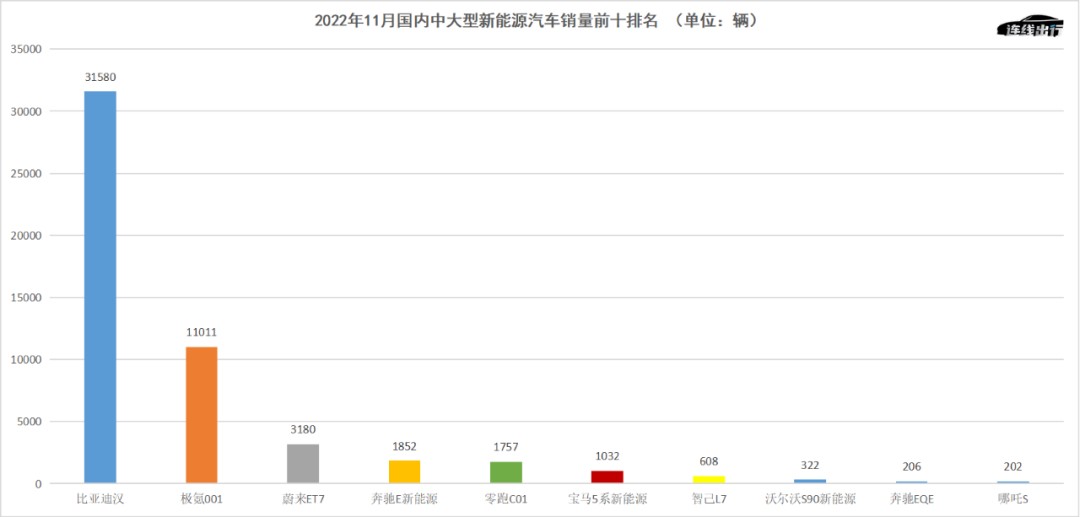
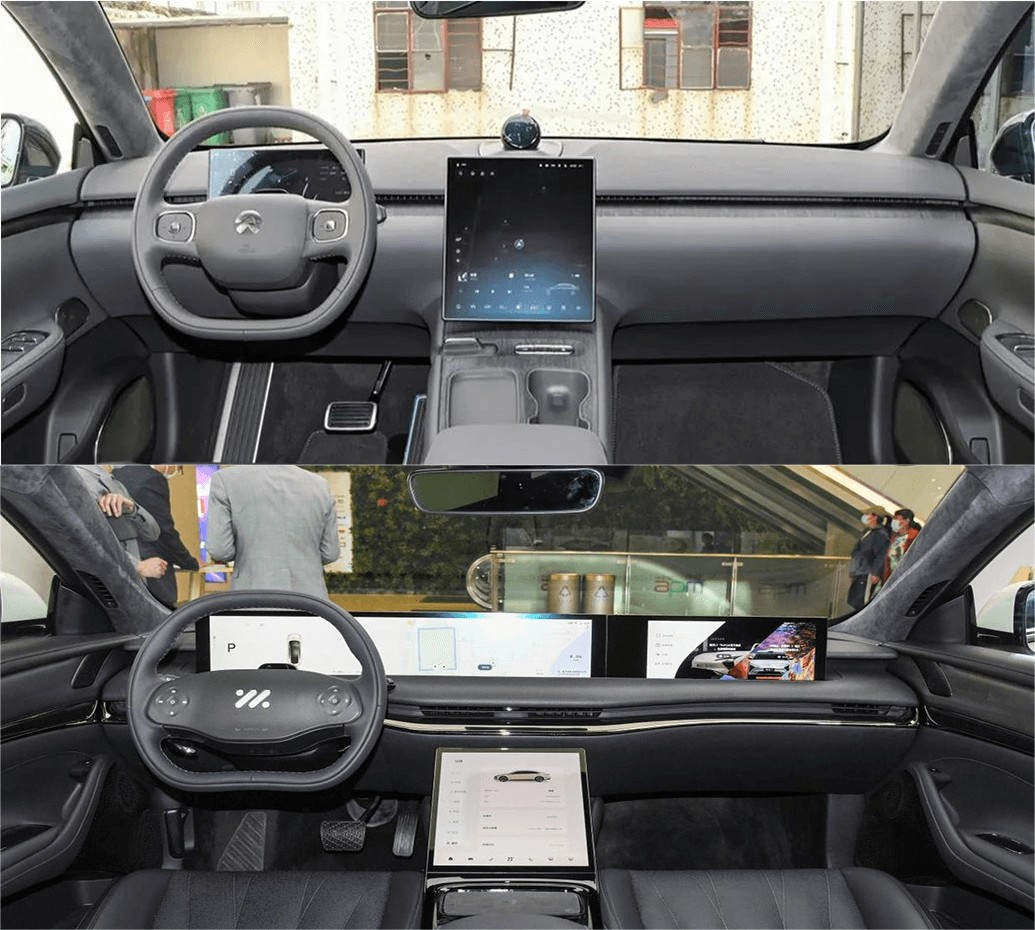
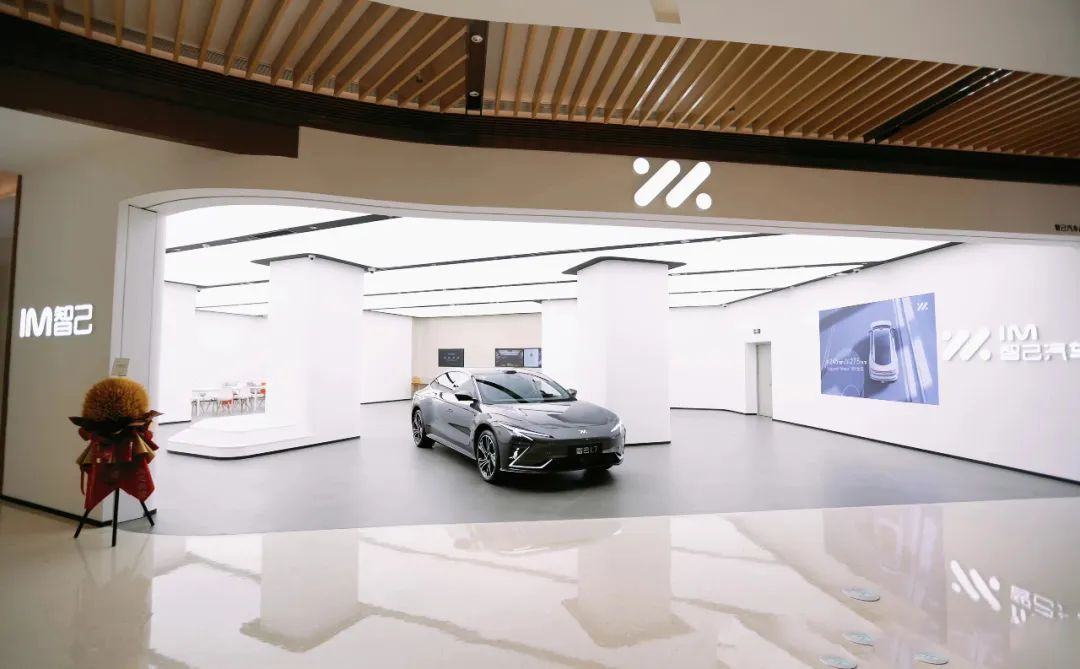
The valuation of Zhiji Automobile is 30 billion, and the sales volume in November is only 608, down 29%. CEO Tamia Liu’s illegal "marketing" is accused of ignoring the law.

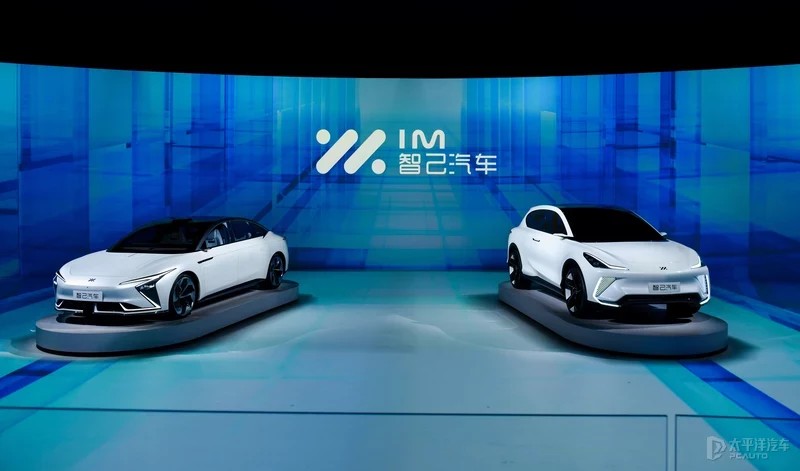
  Backed by SAIC, Zhangjiang Hi-Tech and Alibaba, Zhiji Automobile, with a valuation of nearly 30 billion yuan, has played a good hand.

  Recently, the production and sales data released by SAIC showed that Zhiji Automobile sold only 608 vehicles in November, down 29.3% from the previous month, reaching 4,545 vehicles in just six months.

  Previously, Tamia Liu, CEO of Zhiji Automobile, once said: "We will review this year many years later, which may be the first year of the counterattack of smart electric luxury cars. We have a high probability that we will ride the dust in the future growth curve."

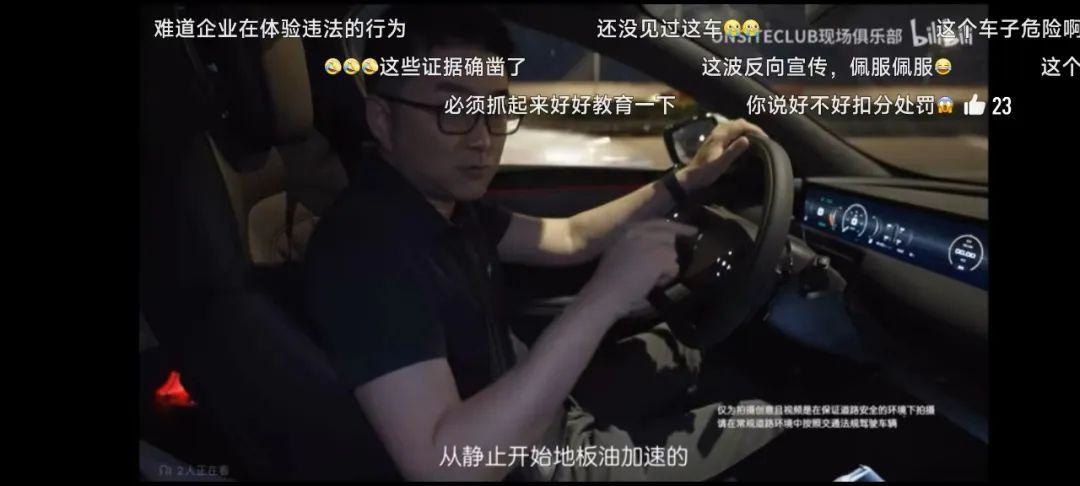
  Tamia Liu, who loves to talk big, is a marketing "veteran". Recently, when Tamia Liu displayed Zhiji L7, there were many illegal behaviors, such as high-speed violation, lane change without turning signal, solid lane change, continuous lane change and speeding.

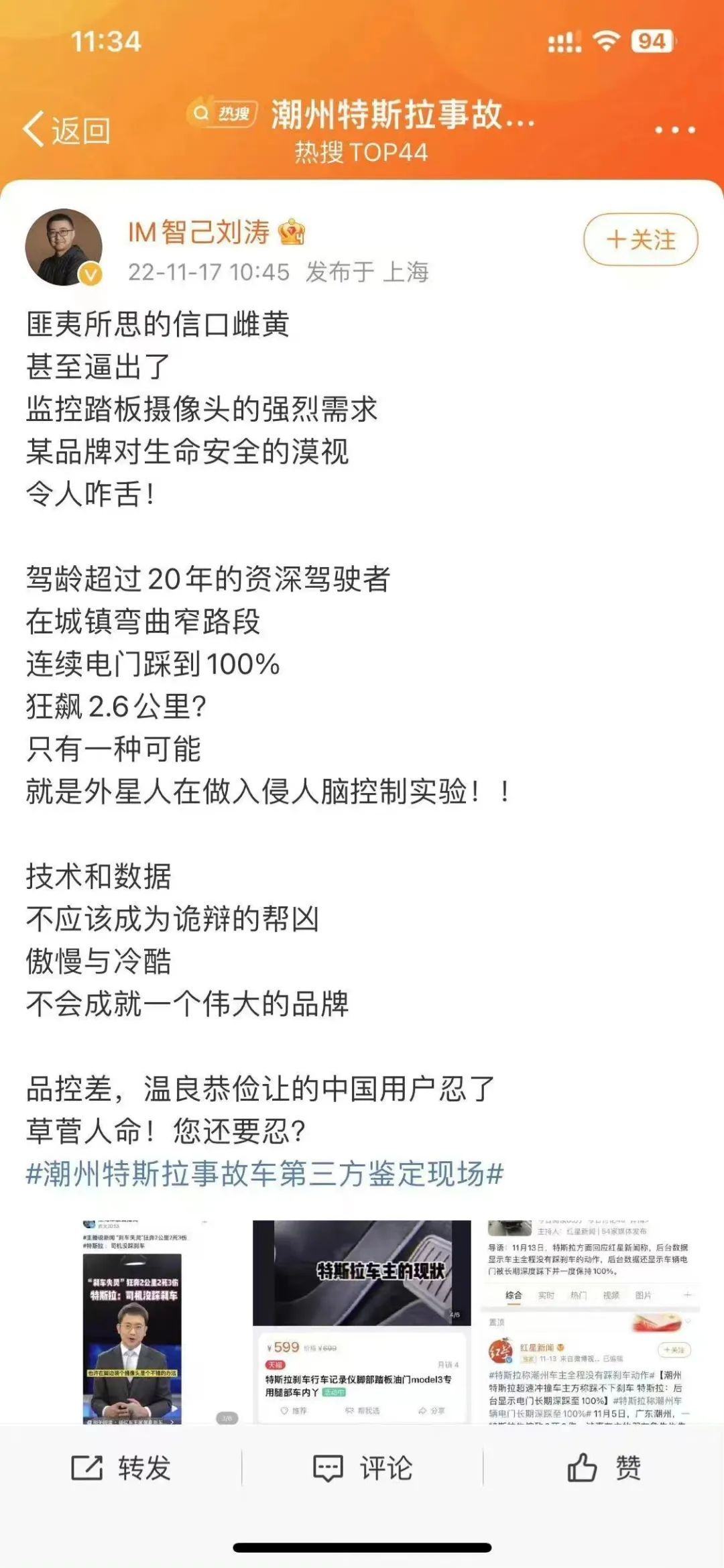
  Although Tamia Liu apologized afterwards, netizens still believe that "all of the above may lead to the tragedy of car crash and death. As the CEO of Tangtang Automobile, it is really shocking to ignore the law and ignore the safety of others."

  Monthly sales fell rapidly after breaking thousands.

  Zhiji Automobile was founded on December 25, 2020, and it has been exactly two years since then. It is a high-end pure electric automobile brand jointly built by SAIC, Zhangjiang Hi-Tech and Alibaba, among which SAIC holds 54%, Zhangjiang Hi-Tech holds 18% and Alibaba holds 18%.

  According to the data, the financing scale of Zhiji Automobile’s initial round reached 10 billion yuan, which is the first automobile science and technology company in China to reach the order of 10 billion.

  It is worth mentioning that Wang Xiaoqiu, president of SAIC, is the chairman of Zhiji Automobile. It is reported that within SAIC, Zhiji was named "No.1 Project" and made it "China Tesla".

  On June 18th, 2022, the first product L7 of Zhiji Automobile was officially delivered nationwide, and the project development of the second product LS7 was promoted in an orderly manner.

  In August 2022, Zhiji Automobile obtained financing from investors such as Bank of Communications, SAIC and ICBC Investment, with a valuation of nearly 30 billion yuan.

  Changjiang Business Daily reporter found that since July 2022, SAIC has included the sales of Zhiji automobile in the production and sales express, and Zhiji automobile sold 816 vehicles in July, with a total of 1,051 vehicles.

  In August, the sales volume of Zhiji reached 1,007 vehicles, breaking through the 1,000-vehicle mark for the first time. In September, the company sold 1,019 vehicles, and the cumulative sales in four months reached 3,077 vehicles.

  However, the sales volume of Zhiji Automobile, which was not too much, began to decline from the previous month. In October, the sales volume was only 860 vehicles, down 15.6% from the previous month.

  In November, the monthly sales volume of Zhiji Automobile declined again, only 608 vehicles, down 29.3% from the previous month, reaching 4,545 vehicles in six months.

  According to the data, the reference price of Zhiji L7 dealers is 338,800 yuan to 578,800 yuan, which is not cheap among a number of new energy car companies.

  In 2021, after Zhiji officially announced the "luxury pure electric smart car" Zhiji L7 to the outside world, Tamia Liu, CEO of Zhiji Automobile, once said: "We will review this year many years later, which may be the first year of the counterattack of intelligent electric luxury cars. We have a high probability that we will ride the dust in the future growth curve."

  The "riding the dust" of Zhiji automobile has not yet appeared, but it is a fact that it has plummeted.

  For poor sales, SAIC responded on the investor platform that compared with other independent competing products, Zhiji Automobile is still in the initial stage of the brand. It is very challenging to build a brand-new independent high-end brand. In the initial stage, it is necessary to ensure the quality of product delivery and customer satisfaction.

  SAIC Group said that every new brand has experienced the difficulties of starting and climbing. "Please give SAIC’s own brands more patience and time, so that we can do our products and services well, so that sales growth and user reputation can be guaranteed."

  The non-delivery has attracted complaints.

  Interestingly, the number of Zhiji cars has not been sold, and the complaint has been found.

  According to Chezhi. com, a Zhiji car consumer bought a 2022 Angel Wheel, but less than one month after picking up the car, he found a large number of indelible black spots on the front windshield.

  After inspection at the after-sales maintenance point of Zhiji Tongpu Road, it was found that the glass was burned by high temperature after leaving the factory and before installation. There were about forty or fifty black spots on a piece of A4 paper, and the quality problem was serious.

  The consumer said that Zhiji Automobile also admitted that it was a manufacturer’s quality problem, but it just did not give a reasonable solution.

  In fact, Zhiji automobile has received many complaints before it was delivered.

  Zhiji Automobile released its products in April, 2021, and launched the "angel rights" promotion policy for the first 3,000 car owners who booked Zhiji L7.

  However, since May 10th, hundreds of car owners who have reserved the Zhiji L7 have voiced on the Internet, demanding that Zhiji Automobile respond to the problems such as the damage to the rights and interests of Angel Wheel users, the reduction of vehicle allocation and the shrinking of batteries.

  Regarding the problem of shrinking battery and cruising range, Zhiji Automobile said that it was caused by different battery power measurement methods, and the battery life of Zhiji L7 did not shrink, and there was no deception to consumers. The wireless charging configuration of the Zhiji L7 production concept car displayed at the Shanghai Auto Show last year is not standard, so it does not involve false propaganda.

  Finally, Zhiji Automobile blamed the lack of rigor in its work, and said that it would accept users’ suggestions in the future, adopt a unified data caliber and clearly publicize relevant test standards and remarks.

  The quality of the car can’t be guaranteed, but Zhiji car is a "good hand" in marketing.

  "Tamia Liu, CEO of Zhiji Automobile, was stunned to promote the so-called super-running mode of his own car. On the highway, he completely ignored the safety of himself and others, and all kinds of dangerous illegal driving were illegal." Recently, a car blogger exposed a news that Tamia Liu, co-CEO of Zhiji Automobile, was driving illegally on the highway, which was vomited by many netizens.

  As seen in the video, Tamia Liu claimed to accelerate the floor oil of Zhiji L7 in a static state, and take everyone to experience the immersive feeling of Zhiji L7 super-running.

  A car blogger wrote that the driving involved high-speed violation, lane change without turning signal, solid lane change, continuous lane change and speeding. "All of the above may lead to the tragedy of car crash and death. As the CEO of Tangtang Automobile, it is really shocking to ignore the law and ignore the safety of others."

  According to the above-mentioned violations, some netizens calculated that Tamia Liu would face 16 points and a fine of 1000 yuan.

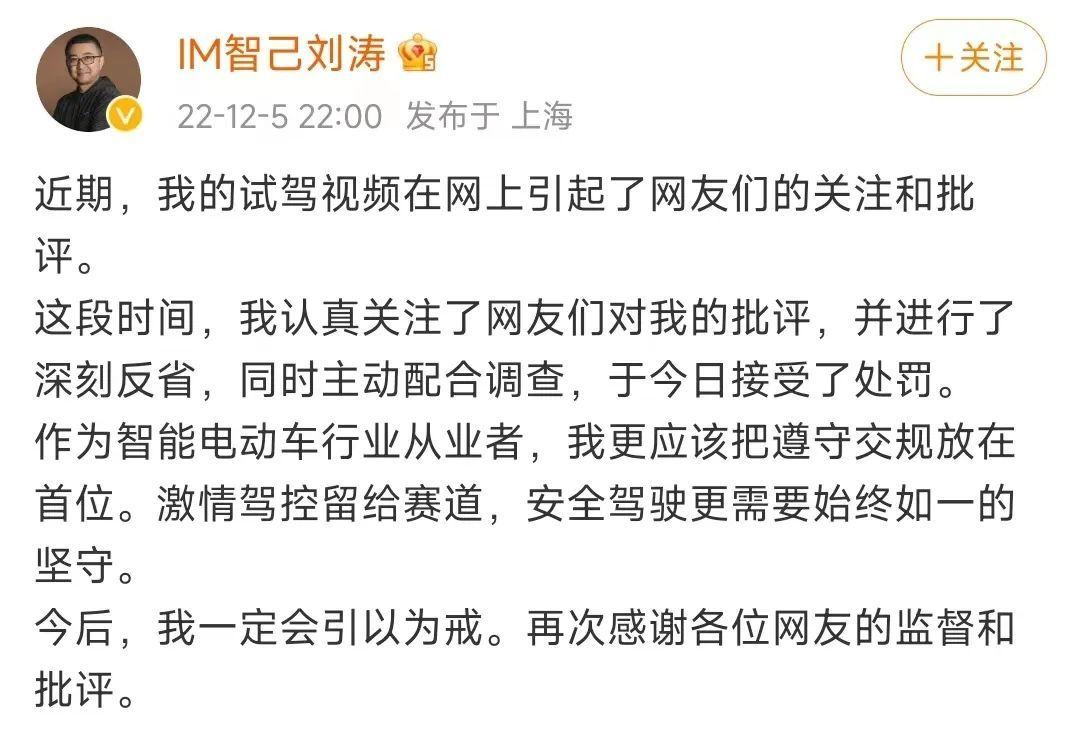
  After the incident, Tamia Liu publicly apologized for its illegal test drive. Tamia Liu wrote in Weibo that he had paid close attention to the criticism of netizens recently, made profound introspection and actively cooperated with the investigation, and was punished on December 5.

  At the same time, Tamia Liu said that as a practitioner in the smart electric vehicle industry, it is more important to put compliance with traffic regulations in the first place, leaving passionate driving control to the track, and safe driving needs to be consistently adhered to. (Reporter Jin Du)

Fresh food is destroyed by "sinking" when it comes home. Why can’t you avoid these pits every day?

Text | understand notes

Delaying service, protecting employees’ rights, breaking the capital chain, and executives’ "running away" ……

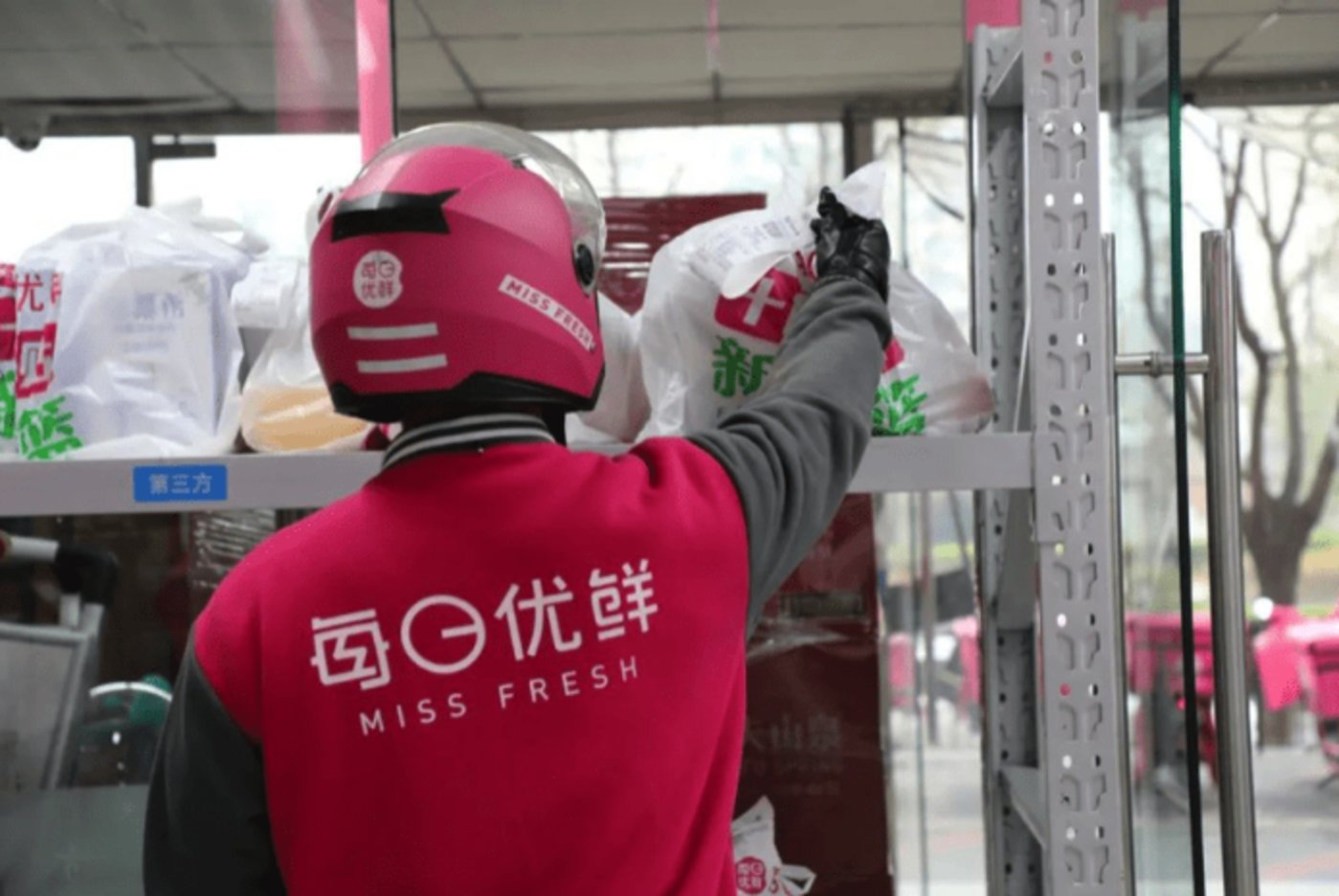
From the end of July, the "originator" of the fresh-food home model — — Fresh food every day has always been a negative rumor. A series of "tug-of-war" triggered by its "broken arm to stop bleeding" and the closure of the Speedmaster business have also been staged in many places: gossip, media reports, corporate rumors, and overwhelming news.

On August 9th, according to official website news of Beijing Consumers Association, Daily Youxian was interviewed by Beijing Consumers Association on the afternoon of August 4th because of "unable to operate normally and causing a lot of consumer complaints". Although the official platform gave a notice of service change: "the delivery time is the fastest delivery the next day", the interview also confirmed the rumor that it was "in trouble".

Some analysts pointed out that the three modes in the fresh e-commerce industry — — Pre-warehouse (fresh food comes home), warehouse-store integration, and community group purchase, the pre-warehouse model itself is the most difficult to make a profit, and it is also a heavy cost, which has also become the main reason why the daily fresh food is in trouble; Some analysts believe that there is nothing wrong with the daily excellent "urban sorting center+community pre-warehouse" secondary storage system itself, but discount subsidies and excessive involution in staking, which makes it difficult to return after losses.

Looking at it from another angle, is it a tragic "pit avoidance guide" for other players in the field of fresh food?

Is the so-called pre-warehouse mode of fresh e-commerce a pit?

Take a look at the recent situation of another player in the industry. In addition to fresh food every day, it seems that the previous days were not easy. As early as June, it was reported that under the continuous loss, Ding Dong bought vegetables and withdrew from more than ten cities to survive.

According to the relevant financial report of Ding Dong’s grocery shopping, most of the company’s net loss of 6.429 billion yuan in 2021 came from the front positions in the second and third tier (cities). Therefore, it has to shrink its network channels and close its business in cities such as Tangshan, Langfang, Xuancheng, Chuzhou, Zhongshan, Zhuhai, Qingyuan, Jiangmen, etc., mostly sinking the market in the third and fourth lines.

Although the financial report for the second quarter of 2022 (as of June 30) released by Ding Dong recently saw the dawn, it was only a staged victory: the total revenue of Ding Dong’s grocery shopping in the second quarter reached 6.63 billion yuan, a year-on-year increase of 42.8%; Non-GAAP’s net profit was 20.6 million yuan, achieving phased profit for the first time. The data shows that the net loss of Ding Dong’s grocery shopping in the same period in 2021 was 1.7285 billion yuan.

So, what is the biggest challenge for fresh food to reach the home market in the future?

"I feel that the more the market sinks, the more difficult it is to do the mode of fresh food."

In 2021, in order to take care of the sick family, Huan Jie (pseudonym), who worked hard in Shanghai for more than three years, resigned and returned to his hometown in Wuhu. He applied to be the operation manager of the local "warehouse-store integration" site, which is regarded as continuing to connect with the "Internet" in this manufacturing-oriented city.

During his work in "Magic Capital", Huan Jie was used to buying fresh products through fresh food. However, after working as a store manager in his hometown for more than a year, he found that the mode of fresh food coming home in small cities was almost difficult to improve.

"In order to seize the market, the price of the fresh platform is cheaper than that of the vegetable market, but few people buy it." He told him that he knew how to take notes. Although the store was located in the city center, the daily order volume of users was less than a quarter of that of a store in the suburbs of Shanghai, and he was losing money almost every month.

In his view:The sinking market "doesn’t catch a cold" about the mode of fresh food coming home, which has nothing to do with the price of products and the local consumption level, but is closely related to the consumption habits of residents. More precisely, it is the "aging" problem of sinking market, which hinders the development of fresh food in small cities.

"It’s not the same as when I was a child. Today, there are many middle-aged and elderly people on the streets of Wuhu, and there are very few peers." As for the reason, Huan Jie explained that, like many third-tier cities, "the siphon effect of big cities has caused local young people in Wuhu to flow out." When communicating with his classmates, he found that the problem of "aging" in Wuhu city is actually quite good, and some cities are more obvious.

According to the statistics of CBN, 149 cities in China have entered the stage of "deep aging". Eleven cities, including Nantong, Ziyang, Taizhou and Zigong, have fallen into the stage of "super aging".

Almost all of these cities are small and medium-sized cities, and they are also "sinking markets" among the Internet population. Huan Jie told those who understand notes that compared with young people who pay attention to convenience, it is difficult for middle-aged and elderly people who don’t like to be "arranged" to accept the mode of buying food fresh at home.

Even if middle-aged and elderly people have learned to buy "industrialized" products with uniform quality on the e-commerce platform, they still insist on the pursuit of freshness of meat dishes. As for the young people in small towns who are used to eating "home cooking", naturally they will not worry about buying food and eating like their peers in first-tier cities.

According to the survey data of iResearch:Among fresh e-commerce users, the proportion of people aged 45 and under is as high as 87.7%, among which consumers under 35 account for 57.7%. It can be seen that no matter what segmentation mode of fresh e-commerce, the main consumers are young users..

As for the mode of returning home with heavy stores and heavy pre-warehouses, in the sinking market with serious "aging", it is completely the rhythm of "persuasion".

Obviously, this is also the reason why when the mainstream fresh food platform "breaks the wrist to stop bleeding", it is the reason why the business in small cities is closed first.

"It is difficult for fresh food to gain a foothold in small and medium-sized cities. These big platforms are not unclear."

Talking about the topic of "sinking the market" when fresh food comes home, Chen Yu (pseudonym), who used to be the regional operation manager of a fresh food platform, believes that the chicken feathers left by the fresh e-commerce industry are the result of excessive competition and blind profit-seeking of capital in the industry in recent years.

Under the influence of the epidemic, the fresh e-commerce industry, which was almost "cool" a few years ago, started a new round of expansion in Zhang Zhilu, which was originally "rolled up" in the big platforms of first-tier cities, and all of them sank to the third-and fourth-tier cities after 2020 to tap new incremental users.

"At the end of last year, our platform planned to fully deploy third-tier cities. At that time, after a series of market research with my team, I felt that it was not suitable, so I suggested suspending the plan. But in the end, the top management decided to rush to more than a dozen small and medium-sized cities. " Chen Yu said that at that time, competitors were constantly sinking, and the boss naturally couldn’t sit still.

Regardless of whether there is an "aging" problem in small and medium-sized cities and whether there is sufficient demand for the home-based mode of fresh e-commerce, all kinds of entrepreneurs and platforms are rushing to small and medium-sized cities, scrambling to burn money subsidies, just to cultivate new consumer demand. Behind this, there is the fuel of capital, and there are also operators who are blindly optimistic and eager to race before the formation of new consumption trends.

"At the peak of industry expansion, like the third-tier cities like my hometown Qingyuan, there were four or five fresh e-commerce platforms, of which two were fresh at home, which was to fight with the community group buying platform at low prices." At that time, the fresh "bubble" and false data created by burning money will only make investors more excited.

The Beijing News reported that as of February 2021, there were 17,000 fresh e-commerce related enterprises in China, mainly distributed in Guangdong, Jiangsu, Shandong and other regions. Among them, the number of fresh e-commerce enterprises in Guangdong Province is 4,495, ranking first in the country.

Chen Yu told me that she knew how to take notes. Because the company’s fresh food platform sank in small and medium-sized cities in an all-round way, the sales performance was not bad. At an internal meeting, the company’s senior management accused her of "not doing a solid job in the previous market research", which almost made the company miss the sinking market blue ocean, which made her very speechless.

"In the previous field of fresh e-commerce, no matter whether it was a group purchase in the community or a fresh home, almost all of them were making money at a loss. Everyone wanted to win a bonus hunter. As long as the price was low enough and the subsidies were embarrassing enough, users of any age would flock to the queue to take advantage of it." It can be said that low prices and subsidies are the magic weapon for fresh e-commerce to open the sinking market, but at the same time they are also the shackles for realizing profitability.

In Chen Yu’s eyes, compared with the community group buying mode that only one community leader can open up the market, this fresh-food home-to-home mode, which relies heavily on "warehouse-store integration" or "pre-warehouse", is the least qualified to participate in the low-price war of fresh-food e-commerce industry.

"Although the front warehouses and front stores can join and cooperate, in order to ensure the quality of fresh food to the greatest extent, the platform should fully guarantee that the front warehouses and stores in the core of the city are self-operated, which is a huge investment. There are few self-operated warehouses and franchise warehouses every day, and all the food purchases are self-operated, and everyone’s burden is very heavy. "

Obviously, fresh food with high operating costs has no chance of winning in the battle between sinking market and community group buying.

Then, can we save ourselves in the crisis of survival by giving up the platform of "stopping bleeding with broken arms" in small and medium-sized cities?

Different from Daily Youxian, which is riddled with negative news, Ding Dong, who has bought food in advance, has shown that its income growth rate has not declined in the last two quarters, while its losses have steadily narrowed.

Some analysts told me that knowing how to take notes was the result of "optimizing operational efficiency". From the previous fight for scale, grabbing the market and fighting for subsidies to the optimization of regional layout, the operating cost has just been reduced.

However, in the eyes of some people in the industry, even if these platforms "stop bleeding" and return to rationality (for example, the daily fresh food is changed to the "cloud super sale" mode), and the main energy is focused on the first-tier key cities, it is still not a simple matter to turn losses into profits.

Especially in the current situation that the supply chain system of community group purchase and fresh food to home platform is mature and perfect, it is almost impossible to squeeze out more profits in the supply chain. Therefore, each platform can only increase the premium of fresh products, thus increasing the gross profit margin.

"Our company’s current practice is to emphasize the quality advantage of the home-to-home model in publicity, thus opening the gap in positioning with the low-cost community group buying model and attracting high-net-worth users who have higher pursuit of life to use our home-to-home service."

Moddy is the city manager of a well-known fresh food delivery platform. He told me that he knows how to take notes. In recent years, the trend of "getting worse and worse" of fresh food delivery and "the originator of pre-warehouse" has sounded the alarm for many colleagues.

Because the "natural" operating cost of fresh food is high, we can’t blindly fight for low prices with community group purchases that operate with "light assets". In his view, the big platform should still take advantage of the good quality of fresh products and high delivery timeliness to deeply cultivate the middle and high-end user market in first-and second-tier cities. This view can also be glimpsed in relevant industry reports:

A report released by Guotai Junan shows that in 2019, before the epidemic, the pre-warehouse was fresh at home, and the unit price of users was above 50 yuan; "Warehouse-store integration" mode, the unit price of customers is as high as that of 65 yuan. The unit price of community group buyers is usually between 30 and 50 yuan.

Relevant survey data released by iResearch show that when shopping online for fresh products, users in first-and second-tier cities and users in low-tier cities have quite different factors: users in first-and second-tier cities pay more attention to fresh quality while consumers in low-tier cities pay more attention to product price.

However, it is not easy to re-establish the "high-end" reputation and attract high-net-worth users to consume quality at once. Especially in the past one or two years, the field of fresh e-commerce has fought a low-price war, and some home-to-home platforms are limited by price and cost, which has continuously reduced the quality of products, which has had a negative impact on the fresh-to-home model.

"In the eyes of many mass consumers, community group buying is no different from fresh food, depending on whose price is low. In the eyes of high-net-worth users, the home platform that grabs the market at low prices is not necessarily high-end, and the results are not pleasing. " Moddy admits that there is still a long way to go before the fresh-to-home model can regain the favor of high-end users.

Judging from the only remaining types of players in the industry at present, the daily freshness of fresh food in the front warehouse is declining, and the grocery shopping and the food shopping in the United States (some cities) are steadily and steadily; The representatives of "warehouse-store integration" are Boxma Xiansheng, JD.COM Qixian, Wal-Mart, etc., which are still step by step; Community group buying representatives, if they buy more food and prosper, seem to be eroding the space left by daily fresh food.

The battle of fresh e-commerce is still unclear.

Some analysts believe that the "rout" of daily fresh food lies in the pre-warehouse mode, and some even completely deny the "asset-oriented" operation of fresh food to the home mode. In fact, the most controllable fresh food comes home in terms of product quality and distribution efficiency, and there is still room for exploration in the business model in the future.

The "decline" of fresh food to the home market is largely related to enterprises blindly striving for scale, sinking the market and blind subsidies. A large number of ineffective costs and expenditures eventually drag down the normal operation of the platform. Perhaps returning to rationality and regaining its position is the ultimate way out for fresh food.

Russia and the United States "spy wars continue"! A citizen of the United States was detained by Russia for an extended period.

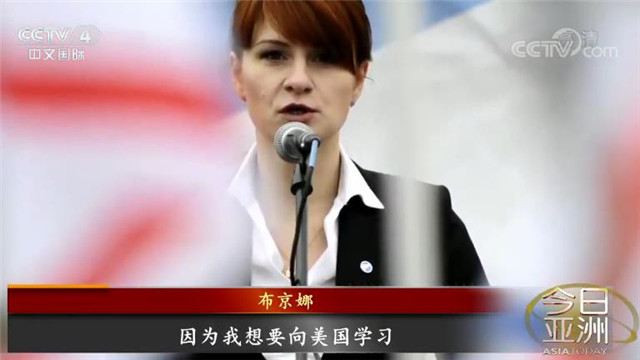
  Cctv newsOn November 4th, the US media released pictures of Russian citizen Bujingna who was involved in the spy storm and was interviewed when she was detained. American citizens detained in Russia after Bujingna’s release — — What will happen to Whelan?

Bujingna: I am a "victim of racial discrimination against Russians"

Bujingna: I am a "victim of racial discrimination against Russians"

  On October 26th, Bukina, a Russian citizen who was imprisoned in the United States for being convicted of "illegally acting as a foreign agent", returned to Russia. Born in 1988, Bujingna came from Siberia, Russia. In 2018, she obtained a master’s degree in international relations from American University, and was arrested in Washington, D.C. in July of the same year. In April 2019, a federal court in Washington sentenced Bujingna to 18 months in prison. During her detention, Bujingna accepted an interview with the US media, saying that she was "a victim of racial discrimination against Russians".

  BujingnaI never wanted to influence your policy. I came here alone because I wanted to learn from the United States and then go back to Russia to make Russia a better place.

  According to the American side, Bujingna "conspired" with senior Russian officials and infiltrated into the powerful National Rifle Association of the United States, in order to penetrate into the inner circle of conservatives and Republicans and influence the US policy toward Russia. The National Rifle Association (NRA) is the largest gun owner organization and powerful interest group in the United States. At present, it has nearly 5 million members and has great influence in American politics.

  Bujingna told the media that the US federal government wanted to portray her as a "fox" sent by the Kremlin.

  The US media said that in the thousands of private tweets that she exchanged with a Russian official, she used words such as "according to our established plan" and "for future battles". However, the Russian side claimed that the prosecution and conviction of Bujingna by the US side was "politically biased" and that Bujingna was convicted only because she was a Russian citizen. The outside world also noticed that the crime of Bujingna’s final sentence did not involve "espionage", but "illegally acting as a foreign agent".

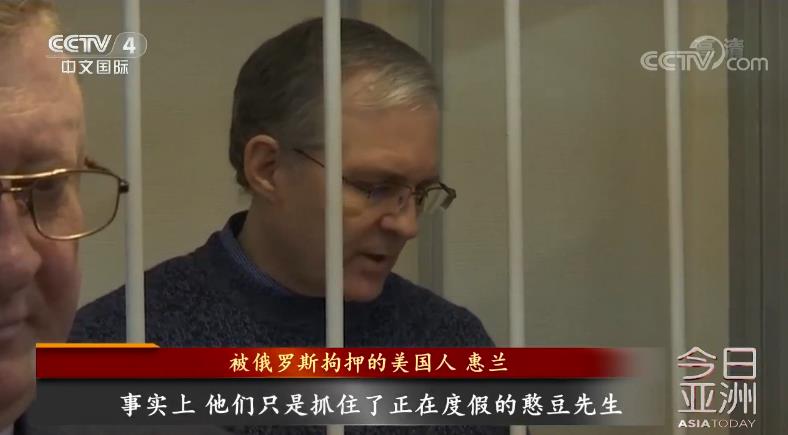
  Russian court extended the detention of American citizen Paul Whelan until the end of 2019.

  After Bujingna was released, the outside world was also concerned about the fate of Paul Whelan. Whelan, 49, was once a member of the US Marine Corps and was arrested in Moscow on December 28, 2018. The Russian Federal Security Service identified it as "engaged in espionage" in Moscow. At that time, some American media believed that Russia might have arrested Whelan for the sake of exchanging Bujingna.

  On October 24th, a court in Moscow, Russia ruled that Whelan’s detention would be extended for two months until December 29th. Whelan insisted that he was innocent when he appeared in court, saying that he went to Russia only to attend a friend’s wedding.


  Whelan, an American detained by Russia.Russia said they had caught James Bond, but in fact they just caught Mr. Bean who was on vacation.

  The United States asked Russia to provide evidence of Whelan’s misconduct or release him.

  According to Russian law, the maximum penalty for espionage is 20 years’ imprisonment. The US House of Representatives also passed a resolution on October 22nd, demanding that Russia provide evidence of Whelan’s misconduct or release him. In fact, this round of "spy storm" is just the tip of the iceberg where the United States and Russia have long been tit for tat. Earlier, Russian Foreign Minister Lavrov broke the news that American agents tried to "rebel" Russian diplomats.

  Russian Foreign Minister LavrovIn April 2016, the United States tried to "poach" the second-ranking official of the Russian Embassy in the United States and demanded his cooperation. The US intelligence department also put $10,000 in cash in the car of a senior Russian diplomat and left a note, trying to buy him off.

  Lavrov also said that American diplomats in Russia often appeared in anti-government demonstrations, and some people disguised themselves to hide their eyes and ears.

  Russian Foreign Minister LavrovThere was a famous incident. An American diplomat wore a wig and fake eyebrows. He wanted to enter the American Embassy in Russia, but refused to show his identity to the Russian police in charge of entrance control, and then he was beaten. It happened several times, and other American diplomats disguised themselves, including men disguised as women, and then recovered their true colors in public toilets. These were recorded.

Us media: the largest spy exchange between the United States and Russia after the Cold War in 2010

  In fact, the spy war between the United States and Russia has been going on. As early as 2010, there was the largest spy exchange event after the Cold War. In June 2010, the US Department of Justice announced that it had captured more than 10 Russian agents who had been lurking in the United States for a long time. The most striking of these agents is anna chapman, a "beauty spy" who was born in 1982 and has a master’s degree. According to the American side, Anna "curve immigrated" to the United States with her British husband, and successfully mingled with the upper class and had contacts with many political and diplomatic figures. It is reported that in exchange for these spies, Moscow released four "heavyweight" personnel who were held in Russia and allegedly provided information to the West, including a nuclear expert.

  Special commentator Teng JianqunAfter the end of the Cold War, the US-Russia spy war mainly focused on two levels. On the technical level, US technical reconnaissance against Russia has never stopped, and on the human intelligence level, US-Russia espionage and counter-espionage activities are still going on.

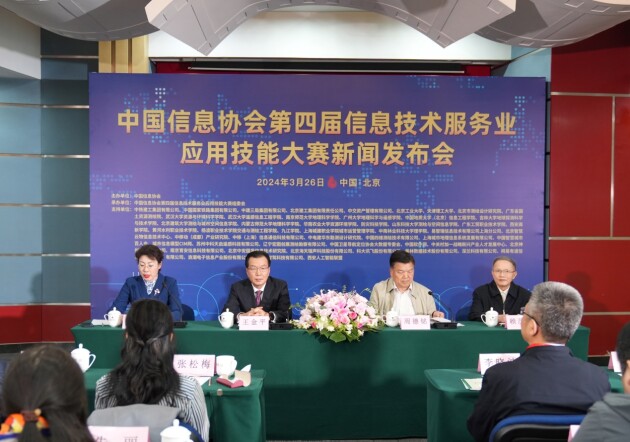
The press conference of the 4th IT Service Industry Application Skills Competition of China Information Association was held in Beijing.

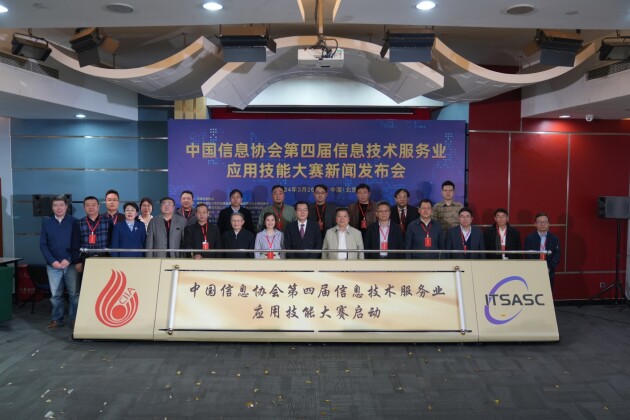
On March 26th, 2024, the press conference of the 4th IT Service Industry Application Skills Competition of China Information Association was held in Beijing Media Center. This year’s competition is based on skills exchange and promotion, and it will create a big stage for skills improvement, a big booth for project promotion, a platform for talents to connect with the big market and transform achievements. Wang Jinping, president of China Information Association, Zhou Deming, former director of the Information Office of the National Audit Office, Lai Maosheng, professor of Peking University, Xin Renzhou, inspector of the former Industrial Policy Department of the Ministry of Industry and Information Technology, Li Xiaobo, former deputy director of the Information Center of the Ministry of Natural Resources, Zhang Songmei, deputy director of the Big Data Development Center of the Ministry of Agriculture and Rural Affairs, Yan Wei, director of the Information Center of the China Association for Science and Technology, Yao Chunsheng, former director of the Proposition Division of the China Employment Training and Technical Guidance Center of the Ministry of Human Resources and Social Security, Lu Xinzheng, director of the Information This press conference brought together representatives of enterprises and institutions from the information technology service industry, experts and scholars from scientific research institutes, universities and vocational colleges, and a number of news media to jointly kick off this competition.

Press conference site

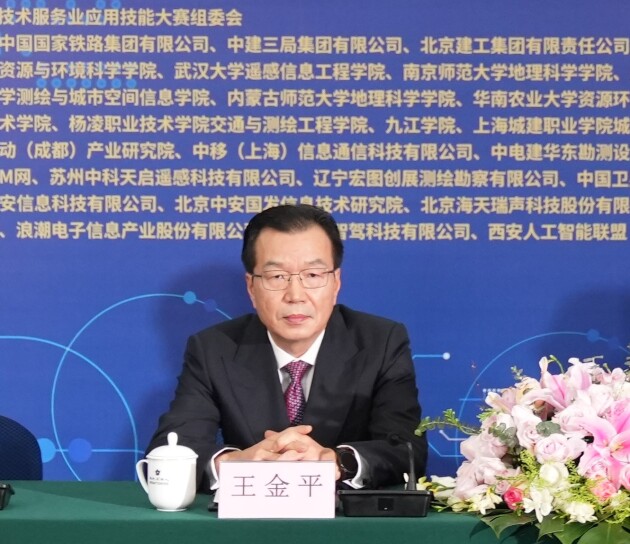
Wang Jinping, president of China Information Association and director of the organizing committee of the competition, delivered a speech. On behalf of the organizers of the competition, he said that the information technology service industry maintained a strong development momentum, with double-digit growth in recent years. With the popularization and application of emerging technologies such as cloud computing, big data and artificial intelligence, the industry is facing more development opportunities and has become an important part of new quality productivity. China Information Association held the Application Skills Competition of Information Technology Service Industry, aiming at thoroughly implementing the national talent development strategy and promoting the innovation and development of information technology service industry, which is of great significance to the Association’s purpose of serving the country, service industry, members and society. Through the holding of the contest, we hope to select and train more excellent skilled talents and high-tech talents, integrate talent chain, industrial chain and innovation chain, and contribute to the construction of new quality productivity and the promotion of digital transformation and high-quality development of digital economy.

President Wang put forward the requirements for running this competition well, insisting on high-level and high-quality competition, paying attention to the combination of practical application and industrial development, and strengthening personnel training and exchanges and cooperation. I hope that through our joint efforts, we will strive to make the contest an industry brand and play a positive role in leading and promoting the work of skilled talents and the development of digital economy in China.

Wang Jinping, President of China Information Association, attended the press conference of the contest.

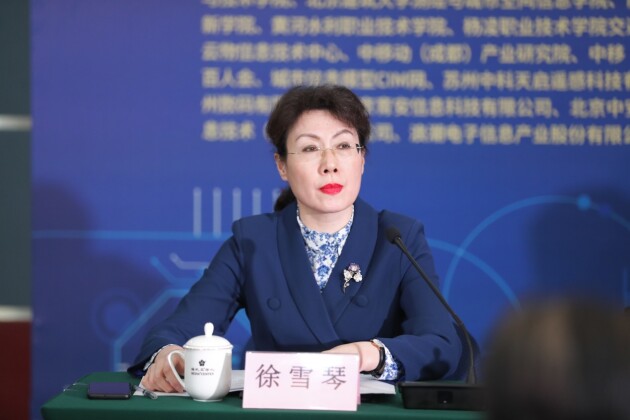
Xu Xueqin, Deputy Secretary-General of China Information Association and Deputy Director of the Competition Organizing Committee, introduced the overall goal, purpose and significance of hosting the competition, the overall thinking of China Information Association in preparing for the competition and the composition of the organizing committee, informed about the preparations for the competition, and made specific explanations on the event setting, competition arrangement, organization and implementation. This year’s competition will highlight the digital station, show the digital ability and pay attention to high-quality evaluation. With the rapid development of information technology, information technology service industry has become an important force to promote economic and social development. By holding competitions, on the basis of upgrading skills, we can not only promote talent exchange and cooperation, but also promote the transformation of scientific and technological achievements and promote technological innovation and industrial upgrading in the industry. Through the docking of competition and industry, individuals and project teams with high skill level, strong innovation consciousness and great demonstration function can be excavated, so as to enhance the competitiveness and popularity of the industry and enjoy relevant policies in project bidding, title evaluation and government purchase of services. On behalf of the organizing committee of the competition, Deputy Secretary-General Xu Xueqin sincerely invites willing and capable units to participate in the organization and implementation of the competition, and jointly make the competition a grand event in the field of information technology services and make contributions to the construction of digital China.

Xu Xueqin, Deputy Secretary General of China Information Association.

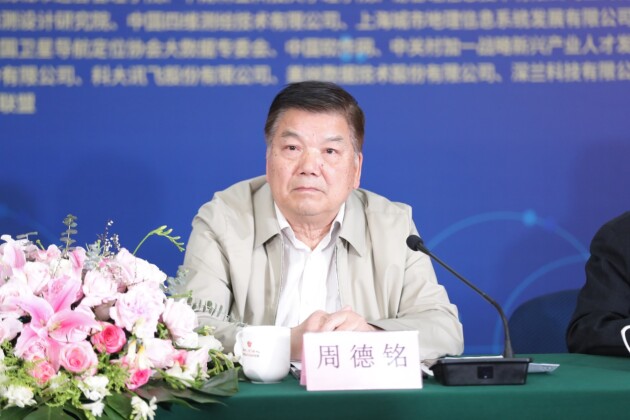
In his speech, Zhou Deming, director of the technical working committee of the competition, shared his views on the application skills competition of the information technology service industry, and introduced the main tasks of the technical working committee of this competition. The examination contents of the competition included theoretical knowledge, skill operation, application examples and design examples. He believes that the holding of the contest is of great significance for improving the professionalism and skill level of industry talents. At the same time, he also put forward opinions and suggestions on the technical work of the competition, hoping that the competition can be continuously improved and standardized to better serve the personnel training and industry development.

Zhou Deming, Director of the Technical Working Committee of the Competition

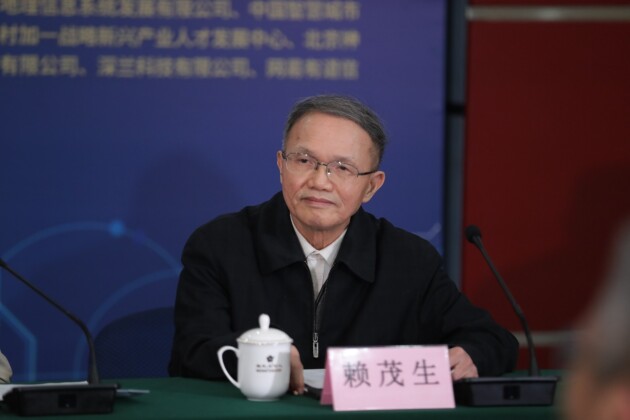
Lai Maosheng, director of the Competition Supervisory Committee, emphasized the fairness and impartiality of the competition in his speech. He said that the main task of the competition supervisory Committee is to supervise the whole competition in strict accordance with the rules and procedures of the competition, strictly control the competition, ensure the fairness, impartiality and openness of the competition, and provide a good competition environment for the contestants.

Lai Maosheng, Director of the Competition Supervisory Committee

This year’s contest consists of ten events, including BIM technology application, geographic information technology and application, network and information security technology and application, artificial intelligence technology and application, Internet of Things technology and application, big data analysis technology and application, mobile communication technology and application, blockchain technology and application, robotics technology and application, and cloud computing technology and application. With the continuous promotion of the competition, all the work will be carried out in an orderly manner, and units willing to participate are welcome to join. At the same time, the contest will further standardize various processes, enhance the professionalism and influence of the contest, establish the contest brand, and better serve the information and digital talent training and evaluation.

Wang Jinping, president of China Information Association, announced the official launch of the contest. The leaders, experts and members of the organizing committee and executive committee of the contest jointly launched the contest.

At the end of the meeting, Wang Jinping, president of China Information Association, announced the official launch of the contest. The leaders and delegates at the meeting pushed the push-off contest and took photos as a souvenir, witnessing this important moment together. With the deepening of the competition, we expect more outstanding players and achievements to emerge and jointly promote the information technology service industry to a better future.

After the press conference, the representatives of the participating event execution units, enterprises and institutions, and experts and scholars from scientific research institutes said that they would actively participate in various activities of the competition and jointly promote the development and innovation of the information technology service industry.

The convening of this press conference marks the beginning of the 4th IT Service Industry Application Skills Competition of China Information Association. I believe that with the joint efforts of all parties, this competition will successfully complete all the objectives and tasks and inject new vitality and motivation into the development of information technology service industry.

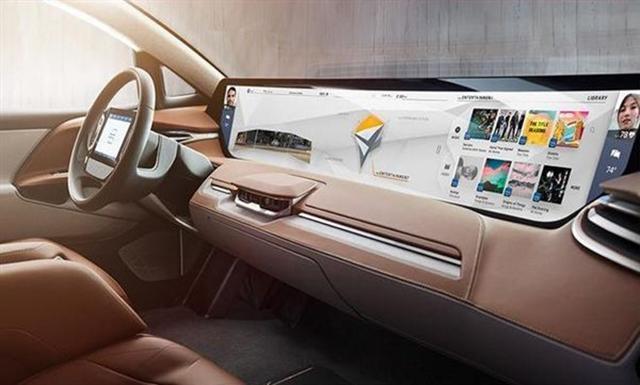
From car projection to headlights, why do you always want to watch movies in the car?

This seems to be a question without any doubt.

The journey is long and the driving is boring. People who want to rub hemp and play cards in an ox cart naturally have the motivation to continuously enrich the entertainment functions of the car. As one of the highlights, movies are constantly chanted by drivers and passengers.

All right, meet you. So there is a drive-in theater with FM radio and outdoor curtain, a second-best radio drama, a car mobile phone, a flat bracket, access to resources from major platforms, and a car-mounted high-definition big screen-now it’s time to compete for the screen size and quantity, one, two, three, until they are connected together.

However, with the continuous development of "out-of-car" technology (such as naked-eye 3D, VR/AR, etc.), the larger car screen can no longer satisfy people. As a result, OEMs have made great efforts to (da) follow (kai) and (nao) dong, and the "black technology" around watching movies and other entertainment projects has followed.

VR/AR stream: Audi

When it comes to black technology players, Audi definitely belongs to the first echelon.

At the 2019 International Consumer Electronics Show (hereinafter referred to as CES), Audi demonstrated its new generation of in-vehicle entertainment system, which can match the virtual entertainment content in real time according to the movement of the vehicle, and the rear passengers can experience the visual experience of the 4D cinema while the vehicle is driving.

The system is developed by Audi Electronics Venture, a subsidiary of Audi, and is responsible for the commercialization of VR technology through an open platform. In the future, the company will also provide their services to all car manufacturers and content developers. When the car is equipped with this in-vehicle entertainment system, the rear passengers can experience movies, video games and other in-vehicle interactive content in real time by wearing VR glasses.

The system can be experienced on Audi’s first pure electric product, e-tron. With the help of the Internet of Vehicles and VR glasses, when the vehicle is stationary, the rear passengers will stay in the virtual spaceship. When the vehicle accelerates, the passengers will feel the state of the rocket taking off, and all the movements of the e-tron will be synchronized in real time and mapped into the virtual experience space.

Specific to commercial applications, Audi said that the system is planned to be introduced to the market within three years.

Ideas are always beautiful. I have two biggest concerns about this technology. First, whether the content can keep up, it seems that if there are only a few films and scenes, it is easy to keep eating ash with the freshness.

Second, it is whether you will get carsick.

Window flow: modern

Also at CES, Hyundai Motor released a new virtual space touch technology, which can be used to "eat" with the window display technology, so that the car can become a small "cinema" with a slight finger movement.

In the autonomous driving concept cockpit named Autonomous Driving Interior Concept, not only the physical buttons are eliminated, but also the touch screen is eliminated. You can make a simple action of "pressing" with your fingers in the air to control the vehicle system. In manual driving mode, the window will be transparent; In the automatic driving mode, the window will automatically darken, and the surrounding conditions of the vehicle will be displayed in the form of video. When the video is projected on the window, the window will become the big screen of the car, and you can enjoy a real three-dimensional surround movie at this time.

Vehicle projection stream: Ford

Compared with the above two cool sci-fi ways, Ford’s scheme is very grounded.

It recently applied for two patents.

The first is a patent called "Portable Entertainment Support System", which will be used in the carriage of pickup trucks (such as Ford’s famous F-150).

In the patent drawing, Ford wants to add a pull-down screen and speakers on the higher crossbar, while the projector installed on the lower crossbar can turn the carriage into a mobile cinema. In addition, the TV can be installed on a higher crossbar through a common wall-mounted kit. If the truck is going to run, it is easy to remove the crossbar and store everything in the compartment.

It seems simple, but many technical parameters need to be considered in the design.

The second is a projector installed on the rear fender of a car, which can project TV or any video onto an external device. Imagine that when the sun goes down, everyone will gather around the campfire, the owner will open the tailgate of the car, and then everyone will watch movies or play video games under the stars.

In addition, the design can also provide external lighting. For example, when night falls, the projector can project light onto the table, so it is very suitable for camping or playing in the wild.

In China, car projection is not a high-frequency requirement, but with the gradual popularization of go on road trip and the increasing demand for travel and entertainment, more and more people will need this function in the future.

3D stream: jaguar land rover

It is reported that Jaguar Land Rover Group is developing a new head-up display HUD, which can play 3D images in the car. This new type of HUD can not only project real-time information like the traditional HUD, but also allow passengers to watch 3D movies safely. "Head and eye tracking technology will track users’ positions to ensure that they can see 3D pictures without wearing optical/shutter 3D glasses or providing a separate screen for each passenger."

The concept of 3D cinema also reflects Jaguar Land Rover’s confidence in the future sharing and driverless trends.

Many suppliers are also keen on the research and development of naked-eye 3D, holographic projection and other technologies. For example, Bosch recently launched a brand-new 3D display product. The display screen can generate a very realistic three-dimensional effect, which allows the driver to capture the on-screen information more quickly. When parking, the realistic display screen allows the driver to judge the remaining space between the vehicle and the wall more intuitively and effectively. In addition, naked-eye 3D can also play a big role in the field of map navigation.

These technologies will produce amazing results when applied to entertainment systems. However, like other forms, it may encounter the problem that the content cannot be updated quickly with technical means. At the same time, when the picture and content are more complicated, it is also a test for the hardware and computing power of the car machine.

Headlight flow: Mercedes-Benz /WEY

This is a school whose concept is well understood but whose technology still needs to be worked hard.

Simply put, it is to let the traditional car headlights evolve and evolve again until it can be used as a projector-that is, the application of lighting digital projection technology in car lamps.

Nowadays, Mercedes-Benz’s Digital Light technology and domestic brand WEY’s intelligent pixel headlight concept have been able to project words, traffic signs and more complex graphics.

At present, the main application of this technology lies in the safety assistance and reminder during driving. The entertainment function is just an adjunct to the icing on the cake. However, who can guarantee that a very interesting new gameplay will not be born with the breakthrough of a certain technology in the future? After all, when it comes to headlight projection, many people’s subconscious reaction is still "that can be used to show movies."

Advantages and disadvantages of watching movies in the car

The benefits are obvious. It is not limited by the region, has good privacy, can kill time (especially when the electric car is charging), and can also coax children and so on.

The disadvantages mainly focus on the safety problems during driving-it will distract the driver’s attention to some extent. Before autonomous driving is realized, greedy eyes will also be a big problem. After all, people sitting next to you laugh at pigs from time to time while watching movies and drinking coke, but they are driving hard, which will inevitably lead to psychological imbalance. Autopilot. Come on.

Of course, some people say that watching movies with an electric car will consume electricity and shorten the cruising range, so it is suspected of raising the bar.

It can be seen from all kinds of "schools" of technology that the application of technology is becoming more and more diversified-one technology is no longer specially designed for a certain scene, it can be used for entertainment, and it can also be used to improve security or information systems. With the "mixing" of technology, multiple systems in the car gradually blend into an organic whole, which is no longer so distinct.

And this may be the performance that the intelligent era is about to open.

For the first time in history! Security Council to discuss potential threat of artificial intelligence

  The reference news network reported on July 4. According to the Associated Press reported on July 3, the UN Security Council will hold its first meeting on the potential threat of artificial intelligence to international peace and security. The conference will be organized by Britain, which sees that the possible use of artificial intelligence in automatic weapons or nuclear weapons has both great potential and great risks.

  According to reports, Barbara Woodward, Permanent Representative of Britain to the United Nations, announced on the 3rd that the meeting to be held on July 18th is the central topic of Britain’s rotating presidency of the Security Council this month. The conference will include briefings by international artificial intelligence experts and UN Secretary-General antonio guterres. Guterres said last month that the alarm about the most advanced form of artificial intelligence was "deafening" and the loudest voice came from its developers.

  Guterres said: "These scientists and experts call on the whole world to take action, claiming that artificial intelligence is a threat to human survival, which is equivalent to the risk of nuclear war."

  Guterres announced that he plans to appoint an artificial intelligence advisory Committee in September to prepare for possible actions by the United Nations. He also said that he would respond positively to the establishment of a new artificial intelligence agency by the United Nations, and suggested taking the International Atomic Energy Agency as a template, because the agency is knowledge-based and has certain supervision rights.

  The report also said that Woodward said that Britain hopes to encourage "taking a multilateral approach to deal with the huge opportunities and risks brought by artificial intelligence to all of us" and "this will require global efforts".

  She emphasized that the benefits are enormous because artificial intelligence has the potential to help the United Nations develop projects, improve humanitarian aid operations, assist peacekeeping operations and support conflict prevention. She also said: "This may help us narrow the gap between developing countries and developed countries."

  But Woodward said that artificial intelligence also has serious security problems that must be solved. (Compile/Lu Di)

Japanese media: Fukushima nuclear pollution water discharge into the sea is likely to officially begin at the end of August.

BEIJING, August 7 (Xinhua)-According to a report by Japan’s Asahi Shimbun on the 6th, several Japanese government sources revealed that the Japanese government plans to formally decide the date of discharging Fukushima nuclear polluted water into the sea after the US-Japan-ROK summit on August 18th, and the sewage discharge into the sea may start at the end of August at the earliest.

  It is reported that Japanese Prime Minister kishida fumio plans to attend the US-Japan-ROK summit in the United States on August 18th, during which he will meet separately with US President Biden and South Korean President Yin Xiyue.

  According to the report, Kishida plans to explain the plan of discharging nuclear polluted water from Fukushima to the sea during the meeting, and hold a meeting of relevant cabinet members after returning to Japan to formally determine the date of discharging the sea.

  Officials from the Japanese Prime Minister’s official residence revealed that it will take at least a week before the date of sea discharge is decided and the sea discharge is officially started.

  According to the analysis of sources, the Japanese government has repeatedly stressed that it will start the sea discharge plan in the summer of 2023. At the same time, Fukushima Prefecture will lift the ban on bottom trawling in September, and the Japanese government is trying to avoid delaying the sea discharge time until September. Based on this, it is very likely that the sea discharge plan will officially start at the end of August.

  Japan’s forced discharge of pollutants into the sea has aroused strong opposition at home and abroad.

  On July 31, local time, citizen groups of Japan and South Korea held a protest rally in front of the Japanese Prime Minister’s residence in Tokyo, opposing the Japanese government and Tokyo Electric Power Company’s plan to push nuclear pollution water into the sea.

  On July 19th, Haruhiko Terazawa, head of the Miyagi Fishery Association of Japan, expressed strong opposition to the discharge of nuclear polluted water into the sea, saying that this would inevitably have a negative impact on Japanese fisheries.

  South Korean parliamentarian Zhu Zhexuan said a few days ago: "There are other ways besides discharging the sea. Just because the cost of discharging the sea is the lowest. " He also stressed: "It is absolutely impossible to pollute the ocean as the source of life and affect other countries."

  The Malaysian People’s Party recently submitted a memorandum urging the Japanese government to cancel the plan of discharging nuclear polluted water into the sea and find other ways to deal with it.

  Kalinga Senaviratne, consultant of the news project of Fiji South Pacific University, said that the Japanese practice has damaged the living environment of Pacific island countries.

  China’s Foreign Ministry spokesperson Mao Ning said recently that the legitimacy, legality and safety of the Japanese plan to discharge nuclear polluted water into the sea have been questioned by the international community. No matter how the Japanese side whitewashes the wrongs, it can’t "bleach" the plan to expel the sea. Protests from neighboring countries and doubts from all walks of life in Japan are all evidence. China urges Japan to face up to the legitimate concerns of the international community and domestic people, stop pushing the plan of discharging the sea, fully communicate with neighboring countries in a sincere manner, effectively dispose of nuclear polluted water in a responsible manner, and accept international supervision.

Rizhao, Shandong: Cherry blossoms attract tourists.

Recently, in the cherry greenhouse in Songlian Town, Wulian, Rizhao, cherry flowers are blooming in the spring, in clusters and strings, densely covered with branches, and the flowers are as beautiful as frost and snow, emitting refreshing floral fragrance, gestating new hopes for increasing production and bumper harvest. Cherry flower, also known as "the first flower in early spring", has a short flowering period and is beautiful, attracting tourists to enjoy the flowers and take photos. (Xin Chongjuan)

Cherry blossoms are gorgeous, like frost and snow, emitting a refreshing fragrance of flowers. (Photo by Liu Yuping)

A spring scene in the greenhouse, like cherry blossoms blooming in snow, attracts tourists to punch in (photo by Liu Yuping)

Cherry blossoms bloom in the spring, clusters and strings are densely covered with branches (photo by Liu Yuping)

Cherry blossoms bloom in the spring, clusters and strings are densely covered with branches (photo by Liu Yuping)

The flowers and bones on the branches are in bud (photo by Liu Yuping)

The volleyball association publicized the list of sand volleyball players preparing for the 2022 Hangzhou Asian Games, and 22 people including Wang Fan were selected.

Qilu Evening News Qilu Yidian reporter Huai Xiao
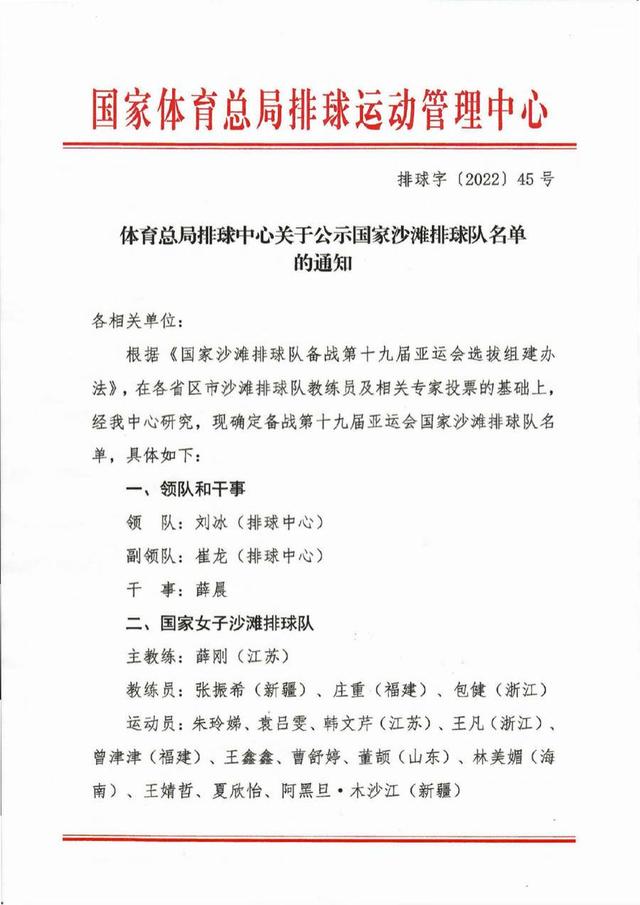
On February 22nd, Beijing time, the Volleyball Management Center of the State General Administration of Sport issued a notice to publicize the list of national beach volleyball teams preparing for the 2022 Hangzhou Asian Games.
Among them, China sand volleyball men’s and women’s teams are headed by Xu Qiang and Xue Gang respectively, with 12 players including Wang Fan in the women’s team and 10 players including Li Zhuoxin in the men’s team. Xue Chen, the world champion, was not selected as a player. She will be the director of the team.
List of national beach volleyball teams preparing for Hangzhou Asian Games;
I. Team leaders and officers
Team Leader: Liu Bing (Volleyball Center)
Deputy Team Leader: Cui Long (Volleyball Center)
Officer: Xue Chen
Second, the national women’s beach volleyball team
Head Coach: Xue Gang (Jiangsu)
Coaches: Zhang Zhenxi (Xinjiang), Yan Zheng (Fujian) and Bao Jian (Zhejiang)
Athletes:
Jiangsu: Zhu Lingdi, Yuan Lvwen, Han Wenqin
Zhejiang: Wang Fan
Fujian: Zeng Jinjin
Shandong: Wang Xinxin, Cao Shuting, Dong Jie
Hainan: Lin Meimei
Xinjiang: Xia Xinyi, Wang Jingzhe, Aheidan-Mushajiang
Third, the national men’s beach volleyball team
Head Coach: Xu Qiang (Shanghai)
Coaches: Wang Yuchao (Liaoning) and Ma Jun (Zhejiang)
Athletes:
Liaoning: Li Zhuoxin, Xue Tao
Shanghai: Tao Cheng ‘an
Jiangsu: Wu Jiaxin, Zhou Chaowei
Shandong: Wang Yanwei, Liu Jinqiu
Shaanxi: Liu Junjie
Xinjiang: Abduhalik River-Mutailipu, Salamu-Ahemat
Reporting/feedback

Beijing announces the outline of online car driver examination: English listening test

  Several drivers are applying for the online car driver test.

  After Beijing released the new policy of network car, the Transportation Administration Bureau of the Municipal Transportation Commission announced the management regulations and examination outline of Beijing network car driver examination. The examinations include the national public subject examination and the Beijing regional subject examination. The exam includes the new policy of online car, 26 sentences about English listening and road practice involving taxi operation scenarios. Taxi drivers can take the job transfer test alone, only taking the part of Beijing regional theory, and passing 60 points. There is no charge for the exam. If you fail, you can take a make-up exam.

  There are three different passing lines in the exam.

  After the release of the New Deal of Beijing Online Car Rental, the Transportation Bureau of the Municipal Transportation Commission announced the notice of "Beijing Online Appointment Taxi Driver Qualification Examination Management Regulations (Trial)" (referred to as the regulations), which clarified the examination methods of Beijing online car rental drivers. At the same time, the examination outline was published and the specific contents of the examination were listed.

  According to the regulations, Beijing online booking taxi driver qualification examination includes national public subjects and Beijing regional subject examination. The national public subject examination is a knowledge test with universal requirements for national taxi laws and regulations, professional ethics, service standards and safe operation.

  Beijing regional subject examination is divided into two parts: theoretical basic knowledge and professional knowledge application ability. Zhang Wensheng, deputy director of the Beijing Transportation Examination Center, introduced that the examination contents include the taxi management policies and regulations in this city, the service specification for booking taxis online, practical English listening, Beijing urban traffic geography and other knowledge. The professional knowledge part is practical operation, which mainly examines the driver’s driving ability, the ability to take orders with mobile phone software and service specifications.

  The national public subject examination scores 100 points, and 80 points or above are qualified; The score of theoretical basic knowledge in Beijing regional subject examination is 40, and the score of 32 or above is qualified. The score of professional knowledge application ability in Beijing regional subject examination is 60, and the score of 48 or above is qualified.

  The examination includes two parts: computer examination and interview.

  In principle, the national public subject examination and the Beijing regional subject theory basic knowledge examination adopt the computer system to randomly select examination questions and unify the examination; The application ability of professional knowledge in Beijing regional subjects is assessed by means of examiner interview.

  The national public subject examination and the Beijing regional subject theory basic knowledge examination take a total of 90 minutes, including 60 minutes for the national public subject examination and 30 minutes for the Beijing regional subject theory basic knowledge examination. After the applicant finishes the national public subject examination, the system directly switches to the Beijing regional subject theory basic knowledge examination. The assessment time of Beijing regional subject professional knowledge application ability is 8 minutes.

  The reporter of Beiqing Daily learned that the theoretical knowledge of national public subjects and Beijing regional subjects are computer exams. The Beijing regional subject professional examination is an interview, with the examiner present.

  The examination content includes English listening and geography.

  According to the Outline of Beijing Regional Subject Examination for Taxi Drivers’ Qualification issued by the Transportation Bureau of the Municipal Communications Commission, the theoretical basic knowledge examination includes four parts: Beijing taxi management policies and regulations, Beijing urban traffic geography, practical English listening and relevant knowledge to be mastered. The geographical score of theoretical knowledge is the highest, reaching 18 points.

  Geography mainly examines candidates’ mastery of the overall layout of urban roads; Understanding of the structural characteristics of urban roads; Awareness of the location and direction of each street and each ring road; Familiarity with the location of various units; Proficiency in choosing and using economic and reasonable operating routes.

  The roads specifically investigated mainly include the distribution of the north-south central axis, Chang ‘an Street, the main roads in the old city, and the main bridge areas from the Second Ring Road to the Fifth Ring Road. At the same time, it is necessary to master the location of the streets near the Ring Road and major government organizations (enterprises and institutions), news media, tourist attractions, museums, cultural and sports venues, hotels, office buildings, hospitals, schools, businesses and catering units in Beijing. Such as the location of Beijing Exhibition Hall, Beijing Zoo, Tsinghua University, Peking University and major transportation hubs.

  English listening includes 26 civilized expressions in the process of vehicle service. Like Welcome to Beijing! Welcome to Beijing! )It’ My pleasure to serve you. (Glad to be of service to you. )Would you like the air-conditioning on? Do you need to turn on the air conditioner? ) and other common scenes in taxi services.

  You can only get a certificate if you pass all three exams.

  According to the regulations, applicants who have passed the national public subject examination, the Beijing regional subject theory basic knowledge examination and the Beijing regional subject professional knowledge application ability examination will be issued the Online Booking Taxi Driver’s License after reviewing the application materials through the service window of the Municipal Transportation Examination Center.

  Applicants who fail the examination can go through the make-up examination procedures at the Municipal Transportation Examination Center or the taxi driver examination workstations 30 days after the last examination.

  So what if one or two of the three subjects fail? According to the relevant person in charge of the examination center, you only need to make up the unqualified subjects.

  Taxi drivers can pass the job transfer exam with 60 points.

  The reporter of Beiqing Daily learned that the above examination arrangements are mainly aimed at ordinary drivers. Taxi drivers only need to take the transfer exam because they have taken the exam before and have obtained the qualification certificate of the cruise car.

  The contents of the job transfer examination include: the relevant policies, regulations and theoretical knowledge about booking taxis online in the Beijing regional subject examination. No longer assess the practical part. Out of 100 points, the driver is qualified if he gets 60 points.

  site

  The first batch of drivers applied for the online car driver test yesterday.

  On December 22, the second day after the promulgation of the new policy of Beijing network car, Wei Dong, CEO of SAIC car, came to Beijing Municipal Service Center early and submitted the application materials for the qualification of network car operation to the competent authorities at the first time. Shouqi Car Company is the first online car company in Beijing to apply for the qualification of online car platform.

  The reporter of Beiqing Daily saw at the scene that the staff of the first car about the car prepared seven sets of materials to apply. Specifically, it includes the application materials for the qualification of the network car business and the compilation of the first scientific and technological management materials.

  Li Song, deputy director of the Taxi Management Office of the Transportation Bureau of the Municipal Communications Commission, said that after receiving the application from the network car company, the relevant materials will be submitted to the public security, network letter, China People’s Bank and other relevant departments to determine their online service capabilities. After the online service ability is approved, its offline ability will be assessed, including management ability, service personnel and training places. The license can be obtained within 20 working days for servers located locally, and within 30 working days for servers located in other provinces. However, if supplementary materials are needed, the time will be extended accordingly.

  Yesterday, while applying for the qualification of the network car platform, dozens of drivers of the first car about the car applied for the network car driver test. The reporter of Beiqing Daily noticed that the driver who applied now needs to fill in personal information such as name, ID card and vehicle. It takes less than 5 minutes for the driver who applies now to pass the audit, and it takes 2 minutes for a skilled driver to use the computer to complete the application. A driver was informed that he could make an appointment for the exam on the spot ten days later. According to reports, the step of online name prediction can be carried out anywhere with a network, without having to arrive at the scene. After the end of the forecast, you must go to the scene to make an appointment for the specific time of the exam. The specific appointment point can be found in official website, the Transportation Bureau of the Municipal Transportation Commission.

  service

  Application process

  1. Online forecast name;

  2. On-site confirmation and appointment examination;

  3. Examination;

  4. Query results;

  5. Get an online taxi driver’s license.

  Note: There is no charge for the exam.

  This edition/reporter Liu Wei Photography/reporter Huang Liang