A Study on the Original Lanji Culture Dream of Red Mansions
author
Return home like a rainbow
In the fifty-eighth chapter of A Dream of Red Mansions, Jia Baoyu asked Fangguan to tell Ouguan not to burn paper in the future. Why does Jia Baoyu think burning paper is not good?
Jia Baoyu made it very clear that he was dissatisfied with burning paper because he felt: "Fools didn’t know that no matter whether gods, buddhas and dead people are dead, there must be different cases. I don’t know that there is only one word’ sincerity’. " It can be seen that what Jia Baoyu opposes is the reinforcement of etiquette and its hypocrisy.
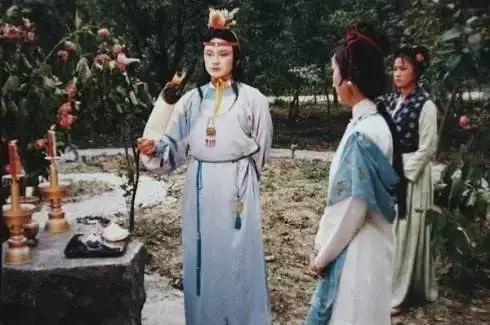
Jia Baoyu was written twice in A Dream of Red Mansions to pay homage to others. Back to the 43rd, Jia Baoyu secretly went to the Narcissus Temple to pay homage to Jin Chuaner; In the seventy-seventh episode, Jia Baoyu paid homage to Qingwen in the Grand View Garden and wrote "The Daughter of Furong" for her.
The reason why Jia Baoyu’s two memorial ceremonies are commendable lies in his sincere heart.

Jin Chuaner and Qingwen are maids who are not treated as adults in a hierarchical society. They are no different from cats and dogs. They have no independent personality at all, let alone dignity. These people’s lives, like goods, can be bought with little money.
But Jia Baoyu loves them from the heart, their beauty, their innocence and their personality. Therefore, Jia Baoyu will be heartbroken because of the fragrance of Jin Chuaner and Qingwen, and will sincerely mourn the passing of their lives.
Jia Baoyu’s way of paying homage is different from the secular ethics. He is not particular about the form of decency, eclectic, unique, and has no secular utilitarian color, so it is particularly touching.
Jia Baoyu knew that his feelings for Jin Chuaner and Qingwen were beyond the understanding of secular people, so he didn’t care about the scene. Jin Chuaner and Qingwen can’t have a decent funeral like Qin Keqing and Jia Jing after their death, but some people really miss them.
Qin Keqing’s funeral was lively, but Jia Zhen wanted to use Qin Keqing’s funeral to seek fame for his son. What Wang Xifeng wanted was to show off her talents through Qin Keqing’s funeral. The utilitarian concept makes Qin Keqing’s funeral less solemn and solemn, and full of vulgarity of fame and fortune.
Jia Jing’s funeral is even more ridiculous. Jia Zhen and Jia Rong showed grief at the funeral, but privately they ignored human relations and played with beauty. It can be seen that their performance at Jia Jing’s funeral was completely theatrical. The hypocrisy of feudal ethics was vividly reflected in Jia Jing’s funeral.
Jia Baoyu is deeply dissatisfied with the word "today’s people are all confused about fame and fortune", dismissive of those who seek fame and reputation, and always uses a sincere heart to fight against secular falsehood.
Jia Baoyu is not against etiquette. When Jia Zheng is not at home, he also feels that if he passes by his father’s room, he should dismount. What Jia Baoyu dislikes is that etiquette has become a performance, without any real feelings, and that ethics has become a tool to oppress people. What Jia Baoyu is dissatisfied with is those who do moral show to maintain feudal ethics, those who hurt innocent people under the banner of feudal ethics, and the suppression of true feelings by feudal ethics.
Jia Baoyu is not opposed to learning. He is familiar with The Analects of Confucius, The Great Learning and The Doctrine of the Mean. He also has great respect for Confucius in his words, and he can speak freely at any time. What he opposes is to turn learning into a tool to gain fame and fortune, a "traitor and a ghost" like Jia Yucun, and a simple and sincere pre-Qin Confucianism, which was originally shining with the thought of "the people are the foundation of the country", was alienated by people who cheated the world and stole fame and became the ruling class’s skill of governing people. The reason why he hates "stereotyped writing in a timely manner" is that he thinks that "it was not originally written by sages, so how can it explain the insignificance of sages, but it is just a bait for future generations".
Jia Baoyu loves life and is not a world-weary person. The reason why he only wants to spend one day with his sisters and sisters is to refuse to be alienated by the "troubled world" and stick to truth, goodness and beauty.
That world is really ridiculous: Jia Lian’s affair with Bao Er’s family at Wang Xifeng’s birthday party can be forgiven, but Jia Baoyu’s sincere consideration for girls is regarded as incomprehensible and even unacceptable; Jia Yucun can rise to the top by favoritism and bending the law, while people without power like Feng Yuan and "stone nerd" can only be slaughtered; A husband and wife who have their own needs and are physically separated can maintain the harmony on the surface, but people who really love each other like Zhang Jinge and the garrison childe have been separated alive, and both of them committed suicide … Such a world, such a fig leaf as propriety and shame have almost disappeared.
Jia Baoyu’s heart is full of sincere and broad love, and naturally he can’t blend in with the world full of falsehood and ugliness. The deeper and nobler the love in Jia Baoyu’s heart, the more incompatible it is with the secular world. It is in response to the poem of the North Island: "Despicability is the passport of the despicable, and nobility is the epitaph of the noble."
I hope that the world will become clearer and clearer, and that the noble will not be isolated. No matter when, the pure ideal is priceless, even if it is illusory.
Original title: Jia Baoyu’s cynicism