Heavy official announcement! The new products of "Dragon Sequence" are named Xiaolong MAX and Xiaolong.

  On March 27th, Haval brand announced the naming of its new energy series vehicles, with the code B07 model named Xiaolong MAX (pictured left) and the code A07 model named Xiaolong (pictured right), thus announcing to the market that the most competitive strategic "sharp knife" of Haval brand is about to debut, which also marks the official opening of a new journey of Haval new energy.

1.jpg
 

  The country’s heavy weapon, the independent automobile industry ushered in a new product of Haval New Energy.

  In the history of China’s military industry development, there are many national heavy weapons with significant strategic position and representing the rise of China’s military industry. From the perspective of military industry to the independent automobile industry, the new energy field is now in a period of accelerated change. Haval is making great efforts to launch a brand-new track, and it is also in urgent need of a product that can represent a brand-new image in order to compete for the new energy road. For this reason, Haval brand has brought new Xiaolong MAX and Xiaolong to consumers.

2.jpg
 

  (Xiaolong MAX)

  Xiaolong represents the posture of a strong man who takes the initiative to attack and is invincible, and symbolizes Harvard’s ambition to forge ahead in the field of new energy. At the same time, as brand-new products of Haval’s new energy brand, the arrival of Xiaolong MAX and Xiaolong also shows that they are new energy vehicles with national brand characteristics, with hard-core product strength, which can meet the wider needs of users around the world.

3.jpg
 

  (Xiaolong)

  Strength matching, the innovative strength created by great powers.       

  In Harvard’s view, the national heavyweight that can represent technological self-improvement must reflect China’s technological innovation ability behind the intellectual creation of a big country, which is the inspiration to stimulate Harvard’s innovative research and development of products, and also the persistence and responsibility as a national brand.

  In terms of design, innovative deduction has been made in the appearance and local details of the whole vehicle, adopting the extreme hexagonal stability of the fighter and the sharp and line-like shape. Their common features in the front face modeling are headlights and fog lights, which are derived from refining and innovating the outline of the fighter. They are brave, stable and stylish.

4.jpg
 

  In the creation of interior space, Xiaolong MAX not only surpasses the same level in terms of size and wheelbase, but also has superior space expansibility and rich storage advantages, which is enough to meet the car demand in the family travel scene.

  Drawing inspiration from design without losing the practicality of product functions, Haval brand has always been adhering to the concept of "user-centered", taking the technical innovation of Great Wall Group as the fulcrum, and taking the Xiaolong MAX of Great Wall Hi4 technology as the first one, realizing the optimal efficiency in all working conditions and worry-free driving in all scenes, accurately grasping the user’s needs in the new energy era, and finally achieving the product strength advantage of new cars, and interpreting the ingenious quality and spiritual core of great powers for Chinese people.

5.jpg
 

  At the same time, as a breakthrough in the new energy era, Xiaolong MAX and Xiaolong’s product competitiveness on the new energy track is strong compared with competing products. Regardless of design aesthetics or product strength, it will fully meet consumers’ expectations for new energy SUVs.

  Breaking cognition and opening a brand-new Harvard from Harvard’s "dragon sequence"

  In the past, Harvard, which has been focusing on building SUVs, led the China brand to break through in the SUV field and achieved the collective glory of independent SUVs. In today’s new energy era, Haval also proposed that it will be the mission of Haval New Energy to win the market by comprehensively leading intelligent electrification, and it is also the determination of Haval New Energy to give it a try.

  New sequences, new channels, new models, new technologies and new products, as Harvard’s new energy sequence — — The heavyweight models of the dragon series, Xiaolong MAX and Xiaolong, will fully launch the new energy track under the five "new" initiatives. In the future, with the listing of two models, Haval New Energy will officially open the road of arrogance!
What brand is Cixi’s royal car? The research says it’s Tulia brand.

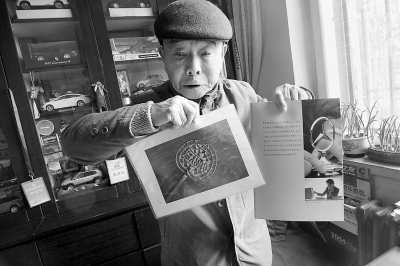
  This year is 115 years since cars were introduced into China. As a researcher of "The Origin of China Automobile History", Jiang Haicheng has been very busy recently: he will give a speech at a theme forum to commemorate the 115th anniversary of the introduction of automobiles into China. This speech mainly focuses on "Is the Empress Dowager Cixi the first car introduced to China?" It seems to be a simple topic, but it embodies Jiang Haicheng’s efforts for more than ten years.

  Jiang Haicheng, who has retired for many years, has not lived a long life. He is still busy with his favorite things. Jiang Haicheng first worked in the Beijing Planetarium. After work, his biggest hobby is studying cars. At that time, the information was underdeveloped and there were few cars. Going to the exhibition hall to see cars became his greatest pleasure. In the 1990s, more and more cars began to appear in Beijing, and Jiang Haicheng became more and more fond of cars. He resolutely left the Beijing Planetarium, where he had worked for most of his life, and became an automobile media reporter.

  As the first batch of automobile media people in Beijing, Jiang Haicheng witnessed the vigorous development of China automobile industry from scratch in the new era. Nevertheless, he is most concerned about the history of automobiles, especially the initial period of automobile development in China.

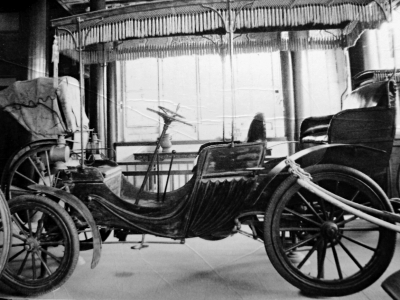
  In 2001, he published an article in China Auto News: The "Mystery" Left by Cixi’s Imperial Cars. At that time, the cars that Empress Dowager Cixi took were exhibited in the Summer Palace. About this car, some people say that it was presented to Empress Dowager Cixi by Yuan Shikai as a birthday present in 1897. This car is the second generation product of Mercedes-Benz. Many people naturally think that Empress Dowager Cixi was the first person to own a private car.

  However, in this "classic car", Jiang Haicheng did not see the logo of Mercedes-Benz, but saw a logo printed with "DURYEA" on an iron pedal. What brand is this car? When was it produced? When was it introduced into China? Jiang Haicheng raised many questions about this car.

  He began to look for answers one by one. To this end, he found the source of the statement that "the vehicle is a Mercedes-Benz second-generation car": Wang Huapeng, editor of "The Encyclopedia of China: History of Chinese Cars". Wang Huapeng, a former director of the Automobile Research Office of the Academy of Communications, told Jiang Haicheng that he made that statement out of speculation after inspecting the car in 1979. Moreover, Wang Huapeng later went to Germany to visit the Stuttgart Mercedes-Benz Museum, and found no cars with similar styles and models as Cixi’s royal cars. At this time, Jiang Haicheng basically came to a conclusion that the classic car of Empress Dowager Cixi was not a Mercedes-Benz car, but a Tulia car.

  However, in a few years, it became popular that the royal car of Empress Dowager Cixi was a Mercedes-Benz brand, and it was also said that this car was customized by Yuan Shikai through the German Embassy.

  Jiang Haicheng once again began his "rebuttal" journey. In 2005, Jiang Haicheng learned that the Ford Museum in the United States had materials of Tulia cars, and he contacted the representative of Ford Motor Company in China, hoping to find relevant materials of Cixi’s royal cars. Before long, Jiang Haicheng received a reply: In 1896, Tulia Company assembled 13 cars with the same design as Empress Dowager Cixi’s royal car, which was the third generation car of Tulia. The car used by Empress Dowager Cixi was the only survivor among the 13 cars.

  Jiang Haicheng was delighted with it, and the good news kept coming. In 2013, Mercedes-Benz held a commemorative event in Beijing to commemorate the centenary of Mercedes-Benz’s visit to China. This activity originated from a historical fact: in 1913, German businessman Franz Oster brought the first Mercedes 10/25 RS station wagon to China for the first time. This also indirectly proves once again that the royal car of Empress Dowager Cixi is not a Mercedes-Benz brand. Jiang Haicheng added that in 1897, Mercedes-Benz customized a car for Queen Victoria of the United Kingdom. On that car, the words Mercedes-Benz brand and Victoria were marked, while Cixi’s royal car did not have similar words.

  Based on these data, Jiang Haicheng believes that Cixi’s royal car has reached a conclusion for the Tulia brand. With the determination of the brand, the time when Cixi came to the Summer Palace by car also came to a conclusion: the car arrived in the Summer Palace in 1902, not in 1897. In 1897, faced with the threat of reform forces, Empress Dowager Cixi had no intention of holding a birthday celebration. Moreover, in the trade environment at that time, cars produced in the United States in 1896 would not have spread to China so quickly. According to historical records, in 1902 after the Gengzi Incident, Empress Dowager Cixi rebuilt the Summer Palace and held her 68th birthday in the Summer Palace. At this time, Yuan Shikai had a chance to get on the bus. However, by 1902, this car of Empress Dowager Cixi was not the first car introduced to China. In December 1901, LINZ, a Hungarian businessman, transported two American-made "Osmo Bill" cars to the Shanghai Public Concession. On January 30, 1902, the Shanghai Municipal Bureau of Industry and Commerce granted him a "temporary license" to drive on the streets, which was the first time that a car appeared in China.

  The debate that lasted for more than ten years finally came to the bottom. In his latest speech, Jiang Haicheng systematically demonstrated from eight aspects that the imperial car of Empress Dowager Cixi was not "the first car introduced into China". Looking back on these years’ efforts, Jiang Haicheng sighed and said softly and firmly, "I finally handed in a valid answer sheet when the car was introduced to China for 115 years."

  Jiang Haicheng told reporters that during the research, he wrote to Mr. Dan Jixiang, president of the Palace Museum, and Mr. Li Guorong, deputy director of the First Historical Archives of China, hoping that they could help him find the old photos of Empress Dowager Cixi and the car. The two gentlemen tried their best to find no relevant pictures, and they specially wrote back to Jiang Haicheng to express their apologies, which made Jiang Haicheng feel extremely warm. Jiang Haicheng also hopes to seek relevant pictures from readers through Beijing Evening News to enrich the research results. Jiang baojun