From the birth of the first integrated circuit to the present, it is just one child. Reviewing this "core" road is beneficial to the innovation of China today.
The ZTE incident not only focused people’s attention on high-end chips, but also brought people back to the long history of electronics and its technological innovation. A series of technological inventions and innovations, such as electron tubes, transistors, semiconductor materials, integrated circuits, large-scale or ultra-large-scale integrated circuits, constitute the development journey of radio electronics and promote the continuous transformation and upgrading of the electronic information industry. Nowadays, human society is entering a new development stage characterized by Internet, big data and artificial intelligence, and the main driving force for this development is still the greatest invention of electronics 60 years ago-integrated circuit.

Electron tubes have led the development of radio electronic technology.
Electronics is a science and technology about the conduction of electricity in vacuum, gas or semiconductor. It is a key subject in the 20th century and determines the development trend of the whole technology. Electronic devices, components and circuits, as the basic units of various electronic devices and electronic systems, always play a leading role in technological innovation. In a sense, the development history of radio electronics is the evolution history of electronic devices.
The birth of the electron tube
In the 1980s, the discovery of Edison effect and the confirmation of the existence of electromagnetic waves marked the birth of electronics. In 1883, Thomas Edison, a famous American inventor, found that there was a weak current passing between the electrified filament and the steel wire, which was also called the Edison effect. In 1884, the British scientist John A. Fleming repeated a similar experiment. In 1895, Italian engineer Guglielmo Marconi successfully conducted a wireless telegraph transmission experiment with a distance of 2.5 kilometers on the basis of Hertz experiment. Since then, the wireless telegraph transmission distance has been continuously extended and achieved great success, and Marconi became the inventor of the wireless telegraph system. In 1896, Marconi telegraph company was founded, and Fleming was hired as the consultant of the company, and engaged in the improvement of powder detector, the key electronic device of telegraph receiver. Powder detector was invented by French physicist édouard Branly in 1891. Its complex structure and poor power seriously affected the efficiency of telegraph communication. In 1904, Fleming used vacuum diode as radio wave detector according to Edison effect, which greatly improved the performance of telegraph detector. In addition to detection, vacuum diode also has the rectification function of changing alternating current into direct current. Vacuum diode is the first electronic device in human history. Its success lit the torch of electron tube and illuminated the development path of electronic devices from generation to generation.
● The establishment of the electron tube "dynasty"
Compared with powder detector, the performance of diode is much better, but its detection efficiency is still very low and its output signal is still very weak. In 1906, deforest, who was engaged in radio signal detection in the United States, found that the electrical signal was significantly enhanced after adding a grid between the cathode and anode of the diode, and the first triode was born. In the first few years, people only regarded it as a sensitive detector and detector, and did not know that it also had an amplification effect. In fact, a triode is an amplifier. In 1919, Schottky, a German, put forward the idea of adding a curtain grid between the grid and the anode. In 1926, Henry J. Round, an Englishman, realized Schottky’s idea and invented the quadrupole. In the same year, holst and Bernard D. H. Tellegen in the Netherlands invented the pentode. These multipole vacuum tubes are collectively called electron tubes.
The advent of electron tubes has promoted the rise of the electronic industry. In 1920, American westinghouse Company opened the world’s first radio station in Pittsburgh. In 1921, American Radio Co., Ltd. was established, and the patents belonging to Marconi, Bell Telephone, General Electric, Westinghouse and Amster were brought together. Large factories for producing electron tubes were established all over the world, and electron tubes entered a new stage of large-scale industrial production. In 1925, with the development of radio broadcasting, radios began to appear on the market. In the same year, John L. Baird, an Englishman, made the first mechanical TV set capable of transmitting images. By the end of 1930s, electron tubes had penetrated into various application fields, becoming the "favored son" of radio technology and an irreplaceable product. Until the 1940s and early 1950s, electronic tubes were still in a state of vigorous development, and hundreds of millions of electronic tubes were produced every year in the world.
Transistors usher in the turning point of electronic information industry
The development of vacuum electronic devices promoted the development of various electronic devices, making the electronic information industries such as radio communication, telephone, broadcasting and television one of the largest industries in the world industrial system at that time. In 1930s, the miniaturization of electron tubes gave birth to a new type of semiconductor electronic device, which entered the historical stage of electronic technology.
● The rise of semiconductors
Miniaturization of electron tubes can reduce volume, weight, performance and power consumption, which meets the basic needs of the market. With the appearance of the first electronic computer ENIAC, the shortcomings of electron tubes became more obvious. This computer shares about 18,000 tubes, with a volume of 90 cubic meters and a mass of 30 tons. It covers an area of 167 square meters and consumes 150 kWh of electricity. In addition, with the expansion of electronic equipment functions and the improvement of requirements, the shortcomings such as service life and reliability of electronic tubes have also become urgent problems to be solved.
The exploration of miniaturization technology of electron tubes has finally made "semiconductor" crystals emerge from obscurity. Compared with conductors and insulators, semiconductor materials were discovered later. In 1833, the British physicist Michael Faraday first discovered that the resistance of silver sulfide decreased with the increase of temperature. In 1839, the French physicist Beclere discovered the semiconductor photovoltaic effect. In 1873, British engineer Willoughby Smith discovered the photoelectric effect of semiconductors. In 1874, German physicist Karl F. Braun discovered the rectification effect of semiconductors. In 1879, Edwin Hall, an American physicist, discovered the Hall effect of semiconductors, that is, a semiconductor with current placed perpendicular to the magnetic field will have a transverse voltage. In 1911, the concept of semiconductor was first named and used by German physicist Badeker. From 1910 to 1930, people did a lot of research on various substances considered as semiconductors. Although there was no breakthrough, the technical application of semiconductors aroused people’s strong interest. In 1906, people made a simple ore detector out of emery crystal, which was popular for a while because it was once used in radios, but soon gave way to vacuum diode detectors.
From the late 1920s to the early 1930s, there was a breakthrough in the theoretical research of semiconductors. In 1928, Felix Bloch, a Swiss-born American physicist, pioneered the energy band theory. In 1929, German-born British physicist Peierls put forward the perturbation theory. In 1931, Harold A. Wilson, a British physicist, put forward a physical model of semiconductor based on the energy band theory, and gave a clear definition of semiconductor by using the energy band theory, which laid a theoretical foundation for semiconductor physics. In 1939, Schottky put forward many important conclusions about rectification theory, arguing that there was an energy barrier between metal and semiconductor, and put forward the famous diffusion theory. With the extension of radio application band to short wave and ultrashort wave, the detection performance of vacuum diode is seriously insufficient. Scientists realized that R&D under the framework of "electron tube" could not solve the problem fundamentally, and subversive innovation must be carried out from basic research, so people began to look to the emerging semiconductors at that time.
● The advent of transistors
The progress of theoretical research and technical application of semiconductors has laid theoretical and technical conditions for the birth of new electronic devices. In 1925, the establishment of Bell Laboratories marked the mature stage of the combination of basic research and technological development in American industrial experiments, which provided a new research paradigm for the birth of new electronic devices. In 1945, Bell Laboratories established a solid-state physics research group led by shockley and Stanley Morgan, among which shockley also established a solid-state physics semiconductor research group with bratton, Gerald Pearson, Gibney and John Bardeen as core members. According to the division of labor, Pearson studied the characteristics of silicon crystals and germanium crystals, bratton studied the surface phenomena of semiconductors, and Shockley and Bardeen were responsible for the theoretical explanation of the experiment. According to shockley’s arrangement, Badin set out to study the "field effect" test. In the experiment, when germanium crystal is used instead of silicon crystal, the field effect phenomenon predicted by shockley appears. On November 21, 1947, when measuring the potential distribution on the crystal, Badin accidentally suggested to bratton that the tip of a metal should be pricked on the silicon wafer, and the resistance of the silicon crystal below the contact point could be changed by changing the voltage of the surrounding electrolyte, thus controlling the current flowing into the contact point. After that, they used germanium crystals instead of silicon crystals.Using various methods to continuously narrow the distance between the two contact points, finally on December 16th, a miracle of power amplification coefficient as high as 450% appeared, and a new type of electronic device was born. On June 30, 1948, this new electronic device was officially named transistor.
Shockley missed the invention of the point contact transistor because he was not present in the key experiment. In 1949, shockley put forward the theory of PN junction and junction transistor, and developed junction transistor in the laboratory. Because of its obvious advantages, junction transistor quickly replaced point contact transistor and was widely used. Since then, PNP alloy tube, alloy diffusion tube and mesa transistor have appeared one after another. In 1952, shockley invented the junction field effect transistor and its basic theory. In 1953, shockley developed a silicon junction field effect transistor. In 1956, shockley, together with Bardeen and bratton, won the Nobel Prize in Physics for his great contribution to three kinds of transistors and their fabrication processes. In the same year, the first point contact germanium alloy transistor in China was successfully developed under the leadership of Lin Shouwu and Lin Lanying. In 1957, Esaki Reona, who was employed by Sony, made the tunnel diode. In the same year, Fairchild Semiconductor Company manufactured the world’s first silicon planar transistor by thermal growth of silicon dioxide on a silicon wafer. In 1960, attalla, an Egyptian-American scientist, and Dawon Kahng, a Korean-American scientist, invented the silicon metal oxide semiconductor field effect transistor (MOSFET).
● Development of semiconductor devices
Although the transistor has completed the revolution in the technical sense, it has to face the test of the market to replace the electron tube in practical application. In 1951, the germanium transistor made by alloy method has come out, which has relatively stable amplification performance, but it is far worse than the electron tube in practical application, and has some shortcomings such as poor frequency characteristics, high noise, low power and short life.
With the continuous improvement of process structure, the purity of semiconductor materials such as germanium and silicon is gradually improved, and the advantages of transistors are increasingly apparent. Transistors and crystal diodes begin to enter the stage of mass production. In 1953, transistor hearing AIDS went on the market. In 1954, the world’s first subminiature transistor radio developed by the Industrial Development Engineers Association of Indianapolis, USA, went on the market, and the price was only $49.95. In 1955, transistor hearing AIDS and radios began to enter the international market. In 1956, the transistor was successfully fabricated by diffusion method, the frequency performance and power capacity of the transistor were greatly improved, the transistor technology entered a mature stage, and various high-frequency transistors came out one after another. Transistors in electronic equipment make electronic components such as resistors, capacitors, coils, relays and circuit plug-ins smaller and smaller, and their reliability and service life are greatly improved. The appearance of transistor makes people have more in-depth research on semiconductor materials, discover more "magic" functions, and manufacture a variety of semiconductor devices, such as photoresistors, solar cells, stress measuring devices, gas-sensitive alarms, etc. in automation equipment, and semiconductor devices have become the darling of electronics.
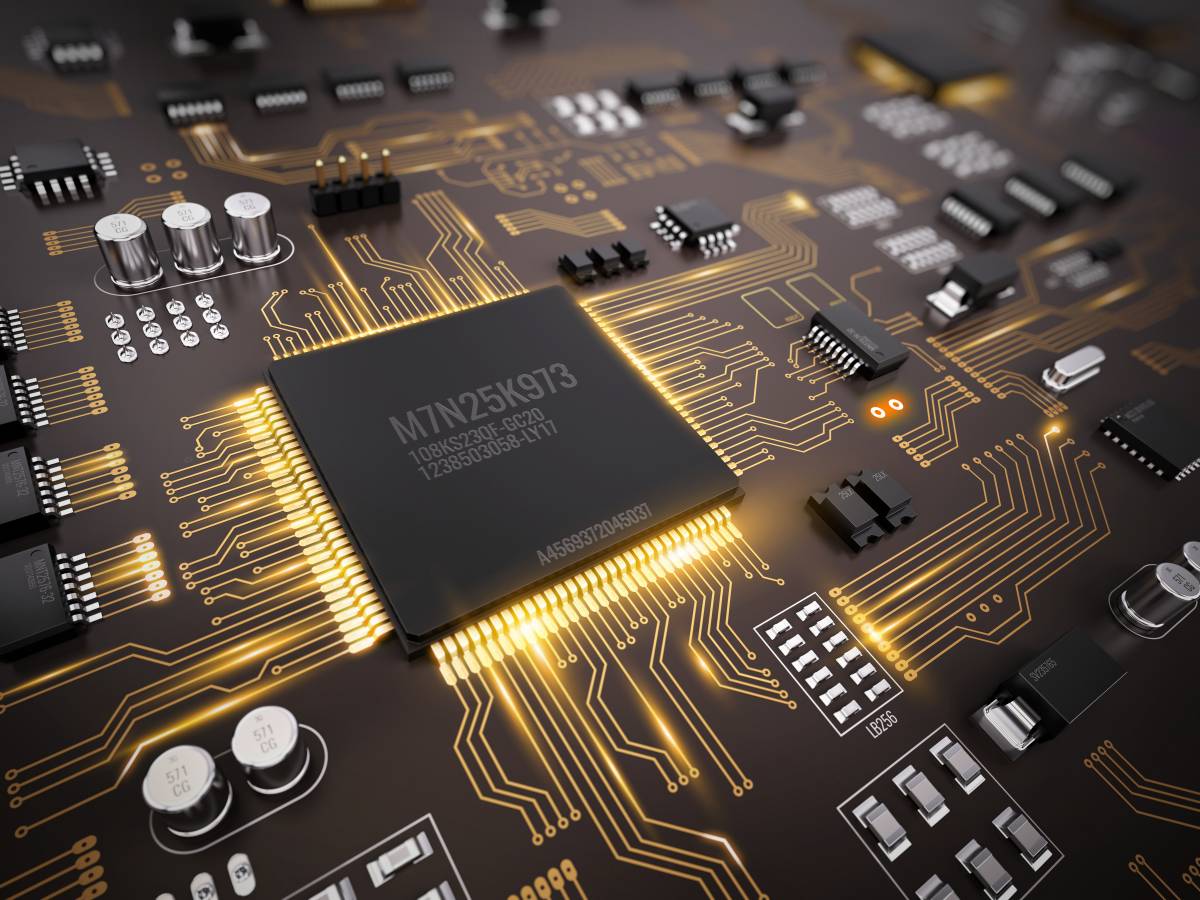
Integrated circuit opens a new era of microelectronics technology
The continuous miniaturization of transistors drives the innovation of manufacturing technology, and the innovation from alloy technology to plane technology makes the miniaturization of transistors take a bigger step. Planar technology not only promotes the production of semiconductor devices to a new stage of mass production, but also lays an industrial technical foundation for the birth of integrated circuits.
● The advent of integrated circuits
Although the miniaturization of transistors has improved the miniaturization of electronic equipment to a new level, with the rapid development of computer, satellite, aerospace and other technologies, the miniaturization of transistors is still far from meeting the needs of society, especially the military. In order to reduce the weight and volume of electronic equipment, not only transistors but also electronic components such as resistors, capacitors and relays should be smaller. As a result, people began to make various attempts and efforts in the high density of electronic equipment, and the electronic equipment of "micro-module" type appeared, that is, various electronic components were first assembled densely and then stacked into a solid structure. However, such efforts are still far from the requirements of precision electronic equipment such as aerospace. Can transistors, crystal diodes and other necessary components be assembled on a semiconductor chip according to the requirements of electronic circuits? This seems to be a natural problem.
In 1952, Geoffrey Dummer, an engineer at the Royal British Radar Station, put forward the idea of this integrated circuit. In May 1958, kilby, who was employed by Texas Instruments, immediately began to study the miniaturization of transistor circuits. On September 12th, kilby finally made resistors from germanium blocks, capacitors from PN junction germanium crystals, and mounted germanium transistors on germanium wafers on glass plates. Then, he etched channels between several devices and connected them with gold wires to form a complete circuit, which became the first integrated circuit (sometimes called microelectronics or chips) ever made. At the end of 1958, kilby and his colleagues made capacitors from silicon blocks with oxide layers, diffused layer resistors by diffusion method, and integrated phase-shift oscillator circuits by silicon crystal control, and applied for patents. Kilby won the Nobel Prize in Physics in 2000.
In 1959, Robert Noyce of Fairchild Semiconductor Company of the United States made a silicon integrated circuit by plane technology, which truly realized a monolithic integrated circuit and became the prototype of the later integrated circuit development. In 1960, the first MOS integrated circuit was born. In 1962, the first official product of integrated circuit with only 12 transistors and resistors appeared in the world, which marked that the third generation of electronic devices officially entered the stage of history. In 1965, Gordon Moore, the founder of Intel Corporation in the United States, put forward the famous Moore’s Law, arguing that the number of components that can be accommodated on a chip will double every 18 to 24 months, and the performance will also double. The invention of integrated circuits has paved the way for the development of microelectronics and microelectronics technology, and it has been developing at the speed predicted by Moore’s Law, which has a far-reaching impact on modern industry.
● Innovation of manufacturing technology
Integrated circuits are inseparable from the innovation of materials and their manufacturing processes. Transistor is the core device of integrated circuit, and its performance depends on the purity of germanium or silicon. In 1948, when shockley was making junction transistors, physical chemist Gordon Teal and engineer John B. Little helped him to make the first crystal puller, which made PN junction from molten crystal and made NPN junction single crystal by doping impurities. As later researchers commented: "No matter what kind of amplifier shockley designed, it can only be sketches for his own entertainment." That is to say, without the technology of purifying semiconductor materials, growing single crystals and doping impurities, high-performance transistors cannot be born.
Similarly, without silicon oxide mask, circuit printing, etching and diffusion technology, planar transistors and integrated circuits could not be realized, let alone the development of microelectronics technology. In 1957, it was discovered that silicon dioxide on the surface of silicon can prevent impurities from diffusing into silicon, which directly led to the emergence of silicon planar technology. The so-called planar process means that every process in the manufacture of planar transistors is carried out in a shallow planar layer on the surface of semiconductor wafers, and oxidation, photolithography, diffusion and ion implantation are important process links. In 1960, H. H. Loar and H. Christensen invented the epitaxial process. In 1970, Spieler and Castellani invented the lithography process. Mask aligner is the core equipment of chip making, and its principle is the same as that of photographic plate making in ancient printing industry. Driven by Moore’s Law, the exposure mode of lithography process has experienced the changes of contact mask aligner/proximity mask aligner in 1960s, projection mask aligner in 1970s, step mask aligner/step scanning mask aligner/immersion mask aligner in 1980s and now EUV mask aligner, which technically spans nodes such as 1 micron, 0.5 micron, 0.18 micron, 90 nm, 65 nm and 45 nm. The continuous innovation of lithography technology promotes the development of integrated circuit technology.
VLSI has become the foundation of modern industry.
Since the advent of integrated circuits, radio electronic equipment has set off an "integration" movement. From electronic computers to various electronic instruments, from aerospace complex electronic equipment to industrial automation control equipment, and today’s emerging industries such as cloud computing, Internet of Things and big data, integrated circuits continue to develop at Moore’s Law.
The emergence of large-scale integrated circuits
Integrated circuits can be divided into small-scale integrated circuits, medium-scale integrated circuits, large-scale integrated circuits and very large-scale integrated circuits according to the level of integration. Generally speaking, dozens of components on a single chip are small-scale, more than 100 to 1000 are medium-scale, more than 1000 are large-scale, and more than 100,000 are very large-scale. The rapid development of integrated circuits is the inevitable result of the development of technology and economy. Improving the integration of integrated circuits is in line with people’s intuitive imagination. Putting the whole circuit system and the whole radio equipment on a single chip can not only greatly save labor costs, but also make the process of large-scale integrated circuits not much different from that of simple integrated circuits with a few components. In addition, in the 1960s, electronic computers have penetrated into various departments such as national economy, scientific research and national defense, and the assembly with small-scale integrated circuits is unsatisfactory in terms of cost and technology. MOS transistor has the advantages of simple structure, small chip area and no need to add "isolation" measures when multiple transistors are integrated, so in 1967, bell laboratory made the first large-scale integrated circuit, which was quickly promoted to industrial production and practical application, occupying an important position.
Semiconductor memory has always been regarded as a representative product of increasing integration, from 1,000 bytes of storage capacity to 4,000 bits, 16,000 bits, 64,000 bits, 256,000 bits and 1 trillion bits. At the end of 1970s, Intel Corporation of the United States proposed random logic large-scale integrated circuit and invented computer central processing unit (CPU) integrated circuit, which created conditions for miniaturization of computers. In 1977, a VLSI with about 150,000 tubes on a chip appeared. In 1988, 16MB dynamic random access memory (DRAM) came out, and 35 million tubes were integrated on one chip, which marked the era of large-scale integration of integrated circuits.
● Industrial development of integrated circuits
The development of integrated circuit industry stems from people’s demand for quantity and quality of information and the progress of integrated circuit technology, which has penetrated into every corner of the national economy and people’s livelihood and become an important support for social development. The industrial structure of integrated circuits has undergone three major changes. The 1970s was the formative period of integrated circuit industry dominated by manufacturing. Its main products were microprocessors, memories and standard general logic circuits, and integrated circuit design was only a subsidiary department. The 1980s was the growth period of integrated circuit industry dominated by integrated circuit design, and its main products were microprocessors, microcontrollers and application-specific integrated circuits. During this period, design companies or design departments of integrated circuits without wafers were established one after another, and foundry factories began to rise. In the 1990s, with the rise of the Internet, the industrial structure of integrated circuits formed a professional pattern of independent design, manufacturing, packaging and testing, and the design industry became the "leader" of the industry.
The integrated circuit industry is mainly distributed in the United States, Japan, Europe, South Korea and Taiwan, China, forming a unique integrated circuit industry. The United States is the birthplace of integrated circuit technology, with large enterprises such as Intel, Texas Instruments, Micron, Qualcomm and Broadcom Waferless Design Company, ranking in the leading position in the world. Japan developed integrated circuits in 1964, becoming the second country in the world with integrated circuit technology. South Korea’s integrated circuit industry began in the 1970s, mainly based on memory, occupying a majority share in the global market, forming a monopoly situation. Taiwan, China started in 1980s and formed a complete industrial structure. China’s integrated circuit industry made great achievements from 1956 to 1978. For example, the first transistor was made in 1956, the DTL logic circuit was made in 1965, the first PMOS LSI circuit was developed in 1972, and a large electronic computer was independently developed for 10 million times in 1976. From 1979 to 2000, from technology introduction to key support, China’s integrated circuit enterprises have accumulated technology and developed in industry, but it is not smooth. After 2000, with the support and encouragement of the central and local policies, the integrated circuit industry in China has developed rapidly and obtained a number of "Chinese cores" with independent intellectual property rights, but there is still a big gap between the core technologies and the international advanced level.
From the birth of the first integrated circuit to the present, it is just one child. Reviewing this "core" road is beneficial to the innovation of China today. Social demand is the source of great innovation, and the miniaturization and integration of electronic devices point out the direction for the innovation of electronic technology. Great original innovation can not be separated from in-depth theoretical research. Without the breakthrough of solid state physics theory, it is hard to imagine the emergence of transistors and integrated circuits. "ZTE" is banned by the United States, which highlights that it is more important to introduce talents than technology. Silicon Valley is the center of high-tech innovation in the world and the highland where talents gather in the world. The transformation of new technology into new products is inseparable from a good innovation environment. The innovative environment of fair competition created by Bell Labs has made a team of complementary cooperation.
Wang Guoqiang, Ph.D., Research Fellow, Innovation Strategy Institute, China Association for Science and Technology. His main research interests are science and technology history, science and technology policy and science and technology communication.
This article is from Zhangjiang Science and Technology Review.