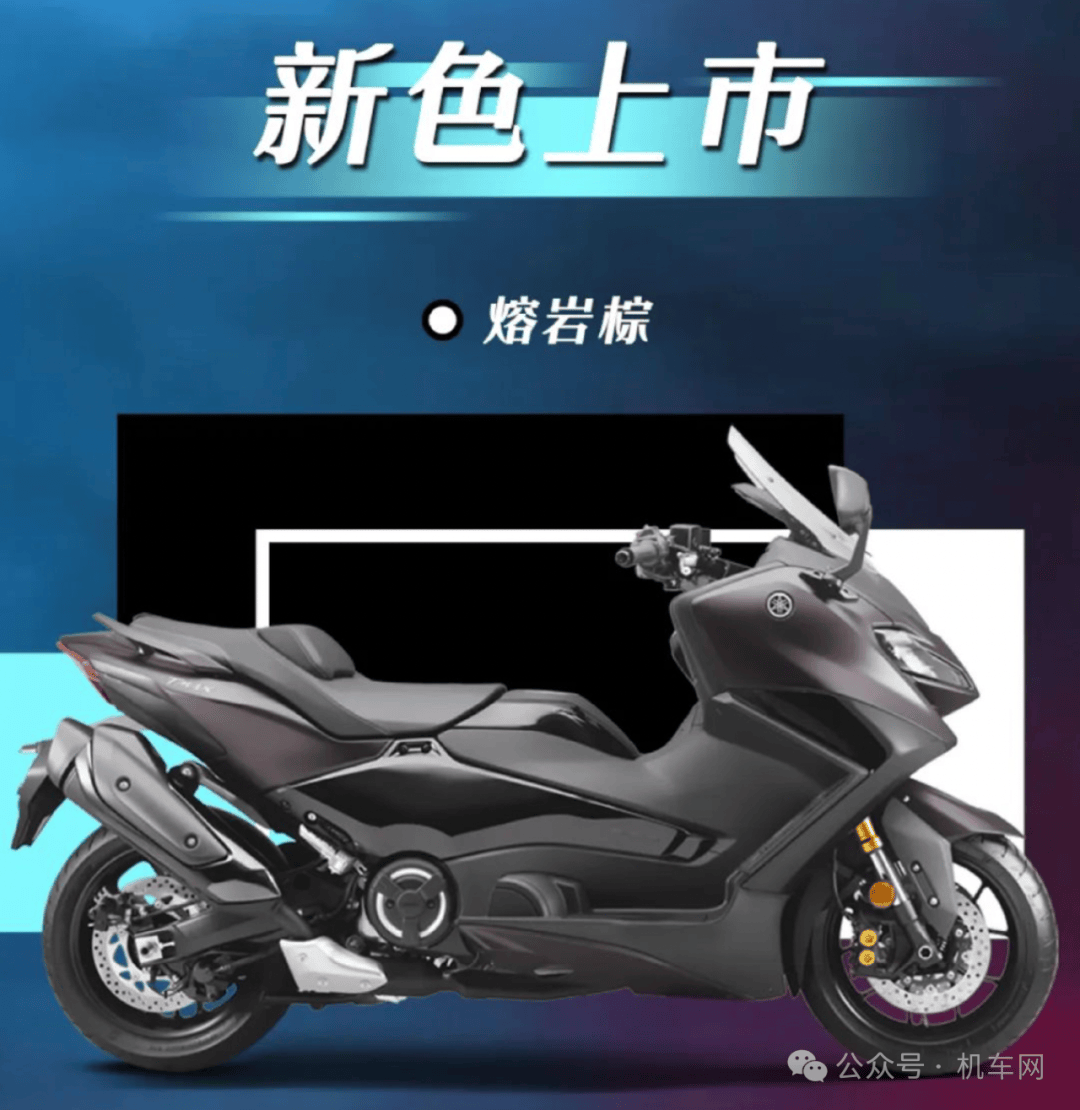
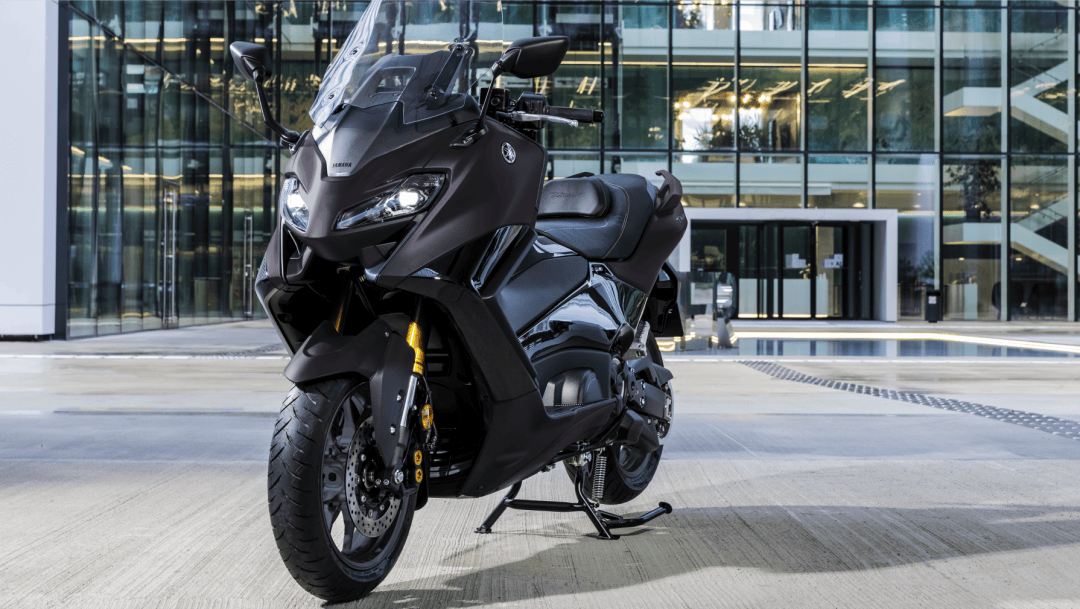
Yamaha released the new TMAX with a price of 139,800 yuan! Brand new pedals or NMAX 160?

pay close attentionLocomotive network, every nightseventeen past nineminute

JC junTalking about motorcycles with you

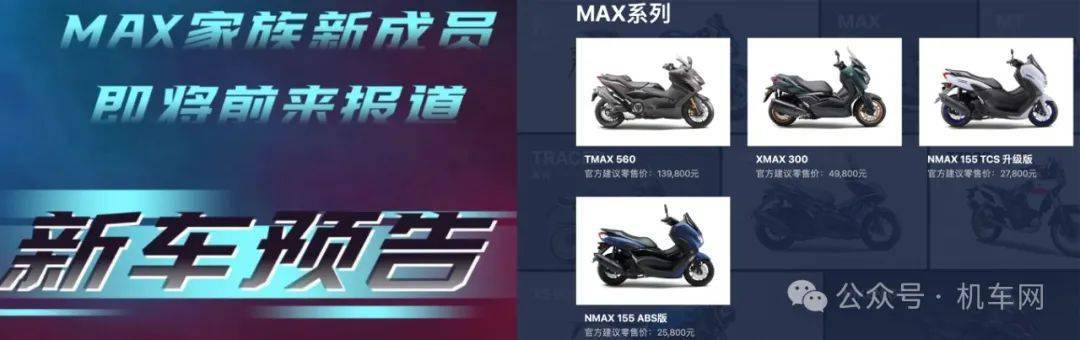
While major manufacturers have released 2024 new cars, Yamaha has also made a new trend today, releasing 2024 models in China.TMAX 560, the price remains at 13.98 million yuan; At the same time, it is also predicted that the new pedals of MAX series will be listed in China soon.

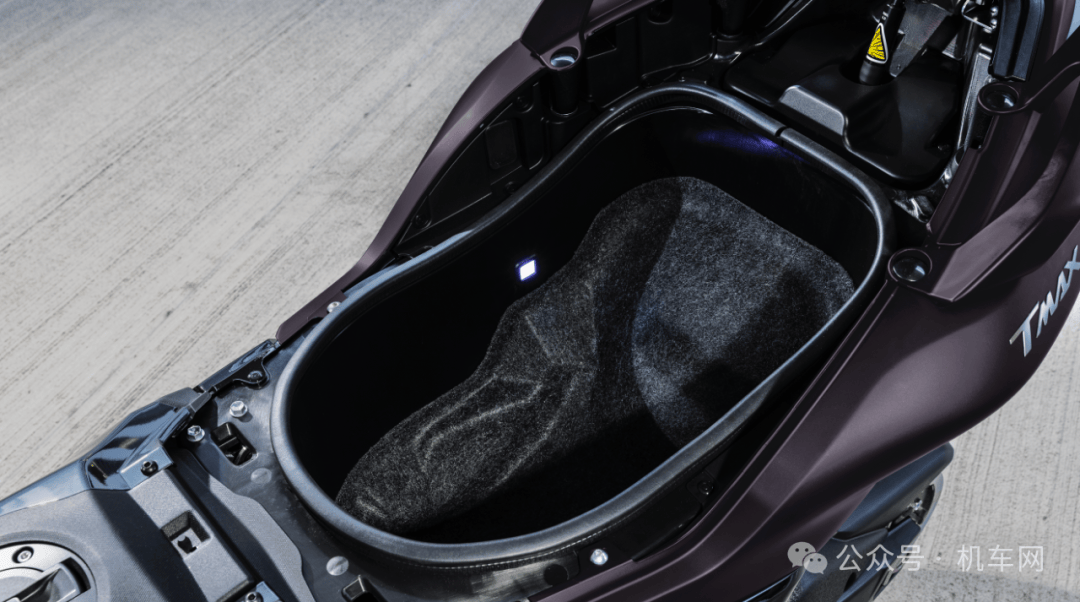
2024 TMAX 560

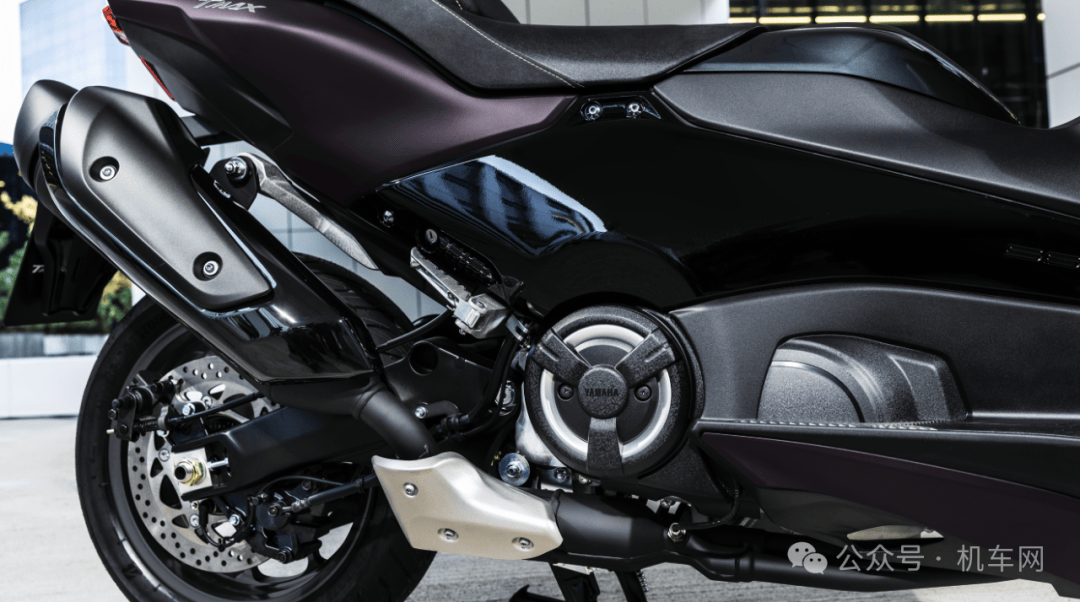
Yamaha TMAX has been updated to the eighth generation since it was listed in 2001. This big sheep has changed a lot from the inside out. The 2024 TMAX 560 still belongs to this generation, and the overall change is not big compared with the 2023 model.The main thing is to updateDark red lava brown coating.

Like last year, the new TMAX 560 is equipped with a 562cc horizontal two-cylinder water-cooled engine with a maximum power of 35.0kW/7500rpm and a maximum torque of 55.0 Nm/5250 rpm. Auxiliary electronic control throttle YCC-T.

The mechanical hardware configuration is also familiar, with 41mm inverted shock absorption and single shock absorber with multi-link structure; Brake has front double disc+radial four pistons.Caliper, rear single disc+single piston caliper; There are also dual channels ABS and TCS. Other aspects of the configuration are not described too much.

MAX new pedal

Compared with the 2024 T-MAX, Yamaha’s announcement of the upcoming new Max family members seems more exciting. After all, the Yamaha MAX pedals currently on sale in China have the mainstream 560, 300 and 155 series, and this time it may be a brand-new pedal to be introduced.

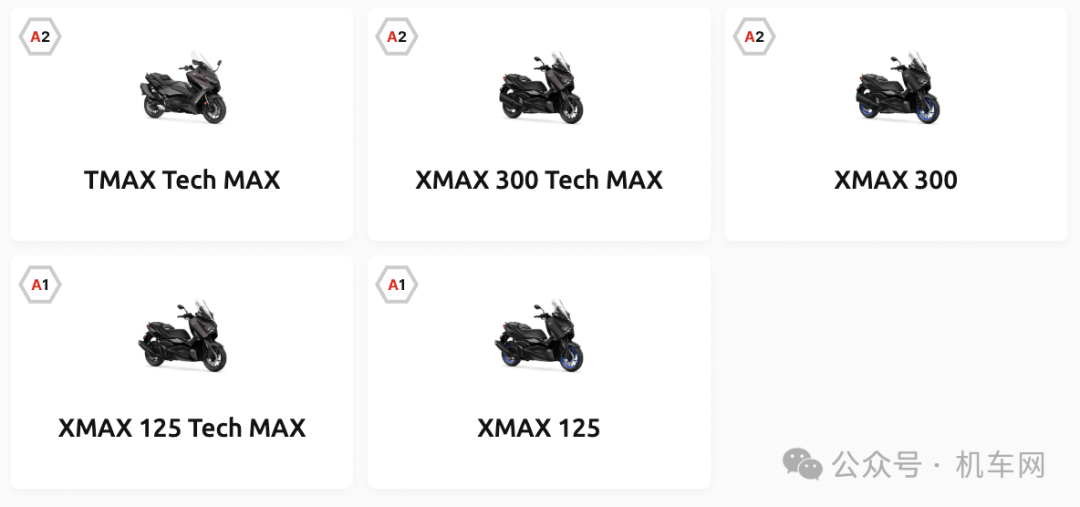
At present, there are 125 series with slightly smaller displacement and ——SMAX 155, a rare flat pedal in MAX series, which is 125 mesh for entry.Before, it was the main model in some areas, and the flat pedal had nothing to do.

In addition to the above two situations, Yamaha will release the new MAX or the modified NMAX 160.(155)Before, it was reported that the official was already designing a new generation of models:The new Nmax has been greatly changed! Engine upgradeIt would be a real surprise for Yamaha to make a domestic start.

Of course, the above is just speculation. Will Yamaha launch it?whichMAX pedal will be announced soon. What kind of car are you looking forward to?

The suspect in the criminal case of murder and corpse destruction in the explosion department of Beijing Third Ring New Town was controlled.

 
  On the morning of August 19th, a gas explosion occurred in a household in the Third Ring New Town Community. The accident caused the male owner and two neighbors to be injured. After the incident, the police found the body of the hostess at the scene. Yesterday, the property of Sanhuan New Town informed the owner that after on-site investigation by the police, "this case was a criminal case of killing and destroying the body and releasing gas explosion" and "the suspect and the deceased had a private relationship with the same unit".


  The police confirmed yesterday that the case had been solved. The deceased was killed by his lover and both sides were colleagues. At present, the suspect has been under the control of the police and confessed the above-mentioned criminal facts.


  Police: The suspect is a colleague of the deceased.


  Yesterday afternoon, in the Kangjing Property Office of Xincheng, a stack of notices stamped with the seal of the property company was printed, and the name of the notice was: "Notice on the 6-4-502 explosion in No.7 yard of Sanhuan Xincheng Community on August 19".


  Manager Chen, the property manager, introduced that the content of the notification came from the feedback from the relevant criminal police of Beijing Public Security Bureau to the property the day before yesterday.


  Yesterday, the police confirmed that the deceased Ding was killed by him and died on August 17, two days before the explosion.


  According to reports, the suspect is a colleague of the deceased Ding, and the two are lovers. Before the incident, the two had quarreled many times about the breakup. On August 17, in Ding’s home, the two sides quarreled again, and the suspect strangled Ding to death. Afterwards, the suspect turned on the gas and forged the gas leak site.


  Property: reporting the case is to stabilize the people’s hearts.


  Mr. Chen, the property manager, said that the notice will be posted in the community. At 21 o’clock last night, on the community network of Sanhuan New Town, the notification about the "8.19" bombing was topped by the red letter.


  According to the report, the explosion has been detected by the police and the suspect has been under control. "The suspect and the deceased are in the same unit and have a private relationship. After killing, they forged the scene and released gas to cause an explosion accident."


  Manager Chen said that if the case is not made public, residents will be worried about the management and security of the community. The notice posted by the property is to stabilize the people’s hearts, so as not to cause panic in a larger area of the community.


  Colleague of the deceased: No ambiguous relationship was found.


  The deceased Ding worked in a state-owned enterprise located in a building outside Guangqumenwai Street. Yesterday, in her work unit, a female leader who asked not to be named confirmed that Ding, 29, was in charge of international trade business in this unit and was still working in the unit the day before her murder. The leader also said that Ding usually works actively and found no close relationship with her male colleagues.


  At about 16 o’clock yesterday, Mr. Meng, the male owner injured in the explosion room, was still receiving treatment in the intensive care unit of trauma surgery in the water conservancy hospital. The attending doctor said that the patient is now able to speak and his condition is basically stable. However, because it is still under treatment, it is inconvenient for outsiders to visit.


  In a room on the second floor of a hotel diagonally opposite the emergency room of the hospital, a man admitted that he was a family member of the injured, but refused to disclose the details of the incident.


  Visiting "the day before the incident, she said’ I can’t go out to work tomorrow’"


  A colleague of the deceased said that he disagreed with some contents of the property notification.


  A "such a cheerful girl, if she says no, she will be gone!" Yesterday, a department leader of Ding’s unit, who asked not to be named, said that Ding’s death was unacceptable to his colleagues.


  On the desk of the female leader, there is a death certificate issued the day before yesterday. According to her introduction, Ding has worked in this unit for more than two years. Because of her hard work, the department handed over many large single businesses to her. On August 16th, that is, last Thursday, Ding was still working in the unit. That night, she told her colleagues that she would go out to contact the business the next morning and was not in the unit. My colleagues at work haven’t seen her since last Friday.


  The leader said that almost all colleagues never thought that she would be killed until the police came to the unit to investigate the situation. The police talked to every colleague in the department, and some colleagues were questioned for two or three hours until late at night.


  The leader saw a post on the internet about the explosion at noon yesterday, and she said that she disagreed with some of the contents of the post.


  She said that Ding could not have an affair with his colleagues, and someone else might have killed him.


  Regarding the statement that the murder suspect mentioned in the online post is someone in the company, the leader said that the colleague mostly runs business outside and is not often in the unit. After the police investigation, "I didn’t hear that the employees of the unit were controlled by the police."


  Ding’s colleagues said that Ding was cheerful and always had a smile on his face, and he usually had a good relationship with his colleagues. "Although the relationship is good, it is limited to colleagues." I haven’t seen Ding having an affair with any male colleague. Colleagues don’t believe that she will have an affair with her colleagues in the unit.


  The female leader said that yesterday, the unit had contacted Ding’s family and planned to prepare for Ding’s funeral.


  -Return visit. Bomb marks are still in the cordon.


  More than 30 households’ houses were damaged, and some owners said that they might get 200,000 compensation.


  Yesterday morning, in front of Unit 4, Building 6, No.7 Courtyard of Sanhuan New Town Community, there was still a yellow warning line, and a security guard was on duty in front of the door. The security guard said that no one can enter at will except the living room in the unit.


  Some owners said that some departments initially determined the loss of the explosion as 2 million yuan, of which the owner who suffered the loss could get 200,000 yuan compensation. However, this statement has not been confirmed by Manager Chen.


  Blow up all the walls


  There are many depressions in the security doors of the fourth unit and the third to fifth floors of Building 6. It can be seen through the cracked doors that the furniture of several households has been covered with cloth.


  Entering the room 502 where the explosion occurred, we can see that the wall shared with the room 503 next door has been completely blown up, and neither room has been cleaned. In Room 502 of the two houses, all the doorframes have disappeared, and clothes and furniture are everywhere on the ground, which is a mess.


  The alert has just been lifted.


  "The glass in the bedroom was completely broken, and it was impossible to live. I dealt with it in the hotel for four or five days." Mr. Zheng, a resident on the second floor of Building 4, said that last night, the property lifted the alert on Building 4, and Mr. Zheng and his wife moved back from the hotel.


  According to Mr. Zheng, the glass destroyed by the explosion is basically in the bedroom, and some residents’ whole windows have been blown up. These days, more than 10 households in the building are not living at home. On the day of the explosion, Mr. Zheng also checked into a small hotel nearby with his lover, and the children were sent to relatives’ homes.


  The test results of the building will come out


  "We provided meals and hotels to solve the temporary problems of damaged owners." Mr. Chen, the property manager of Kangjing, the new town where the community is located, said that there are 72 owners in Building No.6, and more than 30 households were damaged by the explosion.


  Manager Chen said that at noon and evening on the day of the incident, the property management company ordered food at the hotel and provided it to the owners. That night, after consulting the owner, the property booked a room in a nearby hotel for the damaged owner to live in. Seven families stayed that night, and the number increased to nine the next day. Two owners stayed in the hotel the night before.


  Manager Chen said that whether booking a hotel or repairing elevators, doors and windows, the expenses will be paid in advance by the property.


  Manager Chen introduced that the property management company has contacted the insurance company and the Beijing Housing Provident Fund Center to confirm the loss compensation.


  Manager Chen said that on the afternoon of the explosion, the staff of the Municipal Construction Committee went to the scene. After preliminary investigation, it was considered that the load-bearing structures of the two damaged units did not move. Although cracks appeared in the downstairs wall of the explosion room, there was no problem with the structural safety of the building. A detailed test report will come out in the near future.


  -Case replay


  At about 8: 45 am on August 19th, a gas explosion occurred in the residents’ home in Room 502, Floor 5, Unit 4, Building 6, No.7 Courtyard of Sanhuan New Town, Fengtai District. The accident caused the male owner of the household to be seriously injured, two neighbors were slightly injured, and the glass of dozens of households in Building 6 was shattered.


  Rescuers found a decomposed female body when cleaning up the scene of the explosion. On the same day, according to the man in Room 502 who exploded, he told the rescuers that he had just returned from abroad. When he entered the door in the morning, he found his wife lying on the ground, dead, and there was a strong smell of gas in the house. When he turned off the gas valve, the explosion followed.


Editor: Wang Xi

"Unemployed Students" Leslie Cheung nostalgia classic takes you back to the glorious 1980s.

Preview poster


1905 movie network news In the 1980s, a number of powerful singers emerged in Hong Kong’s music scene, and the first generation of Hong Kong idols, namely Leslie Cheung, Danny Chan and Zhong Baoluo, emerged. Their unique personal charm has not only been sought after by many young people, but also inspired many enthusiastic young people who dare to pursue their dreams.


In the "Three Swordsmen in Central", Zhong Baoluo became an idol-level master of ceremonies with his handsome appearance and host talent, while Leslie Cheung and Danny Chan, who started the trend of singing and dancing in Hong Kong music scene, were both idol singers with singing talent. They not only created many classic works popular in Asia, but also became irreplaceable music legends. Speaking of their respective characteristics, Leslie Cheung’s songs are dynamic, warm and long. "Monica" and "The Wind Continue to Blow" sang an era. In 1995, with his comeback, he even surprised the world. Danny Chan’s lyrics are sincere and direct to the soul, and their songs are pure and moving, which is memorable. I just like you, What do you want in my life, and I have you, which are never tired of listening to … …


Maybe everyone has heard their songs, but not everyone knows their stories. Maybe only at a certain age can they really understand them and realize that they are more legendary than the classics they left behind. The film "Unemployed Students" starring Leslie Cheung, Danny Chan and Zhong Baoluo will be released on September 8th.

"The Big Secret of Love Pets 2" Guo Caijie gave a voice and teased the nerves of laughter

1905 movie network news An animated comedy film jointly created by Universal Pictures and Lighting Entertainment will burst into laughter in mainland cinemas on July 5. Today, the film released a special dubbing of Guo Caijie, and Guo Caijie, who is known as the "ever-changing goddess", tweeted the "Goddess Wang" with a changeable and energetic voice.

In the special edition, Guo Caijie talks about the courage and sprouting of "Goddess Wang". In her eyes, the chirping of being able to be eloquent and martial is not only the exquisite elegance of a little girl, but also the chivalrous temperament of "not caring about how you look at yourself around you" and being generous and free and easy, which is completely "a model of women in the new era who get the kitchen under the hall". In order to fully reveal the charm of Chijo’s personality, Guo Caijie devoted herself to trying to match the roles with different intonations. In the special edition, she also laughed and said that she was perfectly integrated into Chijo "and felt that her nose was as sharp as Bomei’s".


In the previous work, Chichoo-choo, who was bold and witty and directed the "Meng Chong Tian Tuan" to run away from new york to rescue Mike, was deeply loved by the audience. In "Big Secret of Pet 2", "Exquisite Girl" will once again embark on an adventure for love. During this period, its interesting training of "changing cats" and the process of fighting with cats have become one of the most exciting and funny scenes in the film. After watching the movie, the person in charge of CCTV6′ s "World Movie Journey" program excitedly called it the favorite of the whole film. "Cosplay, a little beauty dog, is mixed into the cat army, which is really enjoyable.


In 2016, with the theme of pet life, it was a great success in China with both fun and laughter. Three years later, it returned with the new and old cute pets, and continued to reveal the secret and hilarious life of cute pets, so that the audience could enjoy different kinds of fun in the hot summer. In the previous interview, Guo Caijie called the film "exciting adventure, soothing healing, and especially happy after watching it." However, after the media watched the movie in advance, comments such as Netease’s "perfect depiction of animal details made people want to stop" and the famous film critic Yi Jie’s "I know too much about pets" also made people look forward to the film.


What kind of fun adventures will pets who are spoiled and cute every day perform after their owners leave home? On July 5 th, laugh and solve puzzles with Meng Chong!


The police chief was sentenced to more than 9 million bribes, and Maotai received more than 200 bottles.

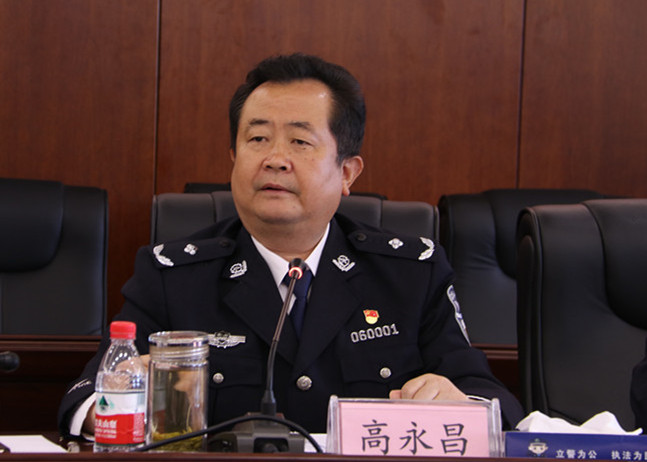
  Gao Yongchang, who once served as the director of public security in Gui ‘an New District of Guizhou, a national new district, was sentenced to 11 and a half years’ imprisonment in the first instance for accepting bribes. Recently, "Gao Yongchang’s first trial of accepting bribes in criminal judgment" (referred to as the first-instance judgment) published by China Judgment Document Network disclosed the above contents.

  The Paper noted that since 2013, Gao Yongchang took advantage of his position to ask for and illegally accept about 9.76 million yuan of property, including more than 200 bottles of Moutai alone.

  Gao yongchang Colorful Guizhou network map

  In fact, in recent years, including Wang Xiaoguang, former member of the Standing Committee of Guizhou Provincial Party Committee and former vice governor, many leading cadres have been investigated for using Moutai for personal gain. In January 2019, Guizhou issued regulations prohibiting leading cadres from using Moutai for personal gain. According to Xinhuanet, in 2019, Guizhou Province investigated and dealt with 397 cases of using Moutai for personal gain, and handled 379 people, including 284 party and government disciplinary actions and 80 people transferred to judicial organs.

  Bribery keyword "Moutai"

  According to public information, Gao Yongchang, male, Hui nationality, was born in July 1961 in Nanjing, Jiangsu. Since he joined the work in 1985, he has worked in Guizhou public security system for more than 30 years. He used to be the director of the anti-terrorism department and the deputy director of the command center (office) in guizhou public security. In March 2013, he became the secretary and director of the Party Committee of Gui’ an New District Public Security Bureau. In December 2014, he served as a member of the party group of Gui’ an New District Management Committee. In June 2019, he was informed of the investigation.

  In December 2019, Gao Yongchang was "double opened". The report of the Supervision Committee of the Guizhou Provincial Commission for Discipline Inspection pointed out that Gao Yongchang violated political discipline and rules, engaged in gangs and gangs, undermined the political ecology of the Public Security Bureau of Gui’ an New District, lacked political beliefs, rumored rumors, opposed organizational censorship, and failed to report personal major matters in accordance with relevant regulations.

  The circular also mentioned that Gao Yongchang violated the discipline of honesty, engaged in power trading and money trading with a number of women, engaged in business activities in violation of regulations, and borrowed and lent money from management clients in violation of regulations. Violation of mass discipline, playing privilege, shaking power and prestige, damaging the relationship between the party and the masses, and apportioning expenses to relevant construction enterprises in violation of regulations; Violation of life discipline and long-term improper sexual relations with others.

  In January, 2020, the People’s Procuratorate of tongren city initiated a public prosecution on Gao Yongchang’s alleged crime of accepting bribes. The tongren city Intermediate People’s Court found that Gao Yongchang took advantage of his position as the director of the Public Security Bureau of Gui ‘an New District in March 2013 to offer or promise help to others in terms of job promotion and adjustment, undertaking projects and disbursement of project funds, and demanded and illegally accepted property totaling 9,763,236 yuan.

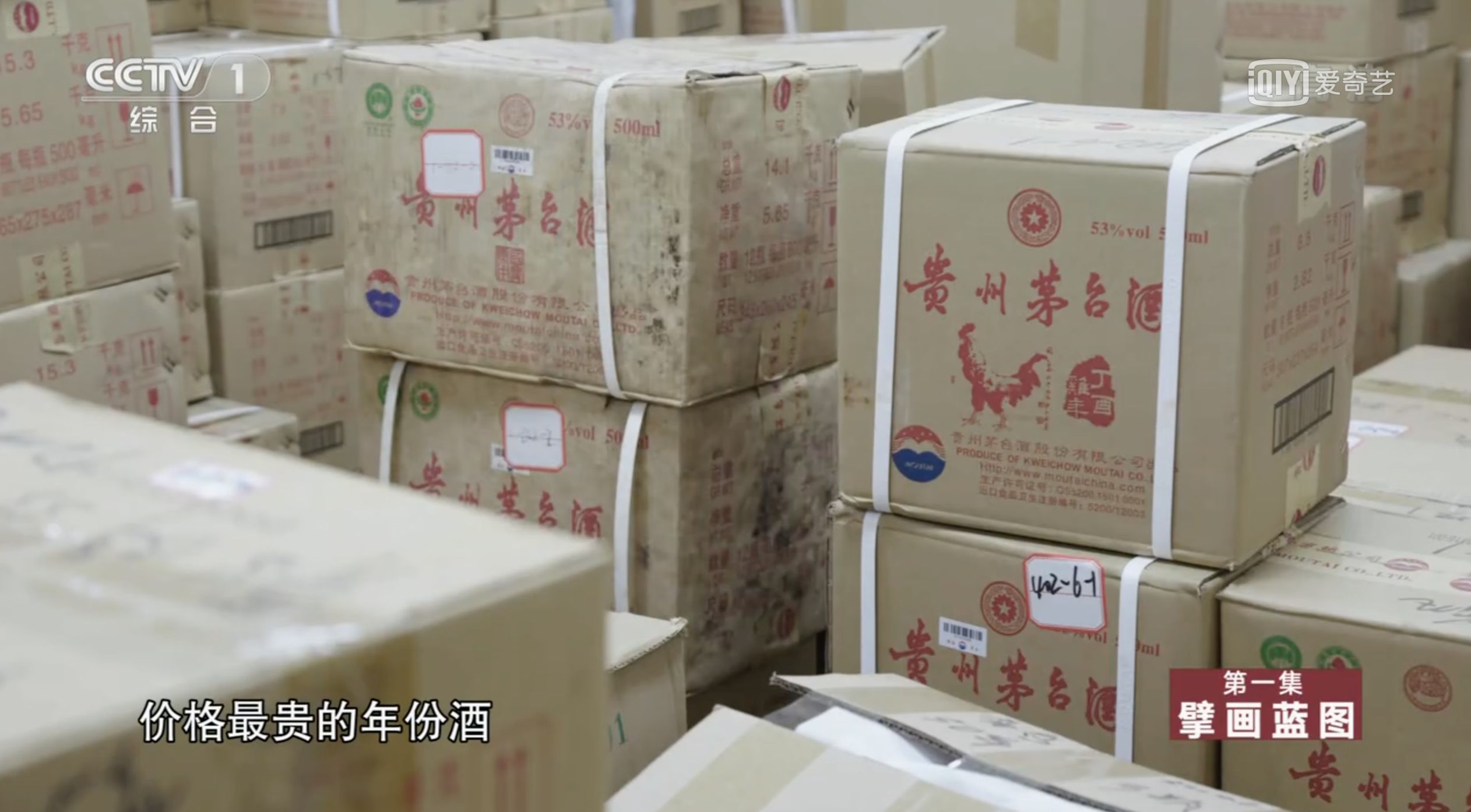
  The Paper combed the first-instance judgment and found that Moutai was a key word in Gao Yongchang’s bribery. In six years, he received more than 200 bottles of Moutai, including 53-degree flying Maotai, customized Maotai, vintage Maotai and Zodiac Maotai, with a total value of nearly 500,000 yuan.

  He was sentenced to 11 and a half years in first instance.

  Who mainly sent Moutai to Gao Yongchang?

  According to the judgment of the first instance, Chen Mou is a policeman of the Public Security Bureau of Gui ‘an New District. Under the care of Gao Yongchang, he served as the instructor of Siya Police Station in September 2015 and the deputy detachment leader of the Public Security Police Detachment in August 2017. In order to thank Gao Yongchang for his help in his promotion and company management, he gave Gao Yongchang 1.7 million yuan.

  In addition, one day before the Spring Festival in 2015, Chen Mou gave Gao Yongchang a bottle of 30-year-old Maotai vintage wine, and around May 2016, he gave Gao Yongchang 6 bottles of 30-year-old Maotai vintage wine. At the end of 2016, Chen Mou put 24 bottles of 53-degree flying Moutai on Gao Yongchang’s official car; One day before the Spring Festival in 2018, he put 12 bottles of 53-degree flying Moutai on Gao Yongchang’s official car; One day before the Spring Festival in 2019, Chen Mou put six bottles of 53-degree flying Moutai on the bus in Gaoyongchang. The total value of Moutai sent by Chen Mou is 133,451 yuan.

  Similarly, He also worked in the Public Security Bureau of Gui ‘an New District. In order to get help in his promotion, he gave Gao Yongchang 53-degree Feitian Moutai for many times from 2013 to 2018, totaling 21 bottles. In addition, He also gave Gao Yongchang 230,000 yuan in cash. With the help of Gao Yongchang, in May 2014, He was promoted as the detachment leader of the public security police detachment of the bureau, and then Gao Yongchang also promised to promote him to the deputy director of the bureau.

  There are also businessmen who send Moutai to Gao Yongchang.

  The judgment of the first instance shows that Zhou is familiar with Gao Yongchang. After Gao Yongchang went to Gui ‘an New District as the director of the Public Security Bureau, Zhou and her husband came to Gui ‘an New District to seek development, and with the help of Gao Yongchang and others, they established Guizhou Gui ‘an New District Ruijie Security Service Co., Ltd.

  In order to thank Gao Yongchang for his help in the company’s operation, Zhou and her husband successively gave Gao Yongchang 2.472 million yuan. In addition, in the Spring Festival of 2014 and 2015, Zhou sent six bottles of 53-degree Feitian Moutai to Gao Yongchang’s home every year. In 2017, before Gao Yongchang’s birthday, he sent six bottles of fifteen-year Maotai vintage wine to Gao Yongchang’s home. The value of Moutai sent by Zhou totaled 43,182 yuan.

  In August 2020, tongren city Intermediate People’s Court made a first-instance judgment: Gao Yongchang was convicted of accepting bribes, sentenced to 11 years and 6 months in prison and fined 1.5 million yuan. The stolen money and its fruits obtained from bribery shall be recovered according to law and turned over to the state treasury.

  Some Moutai wines hidden in Wang Xiaoguang’s home. Screenshot of "National Monitoring" video

  In recent years, many leading cadres have been investigated for using Moutai for personal gain, among which Wang Xiaoguang, former member of the Standing Committee of Guizhou Provincial Party Committee and former deputy governor, was a typical one.

  The documentary feature film "National Supervision" released by the Propaganda Department of the State Supervision Commission of the Central Commission for Discipline Inspection once introduced that after Wang Xiaoguang was detained, he found a house full of Moutai in his home, with a quantity of more than 4,000 bottles. Because he felt unsafe, he also poured the vintage wine that had been poured into the jar into his sewer in batches.

  In January 2019, Guizhou issued regulations prohibiting leading cadres from using Moutai for personal gain. According to Xinhuanet, in 2019, Guizhou Province investigated and dealt with 397 cases of using Moutai for personal gain, and handled 379 people, including 284 party and government disciplinary actions and 80 people transferred to judicial organs.

[CCTV] Mathematicians’ Grain Prediction

[Introduction]


The Hall of Praying for the New Year in Tiantan Park is the place where emperors used to worship heaven. In this way, they pray for good weather and good harvests. Of course, the Hall of Praying for the New Year can’t predict the future, and offering sacrifices to heaven is just a feudal superstition. Today, a mathematician in Chinese Academy of Sciences plays the role of "prophet". What are they "divining"?  


[explanation]


In 1999, more than 1,400 people attended the 15th World Congress of the International Logistics Association, and a paper on input-occupation-output technology and grain yield prediction in China won the only first prize for the progress of international operations research. With the highest accuracy, the fastest timeliness and great economic value in the world, he has attracted the attention of scientists and governments all over the world.  


[Title]


Mathematicians’ Grain Prediction


[explanation]    


In short, this paper is grain yield estimation. It is to predict the actual grain output by meteorological method, remote sensing technology or statistical dynamics before the crops are harvested.


Since 1980, at the end of April every year, the National Grain Output Forecasting Group, chaired by Xikang Chen, a researcher at the Institute of Mathematics of Chinese Academy of Sciences, has completed the forecast of the national grain output in that year. At the beginning of May, this report will be submitted to the main leaders of the central government and relevant departments of the central government, and it will become an important scientific basis for the state to formulate the grain policy for that year.


The growth and maturity of crops is a very complicated and changeable process, during which there are not only many unpredictable factors, but also complex interactions between various systems and the environment.


At present, the lead time of grain yield estimation in foreign countries is usually about 2 months, while that of grain yield estimation research group is more than half a year; The error of output estimation abroad is 5% ~ 10% of the actual output, and the average prediction error of the output estimation research group is 19% of the sampled actual cutting output. Moreover, in the past 23 years, it has been predicted that the grain abundance, average and sorry directions in each year are all correct.


[interview]    


Our method is to use system comprehensive factor forecasting method, mathematical method and model to forecast. Its forecast can be longer, and now our forecast time is half a year earlier, that is, half a year before the grain harvest. What kind of concept is this? It’s just our ordinary grain. Its growing period is 140~150 days, that is, 4~5 months, so if you advance it by 6 months, that is, before the seeds are sown, I have already predicted its yield.


[explanation]  


The forecasting equation of the grain yield estimation research group chaired by Xikang Chen comprehensively considers the interaction of natural factors, such as soil and meteorology, and socio-economic and technical factors, such as policies, prices, improved varieties and fertilizers.


This is one of the nonlinear prediction equations. So how practical is it?


[interview]    


The most obvious performance here is in the import and export. If there is a crop failure this year, we should import food, but if you didn’t estimate it in advance, you didn’t import it as a result. From January to September, we found that our country had a crop failure, and then we went to the international market to buy food. Internationally and in the market, they also knew that China had a crop failure, and the price of food rose sharply at this time. Therefore, if we can’t predict it early, or if the prediction result is wrong, we will import and buy food.


In 2002, for example, the estimated output resulted in a grain shortage of 30 million tons. Because we knew this situation in advance, we imported wheat in the international market when the price was low in April and May. If you wait until the harvest in October and find that it is insufficient to buy, you will have to pay an extra $207.6 billion in foreign exchange. A report saved the country 171.6 billion yuan, thus alleviating the crisis on the table of ordinary people.


Accurate and timely yield estimation report gives us enough time to arrange grain production, storage and import, which makes us occupy a favorable position in international trade.


SETTING: Science and Education Center of Beijing TV Station


Broadcast: Beijing TV 3 "All-round Science and Technology" November 5, 2004


Second prize works, second prize works


The winner of the highest national science and technology award-Zhao Linlin of Wu Mengchao


[explanation]


At the National Science and Technology Awards Conference just held in 2006, Academician Wu Mengchao, a medical expert interviewed by Everyone, won the "National Highest Science and Technology Award". This is the first time that a medical scientist has won this honor since the establishment of the highest national science and technology award.


In the 1950s, the mortality rate of liver surgery in China was as high as 33%, but with the efforts of Academician Wu Mengchao, this figure quickly dropped to 84.8% in the 1960s and 1970s and 0.35% in the 1980s and 1990s. In the same period, the five-year survival rate of liver surgery in China has also increased from about 10% to 532% today. Today, let’s go into Wu Mengchao, a famous medical scientist, to review the creation process of this miracle.


Wu Mengchao: In 1956, I attended an academic conference, and Japanese experts were invited to the conference. After the conference, I once heard them say that the Japanese are crazy, saying that the current level of (liver surgery) in Japan is good, and liver resection can be done. Your level in China is still far behind, and it will take at least 20 or 30 years to reach our level. I am very angry when people say this. What’s so great about the Japanese? We must catch up with them!


[explanation]


The assertion of Japanese experts is not without foundation. In 1950s, hepatobiliary surgery was regarded as a "forbidden area" in the world. At that time, Japan was still in the forefront, but there was no separate liver surgery in China, and liver surgery was in a blank stage. At that time, 34-year-old Wu Mengchao was only the attending doctor of Changhai Hospital affiliated to the Second Military Medical University, and knew almost nothing about liver surgery. At that time, even his teacher, Qiu Fazu, known as the "father of surgery in China", did not have complicated liver surgery.


Interview with Qiu Fazu: At that time, liver surgery in the world had just begun, and China was not ready yet. The situation in the liver is very complicated, including biliary tract, vein, artery, blood coming in and blood coming out. In the past, liver surgery was considered as a restricted area, and doctors were afraid to operate.


[explanation]


The liver is one of the organs with the most abundant blood supply in human body, and it has dozens of functions such as metabolism, digestion, storage, detoxification and coagulation. With the development of medicine today, artificial heart, artificial lung and artificial kidney have been created, but it is still impossible to replace the complex function of liver with anything. Liver surgery often leads to the death of patients due to massive bleeding, and there are only a handful of successful operations in the world. In 1958, Changhai Hospital admitted the first case of liver cancer in its history. The main method of treating liver cancer was surgical resection. The hospital specially invited a famous surgical professor as the chief surgeon and Wu Mengchao as the assistant, but the patient also died on the operating table because of massive bleeding.


Moderator: What is the cause of this massive bleeding?


Wu Mengchao: I’m not familiar with this hepatobiliary anatomy. Therefore, there is no way to control this bleeding, and the blood seeps badly. At that time, the rescue technology was poor, and the patient quickly went into shock, and then he was rescued quickly. As a result, the patient died.


Moderator: At that time, when cutting this tumor, it was actually not clear what the internal structure of the liver was like.


Wu Mengchao: I don’t know. I’m not sure.


Moderator: That was the first major liver surgery you experienced. What kind of impression did you leave after that operation?


Wu Mengchao: At that time, I felt that there was a lot of bleeding during liver surgery. It seems that the blood vessels in the liver are very rich, and it is not easy to make this operation successful. If you want to do a good operation, you must be familiar with anatomy, which is what surgeons do. Therefore, if we want to develop a new subject, we must make clear the basis of organs.


[explanation]


To solve the problem of massive bleeding in liver surgery, the key is to find out the structure and vascular direction of the liver. However, in the 1950s, there was no unified and recognized anatomical way in the world. In order to understand the structure of the liver, Wu Mengchao learned after consulting a lot of data that the dissolved plastic was injected into the liver from blood vessels with a syringe, and after the surface tissue of the liver was corroded, the dense blood vessels could be exposed. Since 1958, Wu Mengchao and his assistants have been experimenting on hundreds of corpses, but they have never found a suitable plastic filler. In 1959, he overheard the news that China won the 25th World Table Tennis Championships on the radio, which immediately inspired him.


Wu Mengchao: On that day, we were sitting in the laboratory and thinking about this problem. It happened that the national sports delegation won the world championship of table tennis for the first time. At that time, there was a lot of publicity. It was a great honor for China to win the world championship. Everyone said table tennis. We thought at that time, isn’t table tennis plastic? So I bought a ping-pong ball immediately, cut it into pieces and soaked it in nitric acid. At first glance, it really dissolved, then I added pigment and mixed them together, so that it could be used for injection.


Moderator: At that time, your idea was to find out how the blood vessels in the liver are distributed.


Wu Mengchao: Yes, how is it distributed, how is it going, and where is the surface projected, so that you will know how to start when you operate.


Moderator: In fact, the idea you came up with was to solve the problem of massive bleeding when you first participated in the operation. Why did you bleed?


Wu Mengchao: Yes, it is to solve this problem.


[explanation]


These liver specimens are made of plastic used to make ping-pong, and the model reflects the direction and distribution of blood vessels and bile ducts in the liver in a three-dimensional and vivid way. In the past two years, after anatomical observation of more than 200 cases of liver corrosion specimens, in 1960, Wu Mengchao first put forward the "five lobes and four segments" anatomical theory of the liver, but this theory was not proved to be safe by surgery. Just this year, Changhai Hospital admitted a second case of liver cancer, and a malignant tumor was born on the right lobe of the liver. Two years ago, the shadow of surgical failure still exists. This time, the hospital organized a strong lineup and specially invited Zheng Baoqi, a famous surgeon, to be the chief surgeon. But just as the operation was about to begin, Zheng Baoqi gave the position of the chief surgeon to his assistant, Wu Mengchao.


Wu Mengchao: At the beginning of the operation, Director Zheng was invited to take the stage. Suddenly, Director Zheng said that I would be the chief surgeon and he would be the assistant. One of me was happy at that time, which was the trust of the director, but the second one was also timid and had a heavy responsibility.


Moderator: I think this moment is worth analyzing. Why did he tell you before the operation?


Wu Mengchao: The director trusted me very much at that time. In fact, the director focused on cultivating me. At that time, he thought that I had studied liver specimens for such a long time and should be familiar with the liver, so he said, "You do it and I’ll be your assistant."


Moderator: In fact, there is definitely a difference between doing anatomy and actually doing surgery.


Wu Mengchao: Of course, I have mastered these basic skills. I know where there are blood vessels, so I am at least a little confident in doing so.


Moderator: When you do it, do you do it completely according to the theory of "five leaves and four segments" that you summarized?


Wu Mengchao: Yes. It is done completely according to this theory.


[explanation]


After three hours of operation, Wu Mengchao successfully performed the first liver cancer resection in China. Three weeks later, this patient became the first liver cancer patient in the history of Changhai Hospital to walk out of the hospital healthily. After that, she lived for six years, which caused a great sensation in the medical field at that time. This case was later specially made into a science and education film, so that we can clearly see the scene of that year today. The anatomical theory of "five leaves and four segments" of the liver has become a classic method in the future, and it is still the theory that guides the largest number of liver operations in the world until today. After successfully completing the first liver cancer operation, Wu Mengchao found that the method of stopping bleeding in the liver was very dangerous. Because of the rich blood in the liver, the hilum of the liver has to be ligated to stop the inflow of blood during the operation, but once the liver is ischemic for too long, it is easy to cause liver necrosis, and a liver operation takes at least one hour. In order to prolong the time of blocking blood, the patient had to be soaked in ice water after general anesthesia, and then operated after the body temperature dropped to 32℃. Wu Mengchao has been trying to find a way to ensure the operation time without causing liver necrosis.


Wu Mengchao: One day, before I went on stage for surgery, when I was washing my hands, I suddenly got an inspiration. Look, the tap was turned off and the water stopped. The tap was turned on and the water came out again.


Moderator: This time, I found inspiration from the faucet.


Wu Mengchao: Yes, I told you that we can also set up a faucet, which blocks the blood vessels and then relaxes them. Isn’t that great? Let’s do animal experiments quickly. How long can this blocking time be? The experiment found that the dog didn’t die if it lasted for 20 minutes at a time, and the dog would die if it was blocked for 30 minutes, and the liver and gallbladder would be broken. So in this case, blocking and then releasing will not affect the patient’s liver for an hour.


Compere: Such a simple thing, why didn’t anyone do it before?


Wu Mengchao: We have been thinking hard for a long time.


Moderator: This is just like what you just said about using table tennis as plastic filler, and it is also an inspiration.


Wu Mengchao: I think this has something to do with my work. How do you think about it every day? When you think about it every day, you will think of something. Isn’t that how inspiration and gravity are discovered?


[explanation]


"Intermittent hilar occlusion at room temperature" is considered as the simplest and safest hemostasis method in surgery, and there are no complications. Until today, it has been widely used in major hospitals across the country and cited by authoritative medical textbooks. From anatomical theory to hemostasis technology, Wu Mengchao established a series of theoretical and practical foundations for liver surgery. In 1963, a very difficult case will challenge Wu Mengchao. One day, Wu Mengchao attended a consultation, and the diagnosis was very surprising. The cancerous part of the patient was in the middle lobe of the liver. The middle lobe of the liver is the place with the richest blood vessels in the liver, and all the important pipelines pass through it. It has always been called the forbidden area in the operation area, and there is no successful precedent abroad. After the diagnosis came out, the doctors present looked at each other, and Wu Mengchao decided to admit the patient to his own department.


Moderator: Why did you dare to take this operation at that time? No one else dares to answer it. How dare you?


Wu Mengchao: Because I am familiar with the anatomy of the liver, I think it can be done. Of course, there are risks. What are the risks? Everyone’s blood vessels sometimes mutate, and sometimes they don’t develop according to the normal (anatomy). If you perform an operation under such a mutation, the operation may fail. (This is) there are errors, and some operations have not found massive bleeding. Another middle blood vessel near the liver is rich, and many blood vessels are related. If it is not good, there may be infection. A massive hemorrhage, a liver necrosis, is possible. So, worry is worry, of course.


Moderator: I am worried, but how did I make up my mind?


Wu Mengchao: Making up your mind is to solve problems for patients. What should I do here? What should I do if I have accepted this task? You can’t just leave it alone. That’s what I am. Therefore, since this operation is to relieve the patient’s pain, I bravely undertook it.


[explanation]


In order to do this operation, Wu Mengchao and his assistant soak in the laboratory every day and do experiments on more than 30 animals. After two months of preparation, Wu Mengchao went on the operating table.


Moderator: Have you considered "in case the operation I received fails"?


Wu Mengchao: Of course, you should also consider yourself. As a surgeon, every operation will (go to) consider the result. As a result, on the whole, it is not good for patients to think too much. We should tell ourselves that I have done my duty, and I have done everything I can, and I have done my job at home. It is really not good, and there are still problems in the end. Then I have done my duty.


[explanation]


It took Wu Mengchao six hours to cut off the middle lobe of the liver with the tumor, and then carefully sewed up the liver on both sides. Once again, he successfully performed the first complete hepatectomy in the world, which solved the major problems in the history of liver surgery in the world. Soon after, he had three consecutive cases of middle lobe resection, and all of them were successful, which indicated that the technical system of liver surgery initiated by Wu Mengchao had matured, and in the 1960s, it promoted the general development of liver cancer resection in China, which reduced the mortality rate of liver surgery in China from 33% in the 1950s to 483% in the 1960s and 1970s.


Interview with Qiu Fazu: We have too many patients with hepatitis B and too many patients with hepatitis C. When cirrhosis develops to a certain extent, it will become liver cancer. Many liver cancers are still very dangerous. Wouldn’t it be great if they could be removed? Early detection and early treatment, so Professor Wu has done a lot of work in this field, and should be one of the founders and pioneers in China and internationally.


Life experience


[explanation]


Wu Mengchao was born in 1922 in the rural area of Minqing, Fujian. Due to the pressure of life, his father went to Nanyang to work and earn money shortly after his birth. When he was 5 years old, he followed his mother to Malaysia and defected to his father. There, he helped his father cut rubber while reading. After graduating from junior high school, there was no Chinese high school in Malaysia at that time, and Wu Mengchao didn’t want to read textbooks compiled by foreigners. In 1939, at the age of 17, he decided to return to China by boat after consulting with several fellow students. On the way, they had to pass through Saigon, a French colony at that time. When they passed the visa, because they were yellow, Wu Mengchao had no right to sign like a white man and had to press his handprint in humiliation.


Wu Mengchao: At that time, the French bullied us, which left a deep impression from childhood. At the time of visa application, when it was my turn and several of my classmates asked us to press our handprints, we all saw that several foreigners in front had signed them, but we were all very angry at being forced to press our handprints. Pressing our handprints was just like signing the indenture, and we always felt it was an insult. I said, we can write English as well as Chinese. Why should we press our fingerprints? They said, "No, you are yellow people, and yellow people are the sick man of East Asia!" " I get angry when I hear this, which is an insult to us. It is not enough to negotiate with him.


Moderator: I heard that you are still very angry about fingerprinting.


Wu Mengchao: Yes, I don’t have to press my fingerprints to go to America. I told you I wouldn’t go.


Moderator: What if they invite you to attend an academic conference?


Wu Mengchao: No academic conference. Don’t go if you want to press your fingerprints.


[explanation]


After returning from Malaysia, Wu Mengchao was admitted to Tongji Medical College and wanted to be a surgeon. However, when he was assigned for graduation, he was rejected by the hospital because of his height of 1.62 meters.


Wu Mengchao: A teacher at the school said that you should stay in pediatrics. It’s settled. You did well in pediatrics, with 95 points in pediatrics. I said I didn’t want to be a pediatrician. My personality is not good. Can I change my surgery? He said that your score of 65 in the surgical exam was too low, so I didn’t look at your size. As soon as I heard it, what happened to my stature? I was so angry at that time. That (teacher) honestly said, "No, not surgery." I started to run. Before I left, I turned around and said, "I’ll tell you, I have to do surgery." I want to do surgery with all my heart. I think I am confident in my hands when doing surgery, and I think surgery is easier to get results, so I think I want to do surgery.


[explanation]


Just when Wu Mengchao refused to assign, it happened that Changhai Hospital was recruiting, and Wu Mengchao finally became a surgeon as he wished. From ignorance of liver surgery to breaking the forbidden area of liver surgery, it took Wu Mengchao only four years. He successfully performed several difficult operations, which made him reach the first brilliant peak of his life at the age of 41. In 1963, Shanghai Science Education Film Studio specially bought imported films and filmed the color documentary March to Hepatobiliary Surgery for Wu Mengchao and his assistant.


[explanation]


就在这部影片拍摄后的三年,这个片子又成了“文化大革命”时批斗吴孟超的证据。当时他从副教授降为住院医生,被下放到陕西韩城农村。但吴孟超始终没有放下手术刀,没多久他就成了当地远近闻名的大医生,求诊的患者络绎不绝,甚至有从外省远道而来的。1974年,安徽农民陆本海慕名而来,他远远看上去像十月怀胎的孕妇,经检查被确认是一个罕见的特大肝海绵状血管瘤。此前他被多家医院拒之门外,有的医院打开腹腔之后被巨大的肿瘤吓得又把肚子缝了起来。


主持人:做这个手术难在什么地方?


吴孟超:难的地方一个是肿瘤大;第二个是肿瘤周围粘连,分离时容易大出血;还有一个就是怕病人出现异常问题。


主持人:当时打开腹腔的时候,您看到的这个血管瘤是什么情况?


吴孟超:很大。这么大的血管瘤还从来没碰到过。我看还有一部分正常的肝,正常的肝还可以保留。做下来以后,马上把这个瘤子带血一起称一称,18公斤重,他的体重一下子减轻了18公斤,做完了以后,大家高兴得不得了。然后我们就守着这个病房,我记得我是守了三四天。


Moderator: It is to ensure that there is no problem with this patient.


Wu Mengchao: Alas. The operation was so successful that it was immediately published in Shaanxi Daily.


[explanation]


Shaanxi Daily published a long newsletter "A Song of Praise for Chairman Mao’s Revolutionary Health Route", and the tumor that Wu Mengchao spent 12 hours cutting was described as "the relatives’ People’s Liberation Army removed a mountain that was weighed down by the revisionist health route-a 36-catty liver hemangioma". In the report full of slogans, only one place mentioned the name of Wu Mengchao, the head of the operation team. This operation has created a miracle in the world medical field. Not only is the tumor the largest hemangioma reported in the international literature so far, but Lu Benhai also has the longest survival time after liver cancer surgery, and he has lived healthily to this day. He was working in the field when a reporter paid a return visit in the 1990s. On Wu Mengchao’s 70th birthday, he also rushed to Shanghai to celebrate his birthday.


[explanation]


Lu Benhai’s case made Wu Mengchao famous, and various difficult cases kept finding him. In 1983, the hospital admitted a 4-month-old baby girl with a tumor on her liver. Previously, the baby’s surgery was neglected in the hospital.


Wu Mengchao: The difficulty of a baby is different from that of an adult. If you look at the size of its liver, for example, the tumor grows very big, and this adult will count as well. So where is the difficulty of small children (surgery)? People are relatively small, have poor tolerance and are at greater risk.


[explanation]


Wu Mengchao operated on the baby himself. Five hours later, he cut off a tumor weighing 600 grams from the baby, which was bigger than the baby’s head. The next day, the Associated Press (Associated Press) published a special banner, reporting that China successfully performed the first huge tumor resection for a baby, which once again shocked the world medical community.


Wu Mengchao: Because I’m bold in surgery. Although it’s difficult, I have to check everything I can be sure of, and I have to check it myself in advance.


[explanation]


After the operation, the baby girl was discharged from the hospital healthily. When "Everyone" came to Shanghai for an interview in August, 2004, she met the grown-up baby girl-Zhu Kena, who is now a nurse and works in a hospital in Wu Mengchao. Whenever I think of the desperate situation described by my parents, Zhu Kena still can’t help crying.


Zhu Kena: Because at that time, my parents told me that basically all hospitals have been pushed out. They said that you should raise another one, that is, all hospitals have been pushed out.


[explanation]


Jukona knew Wu Mengchao’s name from her parents when she was very young.


Zhu Kena: I just applied for a nurse in the senior high school entrance examination that year. Why? Because I think my own life was saved by others, I think I should do something for others, too? What I want to say to Wu most is, thank you for giving me another life, another life, and giving me another chance to be born again. Thank you very much.


[explanation]


After the reform and opening-up, a series of techniques and theories of hepatobiliary surgery initiated by Wu Mengchao have been written into textbooks, and have become classic methods, which have been used to this day, even often cited by foreign scholars, and his reputation in the international medical community has been constantly improved. In 1986, a foreign film crew made a special trip to the hospital where Wu Mengchao was located, and filmed the whole process of his tumor resection without pulling, so as to study his extraordinary medical skills. This film crew is from Japan. At this time, China’s liver surgery technology has been in the forefront of the world. James Walliams, an internationally renowned liver surgeon and tenured professor at the University of Chicago, called Wu Mengchao "the most experienced liver surgeon and clinical scientist in the 20th century" and "one of the most outstanding figures in the field of surgery".


[explanation]


In 1996, 74-year-old Wu Mengchao founded the largest specialized hospital of liver surgery in the world-Shanghai Oriental Hepatobiliary Surgery Hospital. As a rule, surgeons usually choose the right time to seal their knives to maintain their reputation, but Wu Mengchao, 83, has to undergo three operations every day as long as he doesn’t travel. At 9: 00 am on December 5, 2005, Wu Lao, who had just finished the meeting, hurried to the operating room 6 to have a pancreatic cancer resection.


Wu Mengchao: Today’s operation is big, and it is estimated that it will last until 2 pm. I can’t have lunch.


[explanation]


Every operation, Wu Mengchao, who is short, stood on this small stool. Wu Mengchao’s indomitable character not only made him become a surgeon as he wished, but also made him break the tradition many times and turn the impossible into reality in the eyes of ordinary people. Wu Lao’s operation lasted for about an hour. The liver cancer resection in No.3 operating room had to be invited to Wu Lao because the patient’s abdominal adhesion was too severe. After explaining the operation steps in detail, Wu Lao came to the No.3 operating room.


[explanation]


Wu Lao has a unique skill in surgery. When he was separating tumors, he saw that his hands were comfortable in the abdominal cavity, and often the tumors could be completely separated without a knife and a cut. Sure enough, in less than an hour, a tumor with a diameter of 18 cm (cm) was separated by Wu Lao and cut off.


Moderator: If this liver has a tumor, can you feel it without looking?


Wu Mengchao: I can definitely feel it. It feels different. I have taught many students this skill, but many students can’t learn it. Because this is an experience, I have to experience it myself. Sometimes I do liver tissue separation. I know that there are blood vessels in this place, so I will divide them slowly. When there is no place, I can boldly divide them by hand.


Moderator: Divide by hand, without a knife?


Wu Mengchao: No knife. Knowing that there are big blood vessels in this place, I carefully touched it and touched it to see if it felt different. This is the feel.


Compere: Is it in actual operation that many places can’t be seen?


Wu Mengchao: I can’t see it in some places.


Moderator: At this time, for example, behind the liver, do you have to reach in?


Wu Mengchao: Just reach in and separate.


Moderator: Since when, do you remember, and how many operations you have performed, your hands have a very dexterous feel?


Wu Mengchao: I’m quite handy. I’m not bragging about this. I’m confident. Why, when I was a child, I cut rubber very well, and I knitted baskets well. Later, when I was studying and doing surgery, my hand was generally evaluated as good.


[explanation]


At about 4 pm on December 5, 2005, Wu Lao began his rounds. As the head of the first hospital, he has to deal with administrative affairs from 8 o’clock in the morning, operate at 9 o’clock, and then take the young doctor to make rounds after the operation at 3 or 4 o’clock in the afternoon. Seeing that some cases were not standardized, Wu Lao said angrily: "Who wrote it? Ask him if he wants to be a doctor? " Wu Lao’s famous director makes many people afraid. He is very strict with doctors and always thinks of patients. In August 2004, when "Everyone" was filmed in Shanghai, we accidentally filmed a paragraph. A young doctor originally asked Wu Lao to help him look at the patients he had operated on, but he was criticized by Wu Lao for his medication.


Interview with students in Wu Mengchao: Mr. Wu pays the accounts for patients. For example, some surgical methods are very troublesome, but they can save the cost of equipment for patients. Mr. Wu will definitely do it by hand, preferring to be a little troublesome and tired by himself.


[explanation]


Although strict with young doctors, Wu Lao spared no effort to train surgical talents and provide them with various opportunities. In 2001, he set up the "Wu Mengchao Hepatobiliary Surgery Medical Fund" with 300,000 yuan from his personal savings and 4 million yuan from all walks of life. This is the first special fund in the field of liver surgery in China. At present, the fund has developed into the "Shanghai Wu Mengchao Medical Science and Technology Foundation", with a total fund of 10 million yuan, which is mainly used to reward outstanding doctors who have made contributions to liver surgery at home and abroad. Wu Lao also talked about how to be a good doctor many times in the interview.


Wu Mengchao: Last time I met a girl in Wuhan, she had a 45kg tumor. I didn’t even accept her when I saw her in Beijing. The girl was only 21 years old. At first, she thought she had gained weight, so she tried hard to lose weight by exercising. I didn’t know there was a tumor on her liver. Her mother knelt down when she came, and as a result, she had no money. I said we will give you a good look, don’t worry. Later, the tumor was cut, weighing 45 kilograms, and (I) sent a professional group to care for it. After the patient recovered, her mother came running, and the family came running. When they saw me, they knelt down. I couldn’t stand it. I am glad to say that you are well. As doctors, we hope that patients will recover well.


Moderator: Is it also such a kind of motivation that you are still willing to have surgery and do a lot of things for patients today?


Wu Mengchao: There is also such motivation, but to be honest, my personal experience has two aspects: one is that I am a doctor, and the doctor’s duty is to cure diseases and save lives; The second one, there are many patients who make me feel very sympathetic now. There are many advertisements now (some patients believe in advertisements), and some patients sometimes spend a lot of money, which seems to be not good. Finally, when I showed it to him, I found that all the money was wasted. There are many such patients, which is very pitiful.


[explanation]


The name Qiu Fazu was mentioned the most by Wu Mengchao in his three interviews with Everybody, and he was most grateful to him. In 1943, Wu Mengchao was admitted to Tongji Medical College, and Qiu Fazu was his teacher. After seeing the teacher’s superb medical skills with his own eyes, he made up his mind to be a surgeon. In 1958, under the guidance of Qiu Fazu, Wu Mengchao took the blank hepatobiliary surgery as his development direction. In the past 50 years, Wu Mengchao has always maintained the friendship between teachers and students. When they meet together, Wu Mengchao always follows the teacher, and when eating, Wu always helps Qiu Lao to choose a buffet. Two medical doctors who have had a far-reaching influence on China’s surgery are interpreting a much-told story in China medical field.


Wu Mengchao: The teacher always writes back in person, so I can’t. Some letters are sent back by the secretary. The teacher always writes back in person, and the work is neat.


[explanation]


In 1996, Wu Mengchao was awarded the title of "Model Physician" by the Central Military Commission, and Wu Mengchao specially invited Qiu Fazu to the rostrum.


Qiu Fazu: At that time, we were sitting on the podium, and I was the only one wearing a suit. The others were generals. There were more than 1,000 people attending the meeting, all of whom were the People’s Liberation Army. Finally, when I was introduced, I said that this was Wu Mengchao’s teacher, and the people below applauded. This is the pride of being a teacher.


Wu Mengchao: It should be said that as a student, I always respect my teacher. I can do it today because my teacher keeps guiding me. My teacher is very kind to me and treats me like a son. We talk about everything. I will tell him what I think and what I do well. He knows that we have to talk on the phone once a week now.


Qiu Fazu: He is very sincere. He tells me everything. I always say everything. I care about my heart. When two people are together, they are the same.


[explanation]


On November 20, 2005, the column "Everyone" organized a large-scale public welfare activity "2005 Medical Everyone Campus Tour". Qiu Lao and Wu Lao accepted the invitation gladly after learning about it. In the afternoon after the first lecture in Beijing, Wu Lao hurried back to Shanghai by plane, and the office meeting and surgery were waiting for him the next day. In the national lecture tour of "Medical Masters" in December, Mr. Wu took time out of his busy schedule and went to Wuhan, Shanghai and other medical colleges to discuss with young students. He hoped that his life-long medical experience would help future doctors.


(Moderator: Qu Xiangdong)


Broadcast: CCTV’s "Everyone" column on January 10th and 15th, 2006.

The original midnight snack has temperature, and the key hides the mind: Zhijie plays a sense of belonging to users with the "HarmonyOS Hotel" service.

The tragic degree of the price war in the automobile market in the first half of this year is obvious to all. However, this smoke-filledBehind the "battle", there is also a "hidden injury" that is quietly perceived by many consumers but easily overlooked-that is, the "straight decline" of the service quality of 4S stores.

This is not an alarmist. Just as the new media of automobile intelligence has seen and felt in the continuous market visit: many brand sales consultants are either"Lazy" mobile phone brushing, or lack of enthusiasm and smile service for customers entering the store. When asked about the reason, the answer was straightforward and heartfelt: "I used to sell a car with a lot of commission, but now my income has plummeted. What kind of good looks do we have?" Looking at each other, the sharp drop in income does affect enthusiasm, but it will undoubtedly pass the pressure on consumers and greatly reduce the experience of car purchase and maintenance.

However, under the background of the times when the industry cuts costs and services, there are always some brands.In the "cold winter", the precious brand background and initial service are still adhered to. Recently, the HarmonyOS Zhixing Experience Center (Intellectual Brand) visited by the author gave us a strong proof.

fromFrom "undiminished smile" to "system strength"

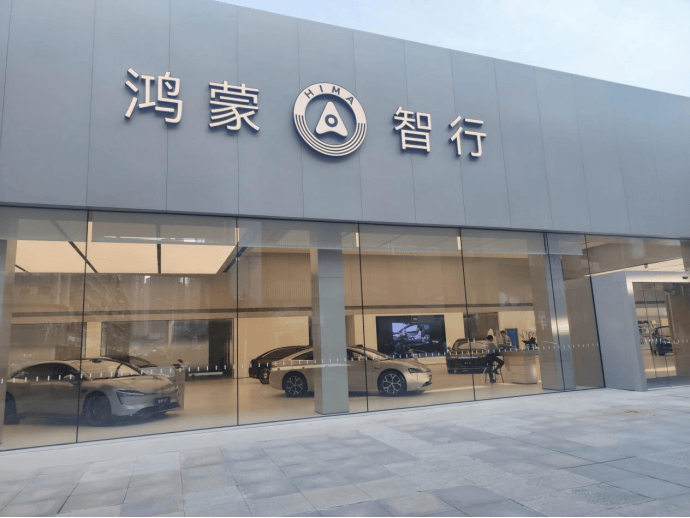
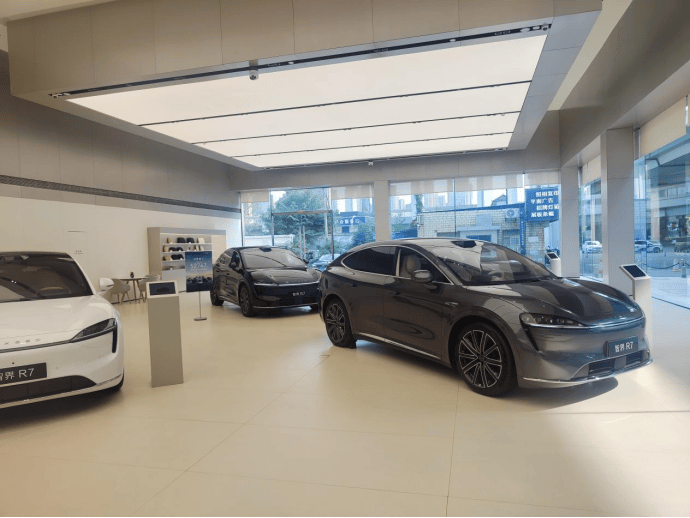
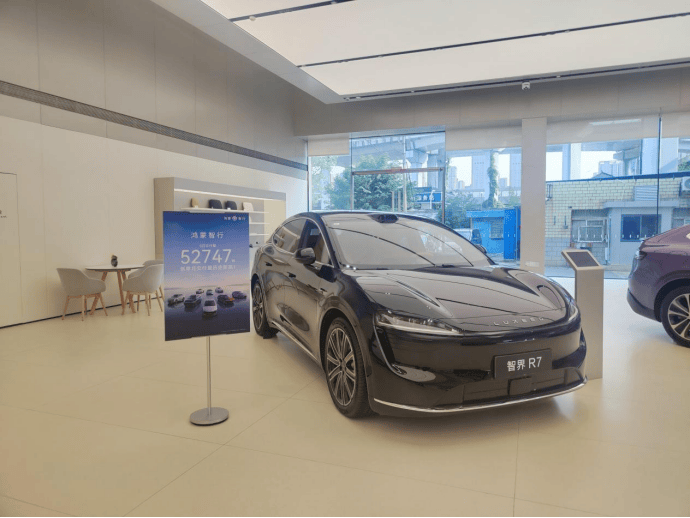
During my spare time on business trip, the author walked into the HarmonyOS Zhixing User Center in Wuhan. My first impression was the luxury and technology on the hardware level: the store was transparent, the design was full of futuristic, and the environment was absolutely clean and comfortable. In front of us, several intellectual cars are shining under the carefully arranged lights, silently telling the brand’s scientific and technological strength.

However, what really made this visit unforgettable was what I felt later and flowed in every detail."Software" Temperature —— A set of service philosophy that goes deep into the bone marrow of the intellectual community.

It is more appropriate to use two groups of words: professional and sincere. Although the author clearly informed me of this trip before seeing the car."Only visit, not buy a car for the time being", frankly speaking, this is usually a "signal light" for the enthusiasm of sales consultants to cool down rapidly, and it is not uncommon to lose or even perfunctory attitude. However, Miss Jie, the sales consultant of the intellectual circle who received the author, showed a completely different look-her smile was sincere all the time, the service process was still meticulous, and she answered every question raised by the author professionally and in detail.

Practically speaking, this enthusiasm does not have the annoyance of overselling, nor is it the kind of forced smile that can be seen at a glance. You can see a sense of pride in the brand and professional service quality.

This can’t help but remind me of working with many luxury brands.In the general communication between 4S stores, they all emphasize that the real luxury is by no means piling up configuration or shouting slogans, and its core support lies in the strong system strength-called SOP (standard operating procedure) internally. In the intellectual world, the author also clearly felt the power of this system.

That is, from appointment, reception, consultation to subsequent maintenance, every link follows a unified, efficient and transparent standardized process. It is this rigorous system that ensures the stable output of service efficiency and quality, and makes the luxury of the new era have a solid foothold. You can see the leopard in the tube. It can be said that the essence of a luxury brand is refined in these seemingly subtle but crucial service processes.

from"Delivery End" to "Evolution Starting Point"

In a further chat with the intellectual sales consultant, her words broke the essence of brand service:"In the service system of the intellectual community, vehicle delivery is not the end, but the starting point of continuous evolution."

This is by no means empty talk. It is intuitively manifested in the intellectual world that the user center has been built into a sense of belonging."Home away from home". What users feel here is far more than reliable technical support. Just as it is affectionately dubbed as "HarmonyOS Zhixing Hotel" by users, it is a place that can be trusted, relaxed and even "go home for dinner".

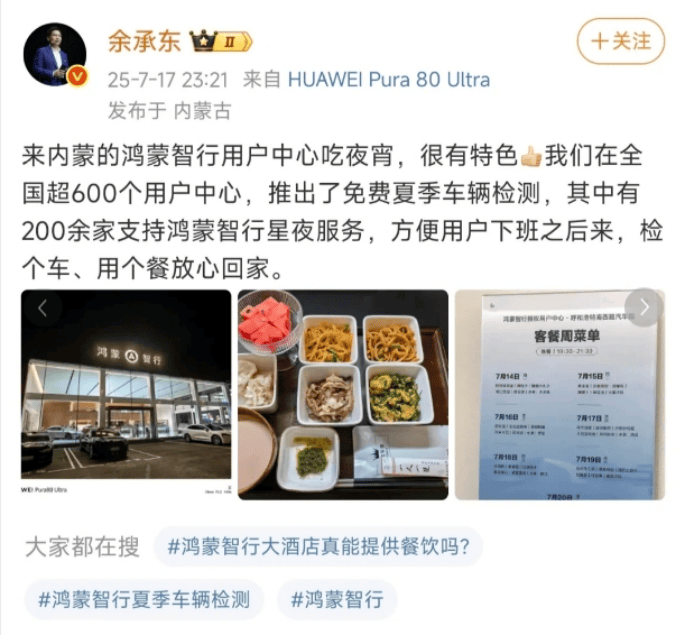
Recently, Huawei managing director and terminalYu Chengdong, Chairman of BG and Chairman of BU, a smart car solution, personally sent a message introducing the "Starry Night Service" launched by HarmonyOS Zhixing User Center. This service directly hits the pain points of urban people: extending business hours until late at night, making it convenient for users to come to the store for vehicle inspection, maintenance or charging after work. What surprises users most is that this service is not simply "overtime", but a free "midnight snack". Many experienced users teased on the Internet: "The HarmonyOS Hotel has even arranged a midnight snack, which is to carry out the" going home for dinner "to the end. "

When many brands reduce night service due to cost, the intellectual community chooses to light up a lamp and prepare a bowl of hot food for users in the middle of the night. This kind of care is exactly the opposite.The most embodiment of the concept of "customer first".

It is worth mentioning that this year.In June, Zhijie announced that it would upgrade the physical Bluetooth keys for all old car owners free of charge, and simultaneously optimize the related functional experience. Paid users can also get the equivalent points back, which can be used to exchange services or goods. This seemingly simple upgrade has triggered a screen-brushing praise in the car owners’ community-Ms. Li, the first batch of R7 car owners in Shanghai, sent a private letter to the new media of automobile intelligence: "I can still receive the’ after-sales red envelope’ from the manufacturer after buying a car for more than one year. This feeling of being remembered is warmer than the price reduction promotion."

What is more noteworthy is that the intellectual community willOTA is the core of "invisible after-sales service". By regularly pushing the optimization of intelligent driving system, adding entertainment functions and improving energy efficiency management, Zhijie allows old car owners to enjoy the technical iterative bonus without frequent return to the store. Behind this "non-inductive upgrade" is the brand’s respect for the time value of users-when many brands tilt their resources to new car marketing, the intellectual community chooses to maintain the loyalty of old users with the experience of continuous evolution.

Users in brand evolution"sense of presence"

When many brands pour resources into the smoke of price war.When "how to sell more cars", the intellectual circle turned its attention to "how to make car owners love their cars more" and "how to make brands and users grow together". This is not only reflected in the continuous functional evolution and intimate service mentioned above, but also extends to the iteration of brand image itself-and users have always been placed at the center of this evolution.

On July 15th, Zhijie Automobile officially launched a brand new logo. This is not a simple visual change: the original LUXEED alphabet has been upgraded to a family-style hexagonal design of HarmonyOS Zhixing, and the dynamic "X" element has been ingeniously incorporated, which intuitively conveys the spiritual core of the brand "breaking through the boundary and exploring the unknown". However, what is more profound than visual rejuvenation is the user care action launched by Zhijie around this: a free souvenir of Zhijie brand logo will be given to all owners of Zhijie R7/S7 who have bought cars, and the application channel will continue to be open until the end of 2025.

This heavy badge is worth far more than the material itself. It is designed to be placed in the car or collected, which becomes a unique witness of the journey between the owner and the intellectual brand. The author noticed a Zhejiang on social media.The owner of the intellectual community of IP sighed: "I thought it was just a brand change Logo, but I didn’t expect to receive a unique badge with full texture. It seems to record the moment when I became attached to my car. This sense of ritual is too strong, and I instantly feel that I am a participant and witness in the brand history. "

What is more commendable is the thoughtful consideration of the intellectual community in service details. The official special reminder is that car owners who have registered to apply for physical Bluetooth keys can conveniently receive commemorative badges at the same service center. This seemingly small design has profoundly confirmed the consistency and user-friendliness of the intellectual service system. This is not only the improvement of efficiency, but also the deep respect for users’ time and experience, which is the intellectual world.Once again, SOP system has landed warmly on user contacts.

【 Conclusion 】From the sales consultantThe professionalism of "smile is not diminished", and a bowl of warm midnight snack in "starry night service"; From the "after-sales red envelope" of upgrading Bluetooth keys for free to the "non-inductive evolution" bonus brought by OTA; Then to the "sense of presence" carried by a commemorative badge, the intellectual community is trying to build a user ecology beyond the traditional trading relationship. It not only sells cars, but also manages a brand relationship based on continuous care and common growth.

Competition in the auto market should never be just a price fight. whenWhen "involution" makes some brands lose ground in service, the choice of intellectual circles provides a valuable perspective: besides the noisy price war, sincere investment in user experience and long-term adherence to service standards are the "brand background color" to cross the cycle and win user loyalty.

What are the appearance characteristics of magpies? How do these characteristics help magpies survive in nature?

Magpie: a unique existence in nature

Magpie is a striking bird in nature, with distinctive and unique appearance. First of all, magpies are relatively large, usually about 40 to 50 centimeters long. They have a strong body structure, which makes them more powerful when flying and moving.

The color matching of magpie feathers is very eye-catching. The head, neck and back are mainly black, while the abdomen is white. The feathers on the wings and tail have a blue-green metallic luster, which is particularly dazzling under the sunlight. This bright black-and-white contrast and unique metallic luster not only make magpies easy to be recognized in the forest, but also may play a warning and protection role to some extent.

Magpie’s tail is long and wedge-shaped, which can play an important role in balancing and controlling the direction during flight. Their tails can also be unfolded when they stop, just like a beautiful fan, which adds to the uniqueness of their appearance.

Magpie’s beak is thick and hard, suitable for pecking at all kinds of food. Its strong feet and sharp claws make it easy to stand on branches and grab food.

The following table shows the appearance characteristics and functions of magpies more clearly:

Appearance characteristics function A larger body shape With strong strength, it is helpful to compete for resources and resist foreign enemies in nature. Bright feather color It may have warning and protection functions and be easily recognized in the environment. A long wedge-shaped tail Balance and control the direction when flying, and show uniqueness when stopping. A stout, hard beak Suitable for pecking at all kinds of food and getting sufficient nutrition. Strong feet and sharp claws It is convenient to stand and grab food and adapt to different habitats.

These features enable magpies to survive better in nature. Their strong bodies and sharp beaks help them get food, whether nuts, seeds, insects or small vertebrates can be their food sources.

Magpie’s long tail can flexibly adjust its direction and keep its balance in flight, so that it can quickly shuttle and avoid natural enemies in complex environment.

Its bright feather color may make natural enemies fear when attacking, thus improving their chances of survival.

In a word, the unique appearance of magpies is an important guarantee for their survival and reproduction in nature, enabling them to adapt to various environments and challenges.

(Editor: He Xian)

[Disclaimer] This article only represents the author’s own views and has nothing to do with Hexun. Hexun.com is neutral about the statements and opinions in this article, and does not provide any express or implied guarantee for the accuracy, reliability or completeness of the contents. Readers are requested for reference only, and please take full responsibility. Email: news_center@staff.hexun.com.

The ambulance was stopped for 12 yuan Expressway toll for 24 minutes.

  24 minutes for 12 yuan toll ambulance theory.

  An ambulance driver in Leshan thinks that it should be free to pass through the expressway. The Provincial Senior Management Bureau said that there is no free passage for ambulances in Sichuan at present.

  Is there a convention?

  Master Liu, who drives an ambulance, said that when patients are usually transported to Leshan and Chengdu and pass through Leshan Toll Station of Chengle Expressway and Chengdu Toll Station of Chengya Expressway, as long as the toll collectors are told about the situation on the car, the toll collectors will release them free of charge.

  Look at the mood?

  Master Liu also said that before the ambulance in the hospital carried patients through the Leya Expressway and the Jiangnan Toll Station and the Mucheng Toll Station, sometimes there was a charge and sometimes there was no charge. "I feel that there is no standard, depending on the mood of the toll collector."

  Neither.

  The stationmaster of the toll station said that according to the company’s regulations, a green channel will be opened for ambulances carrying critically ill patients. The relevant person in charge of the Provincial Senior Management Bureau said that the relevant regulations do not stipulate that ambulances are exempt from road tolls.

  On December 11th, Jiajiang County Chinese Medicine Hospital of Leshan City sent an ambulance to pick up a car accident victim from the countryside and return to the hospital. Unexpectedly, when the ambulance was about to leave the toll station in the south of the Yangtze River in Leya Expressway, the driver and the toll collector disagreed about whether to pay the toll in 12 yuan. The ambulance carrying the injured stopped for 24 minutes, and finally the ambulance left the toll booth after the injured family paid the fee.

  In this regard, the person in charge of Jiajiang County Hospital of Traditional Chinese Medicine responded that the ambulance parking theory is really inappropriate and has criticized and educated the drivers involved, but at the same time, it also called for the unified implementation of the free pass policy for ambulances to gain time for saving lives.

  The relevant person in charge of the Provincial Senior Management Bureau said that according to the relevant regulations of the State Council and Sichuan, ambulances are not required to be exempted from paying road tolls.

  "Let me go at once!"

  Ambulances want to be free

  The toll collector will not release it.

  In the past few days, a photo of an ambulance stranded in a toll station has been circulated on the Internet. According to netizens, at 3 o’clock in the afternoon on December 11th, an ambulance carrying critically ill patients went from Mucheng to Jiajiang County. When passing through Jiajiang South Toll Station, the toll station staff asked 120 ambulances to pay tolls, resulting in 120 ambulances staying at the toll station for a long time.

  On-site monitoring of Jiajiang South Toll Station of Leya Expressway shows that at 14: 41 on December 11th, an ambulance of Jiajiang County Hospital of Traditional Chinese Medicine with the license plate number of Sichuan LLZ120 drove the patient into the toll station, and the toll showed that 12 yuan toll should be paid.

  "quick! There is a car accident patient in my car, let me go at once! " The ambulance driver put down the window and asked the toll collector to release it immediately for free, but the toll booth staff said, "According to the regulations, ambulances are not free, and you can’t leave until you pay!" Should I pay the fee after all? Both sides have their own opinions, and the toll collector will not let them go, and the ambulance will not pay.

  The surveillance video shows that the driver got off the bus and took a photo in front of the car, and then got on the bus. Seeing that the two sides have been deadlocked is not the way. In the end, the family members of the patients in the ambulance paid the toll of 12 yuan, and the toll collector lifted the pole to release them. At 15: 05, the ambulance left the toll booth.

  "According to the usual practice, it should not be collected."

  Usually transported to Leshan Chengdu.

  The driver said that it will be released free of charge.

  On December 15th, Chengdu Business Daily reporter contacted Master Liu, the ambulance driver.

  "Ambulances carrying patients should not be charged according to the usual practice." Master Liu has been driving an ambulance for many years. He told the Chengdu Business Daily reporter that patients are usually transported to Leshan and Chengdu. When passing through Leshan Toll Station of Chengle Expressway and Chengdu Toll Station of Chengya Expressway, as long as the toll collectors are told about the situation on the car, the toll collectors will be released free of charge, but the empty cars will take the initiative to pay according to regulations.

  Master Liu said that before the ambulance in the hospital carried patients through Jiajiangnan toll station and Mucheng toll station, sometimes there was a charge and sometimes there was no charge. "I feel that there is no standard, depending on the mood of the toll collector."

  "It’s not that the hospital can’t afford the toll, and it can be reimbursed when it is taken back." Mr. Huang, the person in charge of the ambulance fleet of Jiajiang County Hospital of Traditional Chinese Medicine, said that considering the public welfare of first aid, it would be beneficial to improve the efficiency of first aid if the expressway exempted ambulances from tolls and set up green passages.

  "Green channel depends on the situation"

  Mainly depends on the judgment of toll collectors.

  Is the patient in the car in critical condition?

  Chao Huang, the stationmaster of the Jiangnan Toll Station of Leya Expressway, said that the state did not expressly stipulate that ambulances would not be charged.

  However, Chao Huang said that according to the company’s regulations, for the sake of saving lives first, the toll station will open a green channel for ambulances carrying critically ill patients and release them free of charge.

  How does the toll collector judge whether the patient in the car is in critical condition? Chao Huang said that it depends mainly on the human judgment of toll collectors, such as whether the ambulance sounds the siren all the way, whether the ambulance personnel in the car are carrying out rescue, and the facial expressions of medical staff and patients’ families, etc., which can roughly judge whether the patient is in critical condition. "On that day, the driver would rather spend more than 20 minutes theorizing and not paying the fee. It can be seen that the car was not a critically ill patient at that time."

  sound

  Hospital:

  Has seriously criticized the driver involved.

  Call for ambulances to be unified and free.

  Ambulances were stranded in toll stations due to charging problems, which caused many netizens to dispute. Many netizens believe that it is obviously against professional ethics for ambulance drivers to pester the toll booth for the sake of 12 yuan’s toll, regardless of the life safety of the patients in the car. The disagreement over whether to charge fees should be put aside first, and rescuing patients should be put in the first place.

  On December 15th, Zhu Chuangye, president of Jiajiang County Hospital of Traditional Chinese Medicine, said that it was really inappropriate for drivers to stop for ambulances carrying patients, regardless of whether the expressway should be charged or not. As an ambulance driver, we should race against time to send the patient safely to the destination hospital, and should not delay the time artificially.

  Zhu Chuangye said that the condition of the injured in the ambulance on that day was not critical and life-threatening. The driver thought that the ambulance carrying the patient should not be charged according to the usual practice, so the parking theory was carried out. "This is only a case, and we have seriously criticized and educated the driver."

  In addition, Zhu Chuangye appealed that at present, ambulances with first aid tasks are free in some places, and fees are charged in other places. Relevant departments should issue unified regulations and implement free access for ambulances on expressways.

  Provincial Senior Management Bureau:

  Free of road tolls?

  The relevant regulations do not stipulate

  Because there is no explicit provision in the country, the issue of whether ambulances charge tolls varies from place to place. Guangdong, Heilongjiang and Beijing have successively issued notices stipulating that the toll of 120 ambulances with fixed devices will be reduced or exempted.

  The relevant person in charge of the Expressway Administration Bureau of the Sichuan Provincial Department of Transportation said that according to the Regulations on the Management of Toll Roads issued by the State Council in 2004 and the Regulations on Expressway of Sichuan Province issued by Sichuan in 2015, ambulances were not exempted from paying road tolls.

  In addition, Chengya Expressway and Chengle Expressway mentioned by Master Liu belong to Sichuan Chengyu Expressway Co., Ltd. The relevant person in charge of the company said that in line with the sense of social responsibility, the company has given certain authority to its subordinate toll stations, and ambulances carrying urgent and serious patients can be given free passage for quick passage. (Reporter Gu Aigang Yan Dan)

Synergistic Promotion of Ecological Environment Protection and Economic Development —— Report on Green Development of Yangtze River Economic Belt

  Promoting the development of the Yangtze River Economic Belt is a major decision made by the CPC Central Committee and a major strategy related to the overall development of the country. In November 2020, General Secretary of the Supreme Leader stressed at the symposium on comprehensively promoting the development of the Yangtze River Economic Belt that we should unswervingly implement the new development concept, promote the high-quality development of the Yangtze River Economic Belt, and make the Yangtze River Economic Belt the main battlefield of China’s ecological priority green development, unblock the domestic and international double-circulation aorta, and lead the main force of high-quality economic development. The outline of the "14th Five-Year Plan" proposes to comprehensively promote the development of the Yangtze River Economic Belt, and jointly promote ecological environmental protection and economic development.

  The Yangtze River Economic Belt covers 11 provinces and cities including Shanghai, Jiangsu, Zhejiang, Anhui, Jiangxi, Hubei, Hunan, Chongqing, Sichuan, Yunnan and Guizhou, covering an area of about 2,052,300 square kilometers, accounting for 21.4% of the country. At the end of 2020, the total population was 606 million, accounting for 42.9% of the country. The Yangtze River Economic Belt is a region with active economy and great development potential in China. In 2020, 11 provinces and cities in the Yangtze River Economic Belt will achieve a regional GDP of 47.2 trillion yuan, accounting for 46.4% of the national GDP, of which the added value of the secondary industry accounts for 47.6% of the national total; The total import and export volume was 15.0 trillion yuan, accounting for 46.5% of the country. The water resources of the Yangtze River account for about 36% of the national total, the areas of rivers, lakes, reservoirs and wetlands in the Yangtze River basin account for about 20% of the national total, rare and endangered plants account for 39.7% of the national total, and freshwater fish account for 33% of the national total. The Yangtze River Economic Belt occupies an important position in the construction of ecological civilization in China.

  Since the "Thirteenth Five-Year Plan", the green development of the Yangtze River Economic Belt has been comprehensively promoted. In 2016, the Central Committee of the Communist Party of China and the State Council issued the Outline of the Development Plan of the Yangtze River Economic Belt, giving priority to the protection and restoration of the Yangtze River ecological environment, and defining the objectives and requirements for the construction of ecological civilization in the Yangtze River Economic Belt in 2020 and 2030.

  The ecological construction has achieved remarkable results.

  Guided by the Outline of the Development Plan of the Yangtze River Economic Belt, the Yangtze River Economic Belt promotes green development at multiple levels: centralized treatment and restoration are carried out around the water, gas and soil environment. From 2018 to 2021, the central government issued 131.2 billion yuan and 120.3 billion yuan for the transfer payment of key ecological functional areas, forestry and grassland respectively to support the construction of ecosystems; Focus on key areas, strengthen source control, implement the "4+1" project, issue the "Guiding Opinions on Accelerating the Control of Agricultural Non-point Source Pollution in the Yangtze River Economic Belt" and other policies, and promote the delineation of the "three zones and three lines" (red line of towns, agriculture, ecological space and ecological protection, red line of permanent basic farmland protection and urban development boundary) and "three lines and one list" (red line of ecological protection, bottom line of environmental quality and resources) Actively promote the green transformation, and issue policies such as "Guiding Opinions on Strengthening the Green Development of Industry in the Yangtze River Economic Belt" to promote the transformation and upgrading of key areas; Explore the cross-regional cooperation mechanism, issue the Guiding Opinions on Accelerating the Establishment of the Compensation Mechanism for Horizontal Ecological Protection in the Upstream and Downstream of the River Basin, establish the "1+3" inter-provincial consultation and cooperation mechanism in the Yangtze River Economic Belt, and promote the coordinated development of regional green.

  The quality of ecological environment has obviously improved. In 2020, the water quality of the Yangtze River Basin will be excellent (Ⅰ— Class III) The section ratio is 96.7%, which is 14.9 percentage points higher than that in 2015 and 13.3 percentage points higher than the national average. For the first time, the main stream completely eliminated the water body inferior to Class V, and the whole line reached Class II water quality, and the water quality of the main stream and main tributaries was excellent. The compliance rate of river assessment sections in 11 provinces and cities (above Class III, provincial control detection) has been greatly improved. Comparatively speaking, the water quality in the upper and middle reaches is more prominent, and the compliance rate of the assessment section in Guizhou Province in 2020 is 99.3%; The downstream water quality has improved significantly. During the "Thirteenth Five-Year Plan" period, the compliance rates of assessment sections in Shanghai, Jiangsu and Zhejiang increased by 59.4, 39.9 and 21.7 percentage points respectively.

  At the same time, the excellent rate of AQI in 11 provinces and cities reached 90.8% on average, which was 10.1 percentage points higher than that in 2015 and 3.8 percentage points higher than the national average. Among them, the average annual concentration of PM2.5 is 31 μ g/m3, which is 37.0% lower than that in 2015. At the same time, air quality has improved significantly, especially in Hubei, Shanghai, Zhejiang and Hunan provinces. During the "Thirteenth Five-Year Plan" period, the excellent rate of air quality index increased by 17.0, 16.5, 15.1 and 13.8 percentage points respectively.

  During the "Thirteenth Five-Year Plan" period, 11 provinces and cities have afforested a total of 14.994 million hectares, supporting 41.1% of the country’s afforestation area with 21.4% of the country’s land area. The ninth national forest census shows that the forest area of the Yangtze River Economic Belt has increased by 5.815 million hectares compared with the eighth census. According to the provincial and municipal coverage rate, the forest coverage rate of the Yangtze River Economic Belt has reached 44.4%, which is 21.4 percentage points higher than the national average. In 2020, the area of soil erosion in the Yangtze River Economic Belt was 389,000 square kilometers, which was 51,000 square kilometers less than that in 2011, of which 12,000 square kilometers less than that in 2018; Soil erosion accounts for 18.9% of the total land area, which is 2.5 percentage points lower than that in 2011, among which it is 0.6 percentage points lower from 2018 to 2020.

  The discharge of pollutants has been controlled to a certain extent. While actively promoting ecological restoration and eliminating the problem of "stock", speeding up the source management of pollutants and controlling "increase" are the core contents of the green development of the Yangtze River Economic Belt. In recent years, the Yangtze River Economic Belt has focused on industrial and agricultural non-point source pollution, urban wastewater, tailings ponds, ships and other key areas, made efforts to reduce pollutant emissions, and achieved initial results. According to the China Statistical Yearbook, in 2020, the emission of sulfur dioxide in the Yangtze River Economic Belt will be 1.165 million tons, which is 81.7% lower than that in 2015. The total emission of nitrogen oxides was 5.3617 million tons, a decrease of 9.4% compared with 2015; The total discharge of ammonia nitrogen in wastewater was 470,000 tons, which was 52.9% lower than that in 2015.

  The utilization efficiency of resources and energy has been significantly improved. The utilization efficiency of natural resources is an important index to measure the relationship between natural environment and economy and society. Improving the utilization efficiency of natural resources can not only enhance the supporting ability of resources to economic and social development, but also help to reduce the consumption of natural resources. Water saving and energy saving in the Yangtze River Economic Belt have been steadily promoted. In 2020, the total water consumption in the Yangtze River Economic Belt will be 248.29 billion cubic meters, 13.98 billion cubic meters less than that in 2015 and 43.93 billion cubic meters less than the control target in 2020; From 2015 to 2020, the water consumption per unit GDP in the Yangtze River Economic Belt decreased by 31.4%, with the decline rate in Guizhou, Chongqing, Sichuan, Zhejiang, Anhui, Hunan and Jiangxi exceeding 30%. The vast majority of provinces and cities have achieved the goal of energy intensity control, among which the energy intensity of Guizhou, Shanghai, Jiangsu and Hunan has decreased by more than 20%.

  The pace of industrial transformation and upgrading has accelerated. Optimizing industrial structure and promoting industrial upgrading are not only the inherent requirements of economic development, but also the important contents of green development. During the "Thirteenth Five-Year Plan" period, the Yangtze River Economic Belt vigorously promoted the structural adjustment of the supply side, accelerated the cultivation of strategic emerging industries and high-tech industries, and further optimized the industrial structure. Among them, the added value of strategic emerging industries in Shanghai and Guizhou increased by 3.9 and 3.0 percentage points respectively, the proportion of strategic emerging industries in Anhui and Jiangsu increased by 17.9 and 8.4 percentage points respectively, the proportion of strategic emerging industries in Zhejiang increased by 7.6 percentage points, the output value of strategic emerging industries in Hubei increased by 11% annually, the added value of strategic emerging industries in Hunan increased by 9.9% annually, and the contribution rate of strategic emerging industries in Chongqing reached 55%. The proportion of high-tech industries in the added value of industrial enterprises above designated size in Jiangxi increased by 12.5 percentage points, the total industrial output value of high-tech industries in Yunnan increased by 55.7%, and the proportion of high-tech industries in Sichuan increased by 4.8 percentage points.

  Urban green transformation has achieved remarkable results. Cities actively promote green transformation, which provides strong support for the green development of the Yangtze River Economic Belt. Take Changsha as an example. In 2017, its total economic output exceeded one trillion yuan. While the economy maintained rapid growth, green and low-carbon development achieved remarkable results. During the "Thirteenth Five-Year Plan" period, Changsha supported an average annual economic growth of 7.8% with an average annual energy consumption growth of 3%, and the effect of energy saving and consumption reduction was obvious. In the field of ecological environment, the excellent rate of water quality in the national control and provincial control assessment sections of the city has increased to 100%, the forest coverage rate has reached 55%, more than 90% of polluted plots have been safely utilized, and the excellent rate of air quality has reached 84.4%.

  Transformation is long-term and complex.

  The Yangtze River Economic Belt has comprehensively promoted green and low-carbon development and made historic achievements. However, the green and low-carbon transformation is a systematic economic and social change, which has a certain long-term and complexity. The green development of the Yangtze River Economic Belt still faces many challenges, especially some deep-seated problems that need to be broken.

  The pressure of ecosystem restoration is high. The Yangtze River is the largest river in China, and its geological conditions are characterized by diversity and complexity. In 2020, 4,901 geological disasters occurred in the Yangtze River Economic Belt, accounting for 62.5% of the national total. The problems of "stock" and "increment" are intertwined, so it is difficult for the ecosystem to enter a state of self-repair in the short term. The foundation of water environment is not stable, and the water quality of some sections is not stable; The historical legacy of soil pollution is outstanding. The land polluted by industrial and mining and cultivated land are widely distributed and have a large stock, and the polluted land in Zhejiang Province alone accounts for one tenth of the national total. The overall air quality has improved, but the pressure in some areas is still relatively high. There is still a big gap between the exhaust emission and the natural balance point in the Yangtze River Economic Belt, and climate is still the main factor. It is difficult to solve the problem of biodiversity, and the protection needs to be improved.

  Structural problems are more prominent. The Yangtze River Economic Belt occupies an important position in China’s raw material industry. In 2020, the output of sulfuric acid, soda ash, ethylene, cement, flat glass and crude steel in the Yangtze River Economic Belt will account for 62.4%, 39.3%, 32.5%, 49.7%, 38.3% and 32.0% of the national total respectively. Despite the rapid development of emerging industries in recent years, the situation of "emphasizing" the industrial structure has not changed fundamentally. The characteristics of "heavy chemical industry" in industrial structure and "heavy coal" in energy structure increase the consumption of resources on the one hand, and increase the difficulty of pollutant prevention on the other. In 2020, the output of general industrial solid waste in the Yangtze River Economic Belt will be 1.02 billion tons, an increase of 10.6% over 2015, while the comprehensive utilization rate will drop by 2.9 percentage points. The task of structural optimization is arduous, and the coordination between economic development and ecological environment protection is facing challenges.

  Green transformation of production and lifestyle is difficult. With the promotion of relevant policies, the proportion of enterprises entering the industrial park has obviously increased, and the degree of industrial spatial agglomeration has improved, but the circular economy system of the park is still not perfect, and the ecological effect of agglomeration has not been fully exerted; The motivation of green transformation of enterprises is relatively insufficient, and the investment in green technology innovation and application is relatively small. A considerable number of enterprises are still "passive" in ecological and environmental protection, and excessive discharge and illegal discharge occur from time to time; Agricultural non-point source pollution is large, multi-point and wide, and the level of agricultural waste treatment needs to be improved; Urban and rural ecological and environmental protection facilities are not perfect, the capacity of sewage and garbage collection and treatment needs to be improved, and the convenience of service is still a shortcoming.

  Institutional mechanisms need to be strengthened. On March 1, 2021, the Yangtze River Protection Law was officially implemented, and the process of eco-environmental protection in the Yangtze River Economic Belt was an important step. However, the special laws and regulations on ecological environment and local laws and regulations are still not perfect, and the cross-regional linkage mechanism has not been fully formed, which has had a certain impact on the construction of related systems; The long-term mechanism of green development has not yet been formed. At present, there are many administrative constraints, the role of market mechanism has not been fully exerted, the internal motivation of enterprise eco-environmental protection is insufficient, and the social participation in eco-environmental infrastructure construction is not high. The level of ecological environment governance needs to be improved, and digital technology has not been widely used in ecological environment governance; The ecological compensation mechanism is in the exploratory stage, the inter-regional coordination mechanism has not made substantial progress, and it is still difficult to achieve efficient allocation of resource elements due to administrative barriers. Although all provinces and cities have begun to try to establish regional cooperation mechanisms, the cross-regional coordination progress in ecological protection, environmental governance, industrial chain layout, industrial transformation, energy consumption and infrastructure construction is relatively slow.

  Promoting Green Development and Re-composing a New Chapter

  The new development stage puts forward higher requirements for the construction of ecological civilization. Recently, the Office of the Leading Group for Promoting the Development of the Yangtze River Economic Belt issued the "Implementation Plan for the Development of the Yangtze River Economic Belt in the Tenth Five-Year Plan", and the "1+N" planning and policy system for the development of the Yangtze River Economic Belt was gradually formed, and the green development of the Yangtze River Economic Belt in the Tenth Five-Year Plan was fully deployed. The Yangtze River Economic Belt should make great efforts to promote green development, systematically plan and make precise efforts to promote the change of green development from quantitative to qualitative, and write a new chapter of ecological priority green development.

  Strengthen the overall function of the ecosystem. The Yangtze River Basin is a complete ecosystem, and "mountains, rivers, fields, lakes, grass and sand" are interdependent. The improvement of the ecosystem and the promotion of the overall function are not only the goal of green development, but also the foundation of ecological construction. The subsystems in the ecosystem are closely related and interact with each other. Ecological restoration and protection should pay attention to the overall promotion, strengthen the governance of weak links on the basis of previous achievements, especially the environmental governance of tributaries and small and micro water bodies, and strengthen the restoration of polluted land; Strengthen the protection of biodiversity and make up for the blank areas in biodiversity protection; Carefully investigate environmental risk factors and strengthen the governance of environmentally sensitive areas and fields. While strengthening the management of weak links, we should pay attention to the correlation of ecosystems, strengthen the coordination of the management of trunk and tributaries, co-ordinate the land and water for environmental protection, and co-manage the water, gas and soil environment. In the construction of ecological environmental protection projects, we should fully consider the comprehensive impact, support projects with comprehensive effects, and strengthen the construction of forest land and vegetation.

  Pay attention to the combination of differentiated development and regional coordination. The Yangtze River Economic Belt spans the east, middle and west, and there are great differences in resource endowments and economic development stages among regions, and the problems and development priorities of ecological environment protection are also different. Therefore, on the one hand, we should pay full attention to regional differences, and encourage and support regions to explore green development paths and models in line with their own characteristics on the basis of implementing the overall objectives and requirements. On the other hand, differentiation is the basis and condition of regional cooperation, and regional cooperation in the Yangtze River Economic Belt is an inevitable requirement of green development, and the solution of deep-seated problems urgently needs a breakthrough in regional cooperation. It is necessary to promote the development of regional coordination to the substantive stage, strengthen cooperation in industrial layout, energy structure optimization, infrastructure construction, joint prevention and control of pollutants, strengthen mechanism construction and enhance the traction role of projects, and promote regional cooperation with major projects.

  Insist on innovation and drive green development. Innovation is the internal driving force of green development, and both long-term structural adjustment and green transformation of production links need innovation to support it. In view of the characteristics of "heavy chemical industry" in the Yangtze River Economic Belt, we should support the system innovation and model innovation of the park, actively build a circular economy system, focus on building a green development demonstration park, and explore a new path of coordinated development of ecological environmental protection and economic construction. Establish and improve the green technology innovation system, strengthen the dominant position of enterprise innovation, strengthen the research and development of key technologies and core technologies in the field of ecological environmental protection, and increase the promotion of advanced green technologies. Promote the digital level of ecological environment management, improve the application of digital technology in environmental monitoring, pollutant prevention and control, ecological environment optimization and cross-regional joint prevention and control, and improve the level of ecological environment management.

  Strengthen the combination with carbon emission reduction mechanism. The value of ecological products is the basis of the construction of green development market mechanism. For a long time, value accounting and value realization have restricted the development of the value of ecological products. With the proposal of peak carbon dioxide emissions and carbon neutrality, the carbon trading market has developed rapidly, and the carbon pricing and trading mechanism has gradually formed. Strengthening the combination with carbon trading and enhancing the relationship between production products and carbon will help solve the dilemma of "difficult measurement" and "difficult trading" of ecological products. At the same time, we should make full use of carbon trading and carbon sink mechanisms, innovate ecological compensation models, and promote regional ecological cooperation. (This article Source: Economic Daily Author: Research Group of Institute of Mathematics, Technology and Economics, China Academy of Social Sciences Author: Wu Bin)