The flowing epic — — Cycling of Beijing-Hangzhou Grand Canal "

Author: Liu Shizhao
In 1981, Liu Shizhao, then a photojournalist for People’s China magazine, and Shen Xingda, a journalist, set off from Beijing and started a one-year and seven-month cycling tour of the Beijing-Hangzhou Grand Canal. In 2016, Lao Liu, who is nearly ancient and rare, once again traveled from Beijing to Hangzhou along the canal. In 2018, The Flowing Epic — — Riding on the Grand Canal was published by Beijing Publishing Group. In the past 40 years, great changes have taken place in China, and the ancient Grand Canal witnessed all this.
Brief introduction of the author

Liu Shizhao, born on December 6, 1948 in Chengdu, Sichuan Province, is an important member of the April Film Festival, a well-known photographer, the grandson of Liu Wenhui, and a former photojournalist of People’s China magazine. His photography career began around 1962, and his grandfather bought him the first exclusive camera in his life, the "Friendship" brand, which cost 19 yuan. After the Cultural Revolution, he went to Inner Mongolia to "reform" labor. In 1973, my grandfather went home to take care of his illness, and I began to learn photography from then on. During the April 5th Movement in the spring of 1976, he took hundreds of photos, and many of his works were selected by the album Mourning for the People, the film Raising an Eyebrow and Pulling out the Sword, and the film exhibition People Love the Prime Minister for the People. In the spring of 1979, he participated in the activity of creating the "April Film Festival" in Beijing.
Creation background
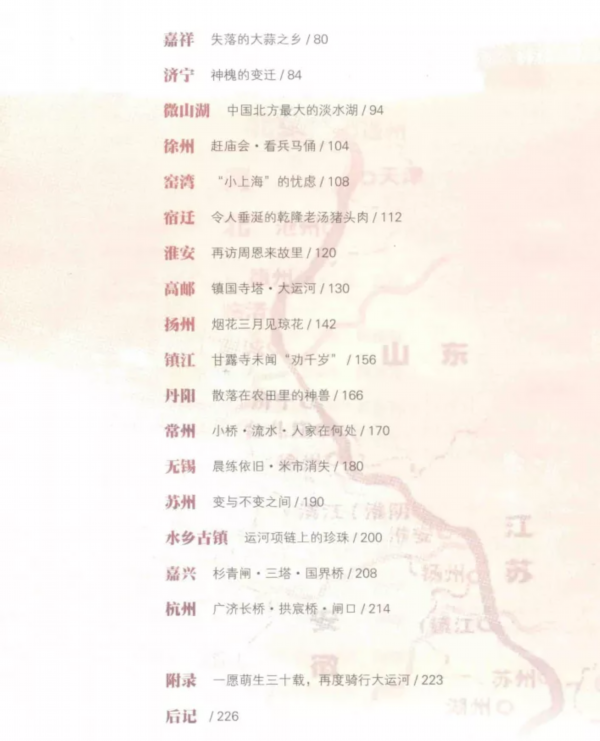
On June 19th, 1981, Liu Shizhao, then a photojournalist for People’s China magazine, and Shen Xingda, then a journalist, set out from Beijing and embarked on the journey of "Cycling Tour of the Beijing-Hangzhou Grand Canal", starting their first discovery journey by riding the Grand Canal. One year and seven months later, on January 17, 1983, I ended my interview in Hangzhou and fulfilled my dream of riding the Grand Canal for the first time.
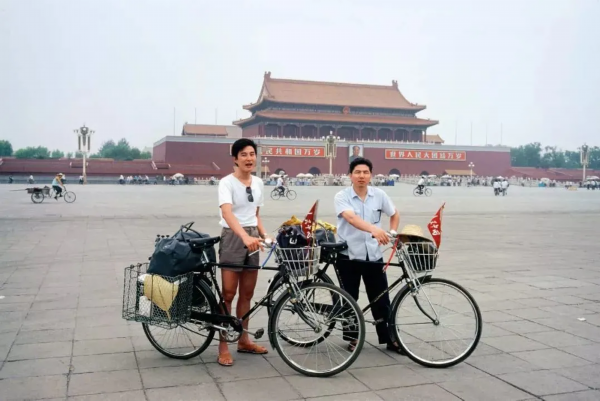
△ On June 19, 1981, Shen Xingda (right) and Liu Shizhao (left) were about to leave Beijing to embark on the journey of riding the Beijing-Hangzhou Grand Canal.
Time has traveled for 35 years. In the early spring of 2016, Liu Shizhao once again embarked on the road of riding the Grand Canal with the dreams of two people.
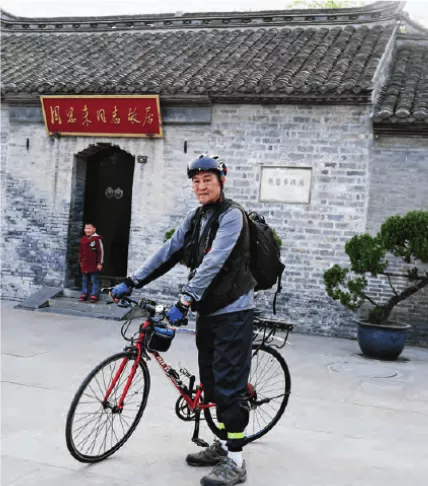
△ The picture shows Liu Shizhao taking a photo in front of Zhou Enlai’s former residence
After 68 days, riding 2156 kilometers, I finally completed my wish to shoot the Beijing-Hangzhou Grand Canal for the second time after 35 years. Thirty-five years is not a short course for life, but it is only a moment for the 2500-year-old Grand Canal.
The feeling of riding twice can be described as a huge contrast. At that time, green travel was still blank in people’s ideas at that time, and it seemed reasonable to arouse people’s doubts. Nowadays, groups of cyclists are often encountered on the road, ranging from students, young people to retired old people. The group of cyclists is growing, which is bound to have a strong supporting role for green travel. Riding on the beautiful bicycle lane by Hongze Lake, Liu Shizhao feels that advocating green travel needs more government support, and it is best to have specific measures to implement it.
This time, "revisiting the old place", Liu Shizhao said that the biggest feeling is a word "change". Riding for the first time was in the early days of reform and opening up. At that time, people’s clothes were so simple in cities and villages along the canal, with low and old houses, narrow streets and few vehicles. The rowing boats in the canal made a "squeaky" sound, which broke the calm of the water … … But the wave of reform has been choppy and ready to go, and people at that time were full of longing for life. Today, 35 years later, great changes have taken place in China, and the ancient Grand Canal has witnessed all this: from the city to the countryside, people’s clothes are much cleaner, houses are taller, streets are widened, the water in the canal is more clear, and there are more motor boats in the river … … Everything, both familiar and unfamiliar. Undoubtedly, the great achievements of reform and opening up have benefited the people in general, and their lives have changed dramatically. However, those antique traditional buildings that disappear with urbanization, those folk customs that gradually fade away, those sewage that is still secretly discharged, and those factories that vomit black smoke make people feel lost.
In the face of these changes and invariance, Liu Shizhao’s mood is also rotating between joy, incomprehension, regret and anger. But as a photographer, Liu Shizhao decided to record what he saw as much as possible — — Because this is the history of the canal. Whether it is good or bad is for future generations to judge.
The photos taken by two rides are only fragments for the Beijing-Hangzhou Grand Canal, but these fragments have left the image history of the canal. Liu Shizhao hopes that more people will participate, and recording the canal and history with images will be valuable in the future.
book review
What is the concept of more than 30 years? It is the "standing" time for a whole generation. Specifically speaking, it is the time for today’s "post-80 s" to become a pillar of society from birth to growth. How has the Grand Canal changed in a generation since the great social transformation in China? This is an interesting question. Riding the grand canal again, looking back, is a change of more than 30 years; Looking ahead is the starting point for recording new changes.
— — Liu Shiding (Professor of Sociology Department of Peking University, Adjunct Professor of Sociology Department of Zhejiang University)
works appreciation
Beijing-Tongzhou
Tongzhou in Beijing, as a waterway metropolis and a royal pier, is the starting point of the Beijing-Hangzhou Grand Canal. The burning lighthouse in Tongzhou was built in the Northern Zhou Dynasty, and it is 13 stories high. It is a landmark beside the Grand Canal in ancient Tongzhou area. When you look at it from a distance, you will know that you have arrived in Beijing. Today, at the starting point of the Beijing-Hangzhou Grand Canal in Tongzhou, a hydrophilic canal park has been built, which has become a place for people to relax. In the near future, Tongzhou will become the administrative sub-center of Beijing, and new landmarks will appear beside the Grand Canal in the future.

△ In 1981, Beijing Tongzhou Lighthouse
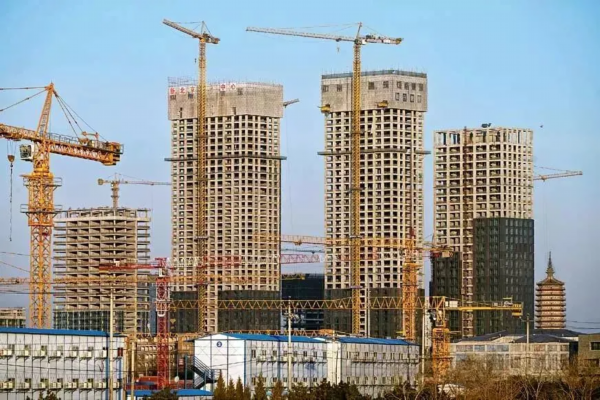
△ In 2016, as Tongzhou will become the administrative sub-center of Beijing, the lighthouse has lost its role as a landmark, and new landmarks will appear on the side of the Grand Canal in the future.
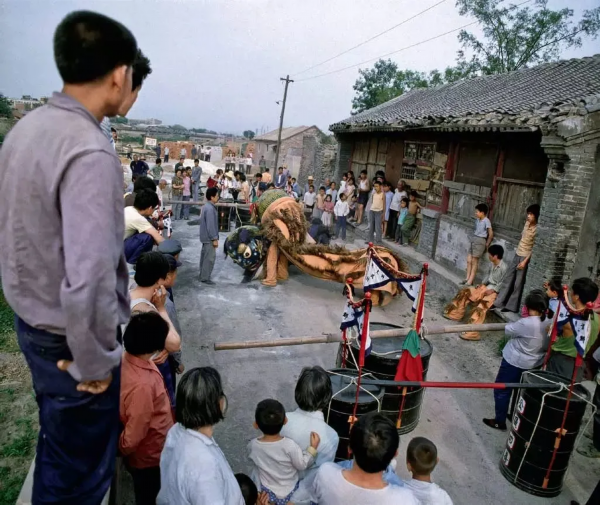
△ In 1981, the "Lions Club at Erzha" in Qingfeng Village, next to Tonghui River in Beijing, was circulated among the people, "Lions Club at Erzha floats", which is what it was about.

△ In 2016, the northern starting point of Tongzhou Beijing-Hangzhou Grand Canal
Tianjin
Tianjin is built on the Haihe River, and people’s lives here are inseparable from the Haihe River, the mother river. At that time, the banks of the Haihe River at night were not as bright and dark as they are now, and naturally became a good place for lovers to date. Today, when I came to the waterfront, the high-rise buildings on both sides of the strait were brightly lit at night. Foreign tourists came to the waterfront to take photos, while local residents came here for a walk, fishing and fitness. Haihe River, the largest river in North China, is also the junction of the North Canal and the South Canal.

△ In 1981, overlooking Tianjin.
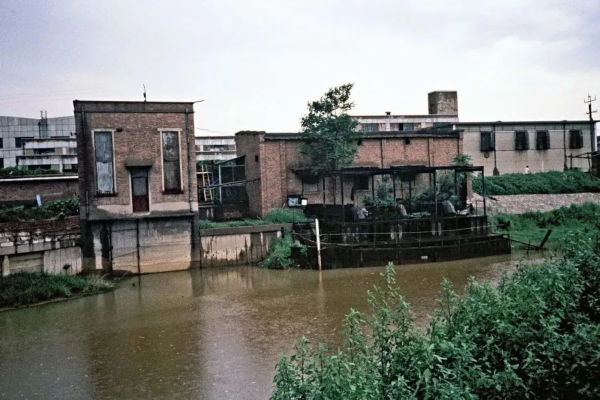
△ In 1981, the mustard garden water plant was built in 1903 along the Nanyun River in Tianjin.
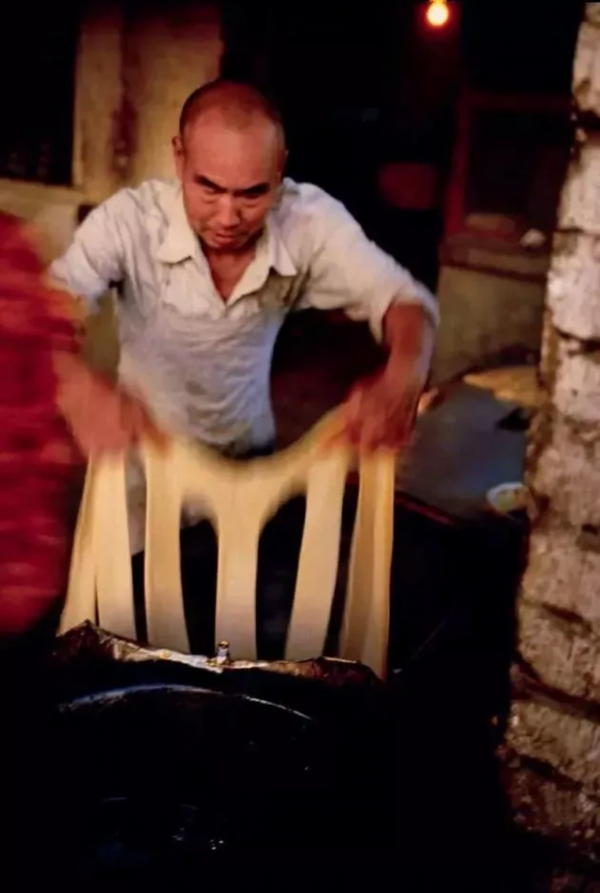
△ In 1981, the legacy of water transportation in Tianjin Hexi Affairs — — Fried oil cake

△ In 2016, Yang Youhua, who runs the big oil cake business in Hexi Affairs,
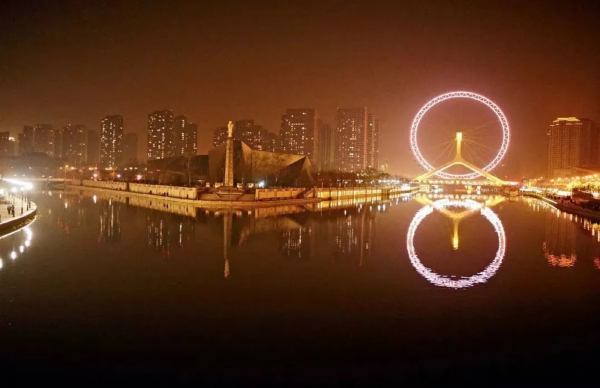
△ In 2016, Sanchakou, Tianjin, the intersection of South Canal (left) and Haihe River, and Yongle Bridge on Haihe River on the right — — "Tianjin Eye" Ferris wheel
Cangzhou
The Cangzhou section of the Beijing-Hangzhou Grand Canal starts from Liyoutun Village in Qing County in the north and reaches the sixth village in Wuqiao in the south. It flows through Qingxian County, Cangxian County, Cangzhou City, Botou, Nanpi, Dongguang and Wuqiao, with a total length of 253 kilometers. Cangzhou is the longest city in the 20 cities where the Beijing-Hangzhou Grand Canal flows. For hundreds of years, ships with high mast and long pole, large and small, have been loading and unloading here, and Tianjin and Guangzhou in the north and Qilu in Nantong are bustling and endless. Shore tea houses, medicine shops, cloth shops, pot markets, and grain warehouses of wineries are crowded with merchants, which have become an important part of Cangzhou’s urban and rural economic belt.
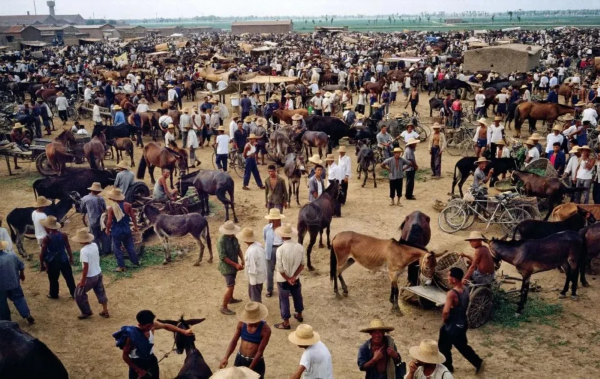
△ In 1981, Xingji Town, Qingxian County was the largest mule and horse market in China at that time.
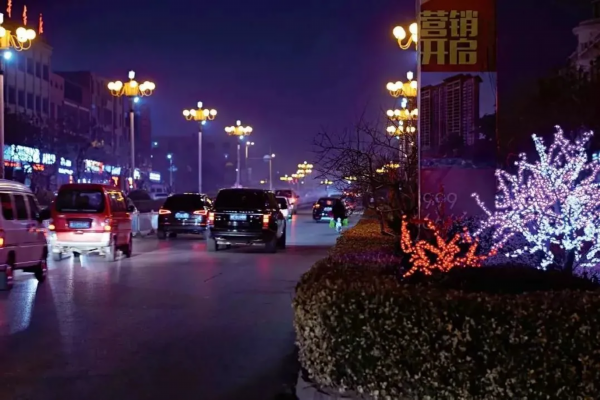
△ In 2016, the night view of Qingxian County
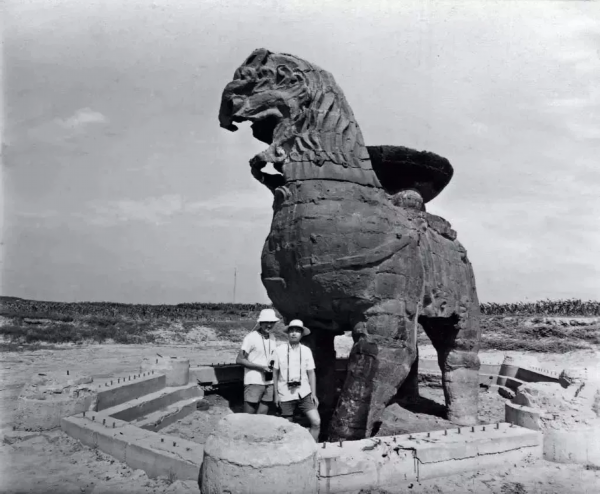
Not far from Cangzhou, Bozhen is a famous foundry town in China. The Iron Lion, a landmark of Cangzhou, which was cast in the third year of Guangxun in the late Zhou Dynasty (953) — — "Zhenhai" is the largest cast iron work of art in ancient China, and it is said that it weighed 40 tons when it was first cast! The picture shows that on July 29th, 1981, Liu Shizhao and Shen Xingda took a group photo in front of Cangzhou Iron Lion.
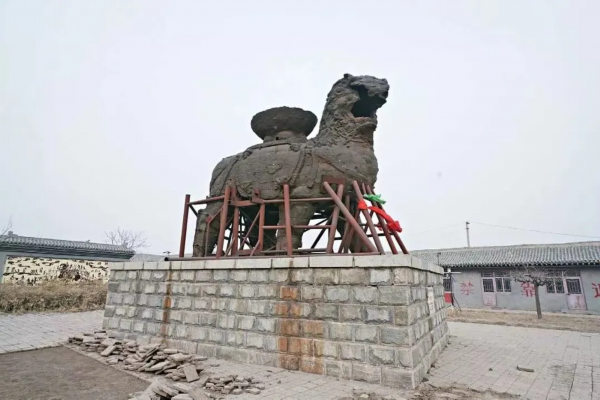
△ In 2016, Cangzhou Iron Lion
Linqing
A great deal of sediment deposited by the flood of the Yellow River has brought extraordinary harvest to Linqing, Shandong Province. This kind of silted soil, called "Lotus Soil", has fine soil quality, moderate proportion of sand and soil, and the burned tribute brick is hard and nonporous, and is not afraid of corrosion. Therefore, emperors of Ming and Qing Dynasties chose it to build Beijing City. Therefore, Linqing people always say that "Linqing burned out Beijing". In the 1960s, under the impact of low-priced small red bricks, the production of tribute bricks disappeared completely. In recent years, with the strengthening of cultural relics protection, the demand for tribute bricks has increased again. Mr. Jing Lao’s family started a brick factory with the ancestral firing skills, and his bricks were even exported overseas — — Linqing tribute brick has been resurrected.

△ In 1981, Linqing Ferry of Beijing-Hangzhou Grand Canal
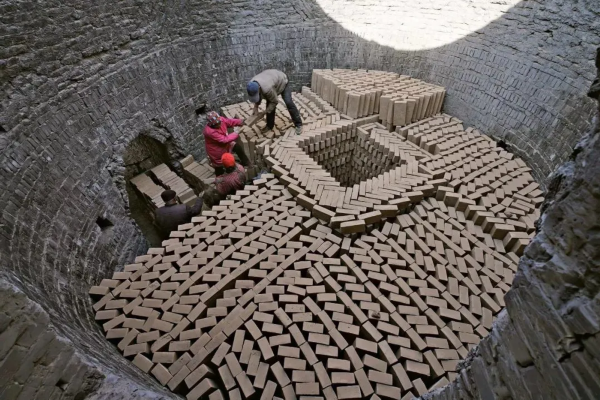
△ The "non-legacy" inheritor of Linqing tribute brick firing technology, 77-year-old Jing Yongxiang’s brick kiln is being installed.
Liaocheng
Liaocheng is located at the intersection of the Beijing-Hangzhou Grand Canal and the Yellow River. In the history of water transportation for more than 400 years, Liaocheng has always been an important commodity distribution center. Liaocheng Shanshan Guild Hall, located beside the Grand Canal, is a witness to the prosperous grain transportation. It is said that when Liaocheng was prosperous, there were eight such halls, but now only one Shanshan Hall is left, which is even more precious.
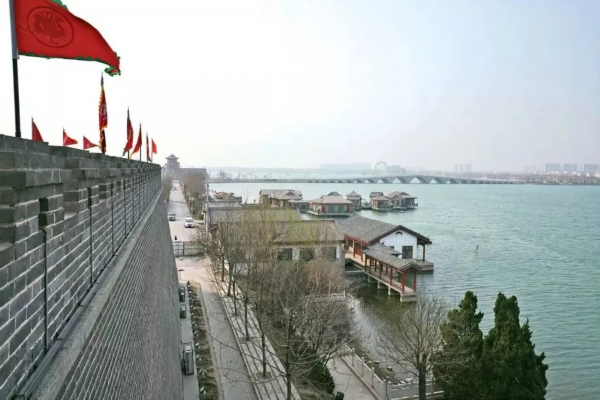
△ In 2016, dongchang lake outside Liaocheng, the "Jiangbei Water City"
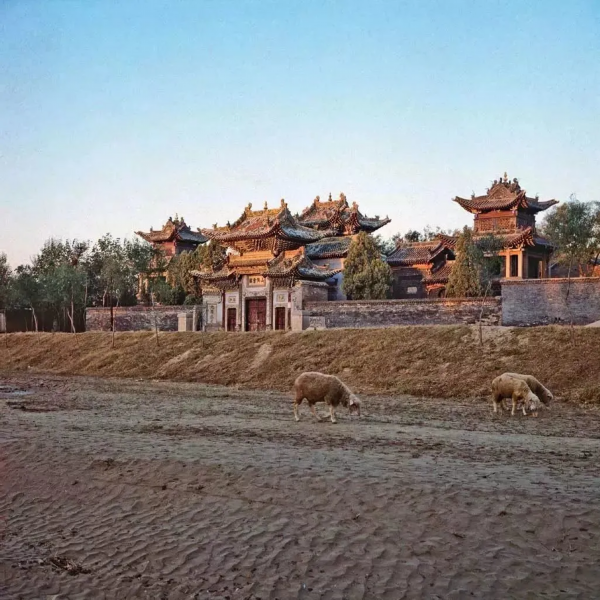
△ In 1981, the Grand Canal in front of the Shanshan Guild Hall had dried up, and several sheep were eating grass leisurely on the riverbed, which made people feel extremely desolate.

△ See you again in Shanshan Guild Hall in 2016. The biggest change is the Grand Canal in front of the door.
Jining
Jining, where the Ming and Qing Dynasties both set up the highest administrative organization to manage and govern the Beijing-Hangzhou Grand Canal — — River governor yamen, so Jining can be called the canal capital. As the national transportation artery, the canal promoted the prosperity of commodity economy in Jining, and also gave birth to the splendid canal culture in Jining.

△ In 1981, Jining Canal Wharf
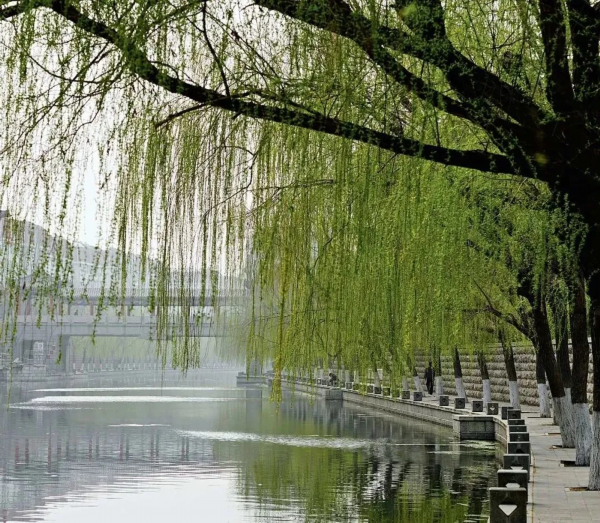
△ In 2016, the canal flowing through Jining City
weishan lake
Starting from Jining, pass Yutai to Weishan, and cross the secondary dam in the middle of Nansi Lake on the way. Nansi Lake is the floorboard of Nanyang Lake, dushan lake Lake, Zhaoyang Lake and Weishan Lake in the south of Jining. The second dam consists of four sluice gates, which cut Nansi Lake into upper and lower levels, and play a role in storing water and discharging flood. When I boarded the dam, I saw a spectacular scene of water and sky for the first time: fishing boats on the lake; On the shore of the lake, fishermen are drying their fishing nets and shrimp cages, which suddenly makes people feel the strong life breath brought by water.
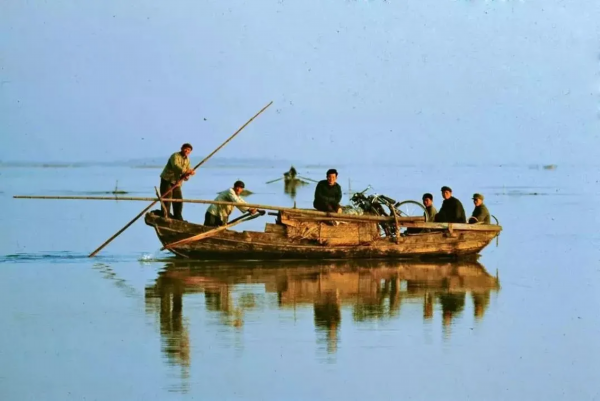
△ In 1981, the ferry in Weishan Lake
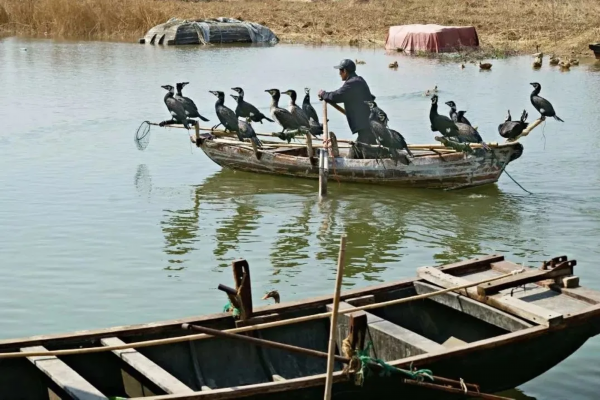
△ In 2016, fishermen who used osprey to fish at Weishan Lake
Huaian
Huai ‘an plays an important role in the history of water transportation. It was once the hub of water transportation and the hub of salt transportation. In history, Huai ‘an is also known as the "four metropolises" along the canal with Suzhou, Hangzhou and Yangzhou. Go through Huaiyin District of Huai ‘an City, walk along the newly-built Xiangyu Avenue, next to the clear and beautiful Central Canal, and soon arrive at Zhenhuai House, the downtown of Huai ‘an District. In the north of Zhenhuai House, there is the ruins of the Governor’s Office of Grain Transportation, which was the only institution that was in charge of national grain transportation in history.
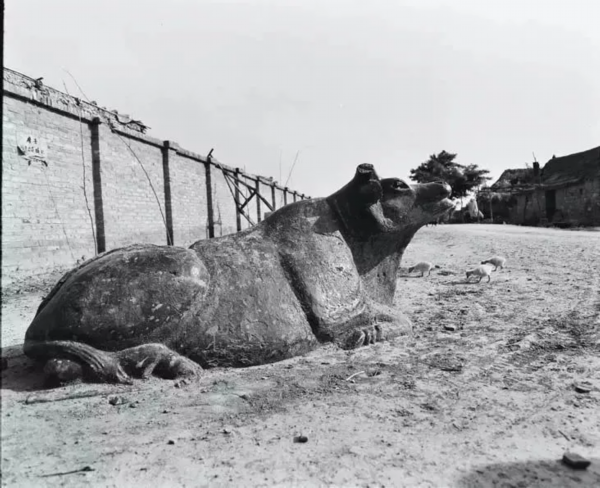
△ In 1982, the Zhenshui Iron Bull at Hongze Lake in Gaojiayan, Huai ‘an

△ In 2016, Zhenshui Big Iron Bull at Hongze Lake in Jiangba, Huai ‘an
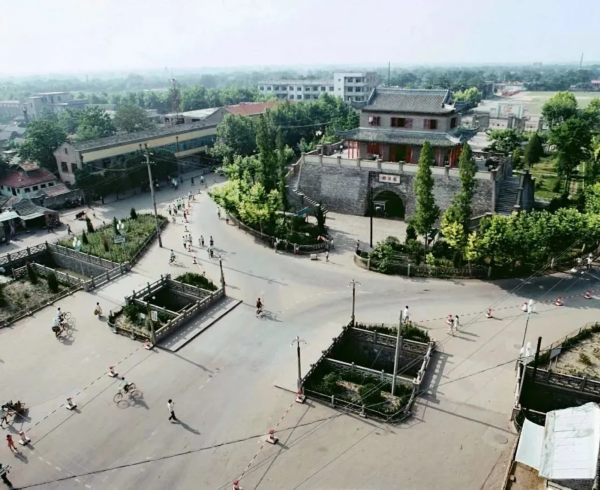
△ In 1982, Zhenhuai House, Huai ‘an
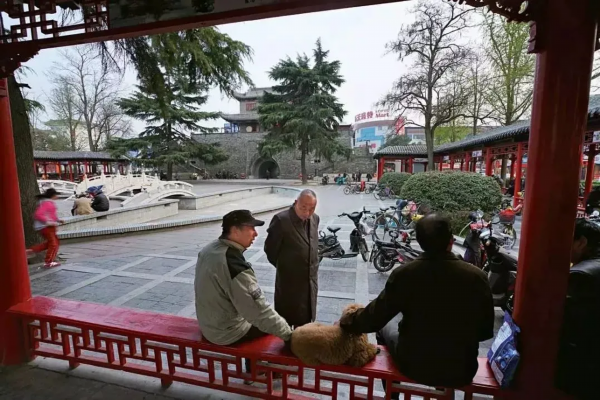
△ In 2016, the street garden behind Zhenhuai House in Huai ‘an became a good place for citizens to relax.
Yangzhou
For thousands of years, rich historical and cultural remains have been left along the Beijing-Hangzhou Grand Canal, giving birth to famous ancient towns, and Yangzhou is one of them. The world-famous Slender West Lake is a banded landscape composed of the water system of the Grand Canal in Sui and Tang Dynasties and the moats in Sui, Tang, Song, Yuan, Ming and Qing Dynasties. It has always maintained an interactive relationship with the Grand Canal. It is a tributary of the Grand Canal and a unique cultural landscape on the Grand Canal.
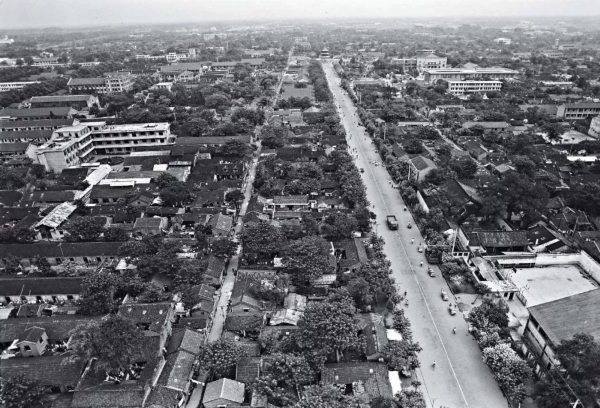
△ In 1982, Yangzhou City was overlooked, and Wenchang Pavilion was in the middle of the road in the distance.
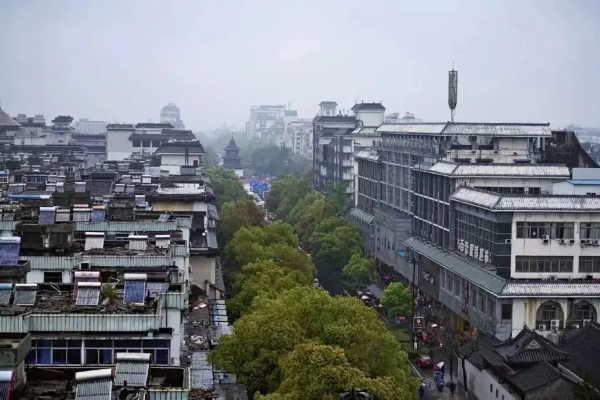
△ In 2016, Yangzhou City overlooks, and Wenchang Pavilion is in the far road.
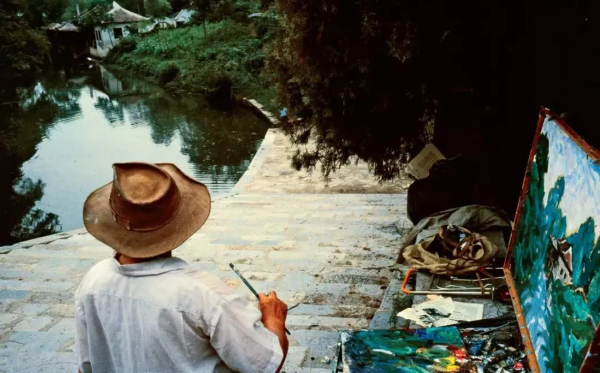
△ In 1982, Yangzhou Grand Canal Royal Wharf
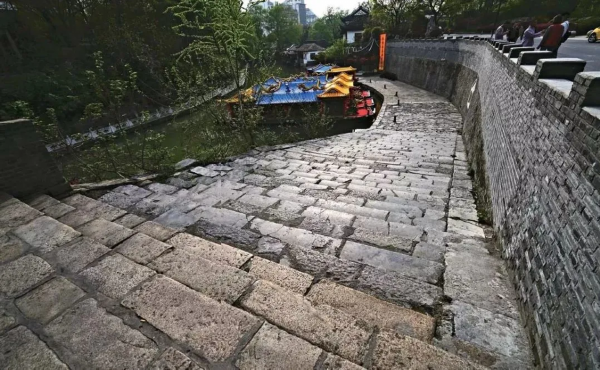
△ In 2016, Yangzhou Grand Canal Royal Wharf
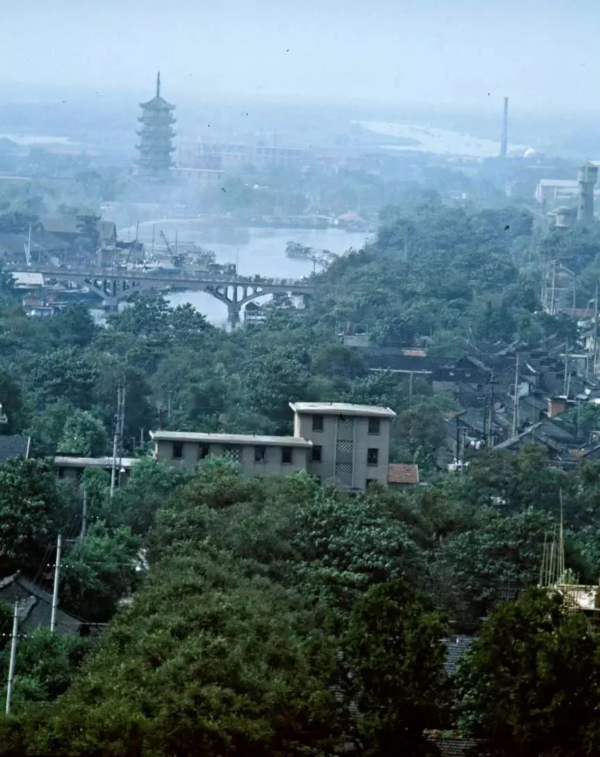
△ In 1982, I saw the "Three Bays in Yangzhou" and the Wenfeng Tower by the canal.
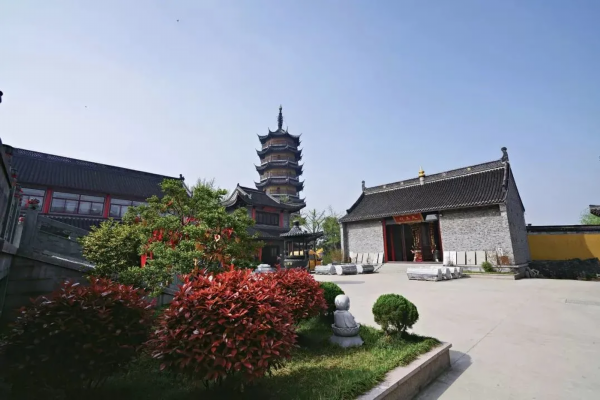
△ In 2016, Wenfeng Temple and Wenfeng Tower in Yangzhou
Zhenjiang
On the south bank of the Yangtze River, Zhenjiang has a history of more than 2,500 years, which is a magnificent epic with many voices. The Yangtze River and the Grand Canal meet here, forming the "Golden Cross Waterway" in the middle and lower reaches of the Yangtze River. The unique geographical position makes Zhenjiang an important commercial port in the north and south of the Canal. In this beautiful "urban mountain forest", the Yangtze River and the Canal depict the blending of Central Plains culture and Jiangnan culture with a horizontal and vertical brushwork, showing the collision between history and modernity. Xiaomatou Street by the Yangtze River, also known as Xijin Gudu, is an old street that was built in the Six Dynasties, and remains of Tang, Song, Yuan, Ming and Qing dynasties still remain on the street. In ancient times, it used to be a dock on the Yangtze River. With the deposition of sediment along the Yangtze River, it is now more than 300 meters away from the river.

△ In 1982, the raft station on the Yangtze River in Zhenjiang

△ In 2016, Zhenjiang City was overlooked from the top of Beigu Mountain.
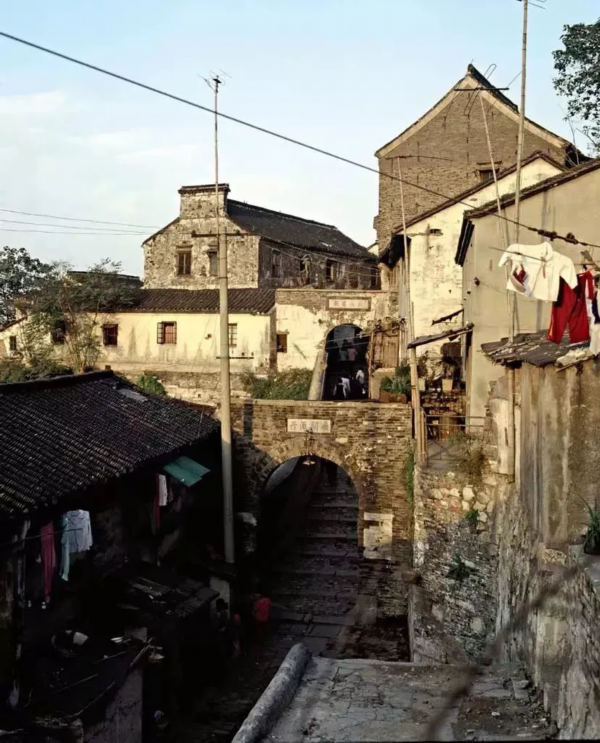
△ In 1982, Xijin Gudu Xiaomatou Street in Zhenjiang took a sunset photo.
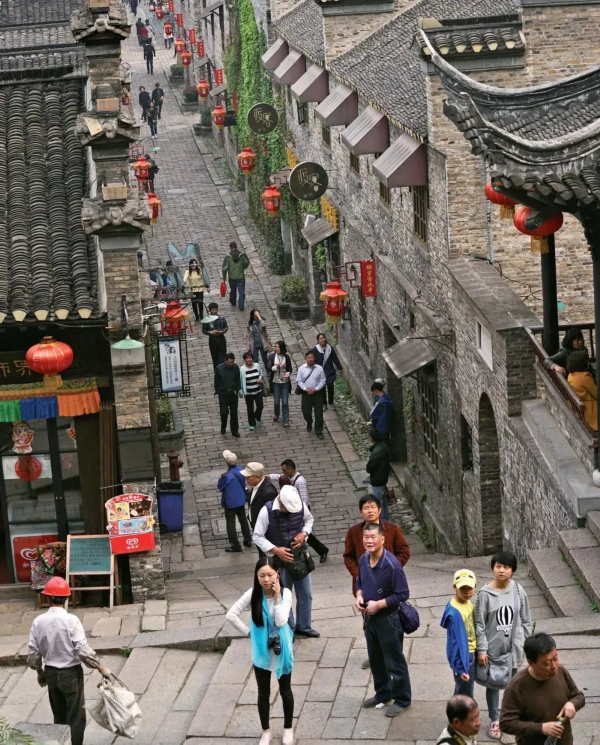
△ In 2016, tourists from Xijin Gudu in Zhenjiang were woven.
Wuxi
Wuxi is a city born and prospered by canals. The convenience of canal navigation made Wuxi in the old days rank among the "four rice markets". As early as the heyday of grain transportation in the Ming and Qing Dynasties, Wuxi was already a famous grain market in the south of the Yangtze River, a concentrated place for grain transportation in Taihu Lake Basin and Zhejiang Province. After the reform and opening up, Wuxi rice market was active, and its business spread all over the country. Sanliqiao, a suburb, was the largest grain and oil market in China, ranking first among the four rice markets in 1990.

△ In 1982, it passed through the Beijing-Hangzhou Grand Canal in downtown Wuxi.

△ In 2016, it flowed through the Beijing-Hangzhou Grand Canal in downtown Wuxi.

△ In 1982, citizens practicing stone locks on Huishan in Wuxi in the morning.
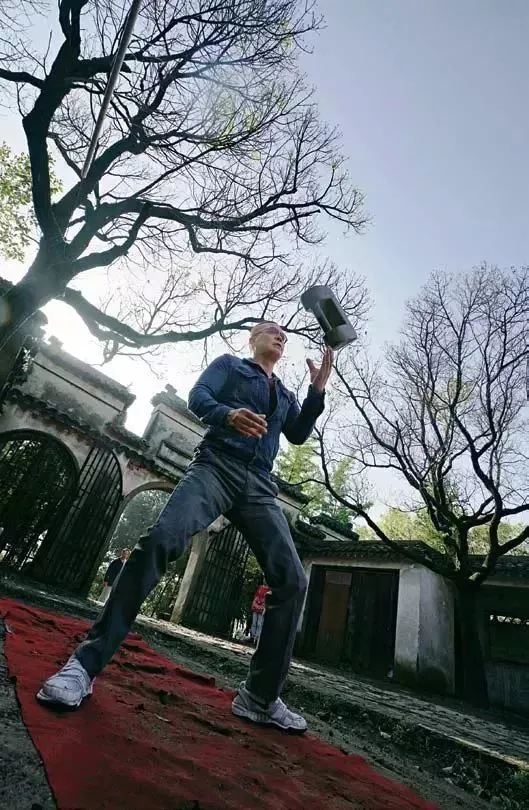
△ In 2016, citizens who practiced stone locks on Huishan in Wuxi in the morning.
Suzhou
Suzhou is a typical Jiangnan ancient city with small bridges and flowing water. Suzhou section of the Grand Canal was first excavated in the Spring and Autumn Period, which is the embryonic form of the Jiangnan Canal. It became an important channel of the Grand Canal in China from the Sui Dynasty and basically took shape in the middle of the Tang Dynasty. After the Tang Dynasty, the Suzhou section of the Canal was built and dredged, but it kept the basic trend of the Grand Canal and still plays an important role in transportation, cultural tourism and so on. Suzhou ancient city water network is one of the water systems of the ancient Grand Canal, and the historical and cultural heritage of the ancient city is an important part of the Grand Canal civilization. Suzhou, a water city, is a unique urban cultural landscape of the Grand Canal and an outstanding example of the integration of ancient city building and water conservancy technology.
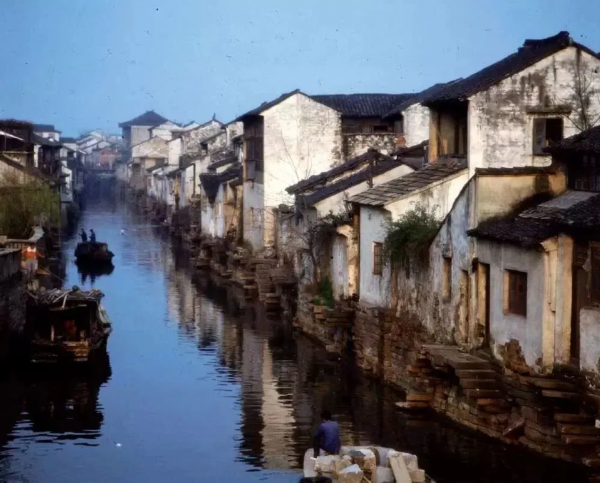
△ In 1982, Suzhou Shantang River

△ In 1982, for the sake of safety, the children of Suzhou Canal boatmen were tied to the boat with ropes.

△ In 1986, a crowded cargo ship in the Jiangnan Canal in Suzhou

△ In 2016, the newly-built villas in Suzhou also retained the traditional architectural forms.
Hangzhou
Tangqi Town, 20 kilometers away from downtown Hangzhou, is an ancient town built in the Northern Song Dynasty. The Grand Canal flows through the center of the town. In history, merchants gathered here, ranking first among the "Top Ten Towns in the South of the Yangtze River". The 78.7-meter-long Guangji Long Bridge across the Grand Canal (also known as Tongji Bridge) is still showing its grandeur to people. Leave Tangqi Town and ride for 1 hour to Gongchen Bridge, the landmark at the southernmost tip of the Beijing-Hangzhou Grand Canal. In ancient times, "Chen" refers to the place where the emperor lived, and "arch" means to pay tribute, so the name of the bridge has the meaning of welcoming the emperor who made a southern tour. On December 25, 1982, I arrived here with Shen Xingda by bike, which ended the first interview with the Beijing-Hangzhou Grand Canal by bike.

△ In 1982, the bamboo and wood furniture market next to Guangji Long Bridge (Tongji Bridge) in Tangqi Town, Hangzhou
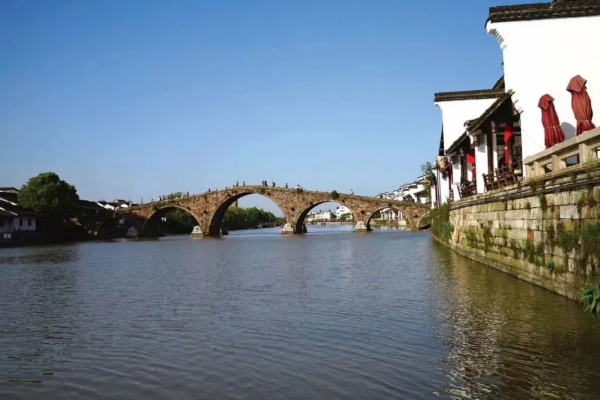
△ In 2016, Guangji Long Bridge (Tongji Bridge) in Tangqi Town, Hangzhou
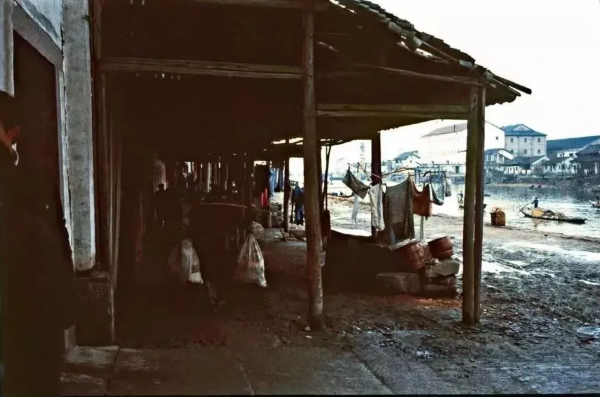
△ In 1982, the street corridor beside the Grand Canal in Tangqi Town, Yuhang, Hangzhou
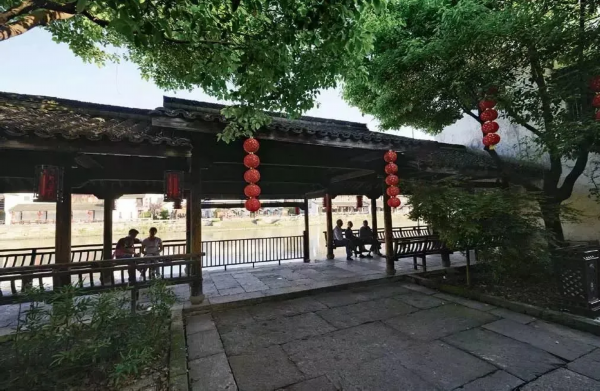
△ In 2016, the street corridor beside the canal in Tangqi Ancient Town, Hangzhou
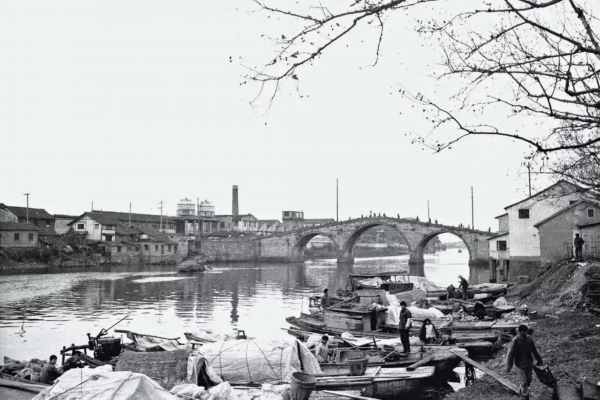
△ In 1982, it was a suburb of Hangzhou, surrounded by many factories: Zhejiang Mafang Factory, Silk Printing and Dyeing Factory, First Cotton Mill, Huafeng Paper Mill, etc. It was the cradle of modern national industry in Hangzhou.
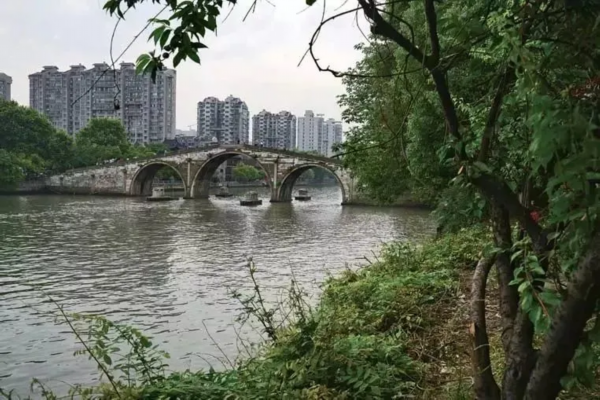
△ In 2016, the Canal Culture Square and the China Grand Canal Museum were built on the east bank of Gongchen Bridge, and the west bank has become a historical and cultural protection block after renovation.
(Source/system of canals Editor/liujing)