Interview with Wei Shujun: I didn’t want to criticize anything seriously when I filmed "Wild Horse with a mane"

Wei Shujun is undoubtedly one of the most concerned young directors in the current Chinese film industry.
His new film "Wild Horses Divide Manes" was praised by Cannes judges."The image style is as free as air", and"Bring new perspectives and strength to the Chinese film industry".
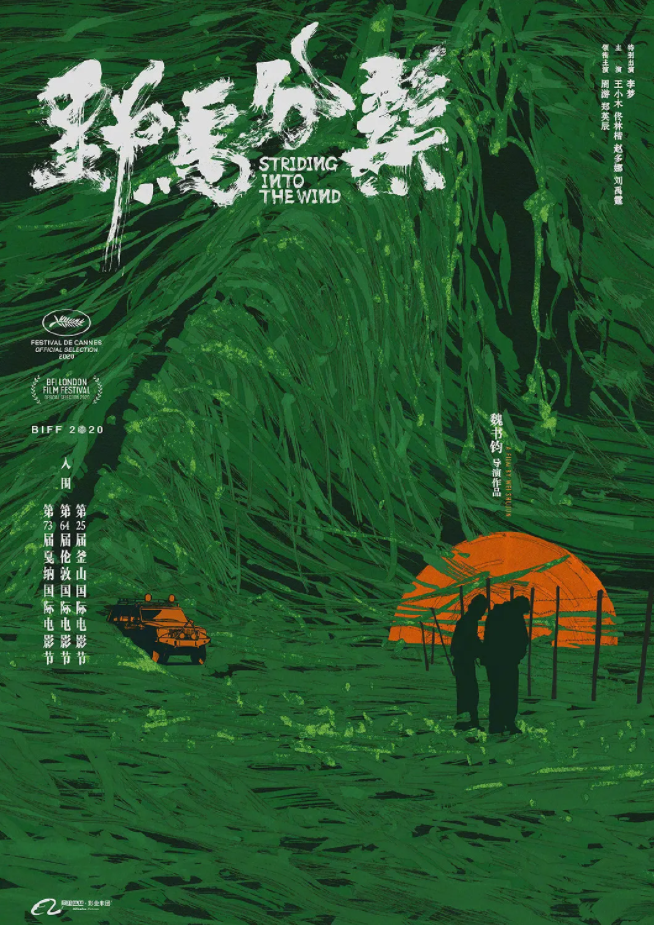
The appearance of the film at last year’s Pingyao International Film Festival also caused a craze. Half an hour before the opening, the media lined up at the entrance of the film palace, and there were too many friends who wanted to see it. For this reason, the staff also specially opened a spare venue, which was shown in two halls.
"Wild Horses Divide Manes" did not live up to the audience’s enthusiasm. Smart humor, mature skills and strong visibility are our first feelings about this film.
This film tells the story of Zuo Kun, a recording student who is about to graduate.

Zuo Kun, who got his driver’s license, quickly bought a second-hand jeep that was about to be scrapped. He originally thought that this car would bring some new possibilities to his life.
But economic embarrassment, annoying teachers, unpredictable love, unreliable crew shooting and ridiculous work experience … trivial troubles piled up together, which brought him to another fork in his life and grew rapidly.
In this film, youth is no longer hurt, melodramatic, self-pitying, and ignorant and shy as still hiding half her face from us behind her guitar, just like the jeep, the core object in the film.
It is not expensive, but it is direct enough to withstand tossing; It is humbled in the city, but carefree on the highway.
Jeep also carries the desire and dream of the hero Kun, but it doesn’t involve those cruel and realistic identity. It’s not that you can get a certain identity and status with a car, but that you can stay away from the city and go far away to get the freedom of an independent person with a car.
Design of Meta-filmIt is another highlight in the film.
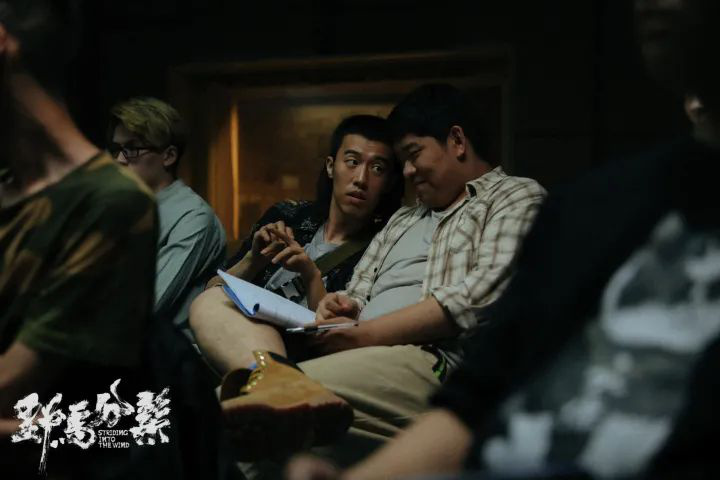
As a senior recording student, the male host followed an unreliable crew.
The director took the opportunity of directing the play to pick up girls, the photographer put on airs, the director talked about the actual arrears of labor services in art, and the crew boasted shamelessly … These scenes provided a lot of jokes for everyone, and also dispelled the charm of "making a movie".
The teacher who teaches recording in the school is also a senior newcomer who has never followed the group and touched the pole for ten years, and the college education is also lightly teased in the film.
The film also uses these humorous jokes to quietly outline the state that the leading actor A Kun has not officially left the campus-his personality and talent are limited by the educational mechanism on the one hand, and consumed by people outside the profession on the other.
The man’s family is as restless as love. Mother never appeared from beginning to end, only the voice that told the students to do the questions.
Father is a policeman, but he didn’t raise a good boy.
The feelings between him and his girlfriend who is learning Chinese are like an elevator box going upstairs and downstairs in a shopping mall. Even though they are destined to accompany each other in the lonely moments of youth, they can’t avoid the fate of parting ways.
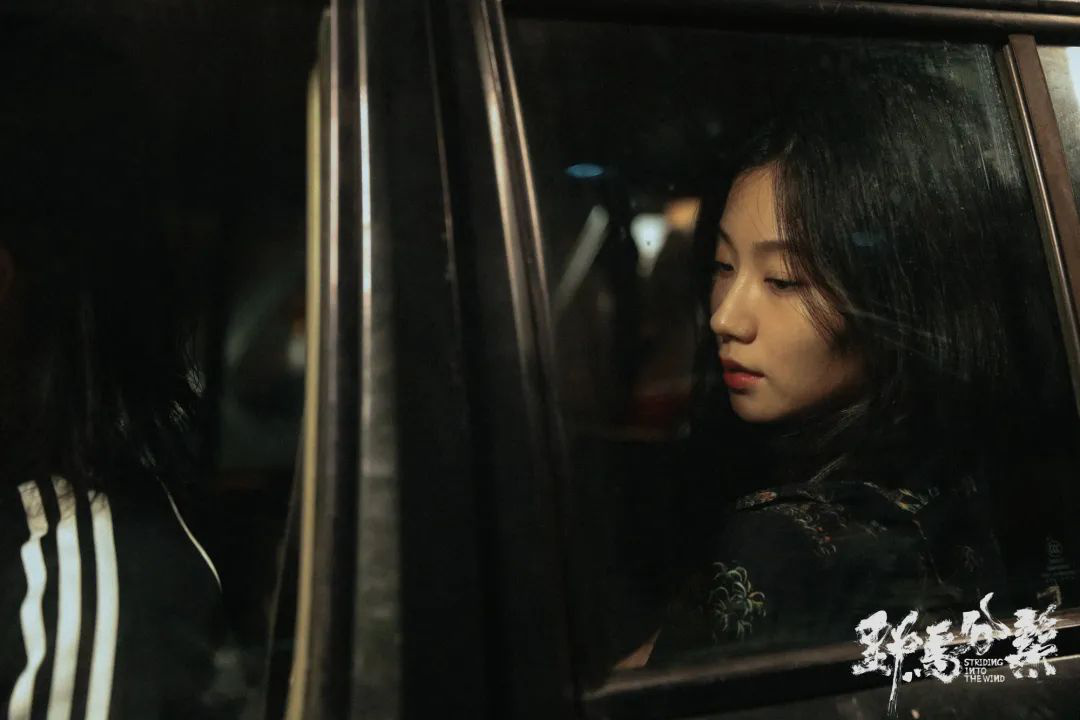
Interestingly, at the end of the film, the hero went to the detention center for his jeep and shaved off his long hair, so that he didn’t give the car to others in the end.
And he learned that this car, which was about to be scrapped, could only be used for herding sheep in Inner Mongolia, and it was not much freer than the city.
Such a film full of life fragments, even if it looks messy, touches many aspects of a young man’s life from a very subtle perspective.
Among them, how social discipline affects young people, some weird and absurd phenomena brought about by the rapid development of society, and the complexity and purity of friendship and love are all displayed in the film in a relatively daily way.
It is not too bitter and bitter, nor frivolous and stupid, and it has a free charm that is not common in Chinese youth films. Even if the story takes place in Beijing, it is not limited to the piqueness of "Beijing flavor" and talking about mountains (the continuation of Wang Shuo’s style), but a more contemporary display of youth, with cross-regional and cross-cultural understandability.
Phoenix entertainment Ifeng movieAlso in Pingyao last year, I interviewed director Wei Shujun exclusively-
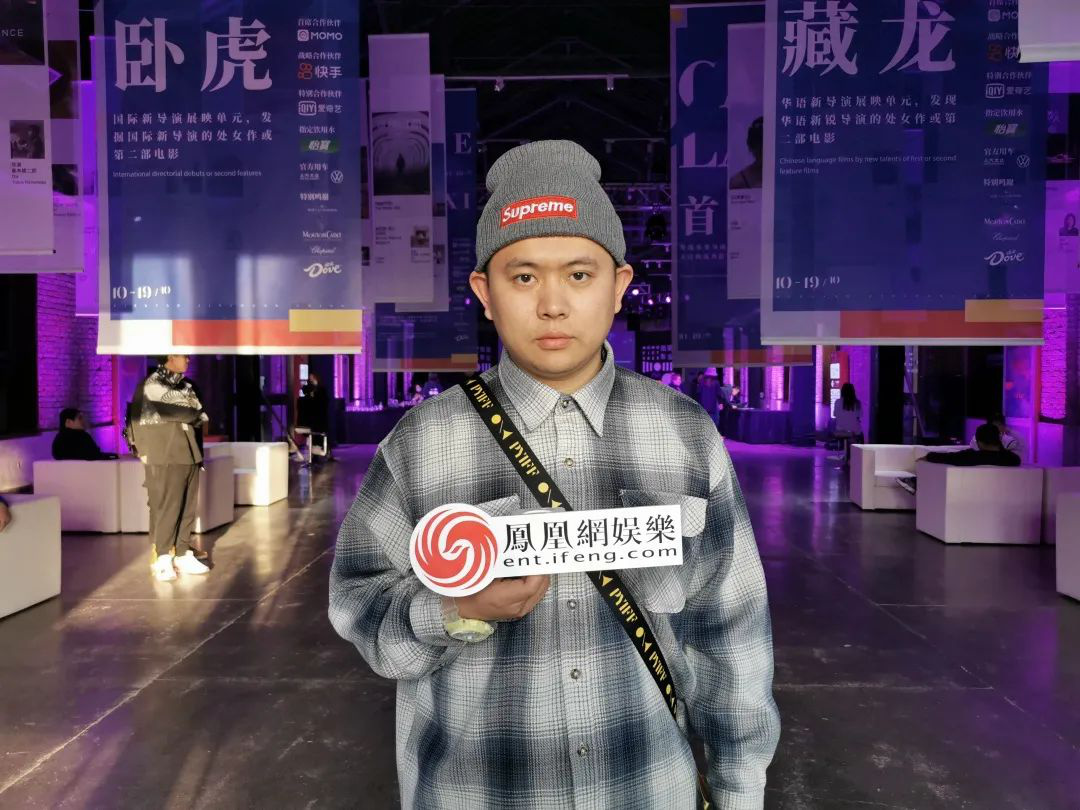
Young, lazy, a fashion brand, there is no burden in speaking. When it comes to topics he is interested in and people he is familiar with, he will get excited immediately. This is the impression that Director Wei Shujun gave us.
Speaking of the new film being selected for Cannes Film Festival,He bluntly said that he was not a "Cannes clique."During the epidemic, it was a great encouragement to appear in Cannes in the form of being selected.
Talking about his own creative experience, he said that his journey has been quite smooth, and that film directors need more practice than college education.
Talking about the film itself, he broke the news that the scenes of the detention center came from his personal experience. The times are changing, and I have no intention to load too many serious social expressions in youth films.
The following is a record of last year’s interview:
On film festival experience;
I appreciate Cannes’ encouragement, but I’m not from Cannes.
Mainland directors are luckier than Hong Kong and Taiwan directors.
Ifeng movie:What was your mood at the Cannes Film Festival in 2020 when only the selected films were announced?
Wei Shujun:I feel quite grateful. Thank them for choosing this film. Just like Amin (the role in the film) said, after the film starts, everyone has their own destiny. This is the fate of the beginning of this film.
Because the global health situation of COVID-19 epidemic is beyond the control of a movie, we have to face it together.
For example, the Cannes Film Festival, they also have to face such a choice. Apart from not holding it, there are not many films. Some people may choose to support it, some will choose to show it in Venice, or some want to try it again next year.
However, it (Cannes) still insists on singling out this film, which I think is an attitude towards people all over the world who pay attention to it.
I also hope that my film can represent a Chinese film at this moment, because another Chinese film has also been selected. I just want to support them on my own behalf, and there are not many opportunities to express my views.
Ifeng movie:Have you ever thought about not going to Cannes? If you go to another film festival, you may be able to enter the normal process?
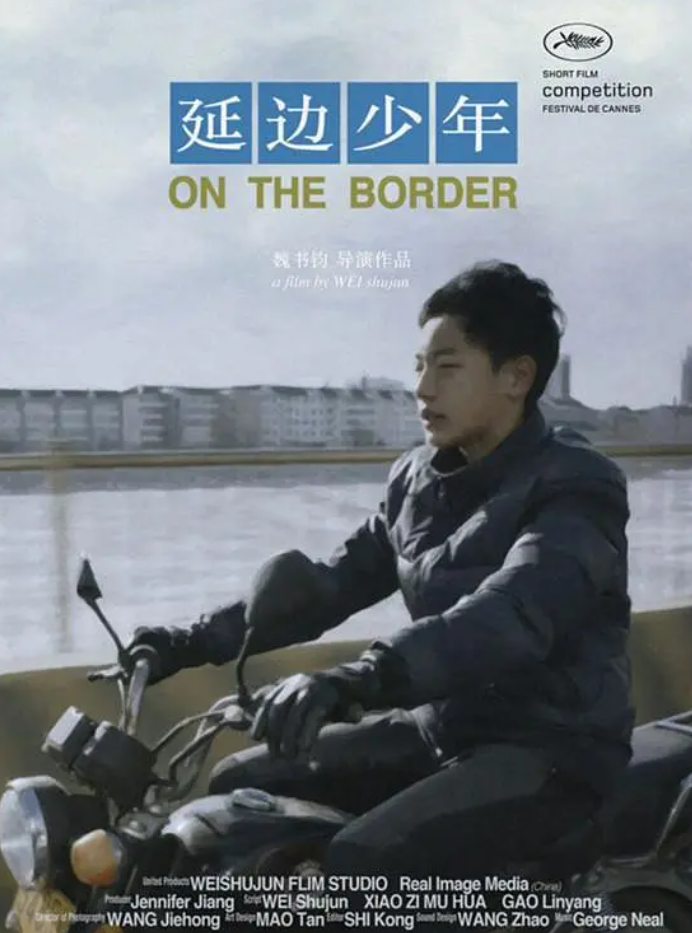
Wei Shujun:I didn’t think about it, because "Yanbian Boys" was Cannes’ choice of me, including the later selection, that is, "I don’t forget to dig wells when I am eating water".
Ifeng movie:Do you have any idea of becoming a clique of Cannes?
Wei Shujun:I don’t have that kind of clique idea, just saying that people helped you push it out. If you have a good film, I think you must give back.
This is human nature. We in Chinese should know better. You helped me, and then I want to help you. To some extent, I think it is a kind of support and mutual support.
Ifeng movie:First time in Pingyao, how was the film feedback?
Wei Shujun:For the first time, I met you offline on a large scale. The feedback is ok. At first, I thought that maybe the film critics in the last two days seemed a little "vicious". Maybe everyone held back for a long time. When you come to a film festival that seriously shows movies, you may be eager or expecting, and the standard may be higher. Maybe some movies have been waiting for a long time, and when you see it, you will raise the standard. I don’t know what you will think, but there is no concept.
Ifeng movie:Will you want to win the prize?
Wei Shujun:No, winning an award is encouragement. The most important thing is to show and communicate with you if you don’t win the prize.
You know, the first stop of this film was in China. There were many actors in our crew, and I called all the actors I could. I think it was also a particularly good experience for us.
It is very difficult for other jobs to participate in the film festival, especially in this epidemic situation, you can’t go to many countries, so I think it’s good to show the film here (Pingyao Film Festival).
Ifeng movie:Did winning the prize before help the filming of Wild Horse with its mane?
Wei Shujun:Winning a prize or encouraging it, it does help financially after coming back. You may start to pay attention to this piece, such as my producer, producer (Liu Qingling), who is my senior sister. We haven’t contacted each other for many years before.
Ifeng movie:Your experience is to act first, then make a film and be shortlisted for the film festival, and then win the prize. Do you think your starting point is high?
Wei Shujun:Compared with other friends, it may be smooth, because there are actually many venture capitalists in mainland China who can find opportunities.
But when I went to Hongkong and Taiwan Province, they were all called young directors until they were 45 years old, and then everyone usually had a job or made advertisements, or made films for TV stations, or made documentaries. Basically, they relied on these things to support themselves and had such a luxurious dream of making movies.
Their venture capital will not be as rich and active as that in mainland China, that is, they need to get counseling money. You have to make a good short film to have the opportunity to make a long film. I think they will be more difficult.
Here, in terms of my personal experience, it may be relatively smooth. I went to Cannes in 2018, when "Wild Horse Fenmane" didn’t start, and then I continued to start in 2019, even if it was smooth.
Ifeng movie:Because of the epidemic this year, many films in foreign film festivals are shown online. Can you accept it?
Wei Shujun:Personally, I think the big screen will definitely feel better, and I think it limits many things. For example, we can’t fast-forward in the cinema, and we can fast-forward if you feel slow on the mobile phone. Something like this, including your viewing environment, may pause if you have to go to the bathroom, and you will probably finish watching it on the big screen.
Its size, the energy of its information, our voice, and the feeling of a group of people staring at something together, I think a small screen can’t be replaced.
On industry and creation;
The director has to be tempered in practice.
Your own movie has to meet people on the big screen.
Ifeng movie:Do you feel the ridicule of film education and film crew in the film?
Wei Shujun:Yes, there must be feelings, there will be no experience or observation, and you will definitely not think too far.
As an art college student, I actually have many similar experiences in the process of learning this. You may have heard many masters say the same truth, and that truth can’t guide you in every specific operation.
When I don’t understand him, or I can’t fully understand him, there will be some situations inside, which is also a process I think it is necessary to go through in my study.
Ifeng movie:There are many such sayings abroad, and it is useless to spit out film education. After four years of watching movies, the result is a student loan in the north.
Wei Shujun:I didn’t go to school abroad, and I don’t know much about it. Today, I saw teacher Xie Fei talk about the reform of film education. I think the part of film practice is very important.
Of course, theory is also important, but in fact, many good directors learn it on the set. Just like a director with an assistant, the relationship between master and apprentice is really helpful.
Ifeng movie:Looking back now, do you think school education has influenced you more, or is it more important to watch movies and practice?
Wei Shujun:Own practice. Actually, directing is very difficult to teach. For example, if you want to teach a director, especially to make movies, for example, if you want to educate a poet about how he became a poet, this can’t be taught, but I can teach you how to write, how to write neatly, and how to write neatly, which can be taught.
So I think when it comes to film education, in fact, sometimes you can do some relatively partial audio-visual training and teaching, as well as some basic knowledge of film history, but it’s really your turn to create independently, and I think your personal learning experience accounts for a little more.
Ifeng movie:Is it true that the teacher’s teaching level in the movie is not as good as that of the male master?
Wei Shujun:I didn’t have it in the recording class. My recording teacher is quite good. There will be similar courses in other majors. For example, I am in Grade 09, and I may know a senior sister in Grade 95. The PPT she watched at school was the same as that used by my teacher.
I will have such an experience and reflection. Everything is unchangeable. I don’t know much about the new things you mentioned today. He said that experience is unchangeable.
Ifeng movie:The filming process and recording process presented in the film are very professional, which may be unacceptable to some viewers. Will you consider this issue?
Wei Shujun:I thought about this question, but later I felt that there was nothing particularly difficult to understand, just recording and lifting the pole. Zuo Kun (the leading actor) also explained to Tong Zong (male No.2) that it would be good to turn on the phone and talk and turn it off.
Just like we are recording with our mobile phones now, we are talking on the phone, but we can turn it off. I think it is relatively popular.
Ifeng movie:There are many funny and embarrassing points in your movies. How did you create this?
Wei Shujun:I’ll take notes, I’ll take notes when I see funny videos, and then I’ll mark them when I see a particularly funny video on Weibo.
When writing a script, we may talk about it, which is particularly interesting. Who has experienced something, and then we think, can this thing be used? Or is it related to us? There will be this.
Ifeng movie:At the end of the film, Zuo Kun entered the detention center. What preparations did you make for it?
Wei Shujun:Made some back notes. One of my real experiences was that I was detained because of driving without a license. When we were in college, there were three or five days.
Ifeng movie:The detention center also practices wild horses to divide manes (Tai Ji Chuan moves)?
Wei Shujun:No, the mustang’s mane is a photo I saw online. The police took a group of prisoners to practice Tai Ji Chuan, because Tai Ji Chuan is for health preservation, and there may be some festivals, and then the prisoners will perform this program for the leaders, which I think is quite interesting.
I think this matter has an impact on the role of Kun, who was originally a student. You should work in school or go out, but how did you end up like this?
Talking about movies:
I chose Beijing to shoot because I wanted a sense of the city.
Shooting is not from a critical point of view first.
Ifeng movie:In the movie, CUE visited three directors: Wong Kar-wai, Hou Xiaoxian and Sang-soo Hong. Who do you like better? Will you want to pay tribute?
Wei Shujun:I have watched Hou Dao’s "The Man from the Wind Cabinet" many times, but I didn’t mention a specific reference such as technical means or specific scenes. Maybe I watched more of his films.
Some film critics wrote "Wild Horses Divide Manes", which reminded him of some of Hou Dao’s films, or some people said that they thought of Yang Dechang’s films, which may be a subtle influence, that is to say, I liked it very much, and I didn’t know when something appeared, so I showed a similar atmosphere when shooting.
Ifeng movie:There is a coming-of-age film in foreign youth films, such as Lady Bird, which tells the story of seventeen or eighteen years old, but you show the stage of graduating from college. Is this because we are relatively late?
Wei Shujun:Maybe. I think it has something to do with our sense of independence. Independent living may not begin until you go to college and leave home.
It may be more common in our environment to come into contact with the outside world later, and this kind of reflection will occur.
Ifeng movie:There is a divergence of views in the film, which has always followed the male master, but suddenly there is a plot that turns to the virginity of Tong Zong?
Wei Shujun:Yes, someone put forward a similar idea when we were editing. In my opinion, A Kun played by Zhou You is first hero, but in fact, I have made many group scenes. At least I think he and Tong Zong should be juxtaposed. They are juxtaposed for the importance of this film.
Maybe there are many scenes, or we will follow Kun a little more, but I think he (Tong Zong) is very smart, and I really want to shoot that scene, so I let him go, but someone did mention this like you.
Ifeng movie:Do you worry about being blunt with the picture of a wild horse at the end, and then with Kun’s more direct narration?
Wei Shujun:Originally, there were only music and pictures, but there was no chanting for traveling.
Ifeng movie:Will someone say that the film is 130 minutes long? After all, it is a life-stream movie with a bias towards daily life.
Wei Shujun:Yes, some people think it’s long. I think it’s good. I saw it myself.
Ifeng movie:There are two places in the film, one is Beijing, and the other is Inner Mongolia. What are the considerations for shooting in Beijing?
Wei Shujun:There is no special consideration, probably positioning this as two children living in the city. We are not a fourth-tier city, a relatively large city, and we are not aiming at landmarks.
Ifeng movie:Your film reminds me of Wang Xiaoshuai’s "Seventeen-year-old Bike", which is also about Beijing and the relationship between a teenager and a car. However, he made a bitter and bitter film and wanted to reflect many sharp social problems. However, this film is very light, and the confrontation is a relatively abstract existence.
Wei Shujun:Yes, times have changed. I don’t want to criticize anything seriously. Maybe there will be some absurd things in it, such as showing some of his schooling process, including their filming process.
But I think finding the absurdity itself means an attempt, which is worth thinking about, and this is enough for our film.
We are not starting from a critical point of view, or creating as a pioneer.
Previous content

Set Ifeng movies as stars.
You can hear from us more quickly.
All support for originality ~