What bonfires and smoke did the Grand Canal witness in the decisive battle against Huaihai?
From November 6, 1948 to January 10, 1949, with Xuzhou as the center, Haizhou (now Lianyungang) in the east, Shangqiu in the west, Lincheng in the north (now Xuecheng District, Zaozhuang City, Shandong Province), and the vast area of Huaihe River in the south, more than 600,000 people from China People’s Liberation Army East China Field Army (hereinafter referred to as "Hua Ye") and Central Plains Field Army launched the Huaihai Campaign against Kuomintang troops. After 65 days of bloody battles, our army wiped out more than 555,000 enemy troops and basically liberated the vast areas of East China and Central Plains north of the Yangtze River.
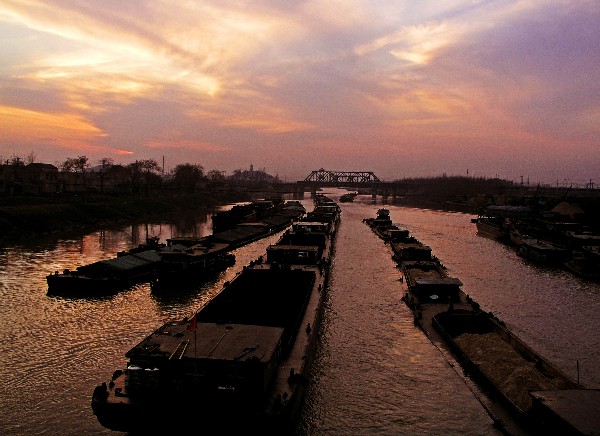
Xuzhou section of Grand Canal
The Grand Canal flows through Xuzhou, the thoroughfare of five provinces. In the great Huaihai Campaign, many important battles took place near the Grand Canal. The canal, which has been flowing for thousands of years, has not only written a thousand-year context, but also witnessed one brilliant victory after another won by the People’s Liberation Army of China with the support of the people.
Competing for the iron bridge and crossing the canal to surround the "Yellow Corps"
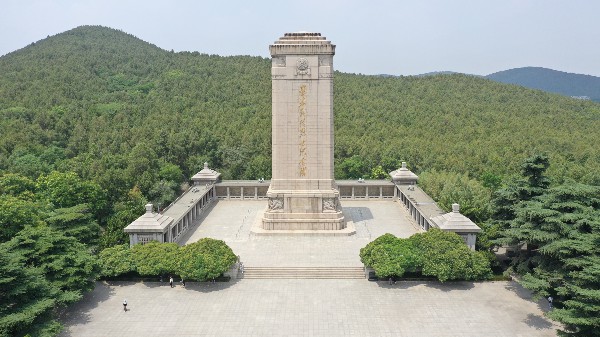
徐州淮海战役纪念塔 视觉中国 供图
翻看《淮海战役史》(上海人民出版社)中的“淮海战役经过示意图”,可以清楚看到,整个淮海战场偏东侧,大运河从南向北横亘穿过。标记我军大部队进攻走向的多个红色箭头,从北方、东北方等方向穿过运河,向徐州方向追击而去。“1948年11月6日至11月22日,是淮海战役的第一阶段,我军围歼黄百韬第7兵团,孤立徐州之敌,多次重要战斗在运河两岸展开!”徐州淮海战役纪念馆的淮海战役史专家张明莉说。
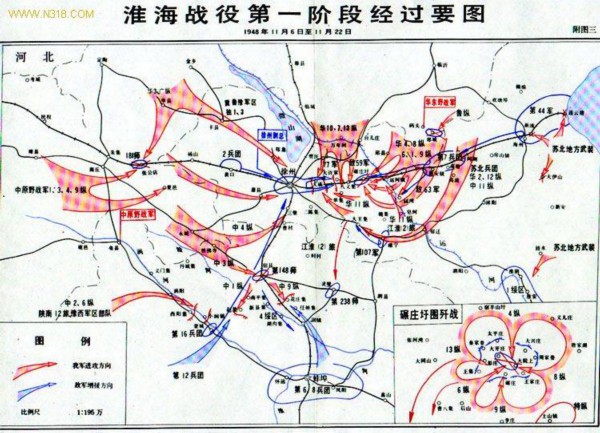
淮海战役第一阶段经过要图
淮海战役发起之前,徐州国民党军的主力部队之一、黄百韬第7兵团(下辖63、64、44、25、100五个军,总兵力十二万余人)位于徐州以东的新安镇地区(位于今新沂境内)。黄百韬担心自己远离徐州,地处孤立,容易首先被歼灭,遂多次向徐州“剿总”司令刘峙请求撤回徐州。11月5日,国民党军“参谋总长”顾祝同在徐州召开军事会议,按照蒋介石部署,决定徐州周围的主力部队向徐州收缩靠拢。黄百韬这才慌慌张张地开始组织渡过运河西撤的行动。但由于刘峙又命7兵团先等待海州的44军撤到新安镇后再一起撤退,7兵团的西撤行动又推迟了两天时间。
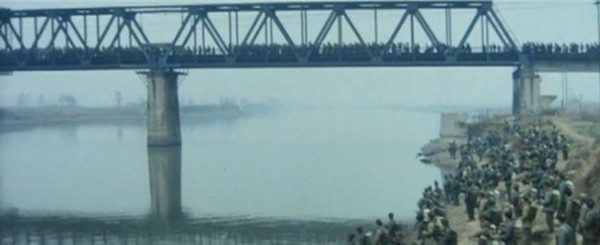
In Armageddon Huaihai Campaign, Huang Baitao Corps scrambled to cross the canal.
On the way to the west, more than 100,000 Kuomintang troops gathered on the east bank of the canal, all like headless flies, rampaging around. The movie Armageddon Huaihai Campaign vividly shows this scene: the only river crossing channel, the Canal Railway Bridge (located in Pizhou today), is crowded with fleeing Kuomintang troops. Some people were squeezed into the canal, others were trampled to death, and some Kuomintang soldiers used machine guns to clear the way. The scene was extremely chaotic. As a commander, Huang Baitao stood by the river, looking at the river and sighing, deeply regretting that he didn’t lay a pontoon bridge on the canal in advance and increase the crossing passage.
After Huang Baitao crossed the river in a mess, he left more than two regiments stationed in the east of the Canal Railway Bridge. At 9 o’clock on the evening of November 9, I chased the 8th column in Hua Ye, and started the battle for the canal railway bridge. By the next morning, the 69th Regiment of the 23rd Division of the 8th Vertical wiped out more than 2,700 Kuomintang troops east of the canal at a small cost. Xinhua News Agency broadcasted the victory of this battle with the title of "Fighting for the Bridge Head of the Canal, Destroying the Yellow Bandits and Making the First Contribution".
"The Huaihai Campaign has just started, and the Kuomintang army has shown an irreparable defeat." Zhang Mingli said that the canal blocked the westward withdrawal of Huang Baitao Corps. The change of hands of the Canal Railway Bridge laid a solid foundation for our army to finally surround Huang Baitao Corps in Nianzhuang area and wipe it out.
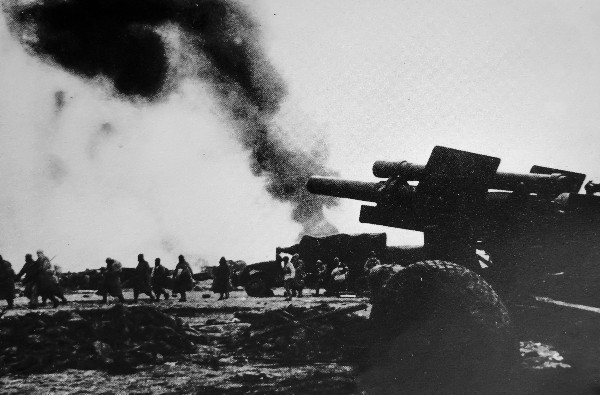
In the Huaihai Campaign, our army won a complete victory and wiped out more than 555,000 enemy troops.
On the front line of the canal, "General Sabre" led an uprising.
Almost with Huang Baitao’s 7th Corps, they crossed the canal and fled to Xuzhou. At the same time, in Taierzhuang and Jiawang areas north of Xuzhou and near the Grand Canal, two generals, He Jifeng and Zhang Kexia, deputy commanders of the third appeasement area of the Kuomintang Army, led a battlefield uprising. Zhang Mingli introduced that before this, there was a 10,000-year-old sluice battle on the Grand Canal. Although the scale of this battle was not large, it was closely related to He and Zhang Uprising.
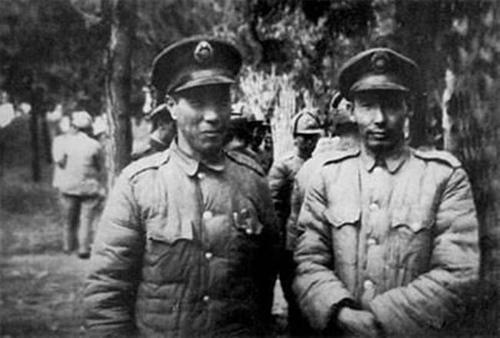
Two generals, He Jifeng and Zhang Kexia, led a battlefield uprising.
The Wannianzha Bridge is the main crossing channel on the Grand Canal from Han Zhuang to Taierzhuang. General Cheng Jun, commander of the 7th longitudinal section of Hua Ye, who commanded the Battle of Wannianzha, recalled that at 19: 00 on November 7th, the 61st Regiment of the 21st Division of the 7th longitudinal section and the 55th Regiment of the 19th Division started fighting one after another to cross the canal. After a short battle, the 7th Vertical took control of Wannianzha Bridge, wiped out the Kuomintang defenders on the bridge and south of the bridge, and made great strides towards Jiawang area. While crossing the canal in the 7th Longitudinal Section, the 10th Longitudinal Section and 13th Longitudinal Section of Hua Ye also crossed the river in Han Zhuang and Taierzhuang.
Hua Ye troops have crossed the canal and approached Xuzhou. Two generals, He Jifeng and Zhang Kexia (both underground members of the Communist Party of China), who have been planning to lead an uprising, feel that the time is ripe. He Jifeng recalled in the article "Uprising on the Canal Front" that on the evening of November 7, after receiving the news that Wannian Gate was lost, he called a meeting of his divisions and heads in Jiawang and decided to send someone to get in touch with the PLA troops. The next day, Zhang Kexia, known as the "general with a sword", also escaped from Xuzhou on the grounds of commanding the battle at the front, and came to Jiawang to lead the uprising with He Jifeng.
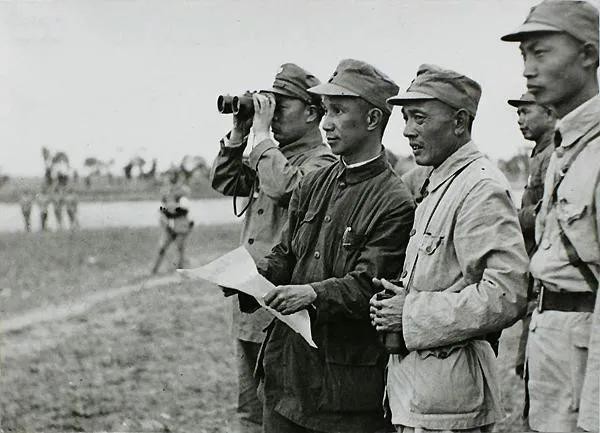
Chen Yi, Su Yu and other comrades were at the front line of Huaihai Campaign.
Under the leadership of two generals, He and Zhang, the 59th Army, together with the 132nd Division of the 77th Army and a regiment of the 37th Division, made up of three and a half divisions with a total of more than 23,000 people, left the reactionary Kuomintang army. The uprising troops immediately went to the area designated by our army on the north bank of the canal to rest and adapt.
The uprisings in He Jifeng and Zhang Kexia had a vital impact on the Huai Hai War. Zhang Mingli said that this uprising made the Kuomintang Xuzhou "pay the total" lose the canal barrier in the northeast of Xuzhou, and the columns of Hua Ye Shandong Corps were able to quickly pass through the canal defense line, directly into the line of yangshan and Cao Baji on the Longhai Line, and stopped the Huang Baitao Corps fleeing westward head-on, which won time and provided guarantee for adowa of the enemy and victory in the first stage of the Huaihai Campaign.
A bloody battle in Yaowan, Conquering the Millennium Ancient Town of Canal
Yaowan is a thousand-year-old ancient town in Xuzhou section of the Grand Canal. It is surrounded by the Canal and yi river. Since ancient times, it has enjoyed prosperous business travel and is known as "little shanghai in northern Jiangsu". In the first stage of the Huaihai Campaign, our army concentrated its forces to encircle the Seventh Corps of Huang Baitao. The 63rd Army, the main force of the Corps, was completely destroyed in the ancient town of Yaowan.
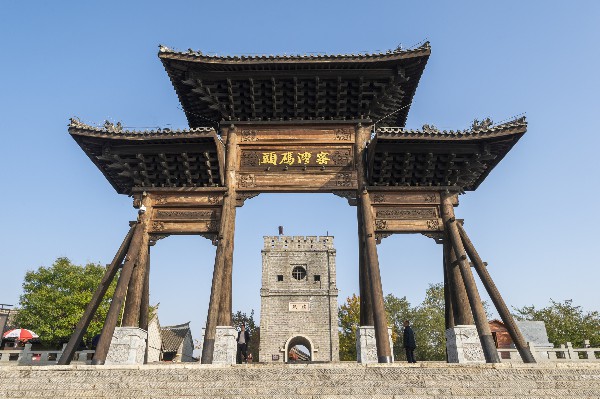
Yaowan ancient town of Xuzhou
Zhang Mingli told reporters that the Seventh Corps of Huang Baitao attempted to evacuate to Xuzhou. He ordered the 63rd Army to retreat from Xin ‘an Town to Yaowan, then crossed the canal and assembled at Nianzhuang. Hua Ye’s ministries quickly pursued the enemy. In the 9th column, the first part of the 63rd Army was annihilated in Yantou Town, and in the 1st column, the main force of the 63rd Army was surrounded in Yaowan Town.
The 63rd Army was trapped in Yaowan, unable to break through. Chen Zhang, the commander of the army, asked Huang Baitao for help, but at this time, Huang himself was also surrounded by Nianzhuang, and he couldn’t take care of the 63rd Army, so he had to let Chen Zhang "handle it by himself". Chen Zhang was helpless and tried to lead his troops across the canal from Yaowan to the west, but our army had already occupied the west bank of the canal, and the 63 rd Army’s breakout troops suffered heavy casualties and had no choice but to return to Yaowan Town.
The 63rd Army is a Guangdong army. When it first arrived in Huaihai battlefield, it was acclimatized, with low morale and shaken morale. On the evening of November 11th, Hua Ye 1st Longitudinal, led by Commander Ye Fei, launched a general assault on the remnants of Yaowan. Our army concentrated dozens of mountain guns, wild guns and heavy mortars, and repeatedly bombarded the enemy’s main positions and military command posts. The whole ancient town of Yaowan was filled with guns and smoke.
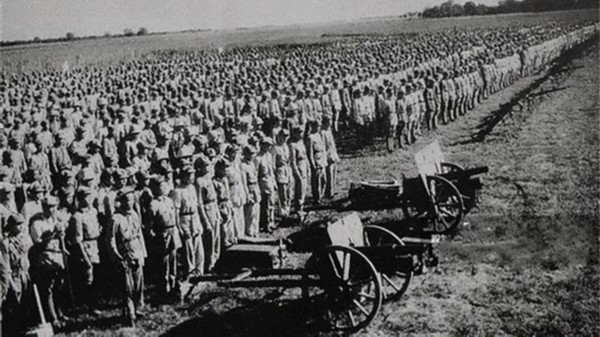
East China Field Army Troops Assembled
Our vanguard troops took advantage of the enemy’s shelters to be suppressed by our artillery fire, and blasted the outer Abatis and the fence. Rush into the small east gate, big east gate and north gate of Yaowan. After fierce street fighting, our army occupied the Catholic church, the enemy’s core position. Chen Zhang, the captain of the enemy army, with several guards, tried to swim and abscond, and was shot dead by our army on the bank of the canal. By dawn on the 12th, more than 13,000 people from two divisions and five regiments of the 63rd Army were wiped out by our army.
The battle in Yaowan was the first large-scale battle in Huaihai Campaign. Hua Ye 1st Battalion was brave and tenacious in the battle, and dared to fight and fight, creating a successful example of wiping out the enemy with one column and one army, which opened the prelude to the victory of the People’s Liberation Army in Huaihai Campaign.